Discovering Themes in Your Novels – A Healing Process

I remember watching best-selling author Kate DiCamillo on an interview on YouTube, and something she said stuck with me. I don’t remember the exact words but it was about how sometimes in a more personal level, a novel is a healing process for the writer. At first glance, it may seem as a regular story but later, there might be symbolism in it that only the author will understand and recognize as personal issues that in a way, are healing/addressed through the story, whether past or present issues.

I thought about my novels and went in search of a deeper understanding. At first glance, the stories appear as pure creativity, and unrelated – just an inspired story. However, once I got beyond the written lines, a whole world of symbolism appeared in front of me. I understood what DiCamillo meant. I discovered healing through those pages, and much more. There was a part of me inside the story that only I could understand, and totally oblivious/secret to a reader. I am not saying that every novel I (or you) write will have encrypted meaning and be a healing vessel, but it is possible that somewhere along the line, it may happen. The mind is amazing and it finds a way.

If you are a writer, go back to one of your early stories and look at it beyond the written lines, go on a discovery mission, and pay attention at what comes to mind. It may surprise you and delight you as well. We write for ourselves as much as we write for the readers.

Today, I Must Rant

Over the weekend, I was disappointed and annoyed. I am sure that this happens to many indie authors, and I would like your opinion on this issue. I checked my books on Amazon and realized that other independent Amazon sellers were selling the paperbacks at unreasonable and shameful prices. One of my novels was priced over $100 dollars. It made me angry because, this is stealing from readers, and I worked very hard to produced those books, and I don’t like the idea that someone is allowed to sell my novels at an exorbitant price, and make more on one book that I would make as an author in selling several. Do you understand my point?

I checked several indie authors and most of them had the same problem with their novels. I checked a best-selling author who publishes traditionally, and she did not have this issue. I don’t know if this happens with indie authors because many are not in the category of best-selling authors yet, but to me, there should be a stop to this madness. I understand that every seller has the right to price their product, but ridiculously overpricing a novel that the author has priced reasonably is unethical. I don’t know who would pay over $100 for a used book that they can buy new for under $15.00, but obviously someone does, otherwise this would not happen.  Amazon should regulate this issue. Of course, there is the argument that no one is putting a knife in the neck of the buyer, if they want to buy the book for the abominable price.

As an indie author, what do you think? Are you experiencing this?

Now, to my other disappointment – The FAKE WordPress blogs. I saw that a suspicious fake WordPress blog (that had no content) posted one of my posts (A Gift for You) as a reblog. When I looked at the blogger/blog there was no content at all in the site, only my post, making it appear as if I was the blogger giving away my novel. Immediately, I reported it to the WordPress team. I am awaiting a response. This happened yesterday. Again, I understand this happens, but it would be nice if WordPress would require their users to legitimize themselves by having a full profile and the required information before allowing them to have a blog. I think there should be a measure in place. As an author, I love WordPress, and overall, it has a great community and an awesome team. It is my blogging platform by choice, and in my opinion the best out there.

In both instances, my husband was upset and irate, because he knows how much effort and care I put into my work. I think there should be boundaries and regulations that would not allow this type of issues to exist so easy. And the word here is EASY.

What has been your experience as a blogger or indie author?


Time Lapse in Writing

Time is one of the trickiest subjects when writing a story. Not only does your world has to be convincing enough when writing fiction, the pass of time is something to keep in mind throughout the story. Depending on your story, you will have to keep track of the days that had gone by naturally, as the characters go about their lives – days, years, age, technology changes … It doesn’t matter if you are writing historical fiction or a modern romance, the pass of time is something to be aware of and keep track. If the protagonist went to work on Monday, and went to sleep that same day, but was meeting with someone on Wednesday, it would be unnatural to wake her up and take her to meet that person – where did Tuesday go? Another example is aging characters appropriately if the story demands it, as well as characters dealing with issues that are age related. In a series, time becomes tricky, and something to watch out for, as in the case of many years going by in the story, from the first book to the second book. You will have to age characters, but also technology in many cases. In addition, some people might not be able to come back because naturally they would be dead. I will use one of my novels as an example, and something I caught “on time” when writing it. It had to do with the pass of time – more than 20 years – and the mention of an aged character in the second book. In the first book, the character retained the title of Mayor, and referred to as Mayor Degan many times. In the second book, I caught myself referring to him as Mayor Degan, when he was at least 20 years older (no problem there, he was aged appropriately), however impossible to be retaining the title for that long. In my mind, the writer’s mind, he was still Mayor Degan, however I had to call him now by his name – Blake Degan. He was not even a character that interacted much throughout the story, but was a necessary one. Time affected even this character.

Supernatural characters might be able to play with time, but it still has to be mentioned in some way, as part of their condition, otherwise it might confuse the reader. Maybe they don’t age, or they can make themselves age according to time … somehow, the writer has to make this known to the reader.

Technology is another issue, not only in the topic of time, but on location as well. As an example, if internet connection is being used as part of the story, it is obvious that the internet speed is different in New York City than in a remote country location. These small details might not seem important, but they are.

The phrase “Time will tell” comes to mind.

Photo by M.A.D.

Photo by M.A.D.


After the Series – What Now?

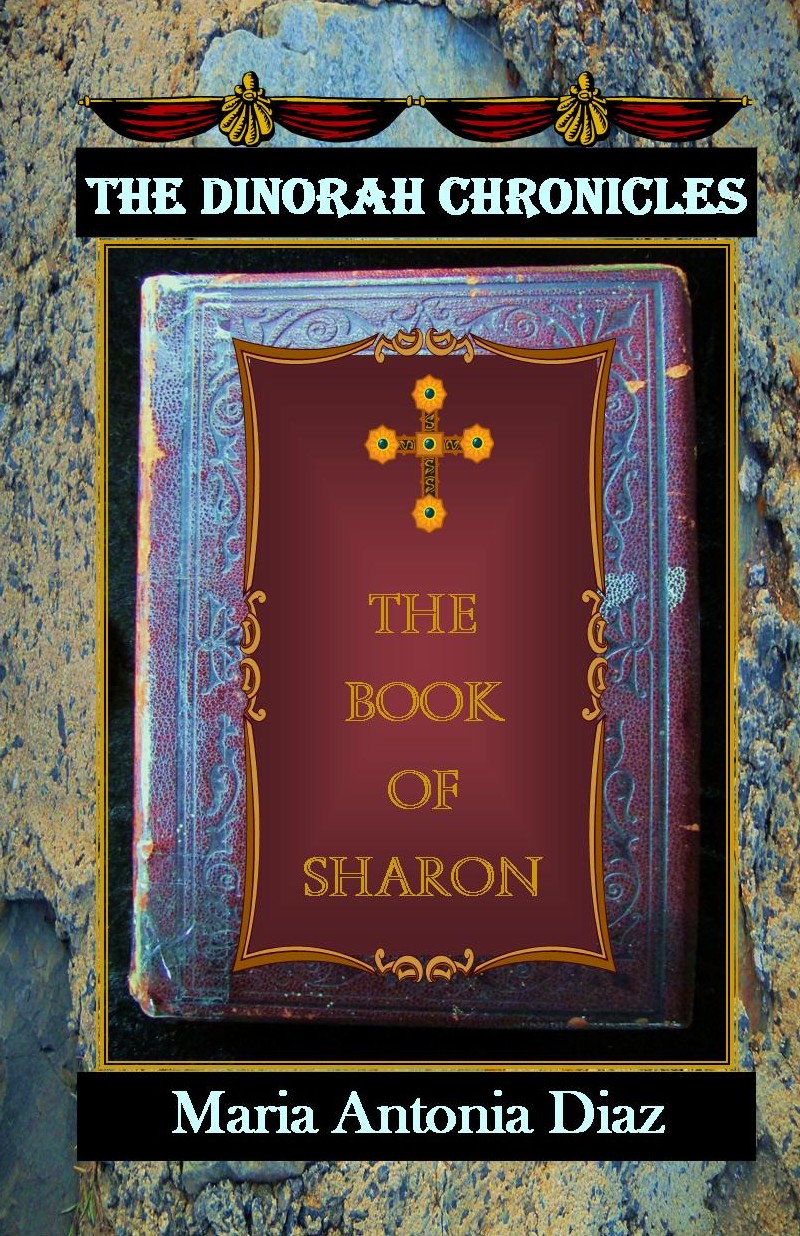
What now? or What’s next? These are questions that I will answer after I write the last book of The Dinorah Chronicles series. At the moment, I’m ready to start the third re-write of The Book of Sharon, book 2 of the trilogy. If I’m lucky, I’ll have the first draft of Sunrise Souls ready by the end of the year (9 months left). What have I learned?

Moonlit Valley inspired the writing of The Dinorah Chronicles. I never intended to write a series, but it developed as a natural process, so I let it be. I have found that writing a series gives me a bit of comfort in the sense that I am navigating known territory, as opposed to writing a new story. However, I have to admit that I enjoy the process of writing a single story more than writing a series. I never say never, but I think that in the future, I will focus on single stories rather than writing a series (unless I’m inspired otherwise). This took me to ask, What’s next? The answer is not as simple as I thought.

As an indie author, I have the flexibility to do pretty much what I desire. I don’t have contracts to fulfill, or lined up books/deadlines, or commitments abroad. The deadlines are the ones I imposed on myself. My commitment is to the story and to the reader. When I asked myself – What’s next? – I understood that many roads were right in front of me, and the one I take is not so clear yet. Why?

The writing industry changed so much in the last few years, and as an independent author, I need to balance my energy and efforts. It means that I do all the work, and any assistance hired is tied to funds available (if any). Also, it means that it does not make sense to follow trends if I don’t love the process. So naturally, my attention will hover around those projects that I am ready for and will enjoy. These days, the speed of publishing and everything else that surrounds it has multiplied, and indie authors are bombarded with many choices and possible projects that they might feel obligated to undertake to follow the developing industry and current trends – podcasts, audio book, channels, speaking/teaching engagements, the translation of their books, and many other endeavors. I admire indie authors who have the energy and focus to have many of those endeavors developing at once; I called them the Super Indies. They are an inspiration.

All the above considered, I sat down with pen and paper at hand, and thought hard about where I am on my journey, and tried to answer the question (now). I felt that my next natural step (after finishing the series)  would be to write a new single story, and focus on the Spanish translation of my first book, and possibly the series. Any other components of marketing books, gaining exposure, or other writing-related projects will be assigned secondary status (as far as focus and effort). This is a prelude, a peek, an early answer to my question, but of course, it all may change. What’s important is that I challenged myself to think about it and took a glance at the possibilities. It also helped me measure my level of readiness according to where I am on my journey. It was worth considering.

As an indie author, how do you feel about balancing current trends and your own journey?

photo by Maria Antonia Diaz

photo by Maria Antonia Diaz


Introvert of Introverts

Lately, I read or hear an increasing amount of information on the topic of being and introvert, and wonder if the people who call themselves introverts have mislabeled themselves. Introvert is not synonym of shy. According to the popular definition now, an introvert is a person who recharges or gets his/her energy from enjoying moments of solitude, working alone, as opposed to an extrovert who energizes by having people around, spending time with others and socializing in more live environments. An introvert would feel drained in this environment, and would need “quiet time” to recover. That does not make him/her a loner, socialization/interaction is enjoyed in moderation. This definition sounds good to me.

Another topic that goes hand in hand with this one is book marketing. Indie authors who consider themselves introverts might have a hard time grasping the now popular concept of indie book marketing, which just as the indie publishing movement, has gained momentum, hence all the bombarding with Must Dos, Nevers, and Don’ts related to self-publishing and book marketing. For an Introvert of Introverts, all this advice may be confusing, overwhelming, exhausting, and frightening. Why?

Most likely, when a movement starts and gains momentum, by default it gains followers, and originates experts, teachers, gurus … and so on, and where there are leaders, there must be followers, and followers sometimes forget that they are the leaders of their own movements, life, and or projects. Introverts who are also followers may feel/think that they have to follow or catch up with all the advice that there is about self-publishing/book marketing and end up feeling so overwhelmed that they might end up frozen or unable to decide, frustrated, and in despair because they cannot follow all the advice. As an example, I will use my dislike of making videos or vlogs, and yes, I consider myself an introvert in the sense of the above mentioned definition. What I’m trying to convey is that introversion is not a black and white topic, it has shade areas or degrees, and as so, introverts should assess what their likes and dislikes are, their level of comfort, and decide which activities fit better with their personalities, and focus on those. Just because everyone is Vlogging does not mean that you have to, and if you love blogging but dislike being in too many social networks at once because you become overwhelmed with too much interaction, then focus on one or two that you love most. Tailor your book marketing activity to your personality and level of comfort and enjoy yourself, otherwise, if you try to catch up with everyone else, introverts who enjoy a higher level of interaction, or the extroverts, you may end up frustrated and angry at yourself. People grow and evolve, and what I dislike at a particular moment, I may end up embracing in the future – it is evolution, and introverts evolve as well.

It is not a race, it is a journey, your journey, so choose wise, and enjoy every minute of it. Journey

On Faith and Writing

When I read poetry I notice one thing, the poem is sad/dark, almost as if it bleeds through the page, or on the other hand, it celebrates life, is an exaltation of nature or love, or whatever the subject seems to be, therefore transmitting a peaceful or joyful vibe through the page. It seems as if a tormented soul or a happy one wrote the lines, although that is not necessarily true.

Ernest Hemingway once said,”There is nothing to writing. All you do is sit down at a typewriter and bleed.” Maybe he was right, but what comes out of your veins? What do you bleed? I have found that for me, inspiration may come from nowhere, unexpected, and sometimes, it is directly influenced by my mood. I’ve noticed that when my faith dwindles, so does my writing. It is when my faith is up that I do my best writing, whether I may be going through a difficult situation or not. By faith I don’t mean religion, but my disposition to believe and trust. That said, I can predict when my motivation will suffer, and when my writing will lack. How to prevent this?

The answer is not so much to prevent, because life is full of ups and downs – it is human life’s nature. Instead, maintaining a conscious positive and high disposition (with effort and despite the circumstances) is what seems to help. I must keep up a high level of trust and frequency to support the flow of my writing, otherwise, it becomes forced, superficial, and dense. So my writing seems to be tied to my faith.

“I learned never to empty the well of my writing, but always to stop when there was still something there in the deep part of the well, and let it refill at night from the springs that fed it.” Ernest Hemingway

The Old Writers

While reading a 2011 Country Diary, I came across these old writing quotes, and I think they are interesting and reflect the old writing wisdom, and still applicable today. I decided to share them with you.

“Anyone who wishes to become a good writer should endeavor, before he allows himself to be tempted by the more showy qualities, to be direct, simple, brief, vigorous, and lucid.” – Henry Watson Fowler, The King’s English, 1908

“Dear authors! Suit your topics to your strength, and ponder well your subject and its length; or lift your load before you’re quite aware what weight your shoulder will, or will not, bear.” – George Gordon, Lord Byron (1788-1824)

“Then, rising with Aurora’s light, the Muse invoked, sit down to write; Blot out, correct, insert, refine, enlarge, diminish, interline.”Jonathan Swift (1667-1745)

“Sleep on your writing; take a walk over it; scrutinize it of a morning; review it of an afternoon; digest it after a meal; let it sleep in your drawer a twelvemonth; never venture a whisper about it to your friend, if he be an author especially.” Amos Bronson Alcott (1799-1888)


I think there is good wisdom here. I found the last line of the last one a bit funny, but certainly speaks of how protective and zealous as writers we are with our work and ideas. However, today the internet has blessed us with a way of coming together and share those ideas, ask for advice, and give to one another. I hope you enjoy these bits of old wisdom.


Heartless Dissection Ready

I hope I didn’t scare you with the title of this post. Almost a month has gone by since I put aside the first draft of The Book of Sharon. The time away is necessary for what comes next – a heartless dissection of it, and I’m ready.

As writers, we pour our heart and soul into our work, then the time comes to forget about it, followed by a cold stare before we are ready to slash it into pieces – heartless and purposely, not an easy thing to do but necessary. From this dismemberment a second draft is assembled. The process goes on until the story is as ready as it can be.

During this time, emotions run wild – from doubt, insecurity, uncertainty, and not wanting to let go, to perfectionism, pride, fear, doubt again, restlessness, exhilaration, incessant questioning … all of it culminating in exhaustion, and all of it necessary. Sounds painful and not too enticing, but it is what writers subject themselves to repeteadly, and beyond scrupulous consideration, and all for the love of the story.

A love affair with words, a crime of passion?


My next victim.

First draft of The Book of Sharon

First draft of The Book of Sharon

For Aspiring Writers

Today, I completed (finally) the Resources and Tips section on my website. This is an ongoing labor; however, it had been left as Coming Soon! for a while, and my goal was to have it ready for January. There are some good websites and recommended reading for aspiring writers. I hope it serves its purpose, and that it may be useful to someone.  Here is the link . I hope it helps a bit. I know that when I started, it took a lot of time and effort to find the best sites, as well as to separate the husk, so this is only a very small list but good for starters. I included a few websites at the end, good for exploration, inspiration, research, and learning. I will keep adding with time, as well as updating this section.

A Happy Coincidence

Sometimes, writing takes life on its own. With my first novel, Moonlit Valley, I felt as if the story wrote itself. The characters presented themselves, and I dare to say, named themselves. The writing process is different for everyone, and I have to say that I enjoyed the writing of that first novel; it was an adventure. After a while, I went back and looked at it with different eyes. I found symbolism in it, and a happy coincidence with some of the character’s names. When I looked at the common meaning of their names, what I found intrigued me and excited me. The meaning match the character in an almost eerie coincidence; it is how I imagined them. Here are a few of the names. If you read Moonlit Valley, you will understand what I mean.

  • Jeremy = God will uplift
  • Rose = Flower
  • Cole Angelou = Victorious + Angel
  • Lara = Cheerful
  • Hael = Immense/living in hall
  • Dinorah = Judgement
  • Leah = Weary
  • Olga = Holy
  • Anne = Gracious
  • Maurice = Dark skinned (I imagined this character tall and dark)
  • Jake = Pale/supplanter
  • Robert (town’s mayor) = Famous (of importance)

I found very amusing the coincidence of the meaning matching the characters and my idea of them. After all, writing is a very profound and spiritual endeavor, an act of letting go, of listening, and of invention and communion between writer and characters/story.

moonlit-valley-coverfrontnew.jpg