Reduced to Your Possessions

When I decided to live in a more present and simpler way, one of the effects that happened almost as a natural reaction was for me to rid of excess in my life, material and other. After evaluating much of my life in a systemic way, I started to let go of stuff first, and eventually, of every other thing that did not fell into balance with my life’s systems. Stuff was a significant area for me, years of accumulation, of excess. This act of letting go opened my eyes to many areas, and I became aware of how possessions dictate on one’s way of living, how people identify with their possessions, and ultimately, how one’s identity can be reduced to one’s possessions, by ourselves and by the perception of others as well. Our living is reduced to maintaining such possessions, and in a way, the stuff that was supposed to enhance living, ends up diminishing it.

I remember attending a funeral when I was much younger, and as I approached the widow to give her my condolences, I decided to wait aside until she finished her conversation with a couple. Without intention, I overheard the man asking this grieving widow how much she wanted for her late husband’s car. Obviously, it was not the time and place to ask that question. This scene stayed in my mind until today. It made me realized how people see other people after death, and how inconsiderate a person who is materially oriented can become. On a more recent observation of human behavior, I observed how a man who owned many vehicles was reduced to his possessions after he died. The next day, there were many takers looking to buy his vehicles. One of them, even checking out a motorcycle during the family service which was at the home of the deceased. This reminded me of the first incident that happened many years ago, its similarity, and made me think of how I would like to be remembered when I go to meet my maker. I am sure that most of us have heard stories about family feuds after a patriarch or matriarch dies, and of siblings fighting for an inheritance and relationships being broken for the same reasons. It happens in the closest of families.

I am not a minimalist, and I can appreciate beautiful things, but I don’t want my identity to be based on stuff, neither how other people might remember me by. When we approach the relation to our possessions as stewards of the material blessings we receive instead of owners or collectors, we become more grateful, but also more generous. We also learn to see people for their true essence and not their status or material abundance, and as a default, we end up having better human to human interactions once we remove the material filter.

Role Models, Where are They?

I think that younger generations are lacking something that was very important for older generations – role models. Our society has decline in this sense, and instead, a younger generation is filling that void with role models found in Hollywood celebrities and even AI, wherever they can find the ideal, even when it may be a bit removed from reality. If you had an influential and positive role model in your life, count yourself blessed. When we are young, we might not recognize the significant influence of a role model in our life, but later on, in hindsight, we realize how blessed we were.

I had two strong role models in my life, both women, and they contributed much to the woman I am today. One of them, my grandmother, the strong, courageous, and righteous woman who raised me. I can honestly say that she was the living image of the woman in Proverbs 31. I learned so much character and wisdom from her (and much more) throughout my childhood and my early younger years, but her teachings lasted a lifetime.

As a young and married adult in my 20s, I met my second role model, a Jewish woman who introduced me to business concepts, an area of my life that had no previous exposure as far as learning. I value her teachings to this day because she inspired in me a learning for such things and gave me a view of myself that I never had before in that sense. She inspired me to dream more, for the first time.

These women, very different but similar in character, and from very different cultures, upbringing, religious views, education, and socioeconomic backgrounds, shaped much of my thinking in a positive way, and I am so grateful for having them in my life at an early age. When I think about what I consider a scarcity in role models these days, I see a correlation with the erosion of our value system as a society. Times may change, technology may modernize and influence the way we do daily living, but core values should remain and not get lost within a rapid changing culture. These are basic rules of engagement, of humanity and societal goodness that we ought to pass on to the next generation.

The Way of Nature

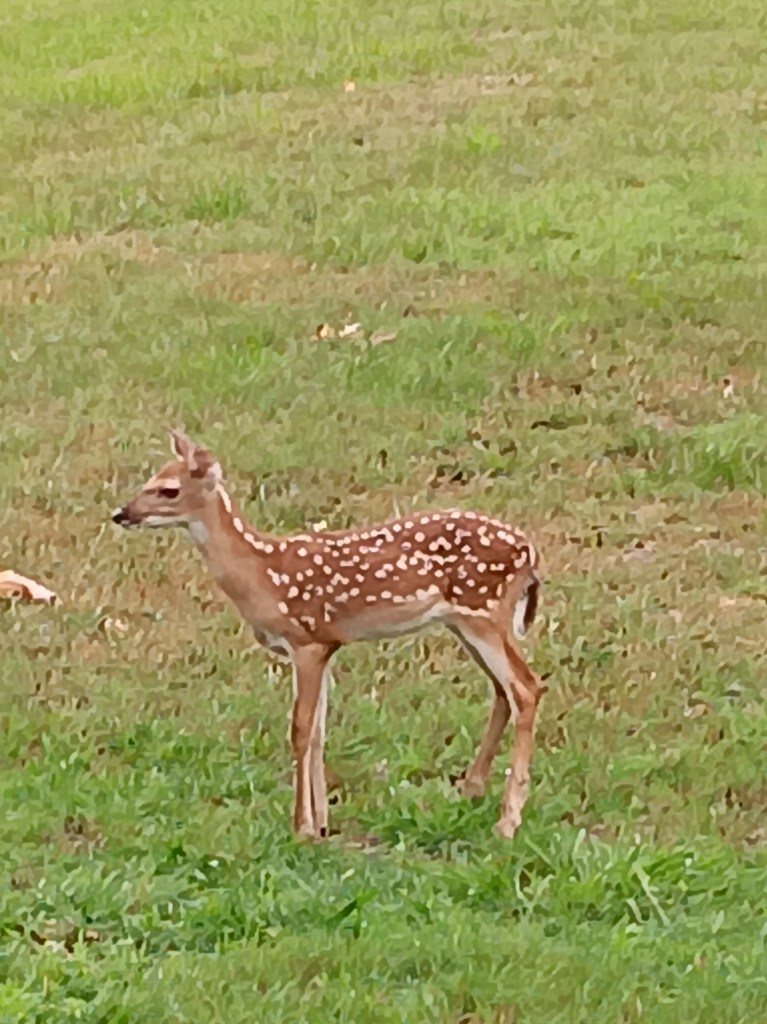
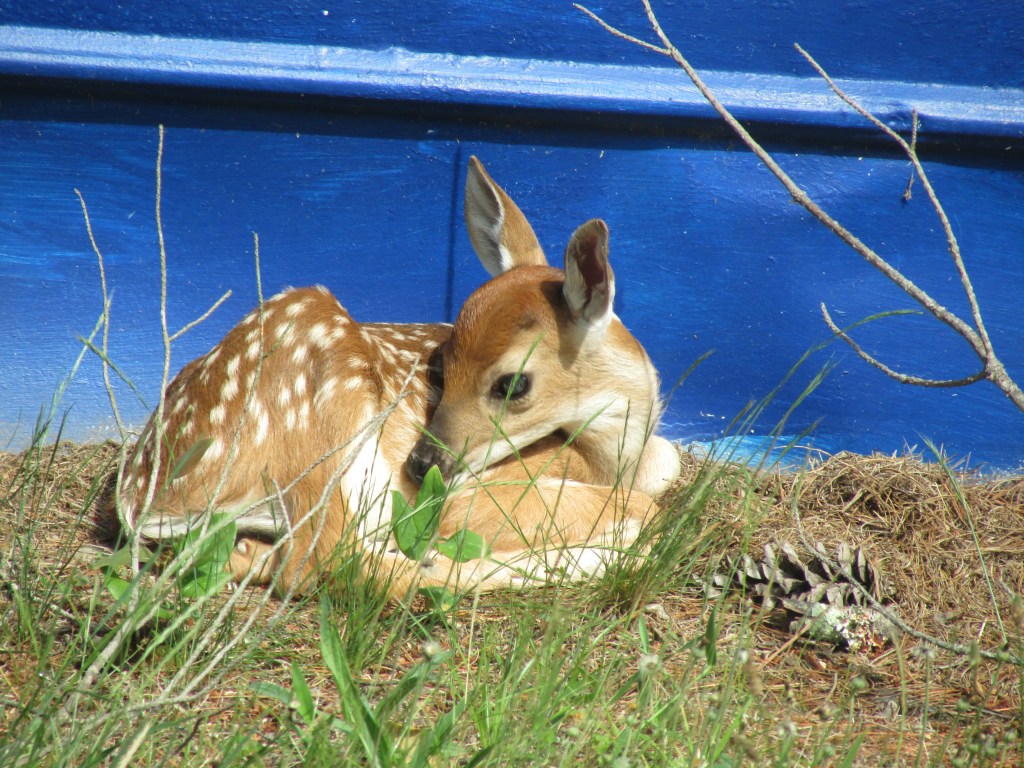
Newborn fawn by the blue shed (Photo by M.A.D.)

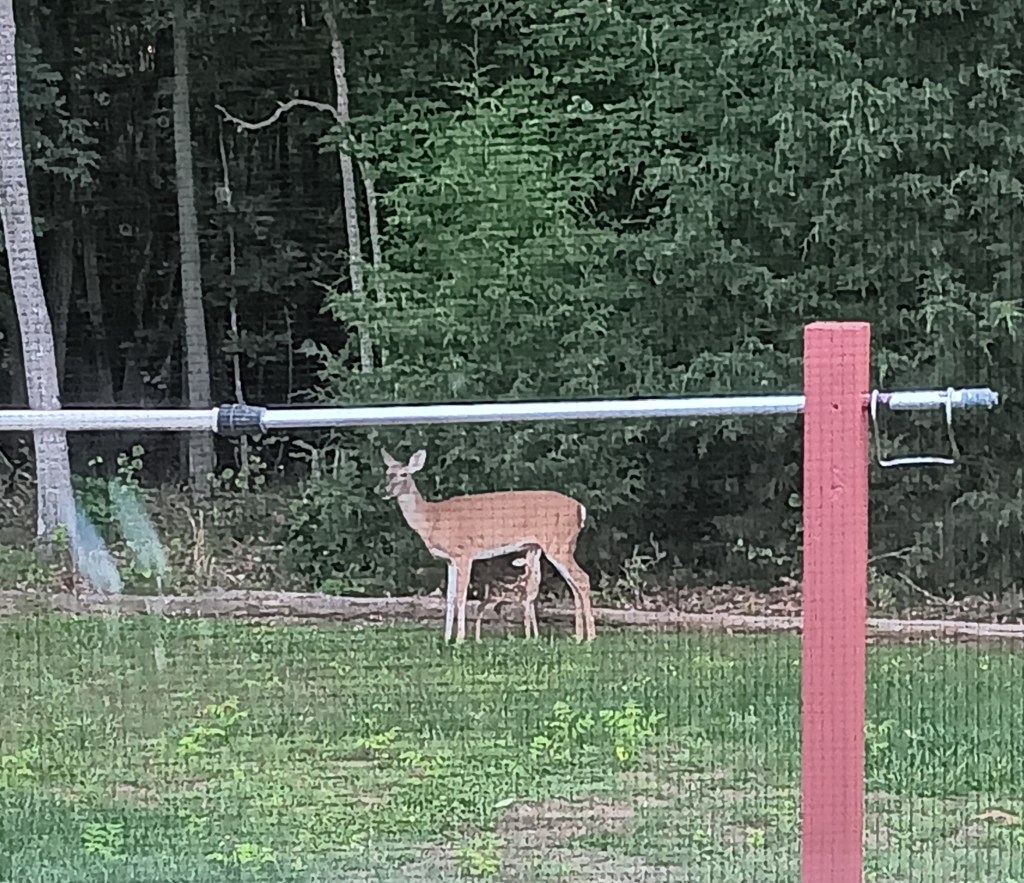
Sometimes, nature gives us a glimpse of its perfection, and at the same time of its wisdom. Mama deer left her baby near the blue shed, where she felt it would be safe from predators. The fawn must have been born recently because its legs were still a bit unsteady. There was shade in the morning but was very hot under the sun by the afternoon. An entire day, no water, only sleeping and aware from time to time. I knew that Mama deer would return in the early evening as it is normal for female deer to do this when fawns are very little. I monitored the heat situation from my kitchen window, just in case, but trusting that Mama deer always knows best. Indeed, she does. Newborn fawns need a lot of heat in the first hours of life because their body temperature is not well regulated yet. She knew that the metal shed would provide sun protection for a good part of the day, but also much necessary exposure to the heat the fawn needed. I observed the fawn at several intervals during the day, and as instructed by its mother, the little one did not move from the space no matter what was going around. My husband avoided the area while doing outdoor chores. By the evening, Mama deer returned to check on her baby and feed him, she was around in the early evening, monitoring the fawn from a distance, but as soon as it was a bit dark outside, she reunited with her fawn. The next day, early morning, I saw her in the backyard feeding her baby. She has left him in the surrounding woods near the house a few times, for what I can tell by seeing her return in the evenings, and by now, the fawn is able to be with her during the day.

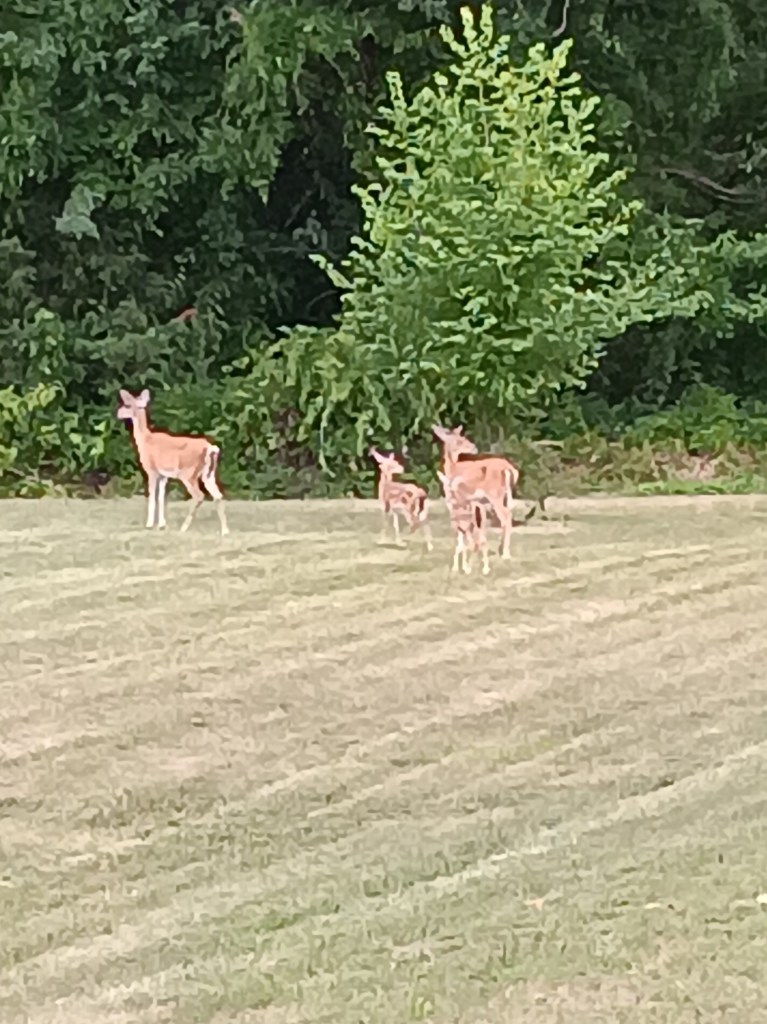
Mama deer feeding her baby early morning, the next day (Photo by M.A.D. taken through the kitchen window)

The way of nature is wisdom in itself. Sometimes, where we find safety and security is in the familiar.

Is it Ironic?

Sometime ago, I went to sign in on one site and had to verify that I wasn’t a robot. Instead of the usual pictures that one can hardly see, I was presented with a squiggly made-up word that I could hardly tell what it was for sure. After two attempts to decipher the squiggly words, I decided to use the sound button to listen to the pronunciation. Well, that did not help. What I heard was a cacophony of AI robotic voices, all at once but not in sync, a screech from hell, impossible to understand. It truly was creepy. The experience prompted this post. I thought, is this ridiculous enough? A robot verifying if I am human and not a robot. I found it a little bit ironic.

Sometimes, we take our humanity for granted; we don’t know if we will lose it one day. Will we ever merge with machine? I certainly don’t want to be around when we become one and the same. I am not referring to medical advances that help humans function due to a condition or illness, but of a complete merge of human and machine/software/whatever artificial that might be, at the brain level, where one absorbs the other. Symbiotic? I don’t think so. Sounds too sci-fi? Maybe, but I don’t think impossible. The reality is that technology is evolving rapidly, too fast. If you have not heard the speech of Geoffrey Hinton, also known as the Godfather of AI, (for his important and pioneering work on its development), at the World Economic Forum, or even any of his latest interviews, I invite you to listen to it. It is very eye opening. He has already warned the world of the existential threat that AI poses for humanity and what he thinks is a smart solution now, because we are running out of time. His credentials are impressive, and I invite you to know a bit more about him, so you can appreciate and understand who the one is warning us. I won’t spoil it for you with details on this blog post, but seriously, listen to him talk about this topic – he knows.

The day we lose our humanity, the same humanity given to us by our Creator, with it we will lose our essence, our kindness, our empathy, what makes us different, what we are. We will lose our divine connection. Isn’t it ironic? But Jesus said,

A Golden Man’s Cuisine

From time to time, the muse taps my shoulder, and let’s me know that it is time to write a little poem. Sometimes it is a holiday poem, about nature, or even a satire, and sometimes it is about the Golden Man, a character I created a few years ago. Think of him as a social character.

A Golden Man’s Cuisine

The Golden Man forgot his quest,

in pomp and circumstance now, he bathes.

Who are those people under my feet?

Must be the ants, and they don’t eat.

Bring me some wontons, bring me kababs; the ants can starve.

But first, cachapas I must have,

and later, much later, I’ll think of cheese.

Not a Debate, Nor a Battle

Ever had a conversation with someone that becomes exhausting and it goes nowhere? Every word said needs to be analyzed or contested, if not enlightened by some not needed piece of information. By the end of the conversation, which one welcomes, there is this feeling of exhaustion and drainage. I have met many people like that, and it is very difficult to have a conversation with them because their focus is to debate anything and/or everything that is said. It is not a pleasant exchange, but futile, even when no attempt to re-establish a point is made.

Life is not a battle or debate. Instead, it is an interaction, an open exchange of ideas between people, whether explicit or not, through words and actions. There is no need to approach a conversation with our backs against a wall, ready to fire back. Unless it is an intended discussion were points and opinions are to be debated, there is no need to be defensive or pedagogical. I have seen people become easily agitated or stressed out in normal circumstances, and part of it is their approach at viewing existence as a constant battle, where every social exchange has to be a debate; a battle against what?

People are different (thank God), have different ideas, ways to approach living, and they come from different backgrounds/cultures. One culture does not define planet Earth; all are part of the beautiful human race. We seem to miss that point. It may sound pollyannaish, but life is not meant to be a constant battle or war of the words. The old advice of “let’s agree to disagree” alludes to this type of interaction, and maybe one more appropriate would be to “live and let live,” as the song says. All in the right context.

Writing characters in depth, may sometimes, become exhausting, and many times, reading them as well. It depends on the context and also on how well the writer has experienced/observed the emotions attached to these characters. I don’t think a character should ever be rushed. I think as writers, we should play with them a bit and see what they are all about before we commit to write them. Others, write themselves.

The Stages of a Simple Beginning (Starting Over)

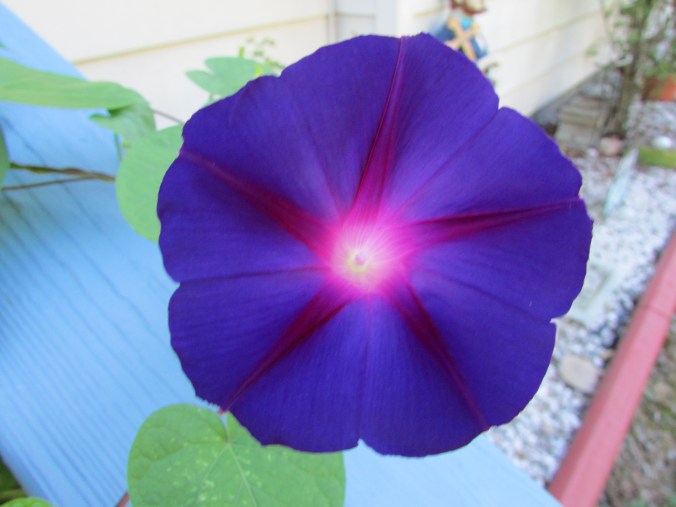
Morning Glory (photo by M.A.D.)

Ever had to start over, either by a conscientious and premeditated choice or by a forced circumstance? It is like the Spring that comes after the death of Autumn and the coldness of Winter. The difference between the two circumstances is the degree of trauma or excitement. Either way, one has to start somewhere. So, where to start? Obviously, safety is most important to consider. Once a person has a safe haven where primary needs are met, such as food, shelter, income, and other basic needs, only then a person can start recovering and dreaming again, but not until one has grieved the past. Grieving the past is the one thing that should not be avoided, the sooner the better, and the faster a person can recover from whatever circumstances caused a “starting over” situation. Even in a planned and voluntary fresh start, I have to leave things behind, a form of grieving. Only then, forgiveness is possible, of others and myself. Only then, I will be able to move forward towards a new day, a fresh start, a new beginning. The simpler the start, the better.

Simple beginnings hardly are simple. I have to find balance again, the old is gone, and the new, well, it has not fully arrived yet. I am in a suspended state for a brief time, a time where everything or mostly everything is new, unfamiliar, and unpredictable to some degree. Sometimes, one has to find oneself before charging to a brand-new future; a new present has its own challenges, some easier than others, depending on the circumstances that catapulted the change. Even when the change is planned and executed carefully, the unpredictable shows up.

When embracing a new beginning, a slow pace at first helps me see with more clarity the road ahead, even during sudden change. I might not be able to control circumstances, but I can slow down in the way I react to change; I can always control the part that is me. It all starts with me, and of course, faith. Hope will follow soon enough, and with hope, new dreams and possibilities. Once I start dreaming again, I have begun again.

As writers, many times we place one of our characters in such a predicament of starting over, and by not rushing a character through all the stages of a simple new beginning, we are building the character’s credibility and ultimately that character’s truth. When we don’t rush ourselves, and we go through the same stages, we start regaining confidence, believing in ourselves once more, finding our truth. But life is not fiction, even if we deny reality and try to live in our own fantasy. Eventually, the fantasy dissolves and we are left with the possibility of change, of making the decision of a simple new beginning, even when that might be just as simple as embracing a brand-new day, as it is for many. During that time, kindness to ourselves and others on the way will make the most significance.

When we focus on our differences, we don’t see need, and we miss an opportunity for kindness. Kindness with promotion cheapens it. Kindness without forgiveness cancels it.

How Do I View Independent Publishing Now?

Many years ago, I wrote about my decision to pursue independent publishing, specifically, print on demand method, and how important this technological development was in making my dream of becoming an indie author possible. At the time, there were many views on independent publishing vs traditional publishing, but mostly, the disdain for independent publishing by the traditional publishing industry. Basically, they viewed it as an author’s career suicide. At the time, and after much research done, I decided that independent publishing aligned more with my views and expectations, work ethic, and my writing style and future endeavors.

For a while, as independent publishing in venues like Amazon and others continued to develop and evolve, it seemed promising and liberating for many authors, as well as affordable. However, with the passing of time, a “gold rush” environment emerged, and it seemed to attract other people who wanted to make a quick buck, who could care less about writing, and who plain and simple stole other author’s work, modified it, and published it as their own. The worst-case scenario that traditional publishing so warned us about, materialized. Now, with the development of AI, another layer has been added to the chaos that already enveloped the independent publishing industry. The speedy AI creation of stories and even the modification of stolen work by using AI is real. Indie authors who care about the craft are facing an overcrowded environment where it is hard to distinguish the good from the ugly, making it harder for their work to be found by readers.

So, how do I feel about independent publishing now, after all the new challenges, perils, and a less than attractive environment for indie authors? How do I feel about traditional publishing now, after seeing what has become of the independent publishing industry? Because honestly, even the so-called vanity publishers of the past seem more attractive now in comparison. If anything, the farmers who own the cows are the ones who benefited either way. Well, I have to say that independent publishing still aligns more with my writing style, the method, that is; however, if back then, I knew what the future would hold for the industry, I would definitely be discouraged to follow that path, and I would seriously have considered traditional publishing. It has become a garbage dump, a less than attractive venue for my taste, and I have to admit that traditional publishing still holds the golden medal, as far as a reputable venue, although much of it has changed in various ways. The flood gates were opened without any type of filtration system, and now, at least for me, this type of venue for independent publishing lacks appeal, honesty, and trust worth.

I don’t know what the future will hold for me as an indie writer, and I may have to go back to basics through research and study of an industry that seems to have fallen short of my expectations. Writing is what I love to do, and I guess that I should be asking myself if I want to do it under today’s circumstances of a less than appealing environment for me as an independent author. It is something that I have to answer myself, seriously and with honesty.

Evil

Evil is a theme in my novels, but it is viewed in a supernatural way, not so much as a real condition, such as in a crime novel. Unless you are a victim of evil personified, most people think of it as something remote; it exists, might be supernatural or not, depending on your spiritual beliefs, and it manifests through human behavior. Since I can remember, I have always considered the supernatural side of evil to be real, but also, I was raised by a religious and devoted catholic grandmother, one who would tell me stories of old, ingrained in an ancient culture, stories of witches and demons, and supernatural beings that happened in the past. Lore or not? It doesn’t matter, but it did permeate into my novels. It probably shaped my views and interest in the topic, but also, fueled my curiosity; so much, that once, I dared asked a priest if he believed that evil was real. He answered something generic, that evil was in this world … I interrupted him and rephrased the question: “Do you believe that the Devil is real, that demons exist?” He looked at me a bit surprised, but calmly he said, “Yes, it is real.” I asked, “Why doesn’t the church tell people the truth?” His answer resonates in my memory until this day. He said, “Because most people would not be able to handle the truth.” I understood and I did not keep pressing him on the topic. I never asked again, but I always remember the answer.

More than three decades have gone by, which takes me back to my novels and the theme of good vs. evil in the supernatural sense. The current novel I was writing (and I say was writing because I stepped away from it for a while) does not follow the same lines, as far as this theme goes, although it has a bit of a supernatural flair mixed in more with the human condition. I asked myself the other day, did I step away from my “niche,” did I abandon my personal quest? Is this why the current novel seems so challenging or is there something more to it? I am not forcing the writing of this novel, but I know one hundred percent that I have to write the story, however the flow of it is very different, but I know that I am the one causing it. There are a few stories that are waiting to be written, all of them calling me at once, however, I know that until I conquer this one, in mind and soul, I will not be able to tend to the next one. Now, it is personal.