A Beloved House, a Beloved Woman

If you have followed, or stop from time to time to read this blog, first, I thank you, and I hope that you have received something from it, whether inspiration, and idea … When I set out on the journey of writing this blog, many years ago, I decided that I wanted to share some of my passions, as well as my journey as an independent author, but also to include another journey, that is, moving from the beloved Jersey shore to the Idyllic Virginia countryside, and the quest of fixing up a dilapidated farmhouse, which would become our home.

Throughout the years, I have met many people who have visited this home and shared stories of the previous owner, Ms. Lula Jane, and how fond they were of her and this house when she lived here. Some of these people have been part of the neighborhood since they were kids and visited her often. One of them described the place as the hub, the place to be, and were everybody ended up. She has been described as a very kind person who loved her home, a very tall woman who enjoyed walking through her beautiful garden. On many occasions I asked if anyone had any pictures of her or the home because my intention was to recreate what this home used to look like in the past. Unfortunately, throughout the years, renters, squatters, and abandonment had taken a toll, and the old farmhouse had seriously deteriorated to the point of becoming not suitable for living. You can see pictures of the previous condition and restoration under the topic “fixing an old farmhouse.” But mostly, I wanted to know more about Ms. Lula Jane, the woman who truly loved her house.

About a week or so ago, I had that opportunity. I received a surprise visit from one of her granddaughters, Ms. Saunders. She happened to be visiting the area on her way to Maryland, and asked if she could see the home where she grew up. It was a real pleasure to meet her. She seemed to have fond memories of her grandmother and of the home. I gave her a tour of the place, explaining what we had done with it. One of her remarks got my attention. She said, “Oh, it looks almost the same.” I was puzzled because we had changed everything and gutted the house, which was in very bad condition when we bought it. Later on, when we sat to converse, I asked her about it and she said that the home still felt familiar and almost as she remembered, even that the furnishings and overall decor were different. Indeed, we had not changed any of its layout. Her visit was not as extended as I wished it would have been; I wanted to know much more. She was kind enough to share some memories of childhood, and of her grandmother, whom she seemed to have adored. I found a connection with Ms. Lula Jane through her stories.

Ms. Lula Jane had traveled from England to the USA with the family she worked for; they took her with them when they moved to the United States. Her granddaughter said that she was free, and not under slavery in England. In England, slavery was abolished much earlier than in the USA. Later on, her grandfather, Mr. John Henry Robertson, built the home. This piece of information seemed to be in conflict with the information I had been given by someone else, but it wasn’t. It was all reconciled when I asked, and she explained that there had been an interracial marriage at some point. Now I had a more complete picture of the history of ownership of this old farmhouse, and I felt closer to the previous owner, both of us having some likes in common.

Ms. Saunders promised to share pictures of her grandmother and of the house if she came across any. We exchanged numbers, and I texted her a link to this blog so she could follow the restoration so far. She was able to clarify and answer some of my questions, according to what she knew, and I am grateful for that. In her excitement, she mentioned that she remembered how good the well water tasted, to what I offered to fill up a bottle for her to take home, which I did. The next day, I received a text from her. Attached, I found a picture of her grandparents. Finally, I was able to see the image of a beautiful tall lady, referred to and appreciated by many people, a cornerstone of this neighborhood. Thank you, Ms. Saunders.

Rather, the Patience of a Gardener

If you visit this blog from time to time, you know that I love plants and nature. I have been restoring a derelict farmhouse and its abandoned grounds, where there used to be a garden that was eaten up by weeds. Weeds? By other native plants, I should say. I thought about that the other day and realized that God didn’t make weeds; instead, he created all kinds of beautiful plants, and we decided to call them weeds, but He did not. I have learned to incorporate some of these “weeds” in my garden and let them be beautiful.

However, this DIY journey has taken years and patience. There is much to be done yet, and I have an impatient spirit sometimes, but I have learned to listen to what this old farmhouse wants, and to what the land is asking for. Most of the time, I have listened well. It is when I have become too restrictive and “boxy” that I have made some mistakes, in the garden that is. Although it might apply to my life as well.

Living a simple life, as well as creating a dream of this old farmhouse and its garden requires quite a bit of patience, and endurance I might add, or I should say quite a lot. Many people find it too much work, inconvenient, and would not put up with it. Exactly the reason why the unpolished gem sat on the market for some time until we picked up the loupe and found it. Have we polished it or has it polished us?

A gardener waits and waits, and … A gardener endures the seasons patiently. A gardener changes with the seasons. A gardener watches the death of a garden and awaits its rebirth. A gardener is not afraid of trying a new approach. A gardener plants in faith, and harvests in gratitude.

In hindsight, it has been like writing a story without an outline. It is mostly how I write as well, so in a way, it has become a natural endeavor; however, it requires the patience of a saint (as the adage says) but I rather have the patience of a gardener.

How Important is the Support of a Spouse/partner for a Writer?

Many years ago, I was watching a best-selling author being interviewed and she was asked if her husband read her books. She answered no, and proceeded to explain that he was very supportive and encouraging of her career, however, he had never read one of her novels. The interviewer seemed a bit puzzled; however, I think that in most cases, a spouse or significant other, even family and very close friends, do not jump into the reader’s pool right away, or ever.

This is something that for some writers is a sensitive topic, and they feel hurt when the people closest to them seem to disregard their books. It happens more than we might admit, in all fields/careers. Personally, I don’t think that if a close person has not read my books that it translates into not caring or a lack of support. Many times, people are not avid readers, or just don’t have enough time, or interest in the genre. If my work is treated with disdain or uninformed harsh criticism, (happened on one occasion, and by a person who I thought would be very happy for me) then, I view that as a different issue that is rooted in that person’s issues and not in my work. There is a distinction to be made.

As human beings, it is natural to expect the support and cheers of the people who matter most to us, and most likely, these are the same people who have supported us in many other ways throughout our entire life, so when something that is very dear and important to us doesn’t seem to have equal importance in their lives, we tend to feel hurt. Support comes in a variety of ways and people show their support differently. For example, my husband has not read any of my novels, but he has been very supportive in many ways, whether that is flashing a big smile when I publish a new book, economic support, giving away copies or promo cards to people he knows and I don’t, and many other ways. Do I mind that he has not read my books? Absolutely not. Having his support is having him on my team, and that is valuable to me.

For writers, sometimes just a caring or congratulatory word suffices; it shows that the person acknowledges their effort and is present, even if that person never reads one page.

What Parameters Do You Have As a Writer?

Photo by M.A.D.

What parameters do you have as a writer?

Every writer has a style that continues to develop over a lifetime of writing. Writing embodies more than putting pen to paper. Every writer has do’s and don’ts that are related to work ethic, style, personal development, goals, and even personality. These are parameters or boundaries that the writer establishes, and many are non-negotiable. As an example, some writers would not consider publishing the traditional route, and they prefer to continue an independent path to their creativity. Other writers would prefer to skip the public appearances or hoopla, although I think this group is a minority. From deciding to stick with a genre to venturing into another, and other considerations, the writer has developed a set of values and principles that will determine most of the career path. It might not be set on stone, but this is the fuel that produces the spark that moves the engine. That is why when it comes down to becoming a writer, there is no one size fits all. There are industry standards, of course, but when it comes down to creativity, each writer has a “code of conduct/ethics,” a system of values of sort, that serves as a guiding light, a beacon for the pen.

Cloning never ends up well, and it doesn’t mean that a writer cannot experiment in the latest genre appeal or what is moving the market at a particular moment; however, eventually a writer will come back to the parameters that were established and are deeply rooted. Can a contract sway the most devoted indie? Maybe or maybe not. It might depend on how deep the writing shrine is rooted and of many other factors, from personal beliefs and values to more work-related, practical, and concrete likes and dislikes. Sometimes, the what-if’s play a role, and other times, it is all a game of roulette, but in the end every writer is its own cliche or its own refuge, although the adage says that no man is an island.

A little mind exercise.

Can you spot the 9 cliches in this blog post?

How do You Measure Success as a Writer?

Photo by M.A.D.

At first glance, it seems an easy question to ponder, however, the more I think about it, the deeper it goes, especially, if you have been writing for many years. Expectations change with time, experience, and age. The young writer is full of dreams and “youthful expectations,” while a more mature writer has navigated the murky waters and has defined and redefined the path to success, or even what success means now, in comparison to what it meant when the writer wrote/published the first book.

Success is a personal measure, however in contrast, it is measured by others, and labeled. For a writer, success might be measured by income generated by the books, other related sales, or by the number of books written. For other writers, recognition, fame, or the validation of a name is very important. Comments, reviews, engagements … all of this might spell success for a writer if that was in the “personal definition” of success the writer had in mind. For other writers, money, fame, numbers … are not as important, and this group writes for the love of it. Their dreams are not crushed by external factors. However, as humans we need a certain degree of recognition, whether that is from our inner circle or external, a spouse, a friend, or a reader that happened to give of his/her time, and left a review, or a comment. Even as children we yelled, ” Look Daddy, look at me.” We might not want the fame, but we want the recognition. The socio-economic background of a writer also has an influence in the type of goals and expectations. Life experiences, self-esteem, all of it, are elements of influence when defining success, whether as a writer or any other career.

It is when the personal measure of success collides with the external measure of success that there is conflict, that is, if the writer’s expectations are in line with the external measure of success. A writer who hasn’t sold many books might view the work as failure because the definition of success included sales, income, number of readers, reviews …. At the same time, the outside world would not consider the same writer a successful writer. However, if the same writer manages to write a best seller the next year, for example, both “personal measure” and “external measure” are at peace, and so is the writer. It doesn’t matter if that same writer had already ten or twenty books under his/her belt. Going a step further, those books might have found new life now, new readers, and might be included (or not) in the vault of success by default.

Mind games, circumstantial, true desire? How do you measure your success as a writer? What has more weight for you, internal or external factors?

This Old Garden

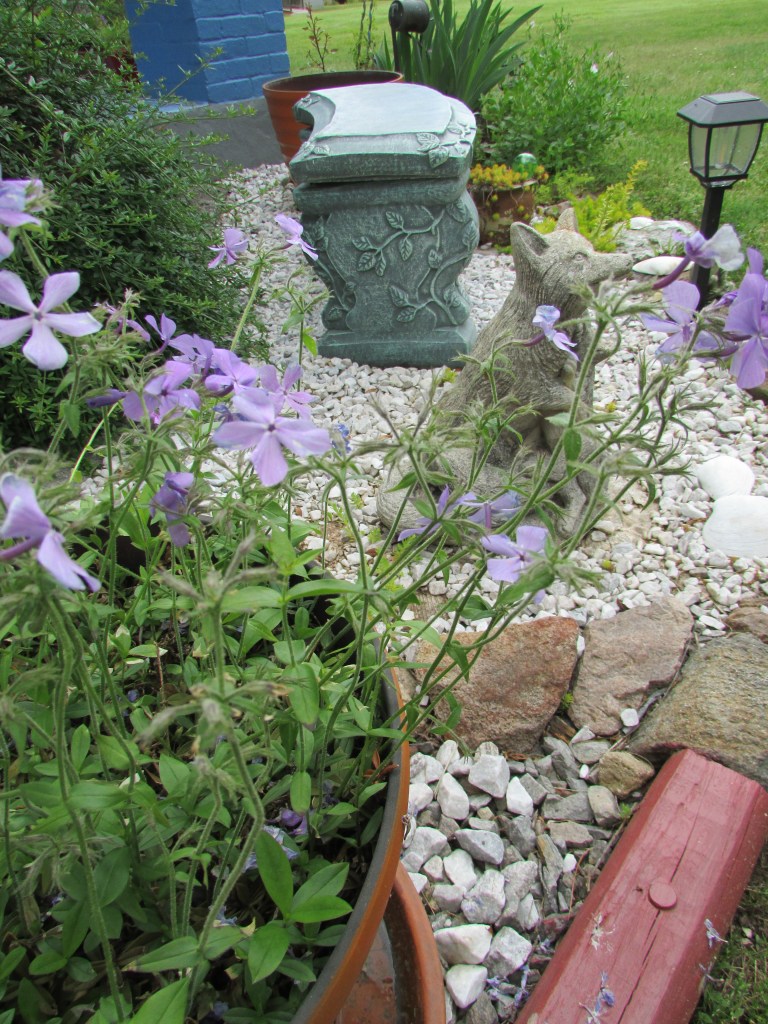
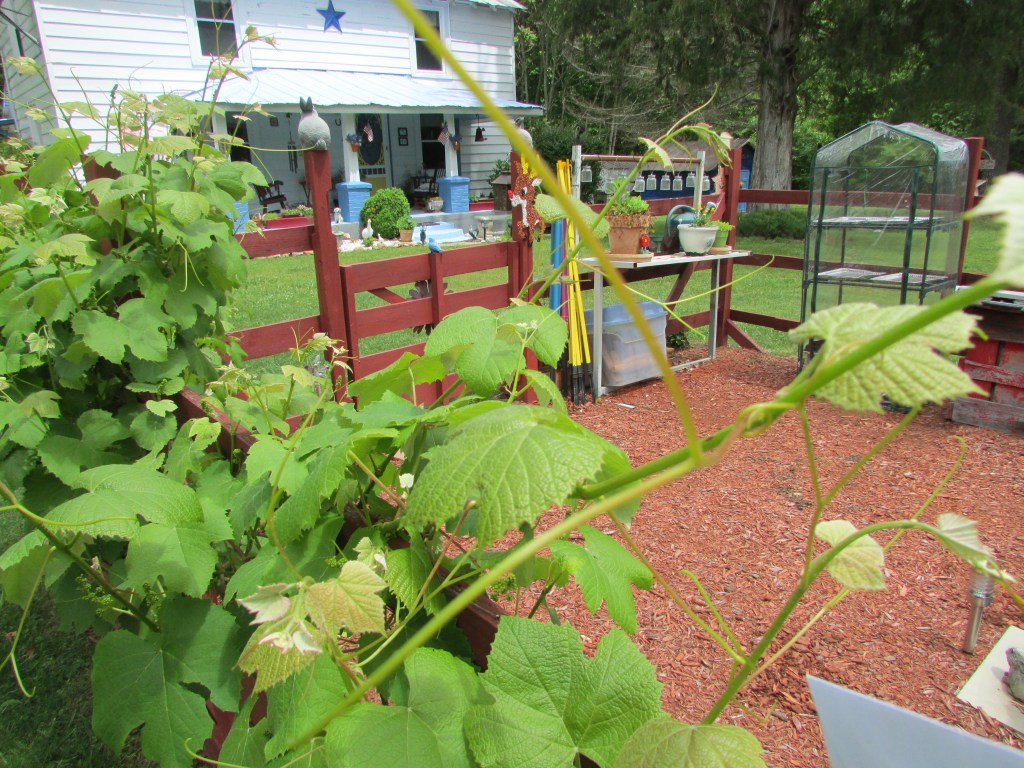
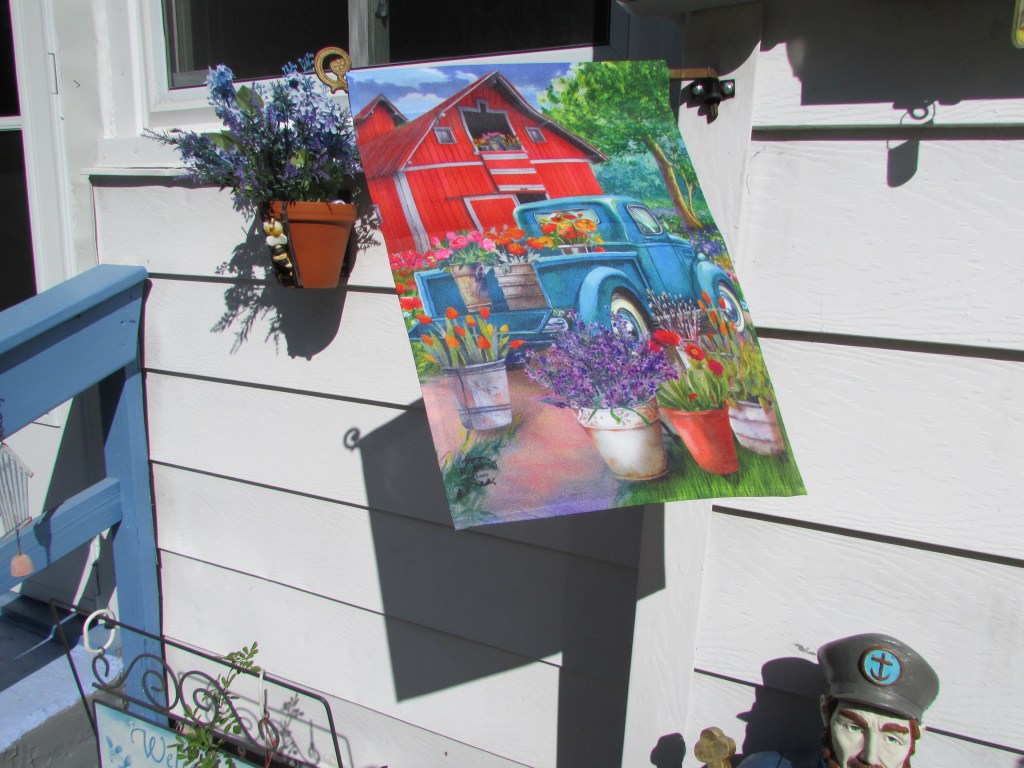
This time of the year is perfect for working outdoors because it is not too cold and not warm yet. It is when we try to do as much as we can before the warm weather and bugs arrive. The weather has been good enough, even during winter. This gave us enough time to tackle some chores that needed to be done. We enjoy this type of work, so when it is done during cool weather, we like it even more. Most of it was repainting all the areas that needed to be redone, such as light posts, porch posts, veggie garden, old planting pots that needed some love, garden tables, and the wood around the house. We are sticking with the color Barn Red by Minwax, a semi stain, and we love it. One coat is just enough. We replaced the wood on the work bench and repainted it, spruced up the side door, and weeded out some broken things. We also introduced a new area in the garden, which will need some further development. Tired flags were changed, grass was cut, and leaves were collected once more after the very windy days we had. Overall, most of the heavy work is done by now, but we still have some things to tackle before the summer. We are also planning other projects before the end of this year, some of which I will share here.

New garden area that needs more work. This year we introduced three new areas in the garden.

We have come a long way.

In the beginning … there was chaos everywhere.
You can view the renovation of the old farmhouse and garden under Restoring an Old Farmhouse posts.
I see you.

A Writer Evolves with the Characters

I am writing this blogpost from the point of view of the evolution of the writer as opposed to how a character evolves in the story. Throughout the story all characters evolve, change, as experiences and challenges are introduced by the writer. The interaction of the characters and the different situations the god-pen writes for them makes this evolution possible. Where there is no change there is no story, it comes naturally. In a series, this process is more evident and so much more engrained in a character, not only because of the many situations a character goes throughout a series, but also because there is the fictional pass of time. Most likely, the character is very different from the first book until the end of the series. This is also where the writer’s evolution takes place.

From that first concept of a character until the end of a story or series, the writer has been learning, feeling, and even listening to the needs of the characters. Sometimes, a character will fight a writer’s pen, and the writer’s best decision for this character will entail listening to it, and analyzing the particular issues that are present. At that moment, not only the writer has changed, but the original intention as well. As characters mature and go along in the story, so does the view and “feeling” the writer has of them and for them. A writer that doesn’t “feel” a character has not listened to it. A stubborn pen is worse than a stubborn character.

At the end of a story/series, a relationship, a connection has been attained but also, there has been a mutual understanding, a symbiotic evolution.

Preparing the Garden for Spring

It turned out to be a mostly mild winter after all, with a few very cold days and nights in between. We even hit six degrees at night once. This week will be random temperatures of all kinds, with some 20s at night. But that is March around here in Virginia; it is the unpredictable month. Winter temperatures started early, and I thought that we would have a very cold winter; not so. The birds have been arriving again, in February, a sign of an early spring, I thought; not so. We had a bit of snow last week, just when we were expecting rain, and so far, the only time it snowed around here. March is hard to predict as far as gardening projects.

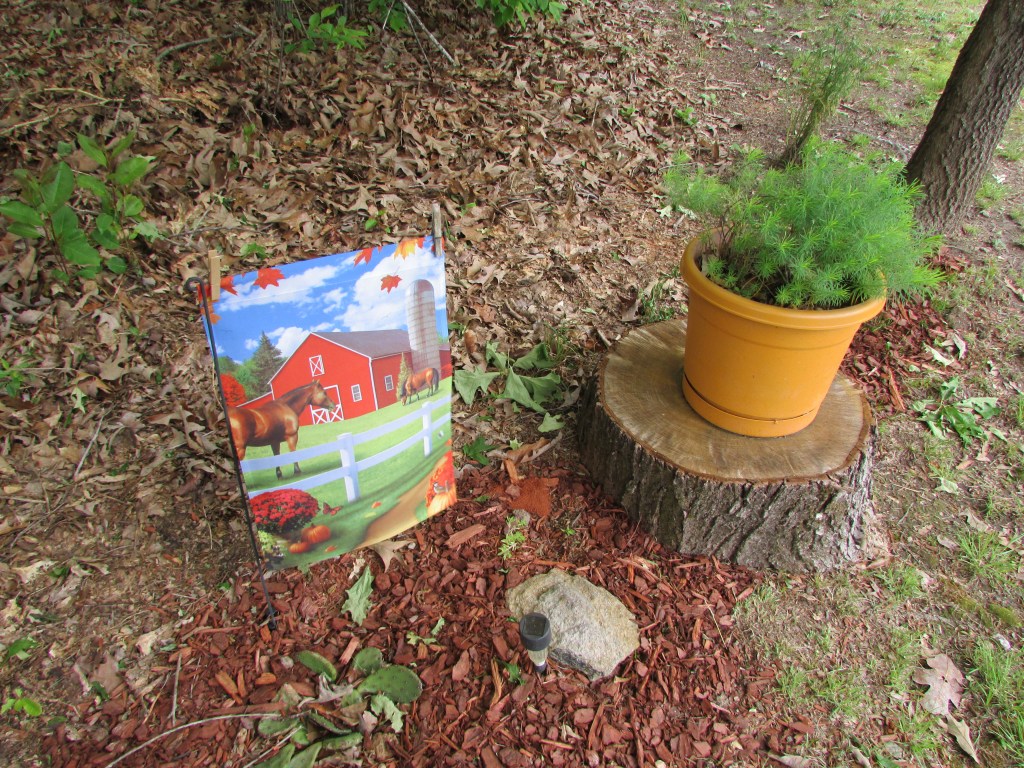
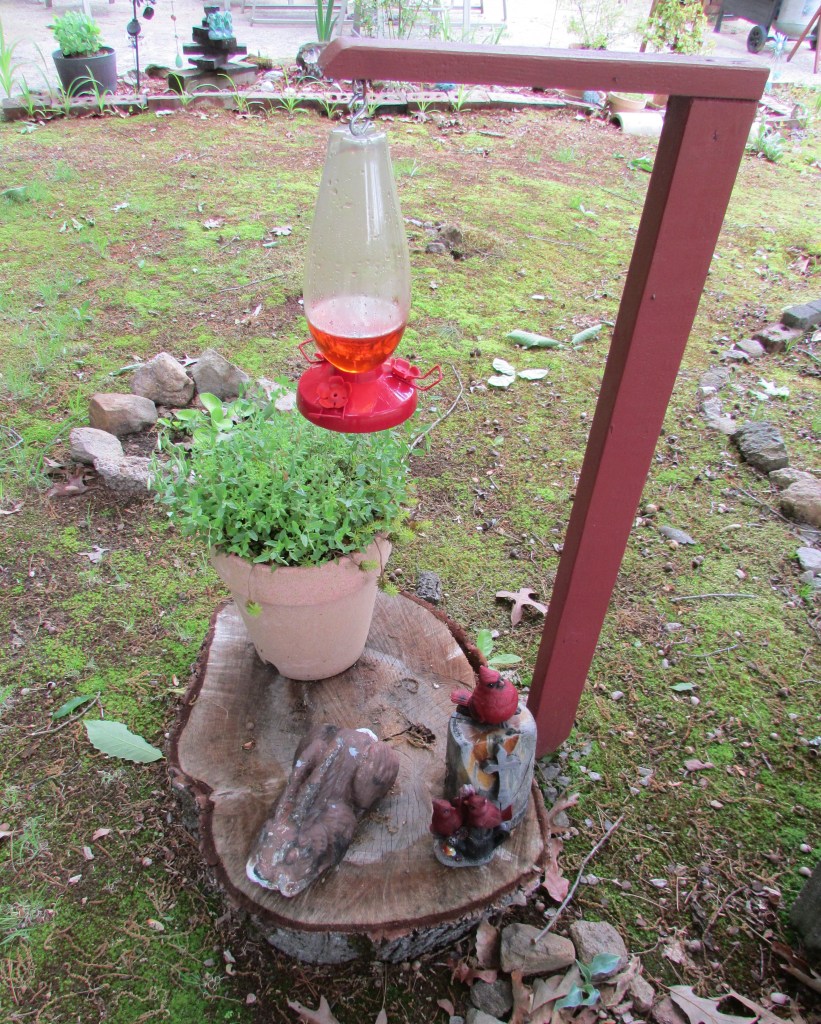
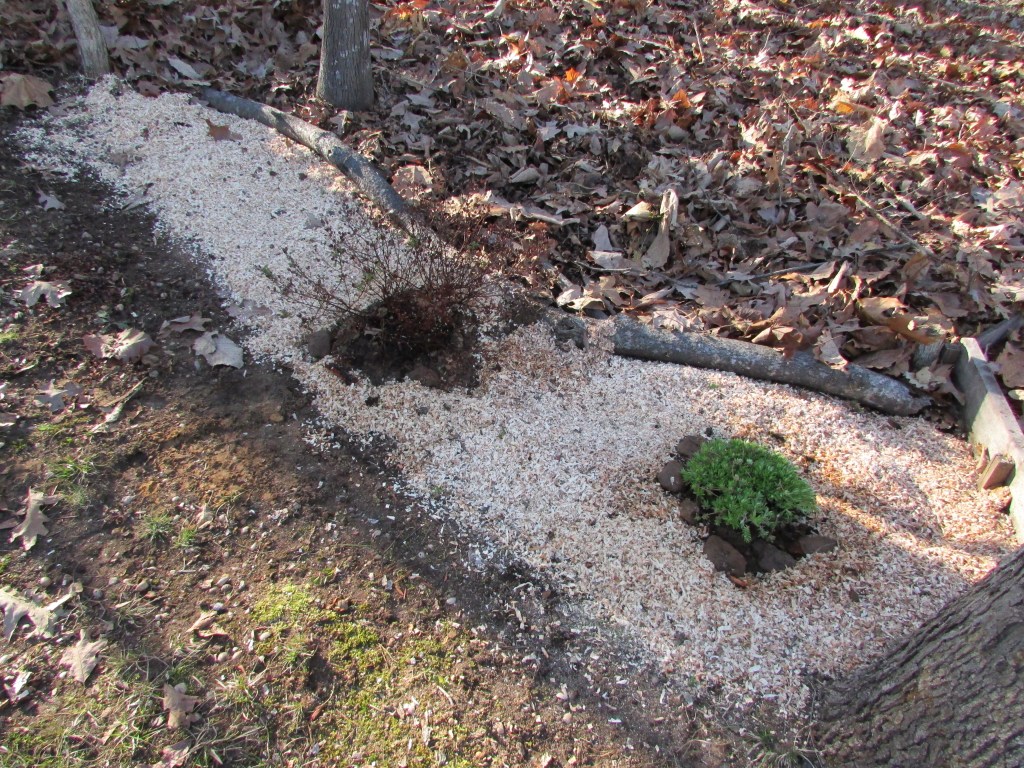
Thanks to the mild weather in December through February, we were able to tackle many projects around the home. Most of them were cleaning up, setting up areas, clearing brush, and overall getting things ready for the planting and gardening season. Most of the dead trees were chopped, and all the wood that was put out for people to take and use for heating is gone. Most people prepare a season ahead, so wood is always in demand. Most of the wood was oak and maple, with other species in between. All of it appreciated for sure. I am glad that the large tree near the kitchen entrance was able to keep on giving, and that it lived beyond in many ways: as wood for heating people’s homes, as garden decor here at the farmhouse, and as mulch for new gardening areas. I loved that tree and hated to have to cut it, but it was a liability at this point. I am happy that the tree lived beyond and nothing of it got wasted. We left the enormous stump and have decorative plans for it. Here are a few pictures of the work we did during this mild season.

Round slices of the tree being used in the garden.
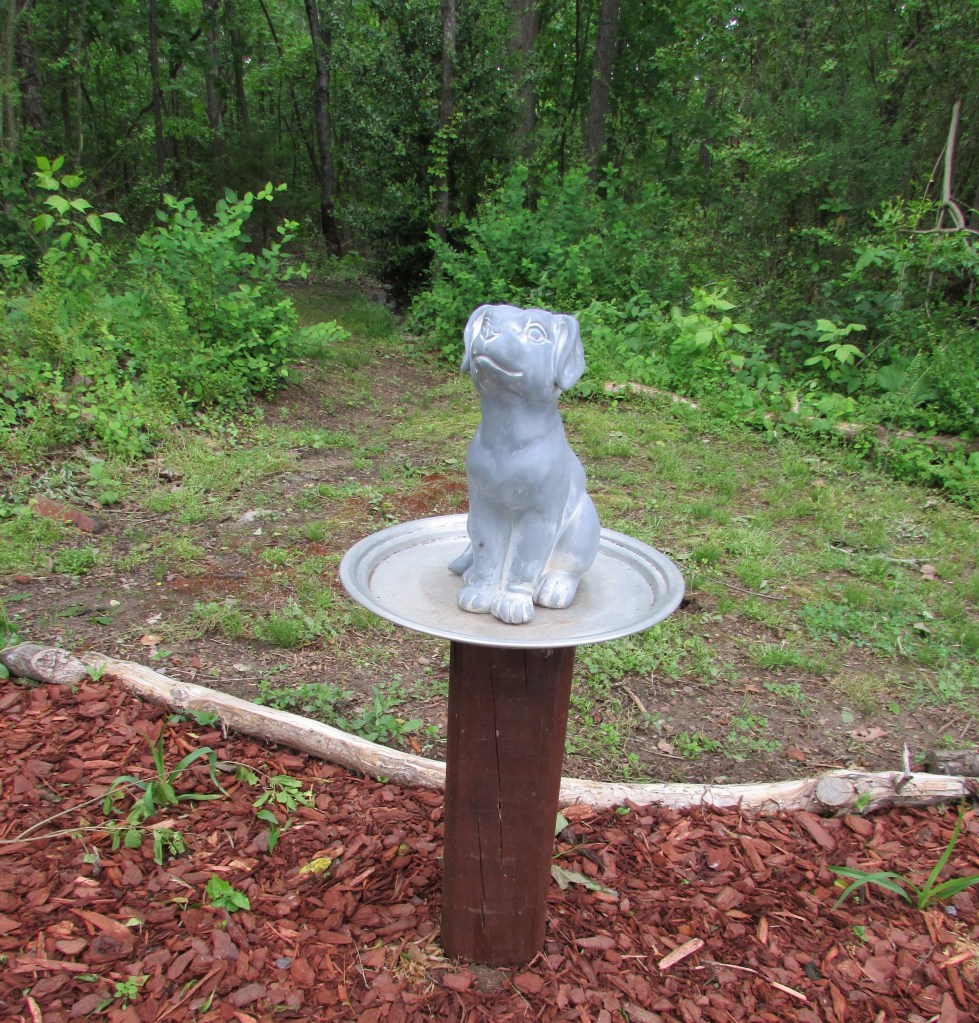
The small trails were cleared of the leaves that covered them. We use the larger logs that have fallen to delineate the pathways. We are not finished making the trails because it is a large project and time consuming.
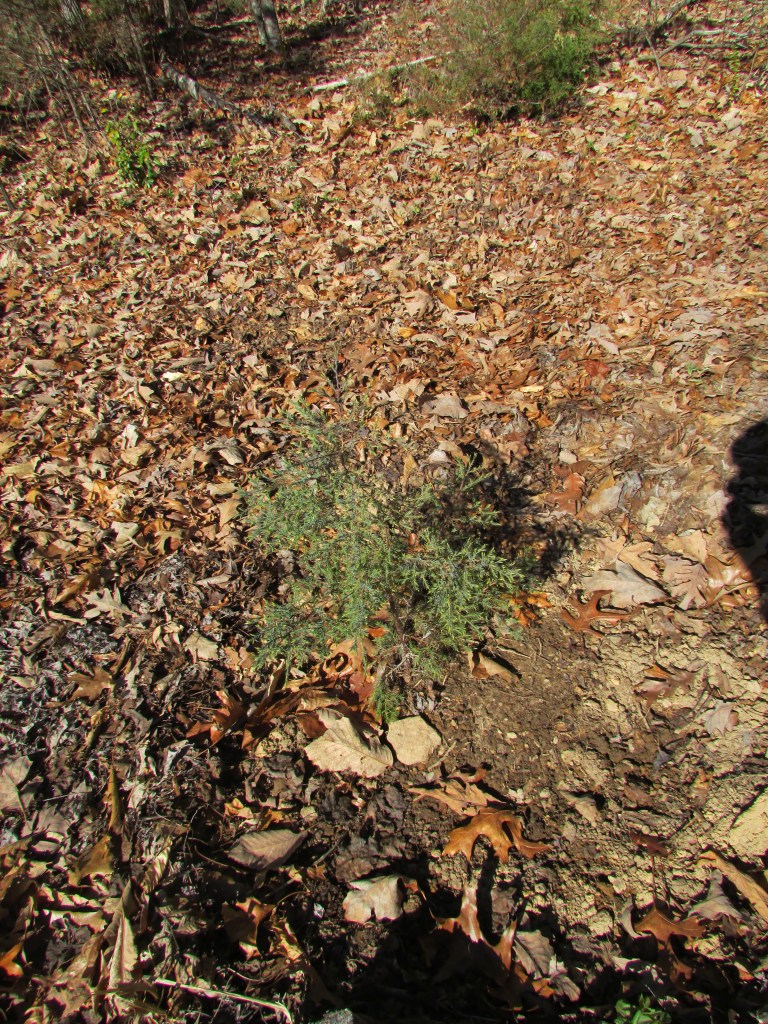
Every time I find a small cedar growing in an area where it should not, I place it in a pot and grow it until it reaches at least one foot, and then, I plant it in the perimeter of the wooded area. Eventually, these cedars will grow, and it will look lovely. This particular one was about an inch when I found it.
The bit of snow we got this winter, so far.
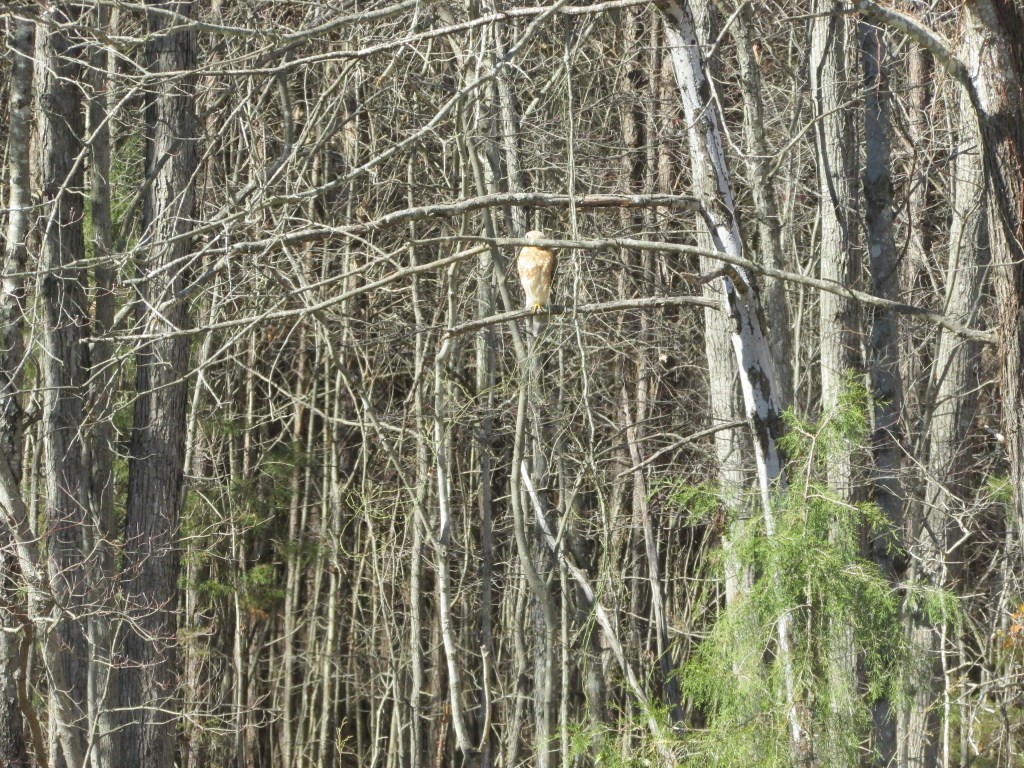
Find the bird.

There are many other chores to do around here, weather permitting that is. All due in time. Hope you enjoy this post.