After ten years of Japanese Lady Beetles invasions, I should be used to these, kind of cute, little critters; cute in small numbers that is, but not so cute when in the thousands and all at once. It is the one thing that makes me cringe at the thought of Autumn arriving. For a week or two, depending on the weather, and starting by the second or third week in October, waves of thousands of lady bugs look-alike critters fly to take refuge in buildings before the cold season arrives. This year, they arrived later than expected, two weeks ago, due to the on and off weather patterns we had. We had a week and a half of arrivals, starting in the hundreds and increasing in numbers to the thousands in several waves. The critters attempt to take refuge inside homes or wherever they can. Most of them die upon arrival but many survive. During these waves, I cannot go outdoors because they will land on top of me and crawl all over. Imagine hundreds of lady beetles landing on you at once; it is just like a horror movie, seriously. My husband knows this well after attempting to step outside during a heavy wave of Japanese Lady Beetles. After all this time, I decided to write a post about them, now that we know each other better.
The Japanese Lady Bettle looks like a ladybug, except that they make its appearance in numbers in the fall season, and the ladybugs usually appear during spring. Its color varies from light orange to reddish, some are black, or variegated black and orange, and they have black spots all over. Their head is more elongated than the head of a ladybug. They have the mark of an M or a W behind the head. They are a bit larger than the ladybug; however, I see them in all sizes, from tiny to larger ones. They were introduced to the USA for agricultural purposes, as they are beneficial by eating pests that damage crops. Soon, they became invasive, and now, they multiply in large numbers. However, if you don’t mind their arrival and your house is well sealed, it should not be a huge problem, as they do not harm people or pets. I have learned to time their arrival during the day, usually after ten in the morning and ending around six thirty in the evening, so I know when I can do my errands before they arrive, and during the one or two weeks they arrive. After that time, I do not see them outdoors. The JLB is also called Asian Lady Beetle, and its scientific name is Harmonia Axyridis. They seem to like light color buildings, which I know is true because my neighbor’s home is painted a pale green and they hardly land on her house, but mine, a white farmhouse, becomes a landing haven. My theory is that the pale green becomes like grass or trees on their vision field and they bypass it. They seem to dislike dark colors as well.
When these critters arrive, they emit a distinctive light scent; it is pheromones that attract others and guide them to where they are to land and winter. I am susceptible to this scent, and it triggers my asthma, so I have learned to be ready and on top as far as my meds are. These pheromones are left where they land to signal other lady beetles, “Hey, come over; the party is here.” After a couple of years of JLB invasions, I started noticing two intertwined circles all over the home siding. One day, I saw a lady beetle leaving the distinctive mark, which always looks the same. It is the pheromone-scented invitation for other lady beetles to find. Here is a picture of two different markings, one at the window siding and another at the side entrance storm door glass. I took the pictures this morning, and because the temperature dropped to the twenties last night, the glass is foggy, but you can see the two circles.
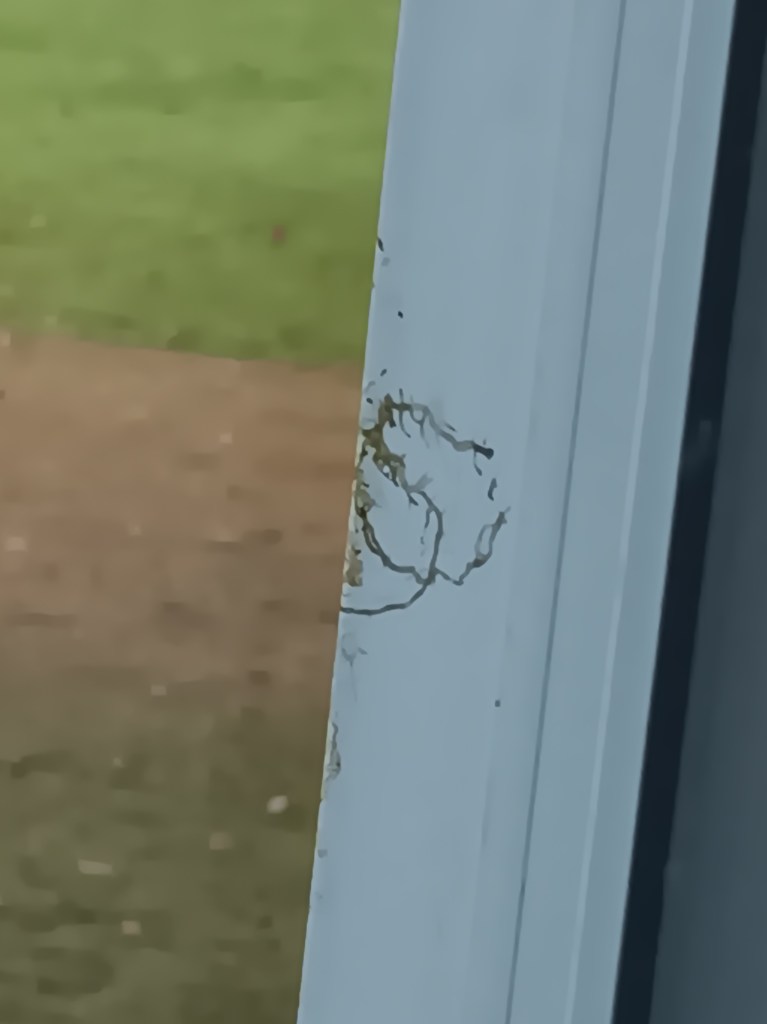

It took me a while to realize that these were love letters. I find this fact so interesting. By now, I think their arrival is complete, and if there are a few stragglers, they will arrive at the first warm day we have before winter sets. After ten years living in the area, I don’t think I will ever get used to these critters and certainly will never step a foot outside when they are arriving, but I have learned to understand their life cycle and have been amazed on a few occasions by their survival skills. If anything, I have learned to accept their very short presence and nuance because I live in an agricultural area. I hope I inspired you to learn a bit more about these lady bugs look-alikes.














 Inkspeare