A Dreamer

I dream more books that I can write. I am a dreamer in every sense of the word. Today I wrote the last chapter of Sunrise Souls, the end of the trilogy – The Dinorah Chronicles. It took longer than anticipated, moving the December 2014 deadline to March 2015, and going past that deadline to the last week of April, today. This is the first draft, and now the hard work starts – rewriting, editing, and going through several drafts until it is ready for publication. I am very happy, and the last chapters have been written while I am going through excruciating lower back pain, taking breaks here and there, as the chair feels like a torture device, and my bed turned into a nail bed. Hey, it is all good.

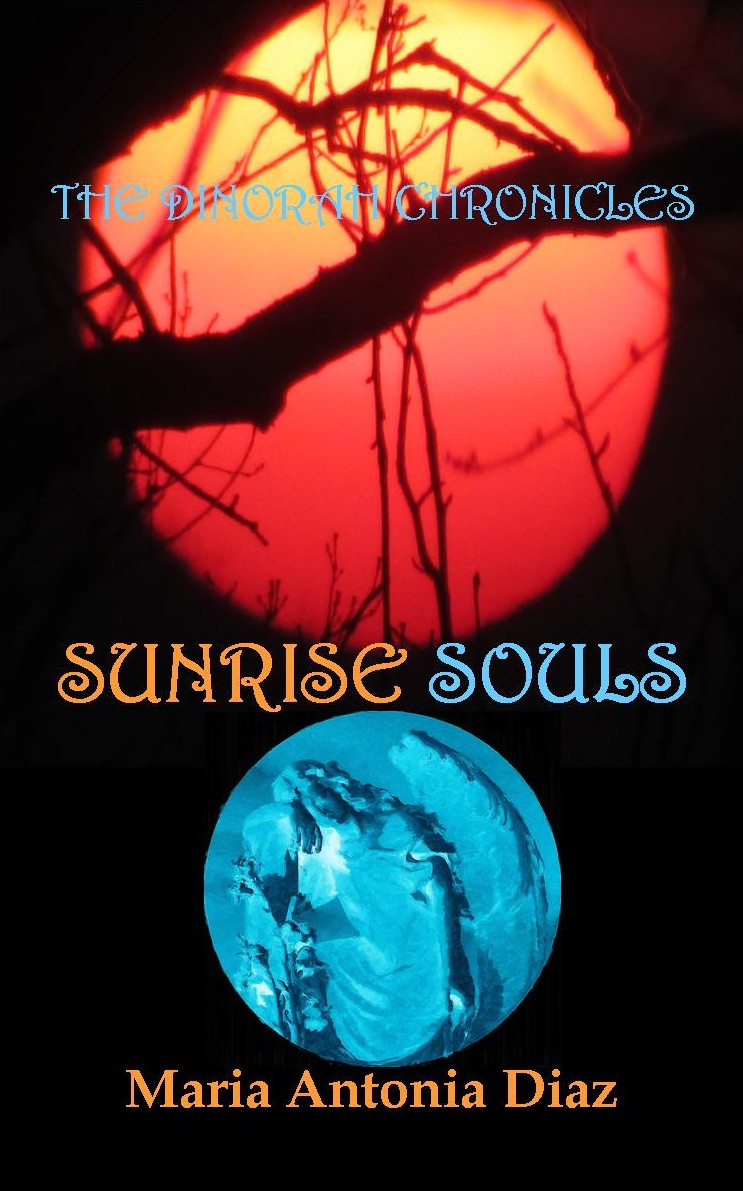
The cover has been finalized, and I even ordered promo cards. Originally, I had a deadline of May 2015 for publication, pending for now, of course, due the amount of work that needs to be done. The experience of writing the last book in the trilogy was a bit different. I felt the pressure of the ending, as I became more critical of my writing. In addition, my health was challenged last year, my mood declined, and it added to the anxiety of meeting my expectations. Thinking of every roadblock I encountered, I don’t think that I performed too badly, as far as having the first draft ready today. I am grateful for that.

My next novel is waiting for me, and I think that I’ll put trilogies aside for a while. I have several novels waiting to be written, but I am letting the one that speaks louder to me become my next project. It is a process that I’ve learned to recognize as it filters to mind during my day, and captures my thoughts in the evening, sometimes making its way into my dreams. It demands to be written, thus muting the voice of the other possible novels.

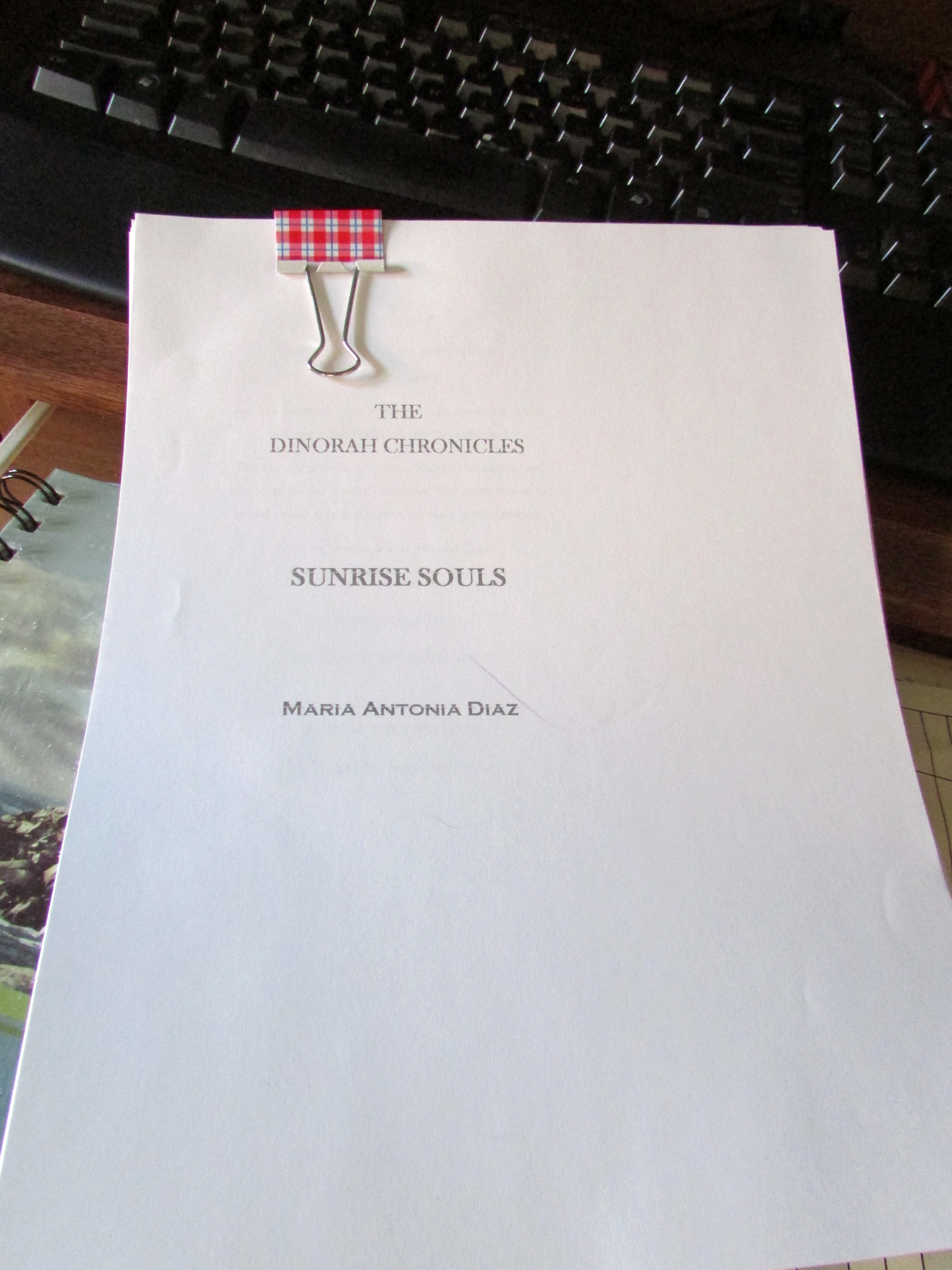
I’ll share my progress here, and for now, here is a lovely picture of the first draft of Sunrise Souls.

SUNRISE SOULS

First draft – Sunrise Souls. Photo by M.A.D.


Earth Soul – a Poem

Just wrote this poem. Happy Earth Day!


Earth Soul


Fragile as glass

The mighty rock

Jasmine of the Universe

Spec of my soul.


If one day, departed my soul

I’d searched the heavens

Looking for home

Diamond in blue, heavenly song.

I Cannot Predict the Future – My Best is Yet to Come

I CANNOT PREDICT THE FUTURE – MY BEST IS YET TO COME.

This post is on attitude. If you can predict the future with one hundred percent accuracy, please do not keep reading.

I tend to ponder my future, and my future as a writer. Writing makes me happy. However, creativity needs nourishment, and many times, this nourishment comes in the form of results. If you are a writer, you know exactly what I mean. You also know that writing is not easy, and takes much work, effort, and faith. Sometimes, you might feel as if you are writing just for yourself, but results come in many forms – the comment of a reader, a good review, the praise of an unlikely reader, sales … you name it. That doesn’t necessarily translate into confidence and the assurance that one’s work is worthy of being in print. Again I tell you, if you are a writer, you know what I mean.

A few months ago, I dared ask a question to someone who has read my books (and is not related to me or a close friend – hence why I asked). I asked,”From 1 to 5, what do you rate my work so far, me as a writer?” She thought about it, and I became nervous because there were other clients at ear-distance in her office. Silently, I cursed myself for asking; now I was not sure if I could take her answer, because I knew that she would answer truthfully. A few seconds went by, then she looked at me in the eye and said, “Four, I give you a 4.” Immediately, a weight lifted from my heart, and I exhale relief. I said, “Four, that is good, very good.” If she had rated a 5, then I would have been disappointed, and suspicious. I know that there is ample room for becoming the best writer I can be, and I have to grow much more, hence why I was hoping for any number under 5, but at the same time, nervous about anything under. Reviews of one’s books are one thing, and subjective to the taste of readers, but my question went above a specific novel, and this is why I hesitated after I asked. It was the first time I had ask anyone this, and probably the last.

The other day I was conversing with my nephew, a sage for his young age. We talked about life from one’s age perspective. It was a good conversation, and later on it made me ponder about my future, and my future as a writer, as well as some plans and goals, but overall, I thought about my image of a writer’s life, and how it compared to the image of writer-self, now and in the future. It was an interesting exercise that gave me deep insight and exposed me. In the end, it didn’t matter much to me, except knowing that I cannot predict the future, and my best is yet to come, but only if I keep giving my best NOW.

When Indie Publishing is Not For You

Thanks to the way technology has developed in the last few years, and the companies that made use of it to broaden the publishing arena, independent publishing is now more effective and affordable. Writers who are serious about their work and are in it for the long run have embraced independent (indie) publishing with excitement and gratefulness. Other people have jumped in looking to make a quick buck, soon to discover that it is not possible or easy, and have left the arena. Many use indie publishing as a way to “be discovered” by the traditional industry in the hopes of obtaining a contract. Some authors who have published via traditional channels have decided to join in and publish independently, while others may consider the movement a heresy. Exciting times for writers, no doubt about it. However, choosing you path to publishing is a very important and personal issue and you must inform yourself, weigh both sides of the industry, and do what is right for you according to your standards – working style, time, work ethics, and future goals; money has little to do with it in the beginning, and a lot later on. The same reason why the traditional industry has not embraced it, and is a bit nervous. Royalties – the forbidden word.

As promising as it sounds, indie publishing is not for the faint of heart; independent authors who have published way before technology reached this capacity know this well. They are the unseen precursors, the ghosts behind the curtain. Many so-called overnight successes have worked at the craft for 15 years or more. Others have been rejected by traditional publishing a lifetime, for not writing what the publishing industry was looking for at the time. These last group found their readers by publishing independently, after many years of rejection and hard work; these too, are called overnight successes.

When is indie publishing wrong for you? It requires a very personal answer, but in general, if you are not willing to work hard, be patient, and grow with the industry as it continues to develop (this is just the beginning) indie publishing might not suit you. In addition, if you are looking for quick money, crave instant recognition, and are not willing to learn, then indie publishing might not be for you. If you feel strongly about pursuing your writing career via the traditional publishing guidelines, independent publishing is not for you. If you are not willing to work long solitary hours at your desk, educate yourself and observe the trends, while working hard to present a decent product to your readers thus honoring their time with the best book you can write, then, indie publishing is definitely not for you.

Writer’s Predicament – WWTT?

WWTT?What would they think?

At one point in our writing we will ask ourselves that question. It comes from the concern that readers will associate what is written with our personality and think that we are it. Some readers will, some will not. That is a chance that the writer will have to weigh, and decide. I think that the work speaks of the writer, however, it does not define him/her.

As writers we decide how far we want to go with our writing, and how true to it we want to be. As an example – If I am writing a murder scene, you bet that I am going to be as descriptive and gross as I can be with the pen to capture the scene and translate it into a visual picture to readers. If I am writing about the killer, I will want to get as deep into his/her psychological persona as I can, to give the character life. Does that make me a psycho or a murderer? I don’t think so. Then, why do we hesitate to write? Out of concern – WWTT?  It is the predicament that stops the pen, the mind, the Muse.

Fiction writers have the “peace of mind” (do they?) that readers will take their works as fiction, but sometimes interpretation goes beyond, and the lines become a bit blurred, not so much for the author but for the readers. A latest example of this is the book Fifty Shades of Grey by E L James. A fiction novel that stirred so much controversy and continues to do so with its movie incarnation. I have not read the book but you would have to live under a rock not to know what is going on with it, that is, if you are an active reader or movie lover. J K Rowling had to deal with the witchcraft criticism of her Harry Potter series, and I am sure that you can think of many other examples.

In the end, a writer decides how far to go with the pen, and how important WWTT is to him/her. To be or not to be, that is the question – Shakespeare.


How to Tame a Multi-Creative Spirit

TameChanged from natural wilderness to a manageable state. (American Heritage Dictionary)


The above definition will serve the tone of this post. As creatives we have an abundance of inspiration flowing, and many times, this same flow overwhelms our creative spirit. A person who seems to have many talents, or ways in which this flow of inspiration is expressed may find it difficult to focus on one talent, thus making it challenging to grow or develop a talent further. A multi-creative spirit may find itself in creative chaos at a particular moment becoming a bit confused as where to focus the intention to create. A writer may feel the need to pursue painting or photography, or any other artistic interest, pulling himself/herself away from the writing career that he/she is following. Many times, this burst of creative passion leads to doubt as to what path to follow. A person may be talented in many areas, however as human beings we live within the constrictions of a material world ruled by time and space, making it difficult to create as much as we wish to, and leaving us in creative exhaustion, spreading ourselves too thin, and eventually opening a door to frustration. So, what is a multi-creative spirit to do?

Focus seems to be the answer. Whether you are great at writing or painting or many more creative venues is not the issue here, but how to manage your creative state in a way that leaves you feeling outside of creative chaos, more fulfilled, and with a clear vision. It is fine to love all your talents and feel equally passionate about them, however one of them will need to be placed first in your fulfillment scale. Prioritizing next the rest of your passions. You may want to dedicate more time developing and growing as a writer, while enjoying your painting as a hobby or as a secondary source of income or fulfillment and not necessarily tied to your income, to present an example. This will take the pressure of the need to be “great” at every talent or perform 100 percent in all, at all times. It brings to mind the adage, “Jack of all trades, master of none.”

As we live, we evolve, and so do our interests and passions. Wanting to excel in all our creative passions/interests might feel natural; however, when we learn to tame our multi-creative spirit it might lead to a better use of our talents, less frustration, and peace of mind, thus a more relaxed state of being that becomes fertile ground for inspiration to flow without the natural constraints that we put on it. In the end, it may work to our advantage and facilitate a state of creativity that leads to mindful fulfillment and nourishing of the creator in us. In this way we respect our gifts, as well as our creative self, and ultimately, the Creator and Giver of it all.

Selecting a Genre

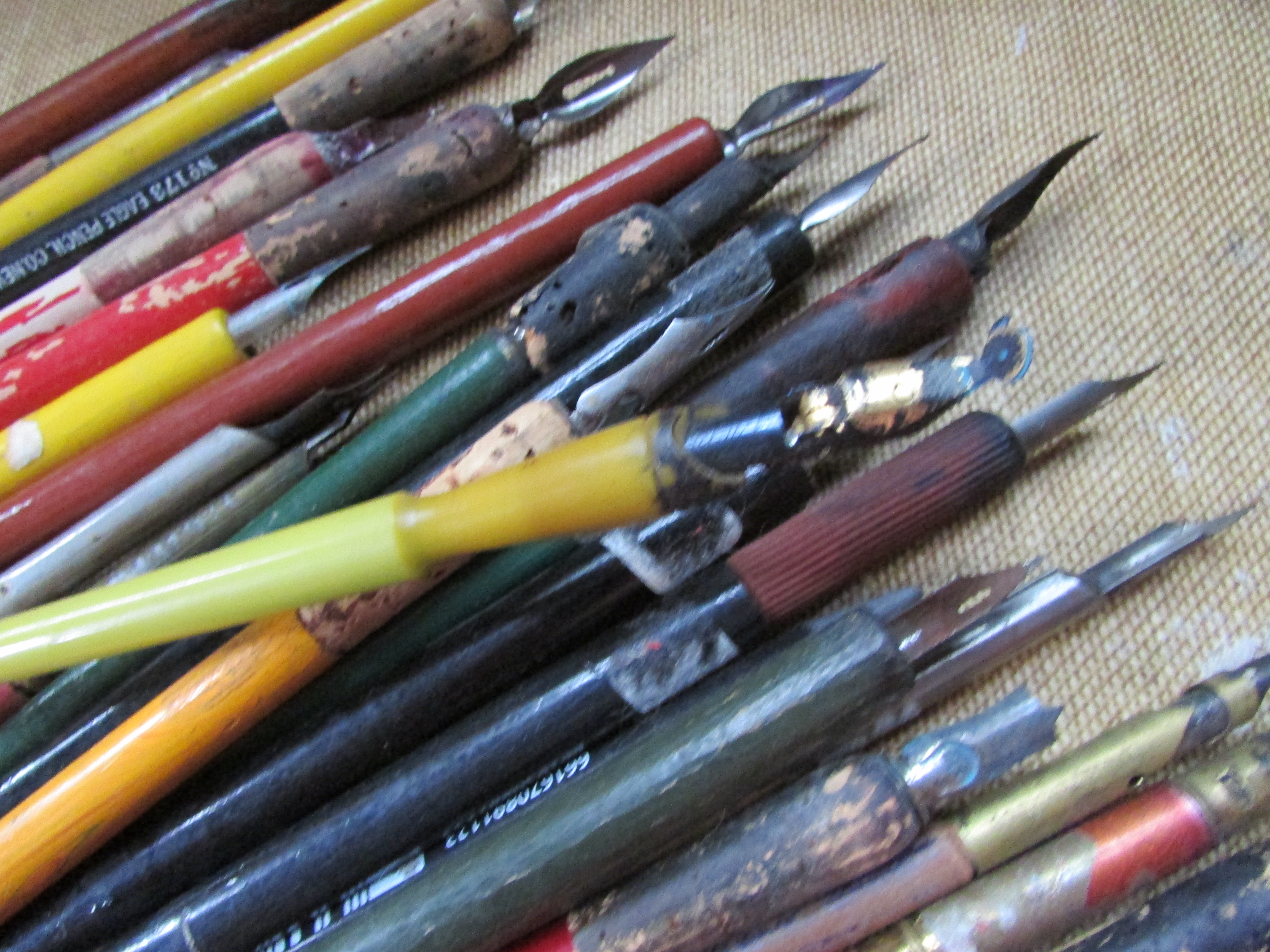
Photo by Maria Diaz

Photo by Maria Diaz


This is probably one of the battles of the heart for many writers. Mostly, because when we write, many ideas come to mind, and many of these cross the limits of the actual work in progress. My belief is that I do not want to chain myself to writing in a specific genre, but I recognize the need to focus on the one that speaks to me the most, at least in the beginning of my writing career. Doing this has its benefits. It will help you concentrate, grow, and polish your skills, as well as develop a name brand.

There is always one genre that attracts our interest in the early days of writing. Later on, we want to spread our wings and soar to other lands. If you are publishing in the traditional way or have a contract, this will present a challenge for obvious reasons. If you have built your brand long enough that a particular genre speaks of it, it also presents a challenge, as readers will tend to associate your brand with the genre, and this is the reason many authors use pen names when writing in other genres. For the independent author, the lines are less defined, as the pen is free to write without the need to follow protocol, except the one owed to readers. If readers expectations demand from you the work that they so much have loved, then a brand has been established, but it does not mean that an author will abandon the desire to explore other genres, and create, possibly at a different pace, works that will please other readers, and maybe, win the interest of faithful readers.

In the long run, write what you love, do it from the heart, and share it in a way that it is presented to readers in the best light, and worthy of their time and respect.


Respecting Your Craft

Each one of us has a journey, and as we walk the path, we give of ourselves, inspire others, take what is given to us, celebrate, and we share our talents. We work hard at a craft that we identify as our talent, our calling – that thing that makes the heart flutter with delight and anxiety at the same time, and gives us joy. Whether for you it is writing, or something else, how you treat your craft will determine how far in your journey you will go with that particular talent. It starts by respecting your craft.

Respecting your craft is personal; you decide how hard you work at it, and the priority you assign as well. You decide to block time in your busy schedule, and to respect that time as an appointment with your talent (or Muse). You decide how far you let others interfere, how much to share, and your level or degree of dedication. You deprecate your craft when critics belittle, or you stand up straight, dust off the venom spores, and keep the focus. You crumble in defeat, or you realize that it is just another step in the long journey, and after all, every soul is on a journey, and as you learn to respect your craft, so will you learn to respect another’s journey – understanding and vision come from doing, and living. Respect your craft. “Do unto others as you would have others do unto you.”- Matthew 7:12

In Retrospect

As the end of the year approaches it is natural to look back and contemplate all the things that we could have done better, and those that were accomplished, but usually, as human nature dictates, we focus on the first. As writers, many times we are hard on ourselves for not producing more, faster, even when we have dedicated an entire year to the craft. It is as if madness had taken over our souls, that is, the madness of the pen, and for a while the only thing that may count, absorbing all our energy and persona. Is it madness of the soul or of the mind? Maybe a bit of both, maybe none. Maybe of the heart. And we dare to follow our heart where it will take us because we are writers, and mad at it.

Well, for me this year has been a bit of a surprise in many areas but one thing that is a constant is my love for the story. I am still working on trying to meet the deadline for Sunrise Souls, however insane that may seem.

One thing I learned over the past year is that inspiration listens to mood, and mood to no one, however I control my mood – allow the mood in understanding – to regain inspiration. Many times, we take inspiration for granted, and it lets us know that it lives in us but we must give it life. It doesn’t flutter around like the Muse we call it, or resides outside ourselves, in another realm – no, it is a part of us, one that is to be summoned by will and faith, and even by desire, one that must be respected and encouraged, and dignify. When we respect ourselves, our work, our surroundings, we are summoning inspiration, our Muse of all sorts, and with it Creativity and audacity. Writing is not for the faint of heart or spirit; in it many souls have gone mad or desolate, but also in it others have grown wings to other realities, paths to other worlds, the solace of the word, inkblood to the soul, inkspear to the heart, and freedom to the mind, but overall essence of the soul.

I will continue to try to meet my goal this year, and await the next with joyful anticipation of good things to come, although these have always been in the now. I wish you all a happy and healthy Holiday Season, and beyond, and a very Merry Christmas to those who celebrate it. May you inspire this new year.

Love,

Inkspeare

Indie Resources

Since I took the path of becoming an indie author, a priority has been to learn more of the evolving and growing movement. From time to time, I come across material that in my opinion, every independent author should read, as it may be very beneficial. I came across two important books that I am reading now, and a third that I am planning to read next. I could not pass on the opportunity to mention them here, hoping that any indie authors out there that need this information will benefit. These have been written by people who have walk the path and done the job, as well as independent authors, entrepreneurs. Here they are,

  • Business for Authors – How to be an author entrepreneur – Joanna Penn

Joanna Penn is a very successful independent author and entrepreneur, and one of the leading figures of the movement.

A book about the subject of intellectual property,

  • How to Use Eye-catching Images Without Paying a Fortune or a Lawyer – Helen Sedwick

Helen Sedwick is a California attorney and independent author who represents small businesses and entrepreneurs.

Another book by Helen Sedwick on my “to own” list is Self-publishers Legal Handbook. 

If you have embraced becoming an indie author for the long run, I advice you to start your own learning library, as I am doing. The more you know the better, and knowledge will enhance your journey, and hopefully, will make it fruitful.