About Creativity and Appreciation

Creativity – Characterized by originality and expressiveness; imaginative (American Heritage Dictionary)

Appreciation – Recognition of the quality, value, significance, or magnitude of people and things.  (American Heritage Dictionary)

Looking at those definitions, one can see the close relation between the two words.  When we create something, whatever that may be, we put ourselves into that project; we give much effort, and there is a sense of pride in the very depth of our artistic soul.  Many times, we are so proud of our work that we want to share it with the world, or with friends and family – many times, there is no feedback, many times, it seems as if no one is listening.  There is no appreciation.

And that takes us to the definition of appreciation and why a bit of appreciation goes a long way.  Artists/writers are emotional and very creative people, whether they show it on the outside or not.  Lack of feedback or appreciation can weaken the artist’s spirit.  It may seem as if a vortex has swallowed his/her precious efforts and no one seems to notice.  What’s worse is that the artist/writer identifies with his/her work so deeply that lack of appreciation translates into lack of esteem/love/appreciation towards the artist-persona, or the human behind the work or piece of art.  Therefore, we as writers/artists tend to suffer when our work is ignored, not recognize or praised, and we may fall into artistic self-pity or worst, depression and lack of motivation, which can only lead to artist or writer’s block and the false belief that “we are just not good enough.”

Next time you are feeling so low in relation to your art or writing, think of why you are feeling that way.  It may be that you are lacking a bit of appreciation from the ones who matter most, or even from yourself.  If others fail to verbalize appreciation for your work (many times this is the form of appreciation that we pay close attention to or notice the most), then look at the image in the mirror, smile, and know that whom you see is capable of much, much more, and has an eternal creative spirit that wants to keep going.

Spotlight? No, thanks.

English: American author Stephenie Meyer at th...

English: American author Stephenie Meyer at the Twilight premiere. November 2008. (Photo credit: Wikipedia)

What prompted this post was an old vampire movie that I was watching last night.  These days, when I think of vampires, Stephenie Meyer comes to mind, and Dracula of course.  Then, I thought of how her quiet life became a frenzy of writing one book after another, short deadlines, one movie after another, many interviews, galas, tons of huge book signings, all marketable Twilight paraphernalia … and so on.  The more I thought about it, the more I agreed with my inner self that I wouldn’t want to be in those shoes.  Why?  It seems so exhilarating and who doesn’t love the spotlight?

The answer is me, and I am sure that there are some writers who love their quiet lives and privacy, and would not like the type of success that brings all that frenzy with it.  I am not anti-social, I like it quiet, and I love my privacy.  I love to give when no one is looking – that is my overall style.  Where is Stephenie Meyer today?  Probably very busy with new projects and the current ones, as well as dealing with the comet’s tail left behind.  God bless her, as it takes a lot of energy and patience to handle that kind of spotlight.

When I visualize a writing career, I see writing, readers, a strong sincere commitment to the readers, and more writing, and more writing, and more writing.  Somehow, I wouldn’t want to include galas, craziness, and tons of attention into my writing dreams.  Given that what happened to Stephenie Meyer is not the usual way things develop, and at such speed, however, she is a good example of what I wouldn’t want to experience in my future as a writer (and of course, I also want to make a living at doing what I love – the bills have to be paid).

Have you visualized your writing career?  Are you published and experiencing it?  How do you visualize your spotlight?  At the flip of a switch or as a growing light with a dimmer?  Which style suits you better – smashing Boom success a la Meyer or rhythmic success a la Coelho?  Would you write for the love of it and for that one reader who has to read your book, or for fame?  Do you write because you love the craft or with a future dollar sign/spotlight on the back of your mind (meaning becoming famous).

The answer to these questions will help you figure out what you want from your writing career and your internal level of comfort.  Feel free to share your point of view.

Celebrate the Good Fortune and Success of thy Brother

Rainbow and Flowers

Rainbow and Flowers (Photo credit: Wikipedia)

I don’t understand it when I happen to come across negative and plain disrespectful comments (not real reviews) about a new published book (or art work), whether from an old or new author.  What puzzles me is that many times, these comments don’t seem to help in any way the writer or artist who made the comment.  On the contrary, I think that this negativity hurts the writer/artist and paints an aura of insecurity or jealousy around the writer/artist.  This could end up hurting the artist who might end up loosing many readers/fans for these reasons,

  • They may already enjoy the works of the author/artist who’s being criticized.
  • They may not like to entertain any kind of negativity or bashing and are ready to cut off the source of it.
  • They believe that in this world, there is plenty for everybody and that celebrating the success of another does not take away from your own.
  • They may enjoy variety in the books they read or the artwork they love.
  • They believe that this world is made of all kinds and everyone has something to offer and contribute to it, even when they don’t necessarily like the piece.
  • They believe that if everyone acted in the same way and liked the same things and were mere copies of each other, this would be a very boring world.
  • They believe that a step towards belittling someone or someone’s work is a step backwards and does not help personal and professional development/growth.
  • They believe that there is a better way to say what they think without hurting the feelings of a fellow artist/writer.
  • They believe that acting in a negative and bashful way towards a fellow artist/writer might be interpreted as desperation, frustration, or jealousy.
  • They believe that by celebrating the success of others, they attract good karma and bounty to themselves.
  • They believe in these mantras – What comes around goes around.  You reap what you sow.   It is a small world.  Be kind to the people on your way up, because they are the same people you will meet on your way down.  The wheels are turning.  Keep the faith.  You never know who will open the next door for you, or who is ready to close it on your face.  When words are not better than silence, it is best to not pronounce them.  Live and let live.
  • They believe that they are a tiny spec on this world, but an important part of it.
  • They believe that times change and that “times” are subject to the people who live on “those times.”
  • They believe that their art/craft is not about them, but about the ones who will find it and benefit – even if only one person.
  • They believe in themselves, and that is enough to celebrate another.

Keep it clean, keep it positive, keep it happy!

Maneki Neko at Last!

I have admire Maneki Neko cats for a very long time.  The first time I spotted one at a Chinese restaurant, I was mesmerized by it and it stole my heart.  Since then, I kept noticing them at businesses but I didn’t know the meaning.  I saw them in many colors and textures, left or right paw up, sometimes both paws, but the basic figure was always the same, a colorful happy cat with one or two lifted paws as if saying hello.  Many years later, still enchanted by these lucky cats, I broke down and got my first Maneki Neko (actually it was this past week – it took me 25 years to get one, finally).

Maneki Neko’s – the Beckoning Cat – origin is Japanese and it represents good luck, protection, prosperity, and good fortune.  To own one is to wish that to yourself and to all who enter your home and business – this is why they are so common in Asian businesses and homes.  Since I want this vibe for me and all who enter my home, I decided that admiring the Maneki Neko from afar was not good enough, and I brought one into my home.  There are several stories about the origin of the Maneki Neko, and there is a temple which relates to one of those stories.  This temple is visited by tourists and locals – it is called Gotokuji Temple.  I read about it on this blog which is dedicated to Maneki Nekos – http://luckymanekineko.wordpress.com/2011/04/13/the-road-to-gotokuji/

Here you will find more information, pictures of different types of Maneki Nekos and the legends surrounding this cat.

Here is a picture of my Maneki Neko, which I have not named yet.

I am not responsible if you, as I was, become enchanted by it.

The Miracle of Senses

The pentagram is used as a Christian symbol fo...

The pentagram is used as a Christian symbol for the five senses, and if the letters S, A, L, V, and S are inscribed in the points, it can be taken as a symbol of health (from Latin salus). (Photo credit: Wikipedia)

As I have said before, sometimes I get so focused on a task that I forget everything around me; I block everything else, and many times I forget that I was just making pancakes for breakfast or that I had just put a load of laundry and heard the bell a minute ago.  All I can say is thank God for all my senses.  The smell of starting to toast pancakes or the too quiet house will alert me and bring me back.  The gentle nag of a cat that wants a temptation treat has brought me back from the extreme focus vortex just in time.  This brings me to the topic of appealing to reader’s senses in your writing.

Just as it is important to me to get rescued by my senses, I thought of how important sensory stimulation is on a novel or a piece of writing.  Awakening readers senses gives a new depth to your story, and may rescue some readers from boredom – boredom of too much dialog or description.  Even if you are deprived of one sense, another takes over, keener and improved.  I try to keep this is mind when writing my story, as I tend to run into too much dialog.   To me, the senses are a miracle; it is how we experience the world, and how readers can experience your story.

Sometimes, I tend to ask myself the weirdest questions, and I have asked myself if I was to be deprived of a sense or ability, which one will I give up.  I know, it may sound sinister to many, but I think about unusual things sometimes.  I would give up speech.  I don’t  talk much; I am the silent type, the observer, and I rather write than talk.  As long as I can communicate when I need to in some way, I think I would be happy.  I am a very visual person, and that would be the sense that I would miss the most, probably to the point of insanity, which brings me to this point – readers are very different in their consumption of reading material and learning, so the senses that prevail throughout your story may appeal to some readers more than to others.  My point, striving for a good balance might not be a bad idea.

Do you think about stimulating the senses when writing your story?  Which sense would you give up?  Which one would you miss the most?  If you are missing a sense, how have you improved the other senses?


Use a Mirror to Manage Writer’s Block

Hot air balloon water reflection Quebec

Image via Wikipedia

At one point or another, you may feel as if you cannot write or as if the story is not flowing quite the way it is supposed to flow.  You may think that you have been plagued by writer’s block (or artist’s block) and when you try to work on your novel or art, you cannot go back to it, as if something prevents you from it.  I have been there and what I found out was that it was not so much of a writer’s block, but more of a conflict with a particular part of the story.  It may be a character, beliefs, philosophy, or even a particular scene.  Somehow, you have an internal reaction or “a problem” with it.  It may be that you do not agree with something that you happen to be writing, but know that you have to write, whether it is to keep the story going, or by mere inspiration.  When you feel that you are stuck with the story, take a break and ponder about the last thing you wrote.  Take notice of how you feel about it, and if an internal bell rings.  This is a sign that you have something to work on (on yourself) before proceeding ahead with the story.  The way I see it (and this is only by my experience with this) is that you either,

  • acknowledge it and ignore it, meaning that you know the bug is there but you will ignore it and keep writing; however, it will come back along the way, impeding total free flow of your writing.
  • take a short break, acknowledge it, ponder it, and make peace with it.  I find that just because I may not agree with something in my story, that does not mean that I am selling out my beliefs.  In the case of an internal conflict that one of your characters or scenes brings up, acknowledge it, try to find the link between your conflict and the story, understand it and move on.

The main thing here is that by recognizing that there is an internal conflict you are looking in a mirror, and therefore, are starting to open the flow of your writing once more.  The mere act of looking at that reflection in the mirror is going to help unblock your writing.  At least for me, it works that way.

Hope this tip is of any help.

When Misery Loves Company

Finger pointing

Image via Wikipedia

We have heard this line many times – “Misery loves company.”  It is a very damaging way to live by.  Why?  When we sulk in our misery and surround ourselves with people who feel the same way, we are becoming victims of whatever situation it is that we sulk about and prolong.  Some people may even live a lifetime this way.  They have become victims and most likely, blame another for their misfortune.

I wholehearted believe that I cannot blame anyone for whatever happens in my life, because ultimately, I make the decisions, whether these are decisions that I make or think I have to make, but is not what I would like to do – in any case, I always decide, like it or not; therefore, there is no assigning blame.  When I fully understood this truth, I became free.  I saw that no matter the circumstances, I chose and that meant accepting responsibility for those decisions – positive and negative.

When we say ” it is ______ (fill the blank) fault, we are closing the door to growth.  Only by understanding that you are responsible for every path taken, and letting go of blame, there can be growth.  For some people, this is difficult to accept and they don’t want to be reminded of it.  If you do, they will find something wrong with you to be able to refute this truth, whether it is your lack of experience in certain area or life situation or something else.  For them, this is ground for invalidation of what you have to say.  Many times, that same “lack” is what helps you be neutral and understand many points of view.  Keep playing the same misery song and you will keep dancing the same misery dance.  If you don’t change the tunes, don’t expect your feet to move at a different rhythm.  That is what I say.

The artist/writer is many times, misunderstood and labeled.  Many artists/writers know that there is a price to pay when they chose to welcome creativity and change in their lives, specially when others don’t understand their art or path.  They may be accused of daydreaming, having unrealistic expectations, not working, being too emotional … and many other things, tons of other things.  If you find yourself wanting your dream very much and on the path to make it real, to survive this you must avoid becoming discouraged by what others may or may not think of you and you must work your dream against the odds.  Most important, don’t invite company to celebrate misery, because misery loves company, and growth will stop.

When to Mind your Fabulous Business and Shut Up.

Duality of Mind

Image via Wikipedia

This morning, as I scanned the FB comments, I stopped at one made by Paolo Coelho – “What other people think of you is none of your business.”  I thought, excellent words of wisdom, but not easy to follow them.  The truth is that doing that is really very difficult because it goes against our human nature.  As a social species, we want to be liked by others,  and we love to be accepted and celebrated by others.  We want to share our wisdom with others, wether blogging, writing a book, talking to family or friends, thru a painting exposition …  We want to achieve but we also want those achievements to be recognized.  We do mind what other people think and say of us, and maybe we give too much importance on what others think of us.  That is why I thought that those words were such an epiphany – “What other people think of you is none of your business.”

If we lived that way we would be so much happier with the world around us and with the world within us.  We would be less critical of others and of ourselves.  We would spend less time worrying and sulking and more time dreaming and doing.  Ever tried to talk to someone who refutes or challenges every word that comes from your mouth – even if you are talking about laundry?  Well, I have, and let me tell you that it is the hardest thing to do, because it is impossible to have a normal conversation with that person.  This is when those words work well and instead of forcing a conversation or defending mine, I choose to mind my fabulous business and shut up, and in the way to happy land, I realize that Paolo Coelho is right – what other people think of me is none of my fabulous business.

Expanding Your Horizon

Rendition of Homer's view of the world (prior ...

Image via Wikipedia

If you are human, you have a set of beliefs.  Those beliefs form as you grow up and are highly influenced by culture, family, country … and many other things.  In a way, you identify with those beliefs, in a way, they are you, part of you.  I know people who are so set in their beliefs that refuse to explore beyond their horizon or entertain another point of view.  These people may fear that by opening their mind to receive information that may or may not contradict their belief system, they might cheat on that same system or worst, lose themselves – I pity them.  Why?  Because opening your mind to try to understand something and exploring information does not in any way diminish what you think, or believe; on the contrary, if you truly respect your beliefs, there is no need to fear new information.  What would have happened if all the explorers and scientists of the past had not stepped one foot pass their comfort zone (beliefs) and try to expand what they already knew or believed?  You answer that question, since the answer is obvious.

I used to write for a site and the community there seemed very friendly and loved commenting on each other’s work.  There was only one thing that drove me nuts, especially when I wrote a piece of poetry.  I write about many things, true or fictional, and many times, I love to imagine things poetically.  What drove me nuts?  That most times, people thought that the piece of poetry was directly related to me, as in true life.  I was too lazy to explain that it was just a piece of writing, many times fictional.

Don’t believe everything you read or are told; expand your horizon, move one step over the flat ocean’s edge and refresh your mind and spirit.  Think for yourself, believe what you must but after you consider the opposite point of view, there is no harm in that; who knows, it may even strengthen your beliefs.  As a writer, you owe it to yourself, and your readers … believe and expand your horizon.

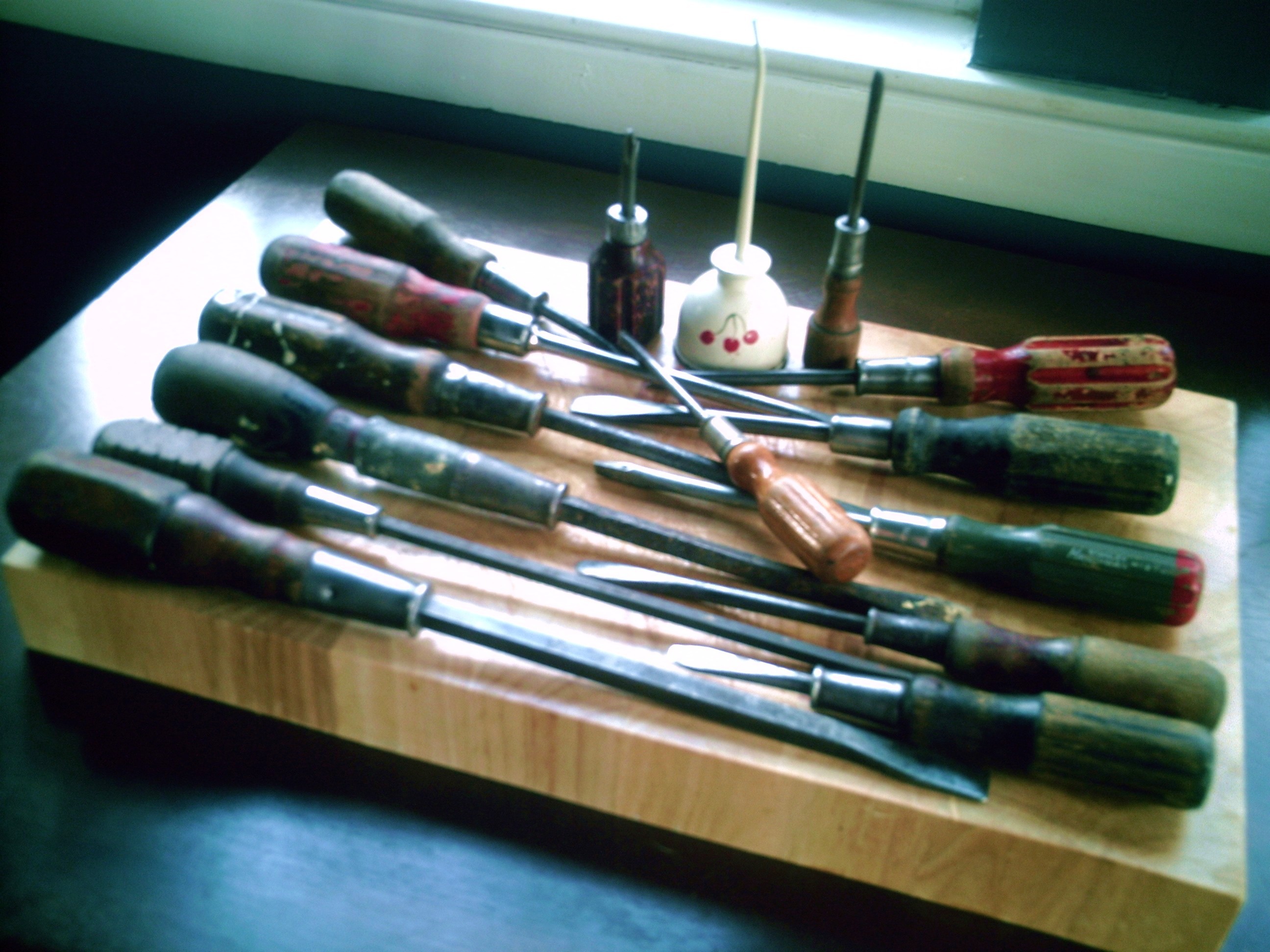
Yesteryear Craftsmanship – From Screwdrivers to Writing

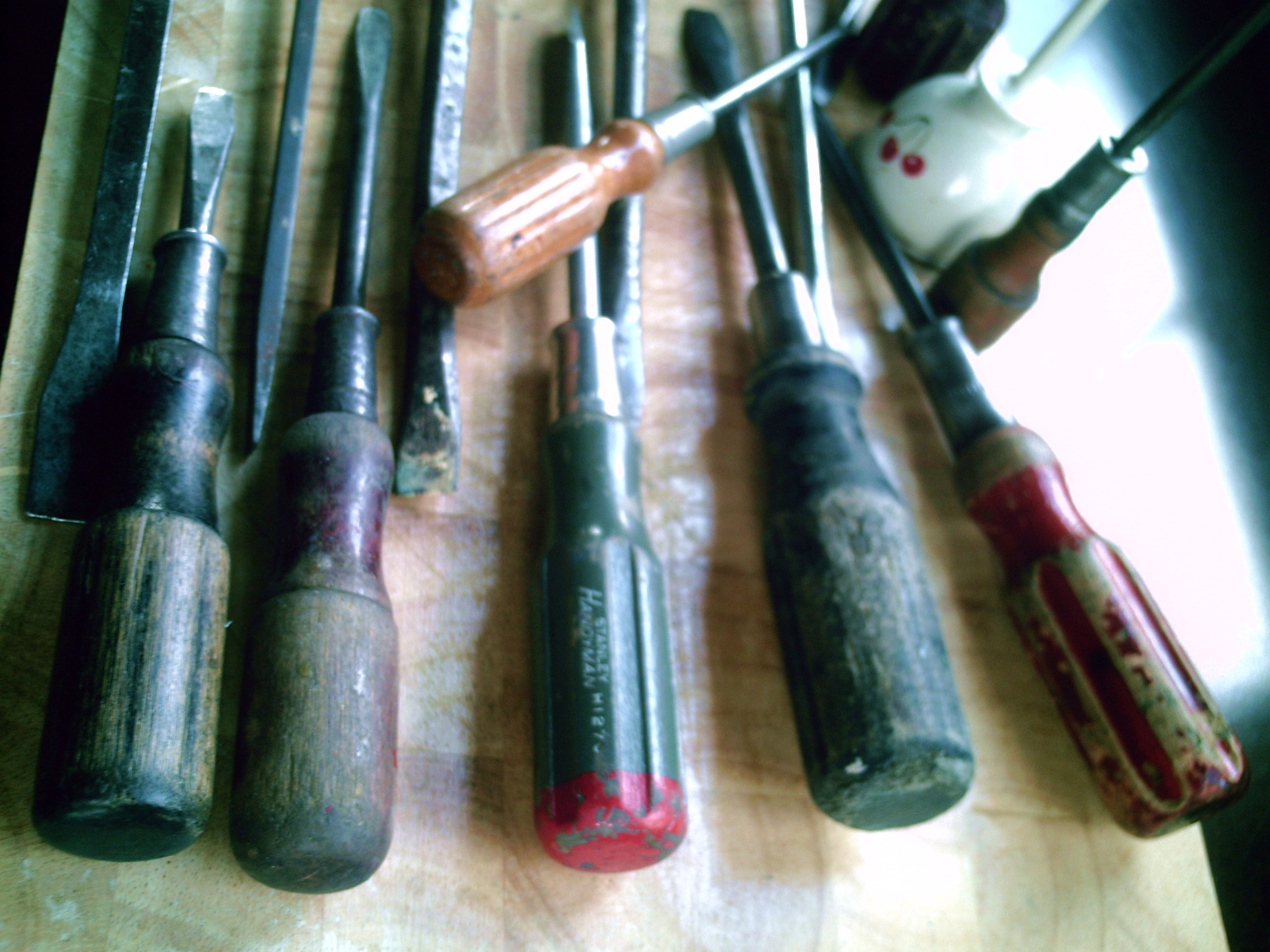
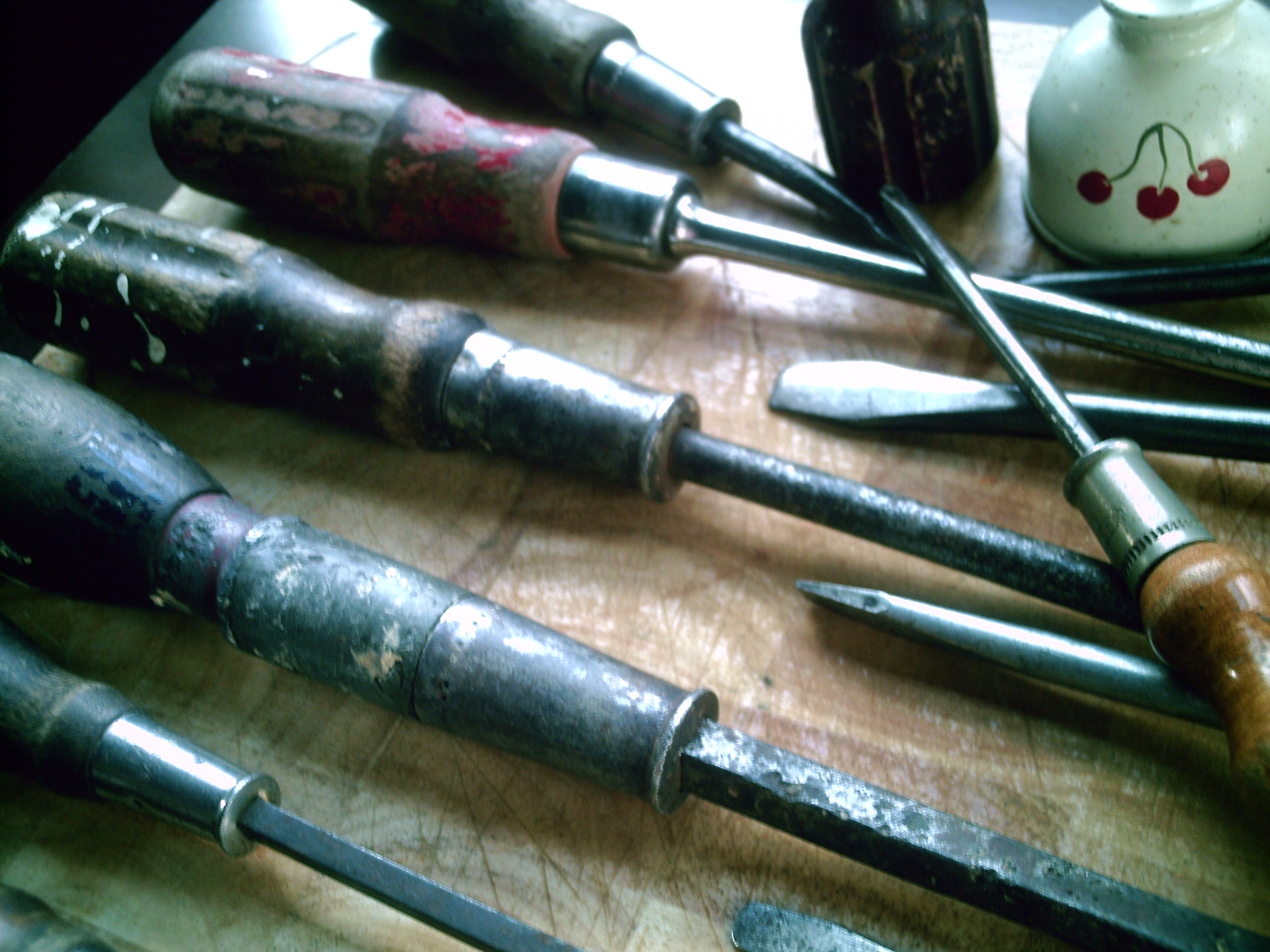
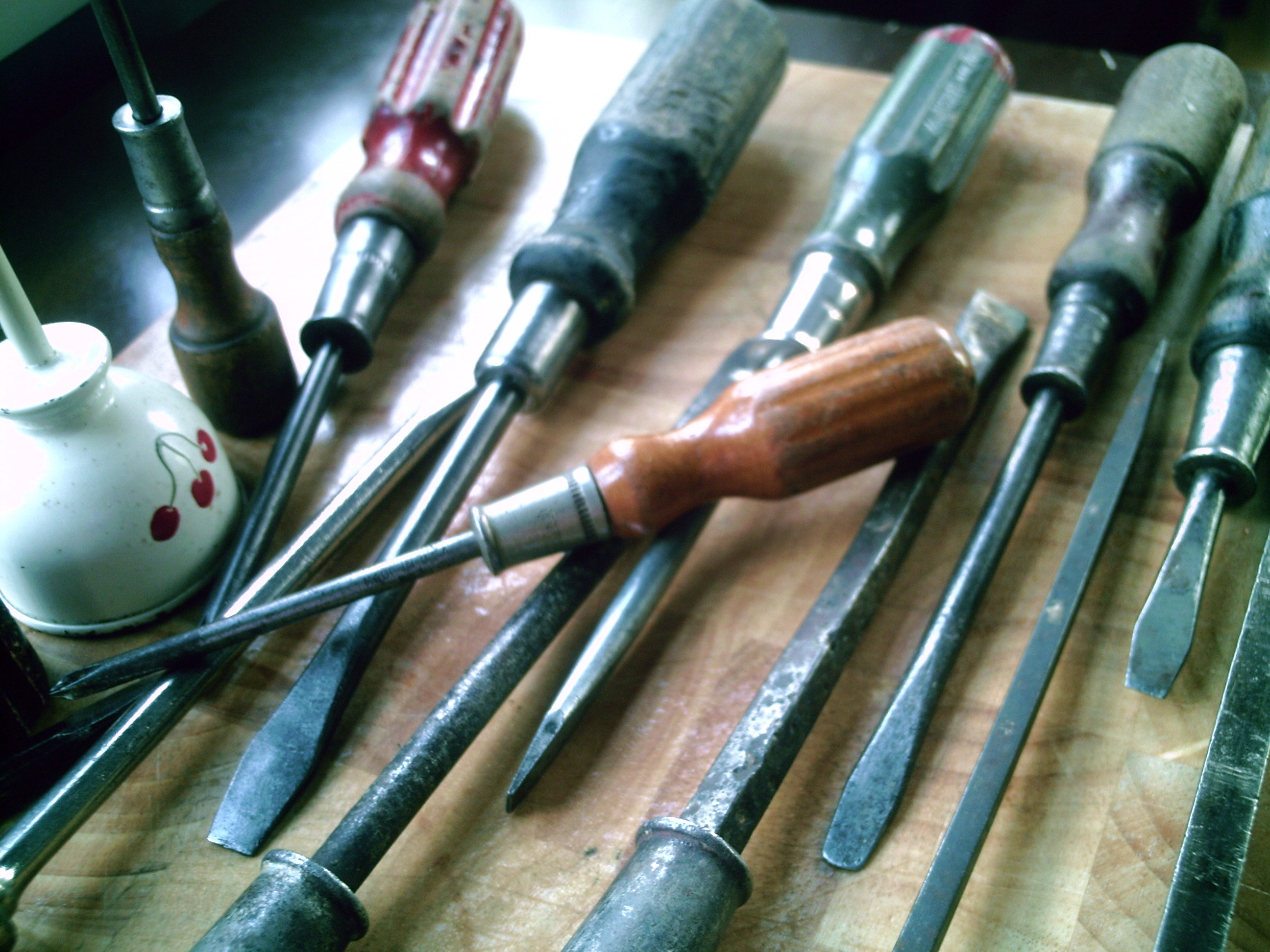
I love old tools.  I guess it comes from growing up with my grandfather who had the coolest tools and from watching him use them with pride.  He even let me handle a few, with much care of course.  There is something about vintage tools that you cannot find in the new ones; it is that attention to detail, that craftsmanship that seems to have been lost over the years.  It is that history embeded in them that is not present in the new ones – from the paint chip that tells you that someone was trying to open an old paint can long time ago with the screwdriver, to the markings on the top that tells you that someone attempted to use it as a hammer once.  You cannot read this in a new tool – it has no story to tell, at least not yet.  New technology offers great designs and materials, but somehow, it misses the soul into the piece.  I don’t know if you can understand me, but that is how I see it, when I look at those pieces and compare them to the new ones.

A few years ago, I came across an old wooden toolbox and kept it on the side, with the intention of using it one day.  As my life has taken a turn, and I am headed to a different lifestyle, I decided to continue to build my old tool collection.  Recently, I was lucky to get a set of vintage screwdrivers at a steal.  I say a steal, because for some reason, vintage tools are starting to get popular with collectors, and you cannot get your hands in a good lot.  Well, I guess my grandfather was looking after me and I was able to find and win this set.  It even has the approval of Gadget Man (my husband) who loves new tools and all kinds of crazy designs.  He is starting to appreciate them now, and he even told me that he was going to build me an old fashion tool box to accommodate my growing collection.  This is why I love him so much – he gets me, and I get him.

As writers, we can look and study old literature, but also, appreciate the new works that many talented writers are sharing these days.  It can all  blend beautifully and cohabit in peace.  There is “Soul” in writing, in the classic works as well as the new works that are born of inspiration, are well crafted, and proudly presented to the reader, not because the writer wants to run after the market to make a quick buck, but because He/she has fallen in love with the piece and wants to share it with the world.

Here are some pictures of my latest tool bounty, which I proudly share with you.

I hope you enjoyed this post.