On Writing – Common Questions

Photo by M.A.D.

For most of my life, writing and publishing seemed a dream hard to reach. Mostly because the image of most famous writers that was presented by the media to my generation was a bit intimidating and hard to reach. It was one of seclusion, selectivity, money, unwanted-wanted fame, and reserved for the few great ones. This was a different time, one without internet, social media, and writer-friendly technology. Traditional publishing ruled the roost, and the few brave independent authors who dared cross to another dimension were viewed as vane, and even rebels who could not abide and bow down to a perfectly run system that would vomit you if you were deemed not good enough, or below its standards. Many dreamers like me would not dare enter the nightmare, and the ones who became rebels of the system knew they have to pay the price, and a very expensive one it was, literally and figurative, reputation included, and with it, down the dream of being even considered for a traditional publishing contract. Independent publishing was viewed as a mortal sin. Thank God these days are different, although not without its problems. When I realized that my dream of writing could be resuscitated under a new set of rules, I didn’t think twice. It was a new dawn. However, I had many questions. Many of these questions are the same ones that aspiring writers have today, although it is much easier to find the answers now. This post is about some of those questions and how I answered them, as well as questions I’ve encountered.

I want to write, but how do I start?

The short answer to that is just do it, write, but there is so much more to that. When I thought about that question, it wasn’t as easy to answer as I thought it would be. There was so much to consider, and so much more knowledge I needed to gather. I spent nearly two years learning (while writing and transitioning) as much as I could about this new system and independent publishing, but as well about traditional publishing at the time. Many myths were alive, other were just that. I found that the most important issue was my Why. Why did I want to write? Was it just because it was a life dream resurrected or was there more to it? I knew I had to answer that question before taking the plunge. I did. My why is not relevant here, every writer will have a why. So, to answer the question, start with your why. Why do you want to write? How do you see yourself as a writer? Is it for money or a call, or something else? When did your desire/passion for writing start? What triggered it? Have you written anything in the past? Why not? Were you intimidated by misinformation? How do you view writing? As a business? As a hobby? As a career? As a calling? How do you view other writers? Would you consider becoming an independent writer (indie writer) or does traditional publishing align more with your vision? Would you consider becoming a hybrid author?

How do I publish my book?

There is much to learn about this subject, and the good news is that today there is much information on this subject online and in books written by many independent authors, as well as hybrid authors. A hybrid author is one who has published via the traditional model, but also independently. The way to answer this question is for you to educate yourself as much about the publishing industry as you can. Learn about both models, but also, about the different methods to publish your work independently, because there are many, and the cost vary widely between these, from very minimal expense to thousands of dollars. Most important, and once you study this information, is to apply what you learned when you answered question number 1 to answering these other questions about publishing. What attracts you more about each model? Which model mirrors more your work ethic? Would you consider becoming a hybrid author? Would you consider working with an agent? What is your ultimate publishing goal?

Do I have to be an avid reader to be a writer?

Most writers are. It is part of your education. You will learn different styles, voices … Develop your writing style and voice. Never try to imitate another writer. It is a disservice to you, and you would be disrespecting your craft. There is nothing wrong with admiring a best-selling author and learning from that author’s style and work; however, develop your own. Understand that it takes time to learn and grow. Most likely, the author that you admire most has been at it for decades.

Do I have to belong to book clubs or writer’s groups?

Short answer, no, and in other words, you do you (or to each its own). You know what you like and dislike, you know your personality well, and you know what ultimately educates you and fuels you. If these groups work for you and excite you, then go for it. If not, there is no sin in that. These can be a great educational tool, but it depends on your personality, preferences, and goals as a writer.

What is the process of writing and publishing a book?

First, read and learn as much as you can about the topic. Aside from the educational part of this question, it is different for every writer. Inspiration comes in many ways. Most serious writers are disciplined enough to have a schedule or method. Many writers use an outline before writing a book, other writers do not. I don’t outline, but a small outline sometimes develops on the side as I am writing. Many times, as a way of remembering important points, or as new ideas pop. There is no right or wrong way here. It also depends on what publishing model you decide better fits your working style and ethic. There are many ways of publishing a book; learn those venues and their differences. Cost ranges from minimal expense to thousands of dollars. The more you contract out the more money you spend. You can use a publishing house for independent writers, which takes care of formatting, editing, etc. or you can hire each phase yourself, from formatting, to edition, from cover to cover, all the way to publishing your book, hardcopy or electronically (eBook). Amazon is a great way to start, if in doubt, and in my opinion, one of the least expensive ways to publish a book, and still put out a decent product. They offer editing and other services as well. There is also a good amount of information on their site, as a way to educate aspiring writers, which translate in more revenue for the company, eventually. Follow the method that you prefer and one that lets you present a well-crafted quality book for your readers, one that you are proud to offer.

Who promotes my book?

You do. Whether you publish traditionally or independently, you will have to do some work to promote your book, and the venue you use is up to you, whether that is social media, blogging, related products (physical products) and promotional materials, giveaways, activities … However, when you have a team behind you, such as in traditional publishing, there are advantages to that, as well as an established name behind your book and proven methods to spread the good news. As an indie writer and publisher, you can do the job yourself or hire people to do it for you, depending on how deep your pockets are. There is also the issue of personal preferences, for example, you might not enjoy social media as much, but prefer blogging, or other methods. I have to say, although I don’t follow this, that being robustly involved in social media, having a YouTube channel, a podcast … does help in spreading the good news about your work faster and widely. It is something that I recognize as a great advantage but not necessarily follow. It all depends on what your ultimate goal is. There are three very good sources to further your education that I like, that is, if you don’t know where to start. One is Stephen King’s book On Writing, Joanna Penn’s book The Indie Author Guide, and a copy of The Writer’s Market (for traditional publishing). Joanna Penn is an independent best-selling author. Her YouTube channel and blog are a great place to start. There are more suggestions under the tab On Writing -FAQ on this blog.

Do I need to be involved in social media? How much is too much?

The short answer is yes. You should have some kind of internet presence. Times have changed, and it is part of a very fast environment and culture development. However, you should not have to feel obligated to join every social media site. If you enjoy that, by all means, the more exposure the better, but not at the expense of your writing time. I think balance is key. I only have this blog as my online platform; other authors prefer a much robust involvement in social media venues. There is an advantage to online exposure and interaction. Again, it depends on your ultimate goal. If selling as many books as you can is your goal, then you will need a well-crafted and thought-out online presence.

Will I make tons of money?

Making tons of money is the wrong reason to enter the writing world. Most writers, good or bad, do not make a high income. A better approach would be to treat “making money” as a byproduct of your love for writing; however, passion/love alone doesn’t pay the bills. At one point, you will reconsider and go back to your Why, and make a decision. You will consider your ultimate goal and adjust your plan if necessary. Many independent authors are doing very well.

What about branding and trademark?

Developing a brand is to your advantage, whether you become a traditionally publish author or an indie author. People tend to associate a name with branding. Study the books of best-selling authors, and notice common characteristics such as color, typography, mood… It is cohesive and recognizable. This is something you will develop with time, because in the beginning you are learning about yourself as an author. However, when traditionally published you will be coached and steered towards an image/brand. The experts take care of that, in a way. When you publish traditionally, you are under contract with a particular publishing house, for the duration of your contract, and both sides have legal obligations to fulfill; you are also represented by an agent. As an independent author, it is up to you to develop a brand (or not), and your work falls under copyright laws and protected by it. I advise to educate yourself on this topic.

How fast should I write a book and publish it?

Writing a book is not an easy endeavor. It takes much crafting, editing, reviewing, research, and other considerations, aside from the publishing part, which has its own challenges. You should not be in a rush but take as necessary to present a well-crafted book always, one you are proud of as an indie writer. Under traditional publishing, you are under contract and must meet the deadlines expected.

Do I have to stick to a particular genre?

There is no right or wrong answer here. I recognize the advantage of sticking to a particular genre, one you have some kind of degree of passion, but I don’t see it as a rule. The experts will tell you different. From the point of view of developing a brand and polishing your style there is definitely a strong reason to try to write in one genre. Know that the boundaries of writing go as far as the mind of the writer, and in my opinion, imagination and creativity and boundless. I don’t follow the stick to a genre rule. The answer becomes clearer as you grow in your craft.

What is the most important thing to do when trying to become a writer?

Write, but aside from developing a writing process/schedule, I think that it is educating yourself as much as you can in anything related to writing and publishing. You cannot craft a plan to follow a path without information, and knowing where you are headed. There are many books available now as well as websites, podcasts, videos, that you can utilize. Visit bestselling authors websites. Many of them offer tips for aspiring authors. Even the visual education you gain by studying their well-crafted websites is worth it.

I hope this has been helpful and that you continue to educate yourself in the craft, but most of all that you embrace your passion for writing and run with it.

Old Words Series (1)

Photo by Maria Diaz

I love to collect antique books (and writing instruments). There is some magic about these tomes. Although none of mine have great monetary value, these tomes are valuable to me. Whether for its old-fashion wisdom, their depiction of a long-gone era, rich in the culture of the time, or the way these look (material, colors, patterns used in their making …), these books are a delight for me, a gift to my senses.

While I was rereading The Royal Path of Life by T.L. Haines A.M./L.W. Yaggy M.S., it occurred to me that there were many words that we don’t see much in books today. Many of them I understood by just rereading the sentence and focusing on the context, but other words I had to look up. This aroused my curiosity, and I thought it would be a good idea to share some of these words and the meaning in a series of posts.

The Royal Path of Life was written in 1876; I own a revised edition (1884). What I love about this book besides the engraved leather binding, gilded title, and gorgeous woodcuts illustrations is the common sense and wisdom found throughout its pages which bleed of the way of living of the times. Here are five words I found interesting. Many words today are derivatives, and many of these old words are obsolete.

Sundered – to break apart or in two: separate by or as if by violence or by intervening time or space. (Merriam-Webster). Earliest known use: old English period, pre-1150. (from OED)

Cynosure – One that serves to direct or guide. A center of attraction or attention. (Merriam-Webster). Its origins are Greek, and it passed into Latin, later French, then to English. Earliest known use was in the late 1500s (OED).

Sire – Father, male ancestor, a man of rank and authority. (Merriam- Webster). From the old English pre-1150. Inherited from Germanic. Last recorded in the 1500. It is obsolete. (OED)

Sinews – I only found the word sinew, what seems to be a derivative. It means solid resilient strength, power. (Merriam-Webster). The earliest known use, early 1500. From the old English, pre-1150.

Boon – A timely benefit: blessing. Benefit favor. Favorable (archaic meaning). (Merriam-Webster). From the earliest Middle English period (1150-1500), A borrowing from the Scandinavian. (OED).

Even if we never use these words again, it is a good mental exercise, and entertaining as well. Hope you enjoy reading about these old words. Does anybody say commode anymore?

Finding My Way Back, an Update (and books and roses)

Finding my way back to my book in progress, The Girl Who Could Not Love, hasn’t been easy. I stopped. I tried. I stopped once more. I had to put it aside for some time despite wanting to continue writing it. Something was not right. It lay dormant, and eventually, I knew I had to come back to it. It has been on my mind all this time, morning, night, and in between; however, distant, but calling me. It is the book that begs to be written to a hesitant writer that has finally surrender to it. Whether to answer the call or not, is not important anymore; it is why. Why is this story haunting me? Why the fight between pen and heart? Why do I want to write this story? Why won’t the story quit? Why won’t I quit?

While reading Never Too Late (or was it Shine On? I read them back-to-back) by Claire Cook, I thought about something she mentioned. It is to ask yourself in the reinvention journey, but in her case while writing a book, what stands in the way of my protagonist? I asked that question about my novel, and my protagonist. The answer, me. I was standing in the way. So, I had to ask myself the question, and I got my deep-rooted answer. I am working on it.

In the meantime, I have been reading up a storm, some of which are these. I am currently reading It’s Rising Time by Kim Kiyosaki. I am enjoying this book very much. I like the writing style of Kim Kiyosaki; it is straight and to the point. So far, I think that this is a book that every woman should read. Next on the agenda is Life Glows On by Claire Cook. Her non-fiction books are straight from the heart and fueled by her experience, as a woman who reinvented herself.

Photo by M.A.D.
Photo by M.A.D.

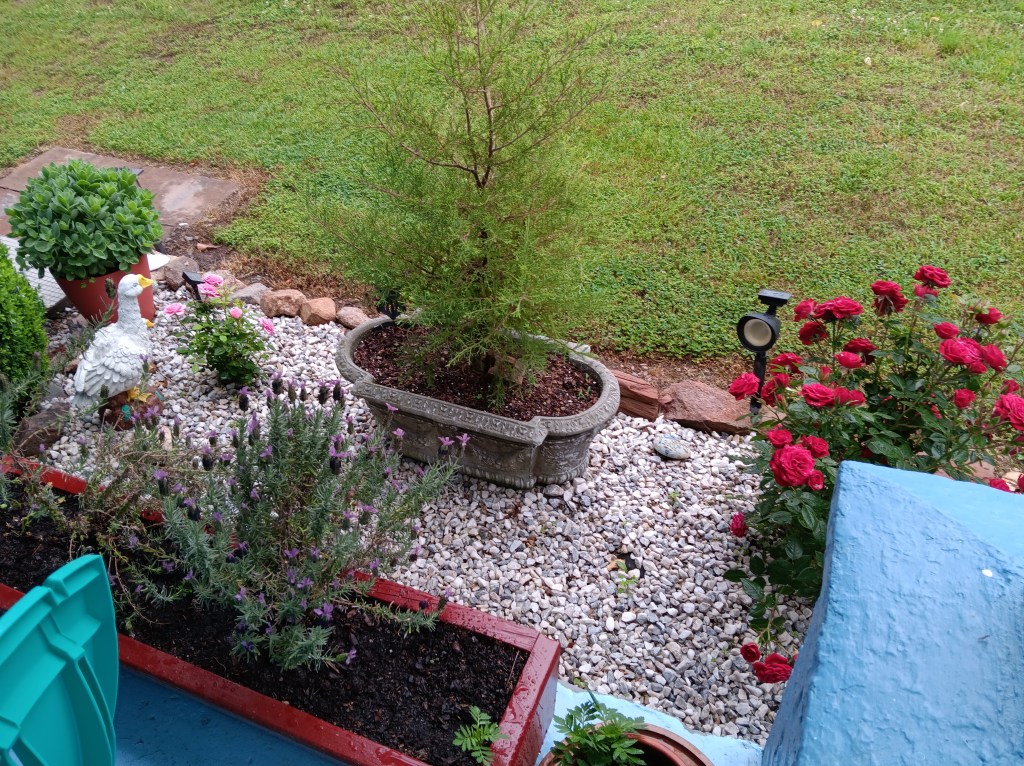
The garden always calls this time of the year. About two years ago, I planted two tiny rose bushes. One of them, the red rose bush, has grown considerably when compared to the other, a pink rose bush. I planted these at the same time, and they have grown under similar conditions. Both were labeled miniature rose bushes. Just as people, they continue to grow at a different pace. Just like writer’s stories, they bloom and develop at different stages.

To the left, near the duck, the pink rose bush, and on the right, the red rose bush. Photo by M.A.D.
Red rose bush. Miniature? Not so much, but spectacular. Photo by M.A.D.

Miniature or not, both rose bushes have their own enchantment.

The Question You Never Asked

As writers developing a story, we have questions in the back of our mind. Questions about our characters, situations, details in the story… and much more. Many times, these questions define a character, personality, and its story within the main story. As writers we are not afraid to ask or answer those questions. As people, many times we avoid the questions and answers in our own story. Ever wanted to know the answer to a question you did not want to ask? Sometimes, the truth might hurt more than the question. Sometimes, the question you never asked is the answer you don’t want to know. Life is full of questions and answers; some questions are better left unanswered.

On AI

Photo by Maria Diaz

This post is about my feelings on AI (artificial intelligence) and the future of writing and publishing. First, I should disclose that I am biased, and also old-school. I am more like the character Will Smith plays in I-Robot. Of course, when new inventions have been introduced in the history of humankind, there has been distrust, inquisition, questions, trepidation, and so much more. Much has been said about AI, especially, during the past year, and by now most of you must be familiar with some applications in technology, including writing. My concern is with the future of writing and the quality of content, as well as the increase on an already saturated market full of the good, the bad, and the ugly. Must all be doom and gloom? Of course not. The same was said about print on demand and independent publishing, and here we are today. Saturation? Yes. I am sure that there are many benefits to AI, probably across and extended to all endeavors. Going back to the topic of quality and quantity, AI will be a best friend to those who want to make a quick buck while saturating the writing market with stories/content written at a fast pace and without care or soul.

That being said, so many questions arise, at least on my mind.

Will the publishing giants favor their own mass-produced stories?

Will freelance writers compete with AI on speed and delivery or will they embrace it?

Will they be paid less for their originality? What are the parameters for originality when it comes down to AI? Is it possible for AI to commit plagiarism?

Will readers appreciate a book written in what will become the “classical way” or will they become consumers of fast stories that might cater to their need for “more and quickly, please.”

Will the quality of stories suffer, or will it challenge writers? Will readers even notice?

Will AI become a favorite tool of writers or an archenemy?

Will it help with writer’s block or make it worse?

Will writers who care for quality and not quantity feel threatened by AI?

Will human writing even exist in the future or will “Robotina” kill the writer?

Of course, it is too early to tell, and I don’t have a crystal ball on my desk. As for this old-school writer, I believe that words evoke feelings, and that might or might not matter in a not-so-distant future.

How Important is the Support of a Spouse/partner for a Writer?

Many years ago, I was watching a best-selling author being interviewed and she was asked if her husband read her books. She answered no, and proceeded to explain that he was very supportive and encouraging of her career, however, he had never read one of her novels. The interviewer seemed a bit puzzled; however, I think that in most cases, a spouse or significant other, even family and very close friends, do not jump into the reader’s pool right away, or ever.

This is something that for some writers is a sensitive topic, and they feel hurt when the people closest to them seem to disregard their books. It happens more than we might admit, in all fields/careers. Personally, I don’t think that if a close person has not read my books that it translates into not caring or a lack of support. Many times, people are not avid readers, or just don’t have enough time, or interest in the genre. If my work is treated with disdain or uninformed harsh criticism, (happened on one occasion, and by a person who I thought would be very happy for me) then, I view that as a different issue that is rooted in that person’s issues and not in my work. There is a distinction to be made.

As human beings, it is natural to expect the support and cheers of the people who matter most to us, and most likely, these are the same people who have supported us in many other ways throughout our entire life, so when something that is very dear and important to us doesn’t seem to have equal importance in their lives, we tend to feel hurt. Support comes in a variety of ways and people show their support differently. For example, my husband has not read any of my novels, but he has been very supportive in many ways, whether that is flashing a big smile when I publish a new book, economic support, giving away copies or promo cards to people he knows and I don’t, and many other ways. Do I mind that he has not read my books? Absolutely not. Having his support is having him on my team, and that is valuable to me.

For writers, sometimes just a caring or congratulatory word suffices; it shows that the person acknowledges their effort and is present, even if that person never reads one page.

A Writer Evolves with the Characters

I am writing this blogpost from the point of view of the evolution of the writer as opposed to how a character evolves in the story. Throughout the story all characters evolve, change, as experiences and challenges are introduced by the writer. The interaction of the characters and the different situations the god-pen writes for them makes this evolution possible. Where there is no change there is no story, it comes naturally. In a series, this process is more evident and so much more engrained in a character, not only because of the many situations a character goes throughout a series, but also because there is the fictional pass of time. Most likely, the character is very different from the first book until the end of the series. This is also where the writer’s evolution takes place.

From that first concept of a character until the end of a story or series, the writer has been learning, feeling, and even listening to the needs of the characters. Sometimes, a character will fight a writer’s pen, and the writer’s best decision for this character will entail listening to it, and analyzing the particular issues that are present. At that moment, not only the writer has changed, but the original intention as well. As characters mature and go along in the story, so does the view and “feeling” the writer has of them and for them. A writer that doesn’t “feel” a character has not listened to it. A stubborn pen is worse than a stubborn character.

At the end of a story/series, a relationship, a connection has been attained but also, there has been a mutual understanding, a symbiotic evolution.

Amiel’s Journal

Photo by M.A.D.

Here’s a little jewel from the past, Amiel’s Journal. I picked up this book years ago at a flea market, and now I am making the time to finally read it. It was among a large quantity of books spread on the ground, of many topics, many of them old, and this one caught my eye. It was originally written in the mid 1800s although this particular edition is from 1863 and is in very lovely, almost pristine condition. It amazes me how a little book like this one can survive more than a century, 159 years to be exact. This is volume two. I wished I had located volume one as well.

It was written by Henri Frederick Amiel, a Swiss moral philosopher, poet, critic, and a traveler. However, it was translated by Mrs. Humphry Ward (Mary Augusta Ward), a British novelist who wrote under her married name. She was a prolific writer but also a critic, journalist, memoirist, very active in society, and believe it or not, was actively against women’s right to vote. That truly surprised me coming from a very accomplished woman at that time. Puzzling.

As I read it, there are so many juicy bits found in its pages. If I were to be harsh, I would say that the book is Amiel’s mid-life crisis bordering in depression and disgust; however, as I read, I understand it is so much more than that. I have laughed, but also found myself saying out loud, “Oh no, he didn’t.” Of course, one has to understand the cultural and societal views of the times and read it under that context. For example, on page 13, he logs on his journal a few lines about what he is reading at the moment. Then, he expresses what I thought was a brutal book review, ouch! On page 16, on another entry, the reader can appreciate his understanding of the many characteristics a woman possesses, and he calls her “monstre incomprehensible, delight and terror of men.” More than once, he talks about Christianity at that time, and his view of Christianity (as a religion) permeates throughout. He writes, “The religion to which Jesus professed must be disentangled from the religion which has taken Jesus for its object.” I understand his sentiment, what he is trying to say, although I not necessarily agree. In my opinion, Jesus is Christianity, but Christianity does not necessarily reflect Jesus, on this day and throughout history. Maybe that was his point after all. There is so much more inside this journal. The fact that it is the year 2022 and I am writing a blog post about what this gentleman wrote on his diary over a century ago blows my mind.

I am enjoying this little book immensely. Eventually, I will be offering this jewel in my shop. Very old books deserve a longer journey.

Home Sweet Home?

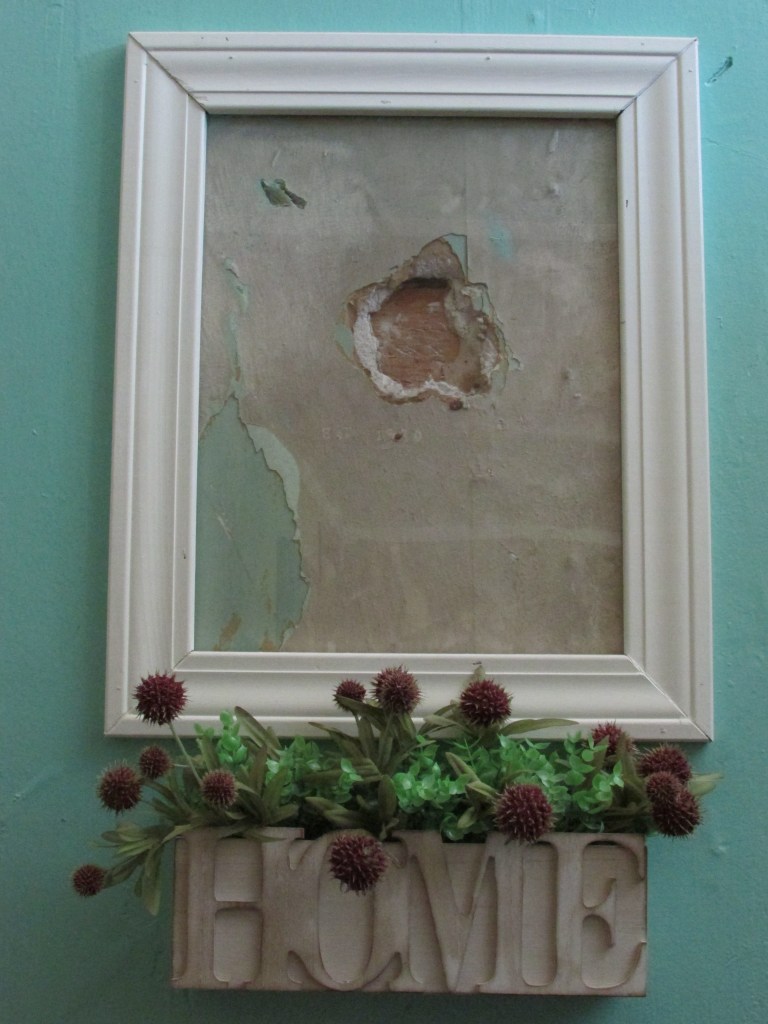
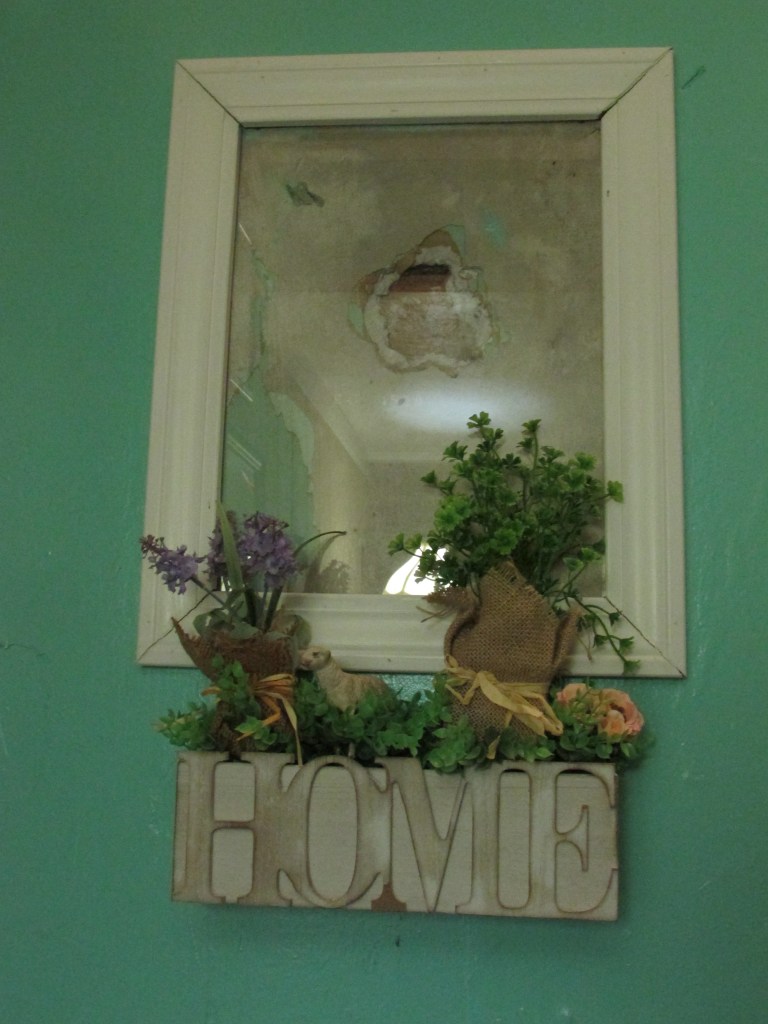
When we started to fix this old farmhouse, we decided to frame part of an original wall as a picture, a reminder of where we had been. I placed a flower box under it, and I was very happy with it until a few weeks ago. Every time I passed by it, I felt a bit annoyed and definitely not at ease but had no idea why. Suddenly, I disliked the flower box. It puzzled me. It wasn’t until I looked at it and asked myself what about it bothered me that I made the connection. The flowers that I added to the box reminded me of an image I had seen over and over everywhere I looked during the past two years – the coronavirus spiked ball shape. I knew I had to replace them right away, so I discarded the ill-looking flowers and placed a different greenery with a happier vibe.

Before
Now.

This was a good example of how media can influence one’s perception and emotional response to people, concepts, things; even the same things one liked before. As writers, we are in the quest of using words and imagery to create a story that translate into emotions and perception for the reader. The words we select, not only tell the story, but live beyond it.

What are the Signs?

Signs are everywhere, that is, if we take the time to see and listen. Have you ever heard someone say, “Signs of the times?” It refers to characteristics of a particular era or present time, or even alluding to certain events that are expected to happen, such as “end times” or other. Signs could also be warnings given to us from above before something is about to happen or we are about to make the wrong decision. Different from clues, which take us forward, from one to the next and so on, in order to reveal something or truth, signs serve more as a beacon, a warning just on time.

I have had signs before something is about to happen. For example, on one occasion, I gave a ride to a coworker who was sabotaging me at work, unbeknownst to me. A small glass blown angel that I had hanging from my backing-up mirror, suddenly broke in pieces and fell just as this person sat in the car. I could not explain why and how it happened because it was well secured with a sturdy chain, and the chain remained intact, not broken. Although I found the incident unusual at that time, I ignored it. It was a warning from above, which I understood later on.

In writing, sometimes we use signs and clues when creating a story. Mystery thrillers are a good example. However, one should separate one from the other. Clues take you to a destination, signs warn you about it. Many people refer to these as one and the same, but I view these as different in purpose. I made use of clues in my novel Moonlit Valley, as the main character Rose Carrigan follows a path that reveals the truth. I made use of signs also, such as a warning given to her by Black Hawk, one of her protectors. Signs and clues are sparingly used throughout my novels, which deal with the topics of the Divine and the supernatural. As a writer, I try not to center the story solely on clues and signs. I think these should enhance the story not become it.

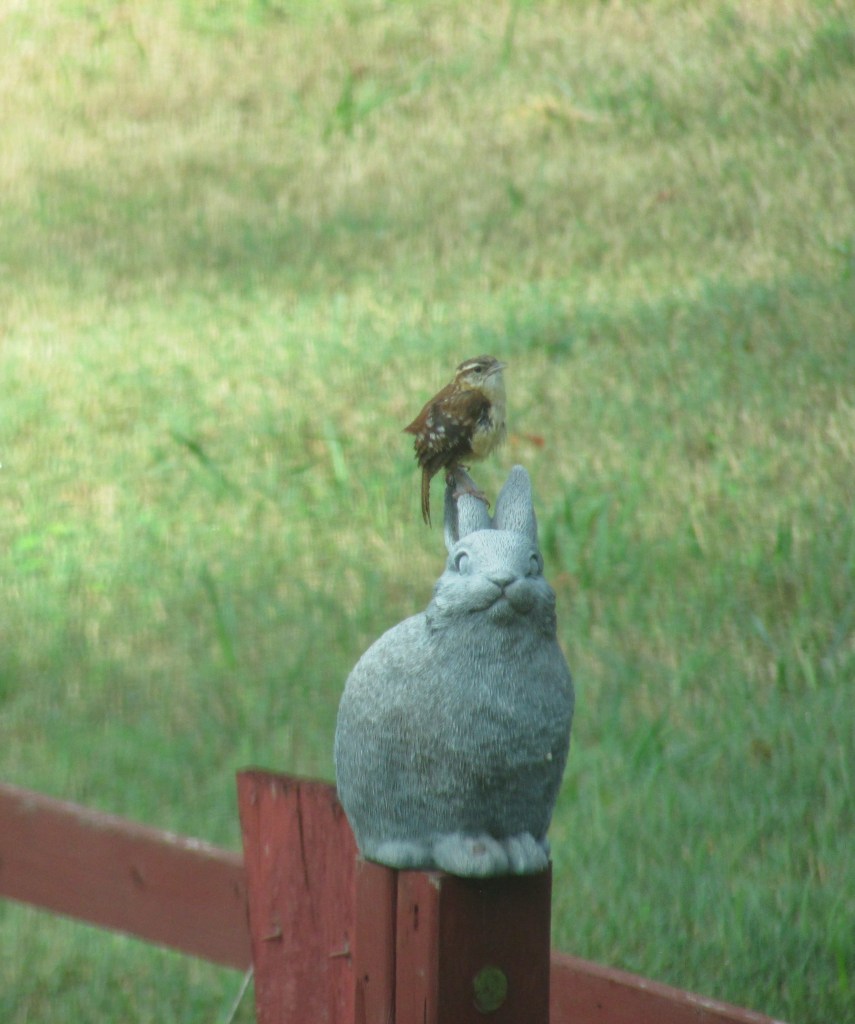
Now, if we could only see a butterfly on top of the bird, we could make up a story.