How Do I View Independent Publishing Now?

Many years ago, I wrote about my decision to pursue independent publishing, specifically, print on demand method, and how important this technological development was in making my dream of becoming an indie author possible. At the time, there were many views on independent publishing vs traditional publishing, but mostly, the disdain for independent publishing by the traditional publishing industry. Basically, they viewed it as an author’s career suicide. At the time, and after much research done, I decided that independent publishing aligned more with my views and expectations, work ethic, and my writing style and future endeavors.

For a while, as independent publishing in venues like Amazon and others continued to develop and evolve, it seemed promising and liberating for many authors, as well as affordable. However, with the passing of time, a “gold rush” environment emerged, and it seemed to attract other people who wanted to make a quick buck, who could care less about writing, and who plain and simple stole other author’s work, modified it, and published it as their own. The worst-case scenario that traditional publishing so warned us about, materialized. Now, with the development of AI, another layer has been added to the chaos that already enveloped the independent publishing industry. The speedy AI creation of stories and even the modification of stolen work by using AI is real. Indie authors who care about the craft are facing an overcrowded environment where it is hard to distinguish the good from the ugly, making it harder for their work to be found by readers.

So, how do I feel about independent publishing now, after all the new challenges, perils, and a less than attractive environment for indie authors? How do I feel about traditional publishing now, after seeing what has become of the independent publishing industry? Because honestly, even the so-called vanity publishers of the past seem more attractive now in comparison. If anything, the farmers who own the cows are the ones who benefited either way. Well, I have to say that independent publishing still aligns more with my writing style, the method, that is; however, if back then, I knew what the future would hold for the industry, I would definitely be discouraged to follow that path, and I would seriously have considered traditional publishing. It has become a garbage dump, a less than attractive venue for my taste, and I have to admit that traditional publishing still holds the golden medal, as far as a reputable venue, although much of it has changed in various ways. The flood gates were opened without any type of filtration system, and now, at least for me, this type of venue for independent publishing lacks appeal, honesty, and trust worth.

I don’t know what the future will hold for me as an indie writer, and I may have to go back to basics through research and study of an industry that seems to have fallen short of my expectations. Writing is what I love to do, and I guess that I should be asking myself if I want to do it under today’s circumstances of a less than appealing environment for me as an independent author. It is something that I have to answer myself, seriously and with honesty.
Evil

Evil is a theme in my novels, but it is viewed in a supernatural way, not so much as a real condition, such as in a crime novel. Unless you are a victim of evil personified, most people think of it as something remote; it exists, might be supernatural or not, depending on your spiritual beliefs, and it manifests through human behavior. Since I can remember, I have always considered the supernatural side of evil to be real, but also, I was raised by a religious and devoted catholic grandmother, one who would tell me stories of old, ingrained in an ancient culture, stories of witches and demons, and supernatural beings that happened in the past. Lore or not? It doesn’t matter, but it did permeate into my novels. It probably shaped my views and interest in the topic, but also, fueled my curiosity; so much, that once, I dared asked a priest if he believed that evil was real. He answered something generic, that evil was in this world … I interrupted him and rephrased the question: “Do you believe that the Devil is real, that demons exist?” He looked at me a bit surprised, but calmly he said, “Yes, it is real.” I asked, “Why doesn’t the church tell people the truth?” His answer resonates in my memory until this day. He said, “Because most people would not be able to handle the truth.” I understood and I did not keep pressing him on the topic. I never asked again, but I always remember the answer.

More than three decades have gone by, which takes me back to my novels and the theme of good vs. evil in the supernatural sense. The current novel I was writing (and I say was writing because I stepped away from it for a while) does not follow the same lines, as far as this theme goes, although it has a bit of a supernatural flair mixed in more with the human condition. I asked myself the other day, did I step away from my “niche,” did I abandon my personal quest? Is this why the current novel seems so challenging or is there something more to it? I am not forcing the writing of this novel, but I know one hundred percent that I have to write the story, however the flow of it is very different, but I know that I am the one causing it. There are a few stories that are waiting to be written, all of them calling me at once, however, I know that until I conquer this one, in mind and soul, I will not be able to tend to the next one. Now, it is personal.

Will Writers Write?

Will writers even bother to write if competing with a large number of AI generated stories? That is a question that only time will answer. There have been incidents where many AI generated books have made it to best seller lists. Scammers also may use AI to generate reworded versions of actual books. They can think of anything to make a quick buck out of the sweat of real authors by using AI to alter their work. Although Amazon has made a few efforts to alleviate the problem, it continues, and as of now AI generated content must be disclosed when submitted, something that helps but does not solve much.

Artificial Intelligence is becoming better and soon it will be just a matter of time when we could hardly be able to tell the difference between written works by real authors and a piece of junk from Robotina. People who care more about making a quick buck than about the craft are able to generate a story, from cover to content, and illustrations in a matter of minutes, especially children’s books. AI saturated market is the worst nightmare for true writers who love their craft and who bleed through the pages of a novel until it is finished.

How will readers find your work when they have to navigate a system which is so saturated by fakes? Will they even care or will they voraciously consume AI generated content as long as it is good enough to fill an entertaining need or any other specific need? If we have people dating AI generated people, what prevents readers to make a switch to AI generated books? Only time will tell, but one thing is certain, authors are now competing with a new form of “art,” one that has eliminated the middleman aka real author and goes straight to making a product for profit in no time at all. Will authors become discouraged? Will real writing even matter anymore? Will AI mimic our blood and sweat in the pages? Will writers write? Only time will tell.

Faster and faster, we are being replaced by our own creation, maybe to the point of becoming obsolete by our own hand. The creator ceases to exist, absorbed by its own creation. Maybe time is all we have left, or do we? Will AI alter our perception of time, eventually? Will we be able to tell?

My Best Friends are Not Human

They were there when I needed them.

They were by my bedside when I was sick.

They comforted me when I felt lonely.

They were with me during my childhood, and throughout my entire life.

They are here now, and offer comfort any time I go to them.

They offered guidance and knowledge.

They taught me how to dream, and sometimes, they made me laugh or cry.

It has been a lifetime friendship, one I will treasure forever.

Books are my friends.


*A true story

Charmed Again and Again

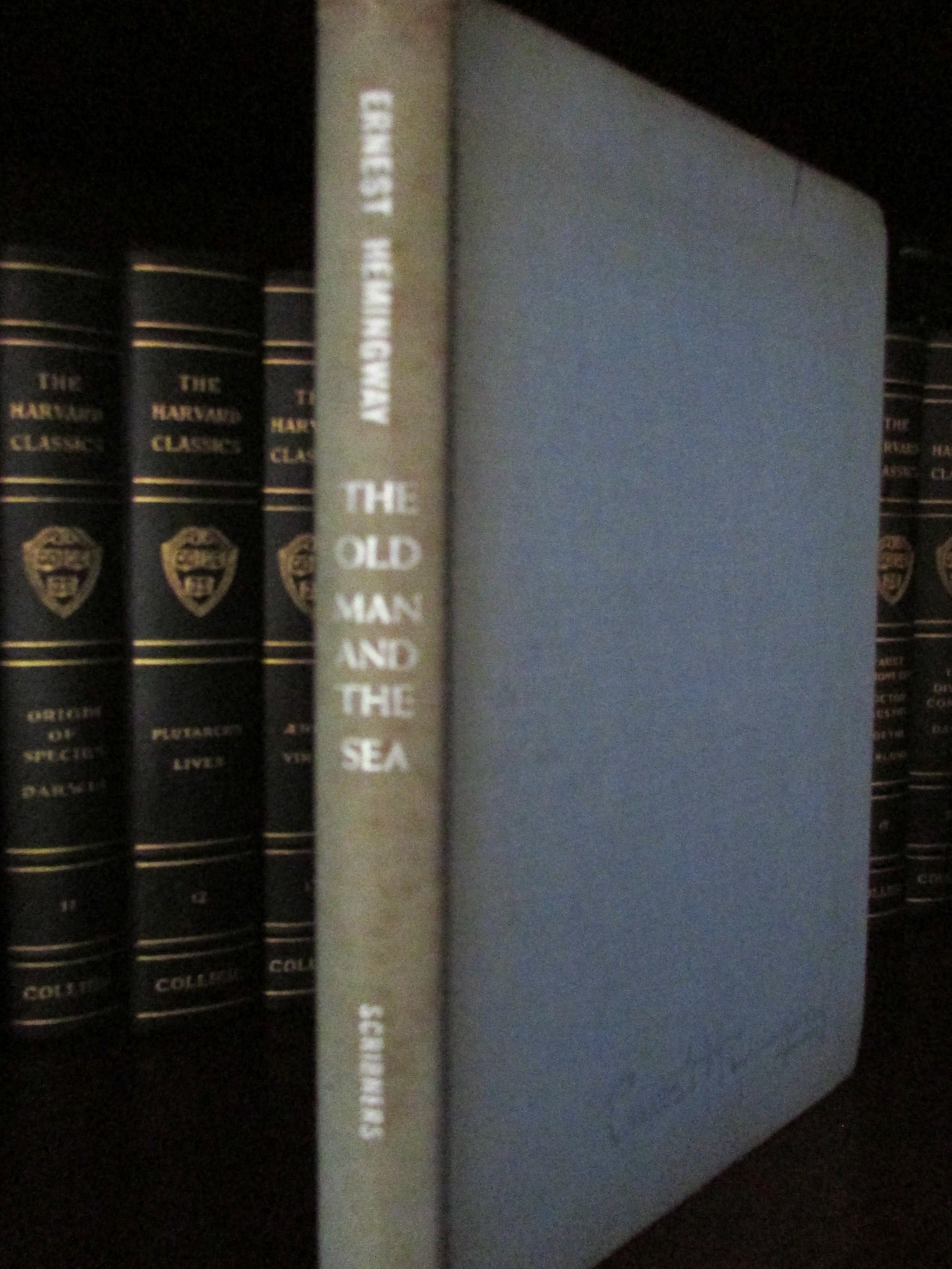
The Old Man and the Sea by Ernest Hemingway – published by Scribners in 1952

That is one classic that I can read more than once with much enjoyment. Although written long time ago, it still reads fresh. I love Hemingway’s word rhythm and the way he paints a picture in my mind. He transports you through time and place, and plays with your senses.

I was able to find an old copy sometime ago, and it is one of my forever books. It is missing the dust jacket, but I love it just the same. It might appear as a first edition, but it isn’t. It is missing the Scribners seal and the letter A on the copyright page. It is valuable to me. I know I will keep reading it from time to time, and probably on an August or September afternoon; it seems a perfect read then.

If you have not read this classic, I invite you to read it. Maybe you can try it for this summer. You will not be disappointed.

IMG_3893


More Than One Hat

Fiction writers wear many hats. We wear a costume everyday. When we create a story, we create worlds, and people in those worlds, characters to whom we give life through challenges and the emotions we try to convey through them. Sometimes, readers might mistake a character for its writer or believe that the writer shares its attributes. Although I believe that there is a bit of the writer in between the lines, fictional characters are fiction. We rely on our mind, imagination, observation, and life experience to give life to our characters, but many times, we rely on research, on learning a particular subject to present a character and a story in a better light. Depending on our writing style, we might become poets, song writers, prophets, and even preachers. I have done a little bit of those jobs when writing my books. I’ve written a poem, a prophecy, and pages of an imaginary book, as I did in The Book of Sharon and in Sunrise Souls, books two and three of The Dinorah Chronicles trilogy. I’ve written riddles on Moonlit Valley, and a song in Sunrise Souls. On my work in progress – The Five-dollar Miracle, I had to write an entire sermon.

My point is, we sometimes have to become our characters and see the world through their eyes for a little while, to be able to write the story. Sometimes, the writing feels effortless, and at other times, it is more challenging, but always with levels of engagement. We are separate from our characters but we step inside their world, their minds, and their feelings/emotions to be able to convey a story to the readers as best as we can. In that regard, we wear many hats. We become the heroine, the villain, the priest, the prophet, and even an inanimate object, such as a book of prophecies and teachings.

I write stories, I create worlds, I give life to characters and become one with them, and then, disengage. I put on a costume everyday. I write fiction and love it.


Inevitable

How did you fall into writing? The inevitable question. I’ve been asked the question many times. Other times, followed by, “I never knew you were into that?”

How do you answer it? I fell into a pile of books while going downstairs half asleep. No seriously, have you thought of the moment when you became interested in writing? Not when you felt “a writer,” because that moment might never come. The usual answer people give is, “I’ve written since I can remember.”  If I go back in time, I can see a child who read everything she got her hands on, a child who amassed a large quantity of pens and pencils, a child who thought that a typewriter was the greatest invention on the planet, and also loved the scent of new notebooks and old books (I still do). I also see a child who followed members of the family, while holding a notebook and pen, and wrote in it everything they did. I see a child who kept diaries, and then, burned them. How many stories do I have from my early years, my teenage years, and the years until I decided to become a writer? None. Not even one. Why? For some inexplicable reason, I had a habit; I burned everything I wrote or broke it into tiny pieces. I never kept one story. It puzzles me today. Although I had the desire to become a writer, I never pursued it. I went into many different careers, pretty much anything that I fancied at the time, but always kept that secret desire well-kept inside me. I had an image of writers that didn’t fit who I thought I was. I saw writers as old people with money. Where did that image came from? I don’t know.

Well, to answer the question – How did I fall into writing? When I resigned from my last job, I felt a strong urge to write, and I did. Almost as a long-lost calling, too loud to keep ignoring. At that same job, in one of our meetings my former boss asked an exercise question to start the meeting. It was, “If you were not here, what would you rather be doing; what is your ideal job?” Each one of us was urged to answer, and we did. Some of us answered honestly, including her, who’d rather be a detective. I answered, “I see myself writing at a cottage near the sea.” Of course, I got the weird looks, but not from her. She said, “I can see you doing exactly that.” Going back to that memory, I think that was the moment when I fell into writing.

My Forever Books

I love books. I love to read. Since I can remember. I am an eclectic reader. I read different genres, pretty much anything that will hold my attention, from fiction to self-help, to finances, reference, anything and everything. After I read a book, it will either be put aside to be read again much later in the future, probably years, at least one more time. It will be donated or given away to someone, or kept for reference for some time. However, there are books that I loved so much the first time I read them, that I know for sure they will have a permanent place on my bookshelves. I will revisit them all my life. I call them my forever books. I would love to share some of these on this post.

Although the Bible, some of the classics, and (important for me) reference books will be permanently on my bookshelves, I am referring to the books that on that first reading, enchanted me somehow. Here are a few.

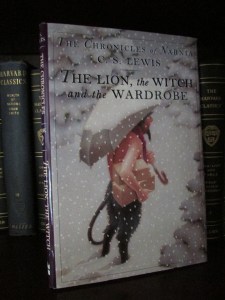
The Lion, the Witch, and the Wardrobe by C.S. Lewis

IMG_3894

I wish I had kept the early copy when I read this one as a child.


Jonathan Livingston Seagull by Richard Bach

IMG_3896


The Miraculous Journey of Edward Tulane by Kate DiCamillo

IMG_3890


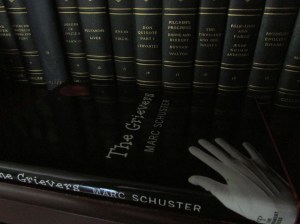
The Grievers by Marc Schuster

IMG_3888


The Last Hunt by Cliff Burns

IMG_3887


The Old Man and The Sea by Ernest Hemingway

IMG_3893


How to Stop Worrying and Start Living by Dale Carnegie

IMG_3892


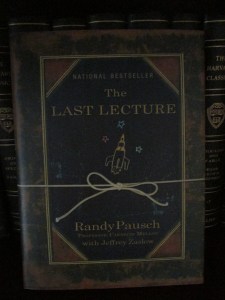
The Last Lecture by Randy Pausch

IMG_3889

Love the book, but much more because it is a gift from my sister.


These are just a few that will be forever on my bookshelf. I enjoyed them immensely. As you can see, they range in topic, genre, and time written. To me, reading is almost a religious experience, and I understand that every reader experiences and interprets a book in a very personal way, and therefore, a book can touch lives and entertain in countless ways. This is why reviews are not as important as we think they are. The same books that I love so much, another reader might dislike. I may love a book, but that doesn’t mean that I will like or enjoy other books from the same author in the same way. I might read them, and enjoy them very much, however, not necessarily give them a permanent spot, reserved only for those enchanting tomes.

As an author, I am in a different state of mind and “being” every time I write, so I think it would be unusual that I would write in the same way or with the same degree of inspiration all the time. To expect the same degree of inspirational awe from an author every time he/she publishes a book is like expecting coffee to taste the same all the time (I love coffee), and maybe that is why I’ve never understood traditional publishing. On the same note, as a reader, I approach a book with different intent at different stages in my life. It seems so as I mature. Life takes on another color, another flavor, and things evolve in importance. Although a story remains as it was written, another story lives and breathes in between the lines, waiting for the reader to find it and give it the meaning that is so unique and special to each person. That is why I am so careful with my opinion of a book, and any reviews are only my experience with, my view, my take, on a book that I enjoyed reading. My interpretation, that is ultimately influenced by the stage I am in life, and my surroundings, as well as all the thoughts, feelings, and emotions that accompany it. A good example is The Lion, the Witch, and the Wardrobe by C.S. Lewis. I read it when I was around 10 years old, maybe earlier, and at that time I thought it was the most exciting adventure I had encounter in the pages of a book. I lived it, and I loved it. I read it again as an adult, and I got so much more out of the same story. The story in between the lines emerged.

I hope I have inspired you to give these books a try, if you haven’t done so already. On a future post, I will share some of my dearest collections that I treasure and will also keep on my bookshelves forever.

Five Annoying Questions For Indie Writers and Possible Answers

If you are an independent writer, it is likely that you have been asked one or more of these annoying questions, and usually by people who have not read any of your books. These are questions that are “meant to happen” at one point or another, so might as well have some fun answering them.

Question: Why do you write?

Answer: Why do you breathe?

Question: Are you really published? I mean not self-published.

Answer: Do you own the company you work for?

Question: Do you make any money doing that?

Answer: How much money do you make at your job?

Question: What is your real job?

Answer: What is your life purpose?

Question: Is it true that self-publishing killed literature?

Answer: Is it dead? Oh, my sincere condolences.


It is probable that you have been asked at least one of the questions above mentioned. Instead of becoming annoyed, have fun answering them. I invite you to share some of your own.


What I’m Reading Now

1999 – Jeff Herman – You can make it big writing books

That is the book I’m reading now. I bought it many years ago, and never got into it. I bought it when my thoughts were around the idea of publishing a book going the traditional route. Although it is an older book, and I am not interested in pursuing traditional publishing, I find it is a good read and interesting. If you are considering traditional publishing this book gives you a glimpse of the work, publishing experiences of many top writers in the industry. If you are contemplating a writing career or are interested in learning more about the traditional publishing experience from many traditionally published authors, this book is good for that. It is brief and set up as a series of short pieces of advice from 60 bestselling authors who have been in the industry for years. They talk about their writing experience, beginnings, as well as offering advice to the reader.

Most likely, by now there are more/better books on traditional publishing but I had that one sitting on the shelf for a while, and decided to give it a try. So far, I am enjoying it. I have a goal of reading everything in my bookshelves that still calls on my curiosity. I have gotten rid of everything else that does not. I will continue to share any other interesting books that I get to read.