As You Become

ProphecyAn inspired utterance of a prophet, viewed as a revelation of divine will. A prediction of the future, made under divine inspiration. Such an inspired message or prediction transmitted orally or in writing. The vocation or condition of a prophet. A prediction. (Definition by The American Heritage Dictionary)


The topic of prophecy is found in my novels, and I find it very interesting and compelling. Our history is filled with prophecies (good and bad), although I find that our fascination for Doomsday supersede the good examples. From apocalyptic predictions/revelations to hopeful promises of a new Earth, and heaven, our curiosity extends as we try to make sense of the world(s) that surround us. Whether we belief on prophecy or not, of any kind, I think that it begins with us, and the extent of our minds in the material world – what we believe, what we entertain, and what we do or how we react to natural and man-created events. As I ———-(fill the blank) I ———— (fill the blank). As we believe, think, focus, and act/react we become. We create and fulfill our own prophecy.

People might argue that some things we cannot control and are beyond our manipulation – Acts of God/Nature – we call them. However, every step we take (before or after) leads to a path. Nothing happens “just because” (that would be called God/Universe). Science looks for explanation, so it falls outside. What about a natural disaster? We do not control natural (not manmade) events; however, why were we in the vicinity when it happened? Certainly, there where steps that took us to reside there, travel there, born and stay there … it is called “the free-will” to decide our lives (without knowing the future and under present circumstances) – it is Life! It is the steps that we take (how we react and act) when natural or unnatural events occur in our lives that determine how the story unveils. As we write the story of our lifes, we become.

Most of us cannot read minds, foresee the future, or are psychics. We rely on our senses, information, intuition, and emotions to decide. We create our own prophecy as we go, but what we cannot do is expect different results from obvious or predictable behavior. We might have a revelation along the way that will serve as warning to change our behavior and set on a different path to obtain different results. Free will is not so much set on the absence of future events but on how we constantly create the future in the now, and how our past has become our future for the same reason.

In living we prophesy as we become.

Photo by M.A.D.

Photo by M.A.D.

My husband keeps this on his desk, and I will add that the game goes on and on and …


The Book of Sharon Excerpt

Here’s a short excerpt from The Book of Sharon – book 2 of The Dinorah Chronicles – that I wanted to share with you. I hope you enjoy it. If you’d like you can read the first two chapters on Amazon here. Just click look inside.

This excerpt is from Chapter 3 – A Letter to the Lost. It is an excerpt from Dinorah’s book, as she is inspired to reveal the ancient tome’s secrets, without revealing her ancestry or the actual book. Her book is called The Book of Sharon. I wrote The Book of Sharon as if it was a book inside a book inside a book. A bit different but I am happy with the effort.

Chapter 3 – A Letter to the Lost (excerpt)

Dear Child,

     Know that what you are asking has been done long time ago. All I ask of you is that you do what you know you have to do, in your heart. It is the plan inside you; you created it, and the spirit knows more than the flesh. The spirit knows the nourishment the flesh needs. Follow your heart wherever it leads you, and know that I am here. If you hold back you will not prosper – right now, you are holding back.”


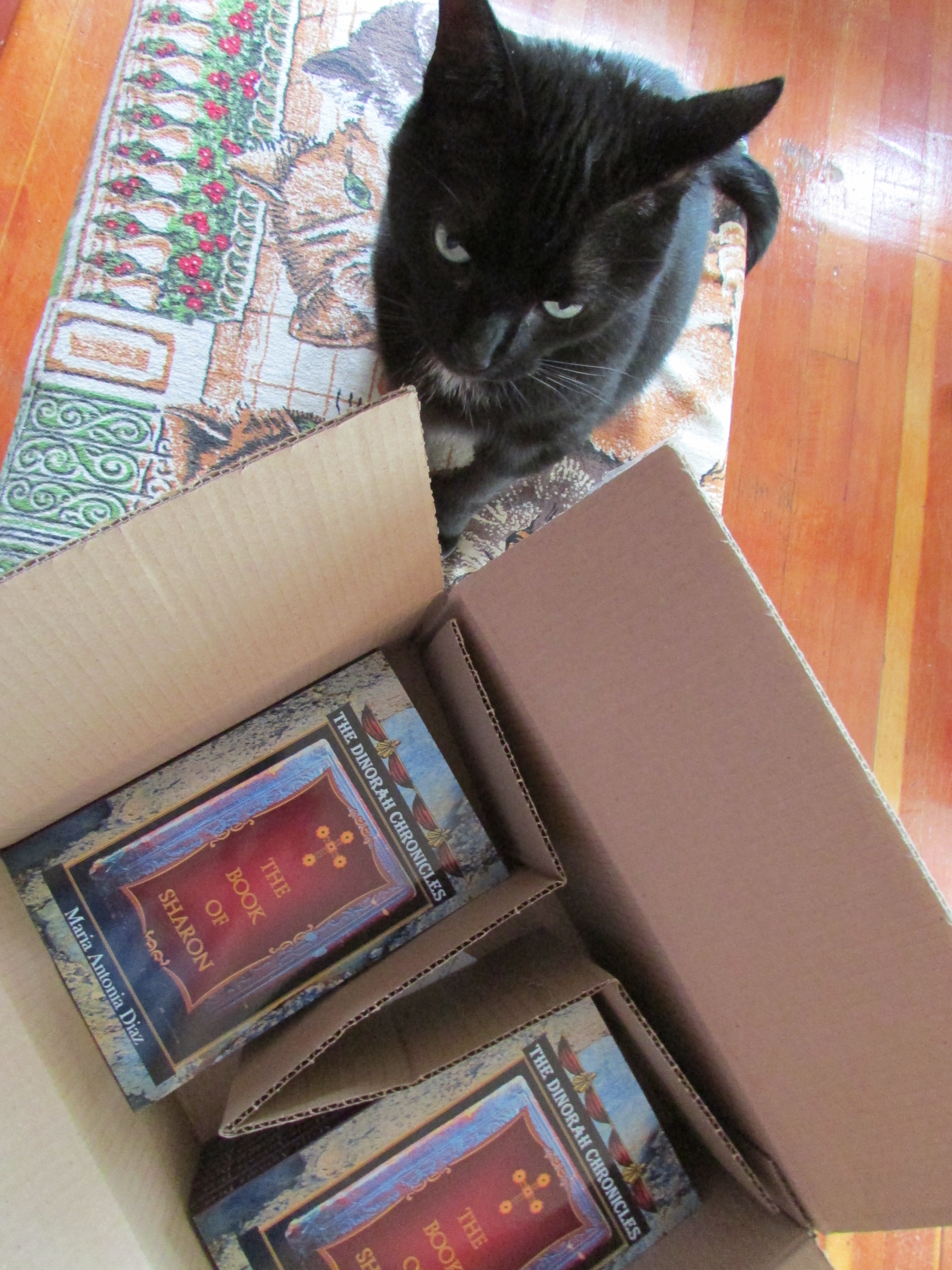
And here is my demanding assistant (more like boss) Chanti, making sure that the shift runs smoothly.

Photo by M.A.D.

Photo by M.A.D.


In Between the Lines – Trust

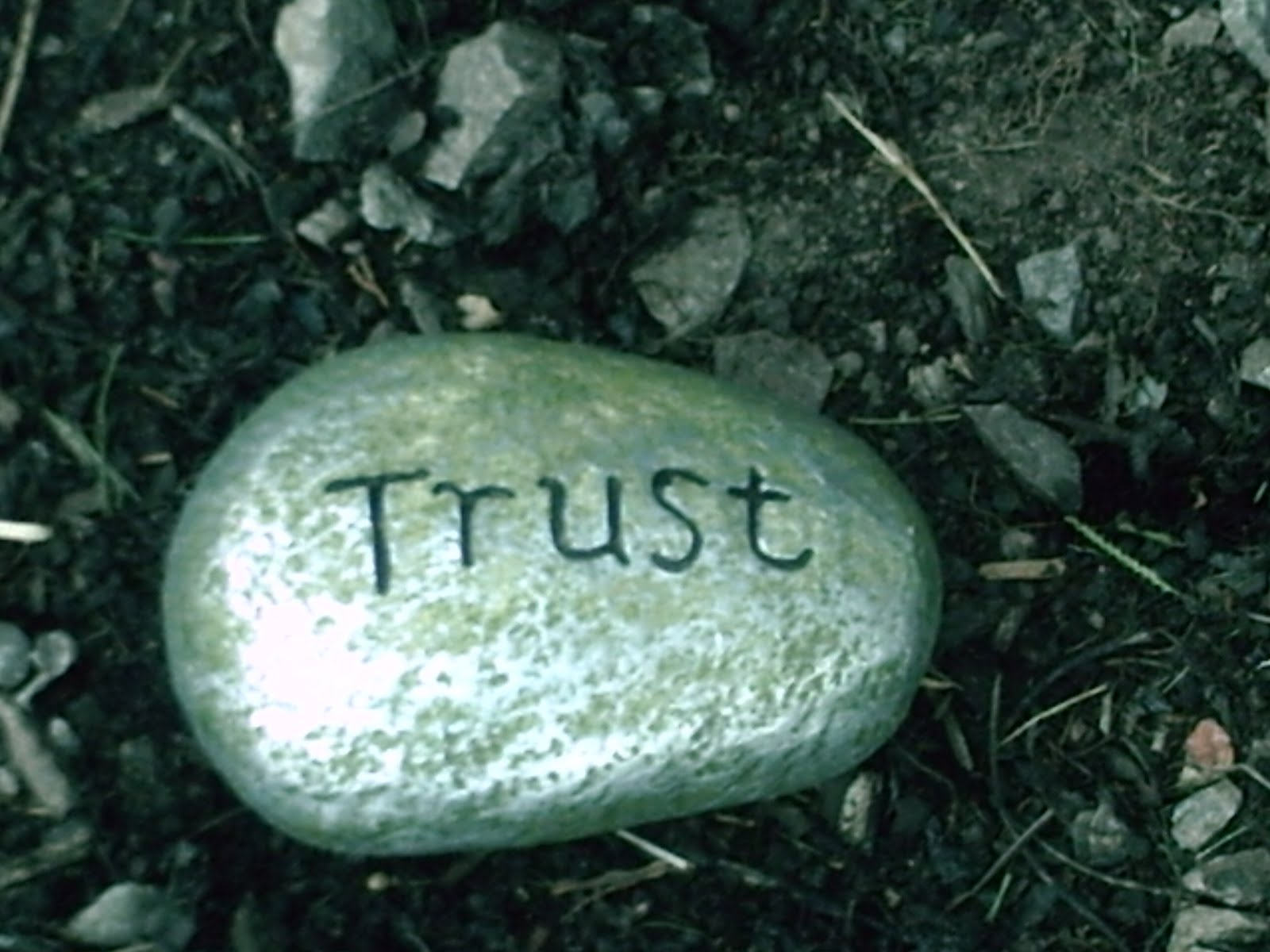
Trust – Firm reliance; confident belief; faith; hope. (American Heritage Dictionary)

Here is one of several definitions that the dictionary gives for the word trust, and the one that I will use for the purpose of this post. Trust is another theme in my novels, and one that I find the cornerstone of everyday living – how we interact with our environment and people around us. We trust systems, people, routines … It goes from an external dimension to a personal and inner dimension to a spiritual one. When we lose trust (in whatever) our balance is shaken, and so is our reliance, confidence, beliefs, faith, and hope. Our feelings hurt. The issue is that once we lose trust in someone or something, it is very hard to recover. It takes change for us to consider trusting again, and as far as people go, many times the only thing that will make someone trust again is the presence of Love. In a way, Trust encompasses the above mentioned conditions; however, Love supersedes all.

In today’s society, it seems that trust has almost ceased to exist. We pay attention to conspiracy theories, and many people delight on these. Whether these theories are true or not is not the issue. It is how you process and internalize the information that you receive every day that will determine your level of trust – external, internal, and spiritual. Pay attention to your “trust process” and see how your balance is being affected. I will use myself as an example. When I start watching more television or increase watching the news, I immediately feel a direct effect on my balance. I like to be informed but I find that if I am going to listen to the news or watch television, I have to place a conscious filter before doing so, otherwise this simple activity may end up influencing the way I feel, and if I pay too much attention to negative news, so does my level of trust. This is just a simple exercise on a very mundane level, but a good example to illustrate.

We use Shakespeare’s line very often – To be or not to be, that is the question – but many times, the To Be depends on our level of trust, externally, internally, and spiritually. The question might be to trust or not to trust.

Photo by M.A.D.

Photo by M.A.D.


In Between the Lines – Good vs. Evil

The topic of Good vs. Evil fascinates me. Since I was a child, this idea has evolved being shaped by my upbringing, religion, stories that my grandmother told, urban legends, books, Hollywood movies … in short, by how my mind made sense of all this, and how it interpreted it in the material and spiritual. Although good and evil might seem as black and white, I suspect that there are many shades of gray in between, and our human nature battles in the midst, making sense of it all. If anything, we deserve credit for that. This theme is present in my novels as well.

As a species we thrive in the material contributing to the good and bad on this planet. As spiritual beings we strive to do better. Whether you believe or not in the concept of good vs. evil, of God and the Devil, yin and yang, polarities … or however you want to explain this duality or antithesis, the reality is that we all get sucked in by its allure and fascination, even if you practice atheism – engaging in a hot topic. Good vs. Evil captures the human mind since the beginning of the Homo Sapiens (wise man) or Adam and Eve in the Garden of Eden, if you prefer that version.

According to one of the most influential books in history, Adam and Eve were seduced by evil, and disobeyed God. But before this, Lucifer had become the devil, and taken a few fallen angels with him. Cain ( son of Adam and Eve) had a bit to do with evil as well. And this is where the concept of evil gets interesting and were shades of gray start painting shades of humanity. When we think of Cain, immediately, we process in our minds (if you know the story or read it in the Bible) that his sin was the act of killing his brother Abel. Yes this was a horrible offense, and so far the first murder in the Bible, since mankind was born. However, the book of Genesis tells a more interesting story – what happened before the murder. What was it?

This is what the book of Genesis tells us about the sin before the sin (in short). This is from the New International Version.

Now Abel kept flocks, and Cain worked the soil. 3 In the course of time Cain brought some of the fruits of the soil as an offering to the Lord. 4 And Abel also brought an offering—fat portions from some of the firstborn of his flock. The Lord looked with favor on Abel and his offering, 5 but on Cain and his offering he did not look with favor. So Cain was very angry, and his face was downcast.

6 Then the Lord said to Cain, “Why are you angry? Why is your face downcast? 7 If you do what is right, will you not be accepted? But if you do not do what is right, sin is crouching at your door; it desires to have you, but you must rule over it.” (Genesis 4: 3-7)


It seems that Cain got upset and jealous of Abel because God liked Abel’s offering better than his. Why this? Upon reading this passage it shows that Abel offered God the fat portions from the first-born of the flock, in other words, the best of the best. While Cain gave “some of the fruits of the soil” or in other words, a good-enough offering, but not the best of the best. And this is what God saw, and I guess that he read both brothers hearts in the offerings, and why he liked one offering better than the other.  This made Cain angry and jealous of his brother, but God, being God and all, gave him a warning of things to come, if he continued with this attitude (If you do what is right, will you not be accepted? But if you do not do what is right, sin is crouching at your door; it desires to have you, but you must rule over it.” ). This is profound. When I read this, I saw Cain’s sin issue in respect to his brother, in a new light, and it made me think of the layers of depth in the concept of good vs. evil. These few verses have so much to chew on, but it was this prelude to Cain’s sin of murder that fascinated me the most. Then, I thought – Why did Cain give a mediocre offering? What was going through his mind? It was this thinking that started it all. Then, I came up with a possible explanation. Since Cain worked the land very hard to yield some crops, must likely he knew that his goodies were hard to come by and with much effort (after all, this wasn’t Eden anymore and he had to work for it) therefore, he gave “some.” In other words, he was being stingy with the one who gave and made all – his God. Again, this is so profound because it reveals another layer. In venturing to read Cain’s thought and personality, I think that he had a trust issue. He lacked Trust. Cain was not so sure that God would provide for him, therefore, he was a bit stingy with his offering, and this was in my opinion, Cain’s first offense. He did not trust his Creator and he did not show his trust/love in his offering like Abel did. This attitude was the catalyst that opened the gates that caused Abel’s blood to flow by his hand.

Pondering the shades between Good and Evil may help us to write better and deeper characters, and to craft a story that would give the reader more layers to peel. As writers, we should not be stingy with our offering to the reader, and always try to give the best of the best, according to our ability.


Next In Between the Lines topic – Trust
In Between the Lines – Destiny

Destiny is a very strong theme in my novels, in many levels, earth-bound, personal to the characters, and even as spiritual duty. Destiny is a word that we use in casual conversation; many times, whether we believe in destiny as a preordained course of events or fate, or not. If we don’t believe in the strict definition of destiny or in predestination, we may tend to believe in purpose, and seek the purpose of our lives, “that thing” that we were born to do here on Earth. Purpose is a more digestible word for many. As humans, we crave meaning, and we tend to attach meaning to things/life/events and that meaning is given a layer of sentiment and feeling. It is our nature, whether we tend to analyze these things with our brain or not, we end up doing it. In short, we need a reason to wake up in the morning and keep going; we need purpose. If we don’t have it, we search for it, a lifetime, if necessary. If we never find it, in our deathbed we might say that we missed our purpose in life. Many turn to depression and wither away because they don’t find purpose in their lives. Tragic.

Destiny or purpose – that thing that you must do before you leave Earth – may or not, prevent you from living your life in the now, depending on how you approach its meaning. I think that if we live in the now and are grateful for the moment, while listening to it, our purpose becomes inevitable and unavoidable. It stops being in the future, distant (by our perception) and weaves itself in our daily lives, moment by moment. Somehow, balance is restored between the material being and the spiritual being that is us, and with nature and everything that surrounds us – we become one with the universe, with all that is, whether you call it God, the Universe, or Science. Is there purpose or destiny in that? Maybe or maybe not, or maybe it is intelligent design, or the way that was meant to be? Maybe it is us, our own nature and the nature of things, of it all. Who knows, and will we figure it out? Does it matter that much? It seems to matter; otherwise, we wouldn’t be searching eternally. Without it we feel as feathers floating in the wind, aimlessly, and taken away by life’s current, and without meaningful act. However, we forget that life in itself is purpose.

Photo by MAD

Photo by MAD


Note – I will be away from this blog for a week – see you soon 🙂


The Dinorah Chronicles – The Book of Sharon

I am very happy to announce  the release of the second book of The Dinorah Chronicles trilogy – The Book of Sharon.

It is available through Amazon and CreateSpace in paperback and Kindle edition.

By now, you already know how much I love to find theme songs/videos in YouTube for my novels and what better opportunity than this one to leave you with this awesome song by the Editors – I want a forest. The youtuber is frogfromnz.  When I heard this song, I could not think of a more perfect song for the novel. The Youtuber did a great job with the video as well, and I certainly love this song by the Editors (by now, you probably know that I love the Editors).

I hope you enjoy it, so here it is.


PS – Thank you to all of you who have liked and follow this blog; it means a lot. Sometimes, it may take a while for me to catch up, but I always try to do my best and visit as well 🙂


Picking Up the Pebbles, Carrying the Rocks, and Embracing Boulders

Present Universe/Earth – The location

Human – The vessel

The Material – The physical state, the condition in the vessel

Change – Fuel, motivator

Target – The journey, the material experience in the vessel at the location

Goal – Growth through the experience, enjoyment, discovery, being, creation, union … to each its own journey, One as Many

Time/Space – Now (always Now, other measure of time is irrelevant)

Report – Ongoing


Although life might seem a weird experiment at times, it is a journey, a destination in itself, and a different experience for every person. It presents its challenges as a way to keep the journey going in the now. Without challenge, conflict, unfortunate events, fortunate events … without change, there cannot be movement, journey, growth. It is necessary as fuel to keep us going. Imagine a life of perfect harmony, everything goes one way – perfect, and nothing happens that will let you have/create a frame of reference that serves as a compass to evaluate your journey. If everything is as perfect as it can be, how would you know the difference? Simply put, without a compass/navigator you might be lost.

Many times, change (fuel) will present itself in various degrees of difficulty, as much fuel as we might need to propel us to the next level. I truly believe that. Sometimes, the size of a pebble, other times as a rock, or even a giant boulder. Sometimes even as the entire quarry. However, if growth is the goal, the natural way would be to keep walking the path, pick up the pebbles, carry the rocks, and even embrace the boulders, and if we have to go inside the quarry, may we find the message in its walls. And when we do, evolution continues.

Photo by M.A.D.

Photo by M.A.D.


On Faith and Writing

When I read poetry I notice one thing, the poem is sad/dark, almost as if it bleeds through the page, or on the other hand, it celebrates life, is an exaltation of nature or love, or whatever the subject seems to be, therefore transmitting a peaceful or joyful vibe through the page. It seems as if a tormented soul or a happy one wrote the lines, although that is not necessarily true.

Ernest Hemingway once said,”There is nothing to writing. All you do is sit down at a typewriter and bleed.” Maybe he was right, but what comes out of your veins? What do you bleed? I have found that for me, inspiration may come from nowhere, unexpected, and sometimes, it is directly influenced by my mood. I’ve noticed that when my faith dwindles, so does my writing. It is when my faith is up that I do my best writing, whether I may be going through a difficult situation or not. By faith I don’t mean religion, but my disposition to believe and trust. That said, I can predict when my motivation will suffer, and when my writing will lack. How to prevent this?

The answer is not so much to prevent, because life is full of ups and downs – it is human life’s nature. Instead, maintaining a conscious positive and high disposition (with effort and despite the circumstances) is what seems to help. I must keep up a high level of trust and frequency to support the flow of my writing, otherwise, it becomes forced, superficial, and dense. So my writing seems to be tied to my faith.

“I learned never to empty the well of my writing, but always to stop when there was still something there in the deep part of the well, and let it refill at night from the springs that fed it.” Ernest Hemingway

Blue Season – Systems Crash

Photo by MAD

Photo by MAD

As human, you may have experienced a blue season. It is when one of your support systems fail or crash. As organized people we have many support systems, some basic – family, friends, marriage, home, finances, health … – other systems are unique to your particular situation or life arrangement. A blue season may be brief or lengthy, come at once or crawl up on you. No matter its nature, it is still a blue season, and a whole bucket of emotions come with it. If you are lucky, you deal with one failing system at a time; however, sometimes, all systems crash at once. This is when your humanity is tested in all areas, and if there’s an echo of divinity in you, better take a good hold on it, because you’ll need it – even if you don’t believe.

What happens when the big test comes? The answer is as unique as we are, and so is the solution or outcome. The tools to use during this time appear in you somehow, and you pick them up or ignore them. During a blue season, whether a single test, or the big one, emotions and feelings run wild, solutions evade or play hide and seek, the mind plays inhumane tricks on your ego, and the physical you collapses, rendering yet another of your systems (health) weak. If you are among the Job (bible character) category, all your systems will fail at once, and Mega Blue Season it is. Better hold on tight for the ride, because this one is a wild one, and most likely, when you are crawling breathless, you will still find strength to yell, “Not fair, not me!” Just in time to collapse once more. But where did the idea of wanting a fair life came from? From our humanity.

Thank God (or whatever you choose to call it) for colors. Colors make a difference. We understand colors, just as we understand music, tunes… We can make the shades of blue whatever we want – perception? No, it is more than that, more like painting a response. We can paint our response the shade we want, until we dilute the blue to a pure white, coming out of it drenched in light, stronger, wiser, glad, and alive. Be grateful for that; I am. It is humanity at its best, or maybe a small grain of the divine seed in us. Whatever it is, it is there inside every one of us to call upon in the hour of need, during the blue season.

Easier said than done? Maybe doing has nothing to do with it. Maybe knowing is just enough. In the end, it will always be up to us. The response is up to us. Whether one or all systems crash during the blue season, how we respond during its length will determine the outcome. And that is all there is to know, as long as we choose to know.

2014 Writing Goals

I have set two major writing goals for this year, editing and publishing The Book of Sharon before the end of the first quarter, and writing Sunrise Souls before the end of the year. If I get to the editing of the last one, I will be very happy, but for now, writing it is all I am expecting. In addition, I am hoping to develop my author website a bit more; it has been under construction. As far as this blog goes, I am hoping to post at least three times a week. Those are my only writing goals for this year – few and clear. My main focus will go towards regaining my health. Other projects will be on hold for now.

Today, my nephew sent me an email that had an Allan Watts short video about one of his lectures on meditation. One thing caught my attention immediately – his definition of meditation. He views meditation as a way to bring you back to reality (to the real world, to the life that we live in a daily basis, to the now, to be present …). When I thought about it, I realized that my concept of meditation was at conflict with this definition. I viewed it as a way to relax and step out of reality – a way to alleviate stress or any present inconvenience. This view is opposite to the purpose of meditation. I found this interesting, and I think that many people think of meditation as a way to escape reality instead of getting back to it. I thought this was brilliant.

As writers we tend to retreat; we spend long hours alone dipped into our own worlds and thoughts, and many times far away from reality. Meditation may be a good tool for writers, that is, as a way to bring us back to life into the now.