On Writing – Common Questions

Photo by M.A.D.

For most of my life, writing and publishing seemed a dream hard to reach. Mostly because the image of most famous writers that was presented by the media to my generation was a bit intimidating and hard to reach. It was one of seclusion, selectivity, money, unwanted-wanted fame, and reserved for the few great ones. This was a different time, one without internet, social media, and writer-friendly technology. Traditional publishing ruled the roost, and the few brave independent authors who dared cross to another dimension were viewed as vane, and even rebels who could not abide and bow down to a perfectly run system that would vomit you if you were deemed not good enough, or below its standards. Many dreamers like me would not dare enter the nightmare, and the ones who became rebels of the system knew they have to pay the price, and a very expensive one it was, literally and figurative, reputation included, and with it, down the dream of being even considered for a traditional publishing contract. Independent publishing was viewed as a mortal sin. Thank God these days are different, although not without its problems. When I realized that my dream of writing could be resuscitated under a new set of rules, I didn’t think twice. It was a new dawn. However, I had many questions. Many of these questions are the same ones that aspiring writers have today, although it is much easier to find the answers now. This post is about some of those questions and how I answered them, as well as questions I’ve encountered.

I want to write, but how do I start?

The short answer to that is just do it, write, but there is so much more to that. When I thought about that question, it wasn’t as easy to answer as I thought it would be. There was so much to consider, and so much more knowledge I needed to gather. I spent nearly two years learning (while writing and transitioning) as much as I could about this new system and independent publishing, but as well about traditional publishing at the time. Many myths were alive, other were just that. I found that the most important issue was my Why. Why did I want to write? Was it just because it was a life dream resurrected or was there more to it? I knew I had to answer that question before taking the plunge. I did. My why is not relevant here, every writer will have a why. So, to answer the question, start with your why. Why do you want to write? How do you see yourself as a writer? Is it for money or a call, or something else? When did your desire/passion for writing start? What triggered it? Have you written anything in the past? Why not? Were you intimidated by misinformation? How do you view writing? As a business? As a hobby? As a career? As a calling? How do you view other writers? Would you consider becoming an independent writer (indie writer) or does traditional publishing align more with your vision? Would you consider becoming a hybrid author?

How do I publish my book?

There is much to learn about this subject, and the good news is that today there is much information on this subject online and in books written by many independent authors, as well as hybrid authors. A hybrid author is one who has published via the traditional model, but also independently. The way to answer this question is for you to educate yourself as much about the publishing industry as you can. Learn about both models, but also, about the different methods to publish your work independently, because there are many, and the cost vary widely between these, from very minimal expense to thousands of dollars. Most important, and once you study this information, is to apply what you learned when you answered question number 1 to answering these other questions about publishing. What attracts you more about each model? Which model mirrors more your work ethic? Would you consider becoming a hybrid author? Would you consider working with an agent? What is your ultimate publishing goal?

Do I have to be an avid reader to be a writer?

Most writers are. It is part of your education. You will learn different styles, voices … Develop your writing style and voice. Never try to imitate another writer. It is a disservice to you, and you would be disrespecting your craft. There is nothing wrong with admiring a best-selling author and learning from that author’s style and work; however, develop your own. Understand that it takes time to learn and grow. Most likely, the author that you admire most has been at it for decades.

Do I have to belong to book clubs or writer’s groups?

Short answer, no, and in other words, you do you (or to each its own). You know what you like and dislike, you know your personality well, and you know what ultimately educates you and fuels you. If these groups work for you and excite you, then go for it. If not, there is no sin in that. These can be a great educational tool, but it depends on your personality, preferences, and goals as a writer.

What is the process of writing and publishing a book?

First, read and learn as much as you can about the topic. Aside from the educational part of this question, it is different for every writer. Inspiration comes in many ways. Most serious writers are disciplined enough to have a schedule or method. Many writers use an outline before writing a book, other writers do not. I don’t outline, but a small outline sometimes develops on the side as I am writing. Many times, as a way of remembering important points, or as new ideas pop. There is no right or wrong way here. It also depends on what publishing model you decide better fits your working style and ethic. There are many ways of publishing a book; learn those venues and their differences. Cost ranges from minimal expense to thousands of dollars. The more you contract out the more money you spend. You can use a publishing house for independent writers, which takes care of formatting, editing, etc. or you can hire each phase yourself, from formatting, to edition, from cover to cover, all the way to publishing your book, hardcopy or electronically (eBook). Amazon is a great way to start, if in doubt, and in my opinion, one of the least expensive ways to publish a book, and still put out a decent product. They offer editing and other services as well. There is also a good amount of information on their site, as a way to educate aspiring writers, which translate in more revenue for the company, eventually. Follow the method that you prefer and one that lets you present a well-crafted quality book for your readers, one that you are proud to offer.

Who promotes my book?

You do. Whether you publish traditionally or independently, you will have to do some work to promote your book, and the venue you use is up to you, whether that is social media, blogging, related products (physical products) and promotional materials, giveaways, activities … However, when you have a team behind you, such as in traditional publishing, there are advantages to that, as well as an established name behind your book and proven methods to spread the good news. As an indie writer and publisher, you can do the job yourself or hire people to do it for you, depending on how deep your pockets are. There is also the issue of personal preferences, for example, you might not enjoy social media as much, but prefer blogging, or other methods. I have to say, although I don’t follow this, that being robustly involved in social media, having a YouTube channel, a podcast … does help in spreading the good news about your work faster and widely. It is something that I recognize as a great advantage but not necessarily follow. It all depends on what your ultimate goal is. There are three very good sources to further your education that I like, that is, if you don’t know where to start. One is Stephen King’s book On Writing, Joanna Penn’s book The Indie Author Guide, and a copy of The Writer’s Market (for traditional publishing). Joanna Penn is an independent best-selling author. Her YouTube channel and blog are a great place to start. There are more suggestions under the tab On Writing -FAQ on this blog.

Do I need to be involved in social media? How much is too much?

The short answer is yes. You should have some kind of internet presence. Times have changed, and it is part of a very fast environment and culture development. However, you should not have to feel obligated to join every social media site. If you enjoy that, by all means, the more exposure the better, but not at the expense of your writing time. I think balance is key. I only have this blog as my online platform; other authors prefer a much robust involvement in social media venues. There is an advantage to online exposure and interaction. Again, it depends on your ultimate goal. If selling as many books as you can is your goal, then you will need a well-crafted and thought-out online presence.

Will I make tons of money?

Making tons of money is the wrong reason to enter the writing world. Most writers, good or bad, do not make a high income. A better approach would be to treat “making money” as a byproduct of your love for writing; however, passion/love alone doesn’t pay the bills. At one point, you will reconsider and go back to your Why, and make a decision. You will consider your ultimate goal and adjust your plan if necessary. Many independent authors are doing very well.

What about branding and trademark?

Developing a brand is to your advantage, whether you become a traditionally publish author or an indie author. People tend to associate a name with branding. Study the books of best-selling authors, and notice common characteristics such as color, typography, mood… It is cohesive and recognizable. This is something you will develop with time, because in the beginning you are learning about yourself as an author. However, when traditionally published you will be coached and steered towards an image/brand. The experts take care of that, in a way. When you publish traditionally, you are under contract with a particular publishing house, for the duration of your contract, and both sides have legal obligations to fulfill; you are also represented by an agent. As an independent author, it is up to you to develop a brand (or not), and your work falls under copyright laws and protected by it. I advise to educate yourself on this topic.

How fast should I write a book and publish it?

Writing a book is not an easy endeavor. It takes much crafting, editing, reviewing, research, and other considerations, aside from the publishing part, which has its own challenges. You should not be in a rush but take as necessary to present a well-crafted book always, one you are proud of as an indie writer. Under traditional publishing, you are under contract and must meet the deadlines expected.

Do I have to stick to a particular genre?

There is no right or wrong answer here. I recognize the advantage of sticking to a particular genre, one you have some kind of degree of passion, but I don’t see it as a rule. The experts will tell you different. From the point of view of developing a brand and polishing your style there is definitely a strong reason to try to write in one genre. Know that the boundaries of writing go as far as the mind of the writer, and in my opinion, imagination and creativity and boundless. I don’t follow the stick to a genre rule. The answer becomes clearer as you grow in your craft.

What is the most important thing to do when trying to become a writer?

Write, but aside from developing a writing process/schedule, I think that it is educating yourself as much as you can in anything related to writing and publishing. You cannot craft a plan to follow a path without information, and knowing where you are headed. There are many books available now as well as websites, podcasts, videos, that you can utilize. Visit bestselling authors websites. Many of them offer tips for aspiring authors. Even the visual education you gain by studying their well-crafted websites is worth it.

I hope this has been helpful and that you continue to educate yourself in the craft, but most of all that you embrace your passion for writing and run with it.

Has Independent Publishing on Amazon Lost Its Allure?

Photo by M.A.D.

Has self-publishing on Amazon lost its allure? I have asked myself the question, and I honestly think that it has become a non-monitored farm where the cows run amok, and the farmer is too busy to do it all. The amount of crap (content without any creative effort just for the sake of making a quick buck) that has been published over time is nothing compared to the amount of low content books that plague the site. Low content books are defined as “books” that have minimal content/text, are repetitive or contain templates, blank pages, or a simple design/drawing. Examples are coloring books, notebooks, journals … Although there are many of these items that have been created with much care, creativity, and offer value to the customer, and that is a legitimate endeavor, there is another type of low content that does not follow the guidelines, and the creator has not made an effort to make the product legitimate. It does not have any valuable or substantial content for the customer. This type of low content takes up a lot of real estate on Amazon, and it is being published at a fast rate, thus “clogging up” Amazon. The problem is the product that does not offer anything to the user and is created without any creative care or thought-out intent. These self-publishers only focus on quantity vs quality and are there to sell as many low-content books to make fast money.

Legitimate authors are paying the price having to navigate the dirty waters that are flooding prime real estate. Although Amazon is making efforts and intensifying the review process, as well as removing non-compliant books, the flood gates have been open for a while. This will be a long and continuous effort, and hopefully, will alleviate part of the problem. I say part of the problem because there are many other issues in the future, if not now, such as AI generated “books” or content from legitimate authors that might have been manipulated and rebranded, and of course, there has always been content on public domain that can be published by anyone. As you can imagine this takes up prime real estate on Amazon.

So, has independent publishing on Amazon lost its allure for legitimate authors? Well, the answer to that might depend on the answer to other questions: Has publishing on Amazon lost prestige? Is Amazon too crap-saturated? Has Amazon hurt legitimate authors by allowing this type of content? Will the traditional publishing industry say, “I told you so?” The questions are many. Self-publishing continues to evolve, hand in hand with technology, and no one knows what the future holds, even for the big giant. I guess that for now, I’ll take it one book at a time.

What Parameters Do You Have As a Writer?

Photo by M.A.D.

What parameters do you have as a writer?

Every writer has a style that continues to develop over a lifetime of writing. Writing embodies more than putting pen to paper. Every writer has do’s and don’ts that are related to work ethic, style, personal development, goals, and even personality. These are parameters or boundaries that the writer establishes, and many are non-negotiable. As an example, some writers would not consider publishing the traditional route, and they prefer to continue an independent path to their creativity. Other writers would prefer to skip the public appearances or hoopla, although I think this group is a minority. From deciding to stick with a genre to venturing into another, and other considerations, the writer has developed a set of values and principles that will determine most of the career path. It might not be set on stone, but this is the fuel that produces the spark that moves the engine. That is why when it comes down to becoming a writer, there is no one size fits all. There are industry standards, of course, but when it comes down to creativity, each writer has a “code of conduct/ethics,” a system of values of sort, that serves as a guiding light, a beacon for the pen.

Cloning never ends up well, and it doesn’t mean that a writer cannot experiment in the latest genre appeal or what is moving the market at a particular moment; however, eventually a writer will come back to the parameters that were established and are deeply rooted. Can a contract sway the most devoted indie? Maybe or maybe not. It might depend on how deep the writing shrine is rooted and of many other factors, from personal beliefs and values to more work-related, practical, and concrete likes and dislikes. Sometimes, the what-if’s play a role, and other times, it is all a game of roulette, but in the end every writer is its own cliche or its own refuge, although the adage says that no man is an island.

A little mind exercise.

Can you spot the 9 cliches in this blog post?

Ghostly Lines

I guess this post is inspired by the change in weather and the crisp air …

Photo by M.A.D.

As a writer, I am attuned to inspiration, and it can come from anywhere, anytime, anyplace. An overheard conversation between strangers, a dream, headlines, a person, and sometimes, as lines that pop up in my mind out of nowhere. I call these ghostly lines because these have no context or previous reference, just appear. It may be a phrase, one word, a brief image that suddenly comes, or a banner of words. If there is pen and paper nearby, I immediately make a notation; if not, I make a point to remember as best as I can. Sometimes I do, sometimes I do not. I keep these words or images filed in a little green box for future use. I figure, this came to me for a reason.

For example, once a brief image of a well-dressed young woman from another era suddenly appeared in my mind, and she was saying to someone, “Even the poor have gardens.” I briefly wrote the scene and the line and filed it in my green box. This time, I was in my car, my husband was driving, so I was able to take out a notebook I keep inside my bag and wrote it down. It didn’t make sense at the moment.

Do not ignore your random thoughts and ideas. Those may come suddenly and without reason. Write those because you might be able to use them one day. These might inspire a story, a chapter, or even the ending of a story, you never know. Take these ideas for what they are – useful random bits and pieces of inspiration. Never underestimate the power of your pen.

Writer, Don’t Take your Words for Granted

Photo by M.A.D.

Most people I have talked with seem to misunderstand what a writer does. Either they think that words are cheap a dozen or that writing a story is easy. A common suggestion is, “Why don’t you write about this or that?” As writers, we tend to draw inspiration from many places, but inspiration is all it is. The original idea must mean something, entice the pen, allure us, arouse our curiosity in order to proceed into the crafting of a story. Sometimes, we agonize over a character, a chapter, or even a single word. Although these suggestions might be well intended, I compare it to asking a farmer how many acres he/she has; you just don’t go there. It is like me asking you how much money is in your bank account.

For some, writing a book is all about money, for others, about fame and recognition, but for a true story lover, it is about everything. That might be hard to explain. If you have ever had an encounter with writer’s block, you know how soul-sucking it is, and how debilitating it is to the mind of a writer. A torment that ink and paper cannot cure. Only the return of the missing word can alleviate the tormented heart and soul of the afflicted writer. There is no time or expectation, only hope and desire. It is a mystery of mysteries, a black hole that consumes words, pen, and writer, for time does not exist anymore, only days without words, empty pages, a crusty dried pen, and innumerable cups of coffee. Days come and go blending into one another, a timeless punishment by the muse who refuses to sprinkle the miraculous ink that will cure the ailment. Until one day … And until then, making peace with writer’s block is a sensible solution.

Book Sales – Discouragement or Passion Builder?

Photo by M.A.D.

Writing and publishing a book does not result in immediate sales. If you are an independent writer, you know that. For most writers, the treasure chest doesn’t open wide enough, and if the only motive is to make a significant amount of money, a dose of reality can knock down your pen. Expectations and motive when writing and publishing a book will determine the level of discouragement when sales do not materialize soon enough. The definition of success will also correlate to those two. Do you consider a success writing and publishing the book (s) or will a lack of sales point towards failure? Again, motive and expectations will determine how a writer views his/her success or failure at the craft, and how this will influence future works.

For many writers, absence of sales is enough to discourage them, hence why many never publish again. Money or recognition was a strong motivator, maybe the only one. In the absence of it, writing does not make sense anymore because it is not profitable. Other writers view the craft as a venue to tell a story, to inspire others, and even as an outlet for their mental and emotional health and enjoyment. For this group, money becomes secondary and not a goal. These are the writers that have been writing for many years and keep at it, even when monetary rewards elude them. Their passion for writing supercedes any monetary value or desire for fame and recognition.

In a now very saturated market, those who remain have realized and understood a bigger why, and in the process defined their own success. In that sense, book sales become a sickle and a passion builder.

On Writing – Birthright, Destiny, and Free Will

Birthright – A right or privilege to which a person is entitled by birth.

Destiny – The seemingly preordained or inevitable course of events.

Free Will – The power or discretion to choose.

(American Heritage Dictionary)

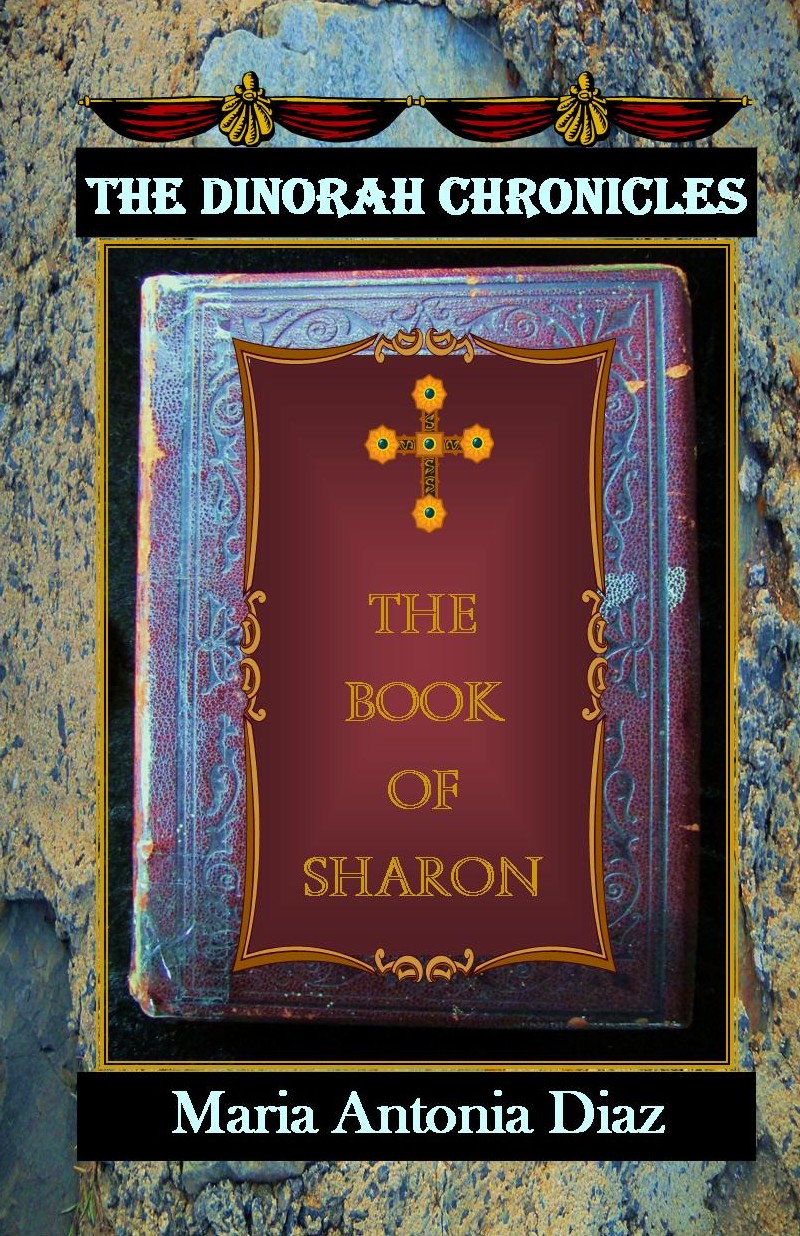
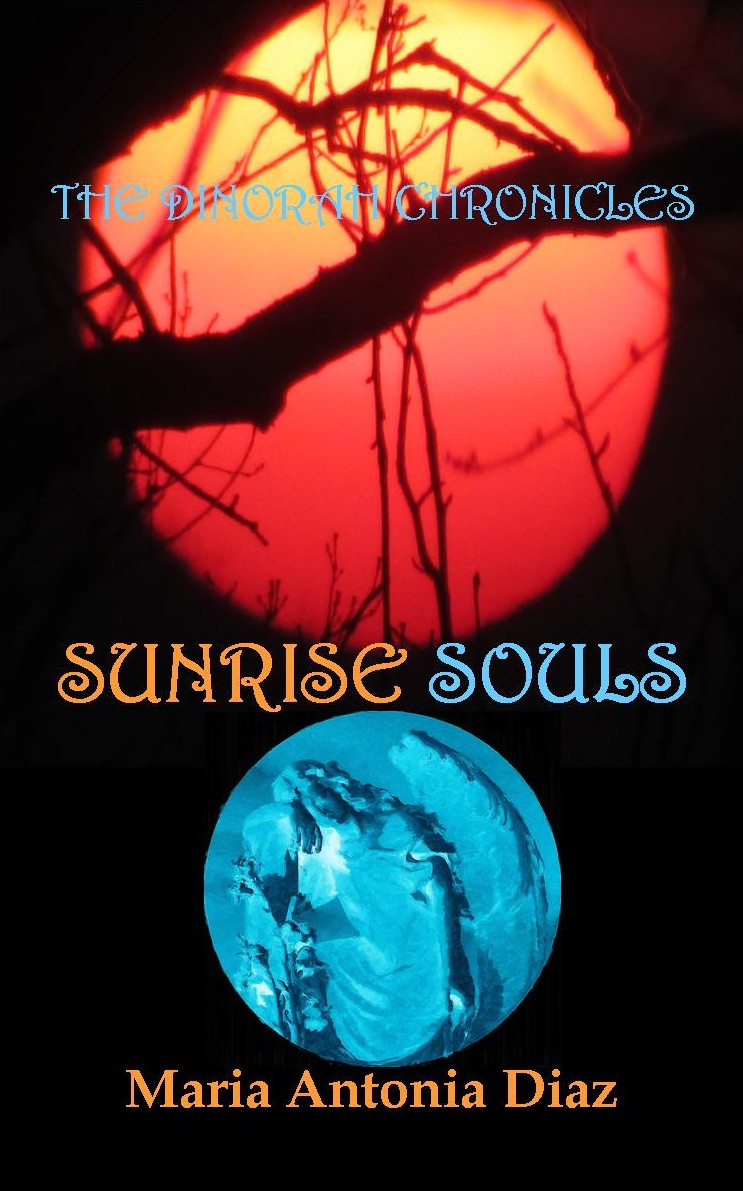
These are topics/ideas that are common in many novels, whether paranormal, historical fiction or other. The Dinorah Chronicles trilogy presents the idea of birthright as central to the series from denial to acceptance to fulfillment. At first glance, these three concepts might appear different or even contradictory to each other, however, these fuel each other, and in the end, the character chooses (free will) to fulfill a birthright and/or what might be viewed as destiny. A birthright might be given but a destiny is chosen by the exercise of free will, whether that birthright is fulfilled or not. In the end, the character finds “self” or grows into the pursuit of knowledge.

The Dinorah Chronicles is available via Amazon in eBook and paperback format.

On Writing – My Experience So Far

From time to time, I like to go back and think about my writing journey and how I feel about it so far. Although I have always written, since I can remember, it wasn’t until the conditions were in my favor that I was able to become an independent author; technology made it possible. In the early days and childhood, stories became broken pieces of paper, maybe because of my mistaken perception, the mystery that surrounded famous writers, and the extreme cost of publishing a book in those days, along with my dislike of pursuing traditional publishing. Although independent publishing has always been looked down in ways more than one, it seems that the idea has become more accepted, and even veterans in the field, traditionally published writers, have embraced it. For me, it has been the realization of a long lost dream, and hopefully, the delight of a lifetime. It has entailed much learning, but also growth. It has been elating as well as confusing at times. For me, the decision to publish independently was as daunting as baring one’s soul to the world, but also a natural one, that is in the sense that I always knew that traditional publishing was not for me. However, before committing, I made sure to learn as much as I could about both venues. That is something that has always been consistent with me – the willingness to study/learn both sides of something before committing to one. This time was not different, although I knew where my heart belonged.

I admire authors who were indies before it was even “a thing.” Back 30-40 plus years ago, it wasn’t as accepted or technologically viable as it is today. Maybe why I don’t take it for granted. It took real guts to be an independent author, and much more work and money. In my view, those writers had a reverence and respect for the craft, way different. As for me, I am so grateful for the times.

Writing for the masses has never been appealing to me, or following the latest trends in writing. In that sense, traditional publishing would have been as jail time. I love to write the story that knocks at my door, the one that begs to be written. Writing for money has never been an important goal, so in that sense, it has not been a disappointment. Delighting a reader, inspiring another, is more appealing these days. Making a decent living at it would only be counted as a blessing.

The future is too short or long, no one knows for sure, so I am very happy writing one story at a time while ignoring numbers; although, for some mysterious reason, thirty books in a lifetime sounds appealing to me, not sure why. However, that number is not a goal, just appealing. Overall, it has been an enjoyable, meaningful, soulful experience that I hope to be able to do for many years to come. When I started on this journey, at the same time, I was experiencing what I would call the most challenging period in my life so far, and also changing an entire lifestyle. Today, while reminiscing, I can say that it has been a good and satisfying journey.

When Others Don’t Understand What You Do

This is a light humor post, but one that will resonate with many writers who have gone through similar situations. It is written in the spirit of encouraging new and aspiring writers, as well as the veterans in the field whose work have not been found or given recognition. Consider this scenario, very common.

“What do you do?”

“I’m a writer.”

“Hum, a car dealership writer, an underwriter?” (Fill the blank on this one)

“No, I write books.”

“Oh …” (followed by a blank stare)

For most people, unless you last name is King or you live at a coastal mansion, you are not a real writer. You are “playing writer” or are going through a phase. In their minds, Writing books = $$$, and a real writer is supposed to have status of some kind. You become one when you achieve this. If not, why do it? Sometimes, we entertain those same thoughts and feelings; you know what I mean. It seems to go deeper than that.

I would like to share a funny story, a conversation I had along those lines. About two years ago, a nearby neighbor had someone fixing her roof. She knew the person since he was a kid. He was starting his roofing business and she needed a new roof, so it was a perfect match. I was at her home when he arrived for that day, and since I had some questions about metal roofs, we began a casual conversation which centered on the type of roof for my 1910 farmhouse, which has an old style construction (beams) and an original stone foundation. The weight of a new roof on the structure was my main concern. After a few exchanges, he asked me what I did for a living. I told him that I was a writer, without going into much detail. Immediately, he shared that he always wanted to write a book and that he knew someone who worked at a local radio station “BUT” she was a “REAL” writer. (Imagine my polite smile). I asked him, “Really, and how many books does she have under her belt?” He answered that she had written a book sometime ago. I smiled, but could not help myself and said, “Oh, just one? I am in my sixth, and it doesn’t get any easier.” I thanked him, waved a goodbye, and walked home. Now we know who will not get my business when it is time for a new roof. I will hire a real roofer.

This is a perfect example of how writers are viewed based on status, which usually equals money in the mind of many people. Which brings another issue – fame before talent. These days, if you are a celebrity a publisher is ready and waiting, and your celebrity name/status precedes your book. You can write about anything and it will be published, promoted, and praised, because in most minds, celebrities can be writers. Ask a Cover Girl model what she thinks about that.

At another level, the sting is more bothersome when it comes from someone closer, who is viewed as a line of support, such a family or a close friend. A friend related to me how annoyed and hurt she was when her mother became very excited about someone’s first book, a person she barely knew, but not hers (many) because her books did not sell much. OUCH!

When I published my first novel, I was excited and proud of myself. I had prepared and waited years for this. I gifted a copy to someone I truly thought would be happy for me, and whom I knew for over 30 years, and for whom I had been there always as needed. Her response baffled me. She threw the book on top of the dinning table and said, “I won’t be reading it; I don’t have time for that.” I was shocked. I did not have a quick comeback for that one. It is different when it doesn’t come from a stranger.

People had asked, “Do you make any money?” or “How much money do you make doing that?” One of my favorites is, “Oh, you should write a book about this or that; I bet it will make money.” We know it doesn’t work like that, and for most of us, it is not even about the money. I am sure you have many similar stories as well. My point to all this? Many people don’t understand what writers do or why we do it. In truth, it is not about how many books, or how much money you make … it is about perception, people’s values, and about what it is important to them, ultimately the reason why they don’t understand what you do. Hence why you should be above it all, don’t give it two thoughts, and keep on doing “your thing.” When people don’t understand what you do, it is inconsequential as long as you know why you do it. Never judge a book by its cover?

On Writing Anarths and Other Celestial Beings

When I think of heaven, I think of blue and white (Photo by M.A.D.)

When I set out to write Moonlit Valley, I didn’t know it would take me to a highly organized, supernatural world that operated on Earth through many beings, one kind called Anarths. Anarths are celestial beings who take human form in order to fulfill their assigned duty on Earth. They do not age, possess strength and speed abilities, are capable of traveling between realms in less than milliseconds, and possess enhanced senses, hence why human emotions overwhelm them. They are sentinels of Earth and they monitor and protect key humans who are important in human evolution according to a divine plan. They are not angels, and are a few ranks below.

Writing Anarths presented a challenge – they were not humans but they had to act human-like. However, for the sake of these characters in the story, they had to be written in a distinctive way, that is, aside from their supernatural qualities. They also could not resemble each other or act like clones; they owned their personality on Earth. They experienced emotions, so they could not behave like robots or android-like. They had to present a soul-like side, even that they didn’t have souls. Description/descriptive behavior and characteristics were good to a certain point, so I relied on dialog to achieve this.

Another challenge that presented itself later on, when these characters made it to The Dinorah Chronicles, which had a story time lapse of 20 plus years forward, was the need to evolve them along with the humans they interacted previously, but because they didn’t age, they could not be “totally present” in some parts of the story. They had to act more human-like across the whole series/story and throughout the years, but also develop a familiarity with certain key human characters in the story. All this had to be reflected in the dialog throughout the trilogy. Because they had blended well with humans, they had acquire certain personality and behavior patterns that had to be reflected in the trilogy. Simply, they could not have remained the same. One way to achieve this was to make them sort of “break a few rules” but without sacrificing their righteousness. Their personalities and behavior throughout the series had to evolve without being to evident, because after all, they had a divine makeup, and a divine purpose/duty, which had to remain untouched by me (the writer). An example of this is prohibited and brief, but necessary, negotiations with a neutral element of The Other Side in order to obtain information that would advance the cause.

A simple example of the use of dialog in the early stages of an Anarth who has been assigned on Earth but has not spent enough time or develop many human relationships yet, would be something like this:

Human dialog“Hey, why are you not going?” or roughly “Hey, why aren’t you going?”

An Anarth would say it like this – “What is the reason for you not attending?” or “Does your intended absence has a purpose?” or “Is there a purpose to your absence?” There are many ways to construct the sentence, many variations, but all intending a certain degree of order.

Another simple example.

Human “Do you want lunch?”

Anarth“Are you in need of nourishment?”

An Anarth in the early stages of human contact would not say “can’t” instead, he/she would say “can not.” As relationships become stronger, the dialog evolves, thus becoming more relaxed. The darker (evil) the character, the more impersonal and less “caring” the dialog became. Writing these characters was fun and I learned much from their interaction and evolution throughout the story as I wrote them.

Moonlit Valley and The Dinorah Chronicles are available via Amazon in eBook and paperback.