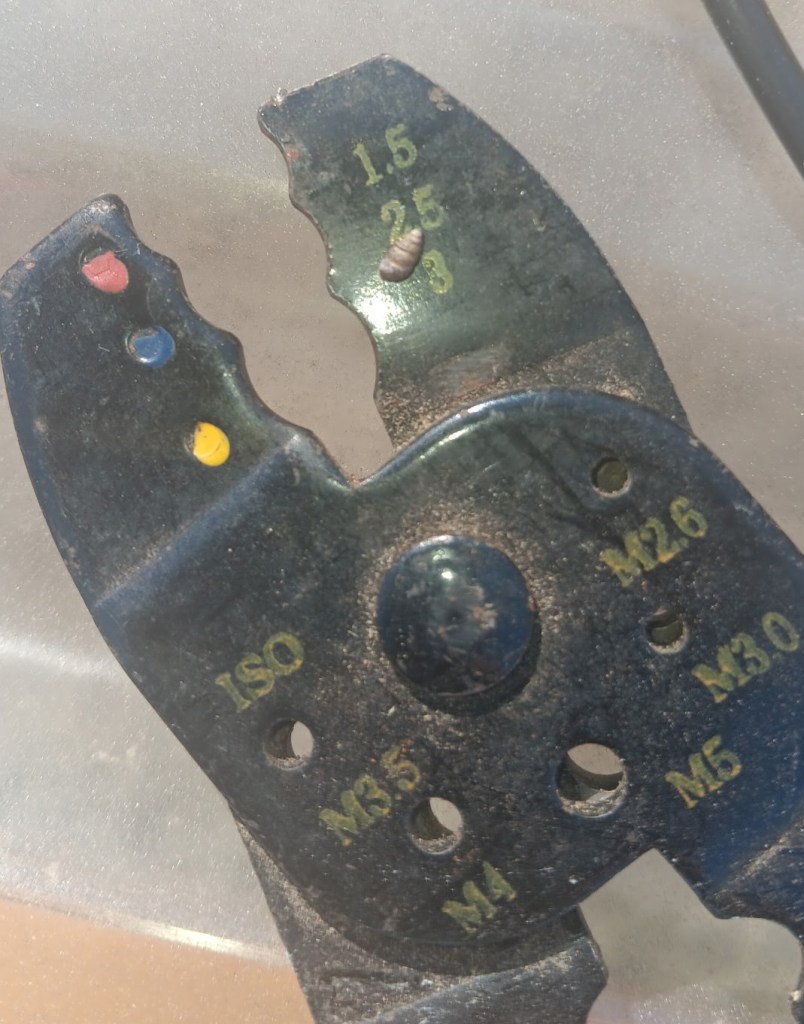
I was helping my husband who was working on our water well. The area we live in has been in severe drought, and has not recovered yet, so our well was not working properly. His tools were scattered all over the ground, so I started to gather them in one place. As I picked up the tool in the above photo, I thought dirt was attached, but upon closer inspection, I realized it was the tiniest snail I have ever seen. In the photo, you can see it between the numbers 2.5 and 3. Very gently, I picked it up and put it in a safe place in the garden. Nature is just amazing and it speaks constantly of the wonders of our Lord.
Nature never ceases to amaze me, and so does refusing to see the truth.
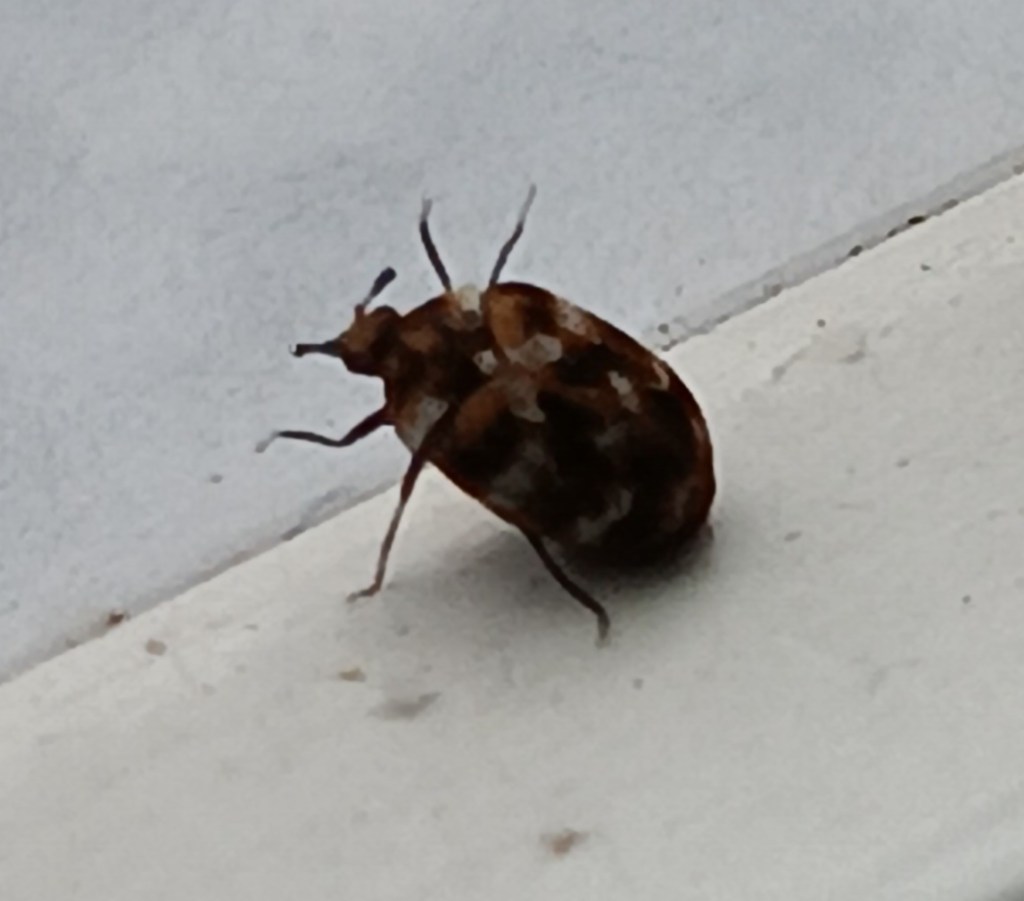
I always thought this tiny beetle was black. It is the size of a pinhead. It wasn’t until I decided to take a picture of it and zoom it that I realized all its beautiful colors. At a glance, it looks black, but it is not. Now, I see it with very different eyes.
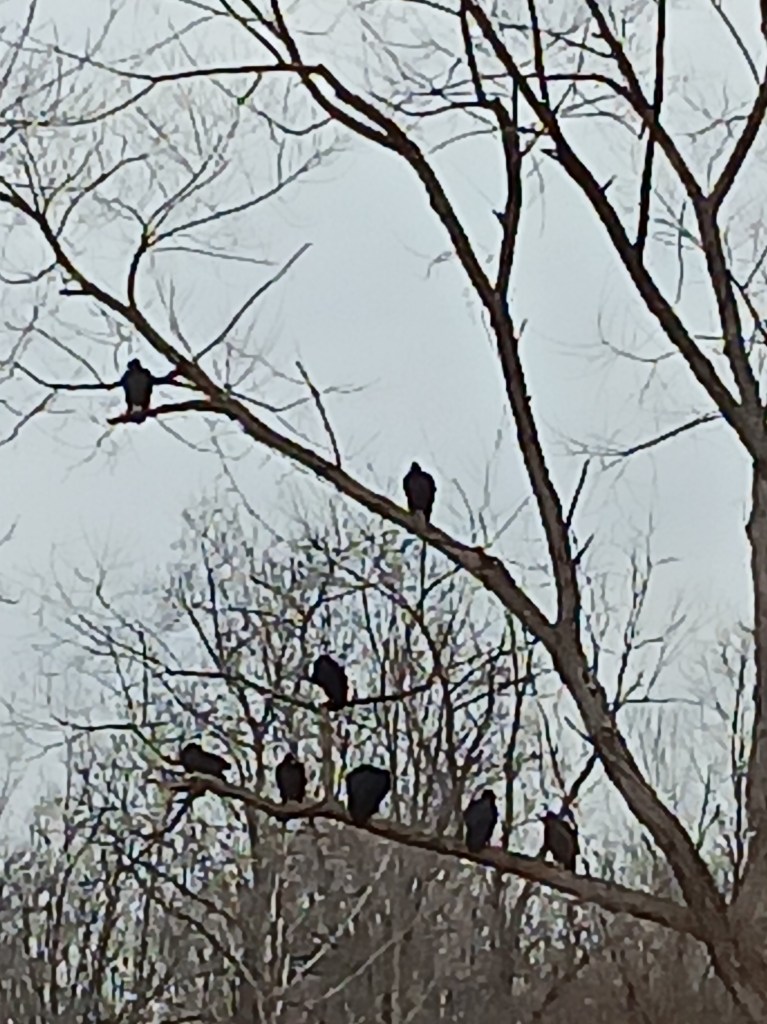
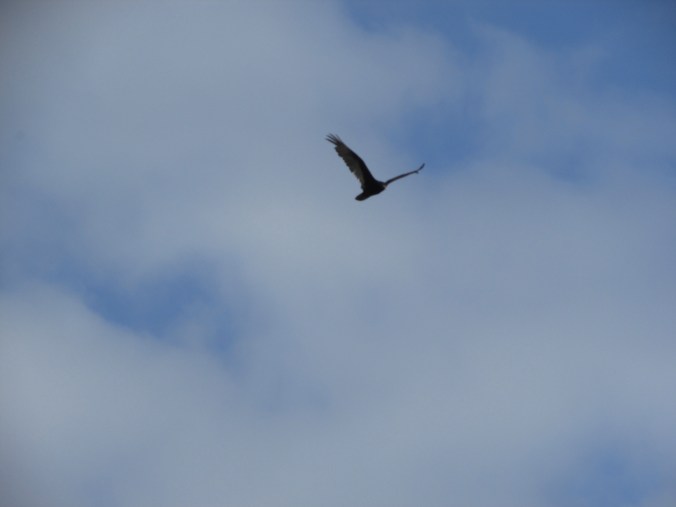
Buzzards are welcomed here in Chatham. We even have a buzzard festival.
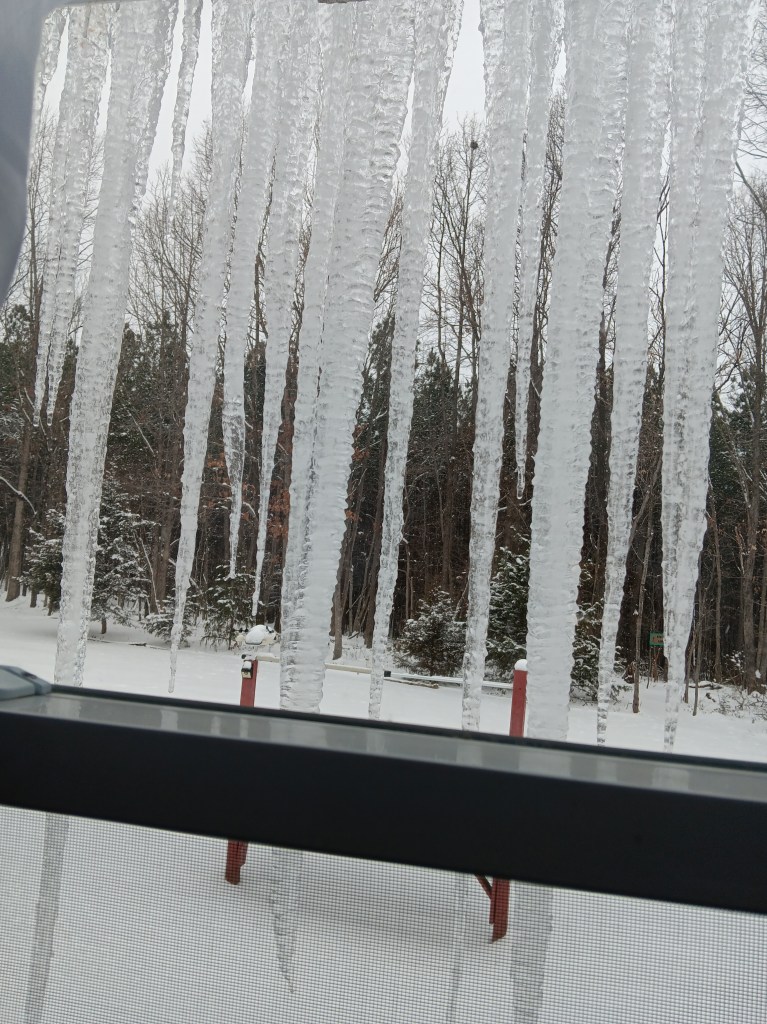
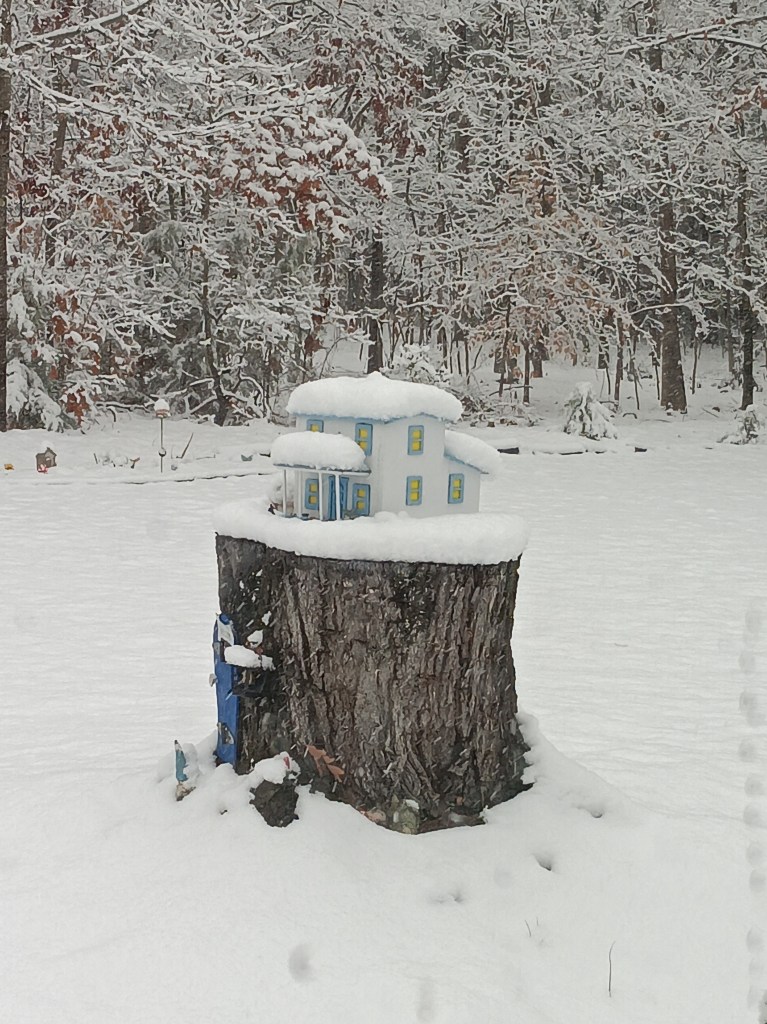
I was not expecting snow so early this year here in Virginia, USA, but we got a few inches. The temperatures have been cold, hitting in the 20s at night and even in the teens once or twice. Last year, we only had a dusting. The old 1910 farmhouse (Black Crow Cottage) is cold in the winter, a given of homes built early. These homes were framed different and without insulation on the walls; by the way, to insulate is not recommended due to the risk of trapping moisture in the horizontal boards and thus causing mold issues. A frame around the walls would have to be built in order to insulate the home, thus leaving space for the air flow. This is something to keep in mind if you ever decide to buy and fix this type of home. You can see pictures of this type of framing in my older posts under the categories of Fixing an old farmhouse or Restoring a farmhouse.
Snow always makes the news around here, even a few inches, and many businesses close operation for the day. People seem to love it when it snows. Moving here from Jersey, it is a contrast. I remember driving to work on a nor’easter on a few occasions, or we would have a delayed opening. Crossing a bridge under heavy snow is an experience, but under heavy fog, it is just out of this world; the feeling is one of flying in the sky inside a car. Not that I recommend this, but when you had to be there, you had to get there. Everything is more relaxed now as far as the job environment goes, for what I can see. Here are a few pictures to welcome the season.
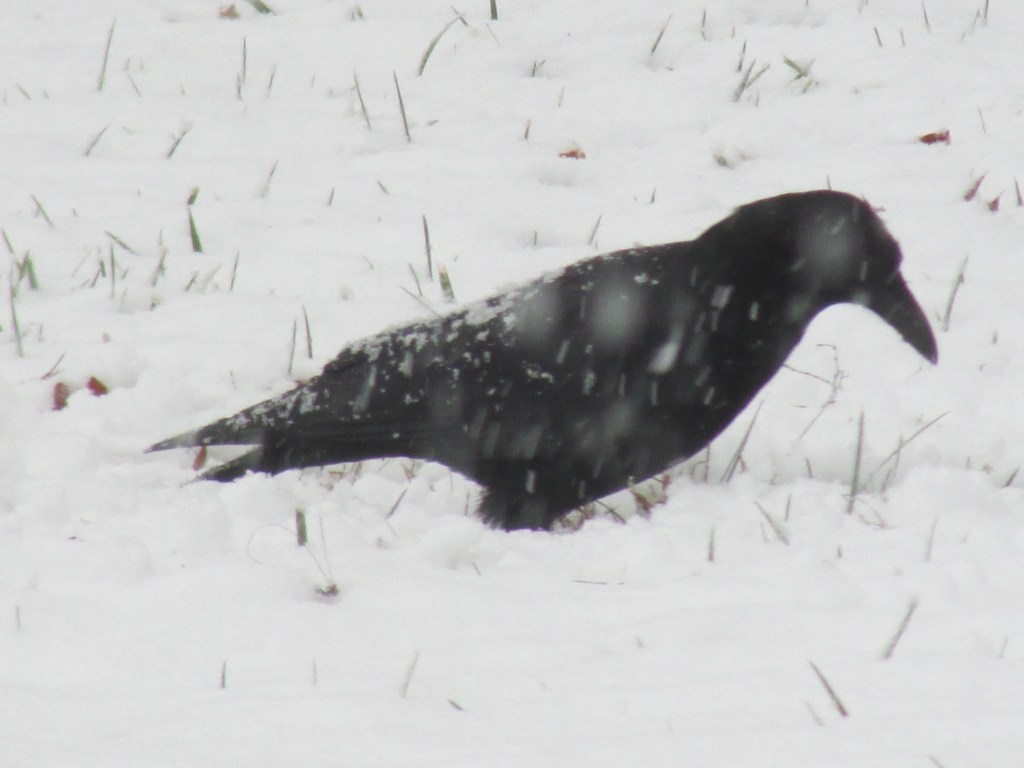
This is why I love crows so much. There are no birds around, the snow is falling heavy wet, and there is Rebel poking the snow and playing, pulling out leaves. I named this crow Rebel because I observed him being a bit different from the siblings when Mama Crow was training them on how to eat. He would be the last one to learn to peck on his own, and Mama Crow would come to the rescue from time to time, I guess when she could not take the yelling for food anymore. Even the siblings, two of them, would feed him at times. When two families of crows would mingle, he would be the one going his own way, minding his own business. One sibling seemed to bully him at times, once he had learned how to peck the ground for food. When I took this picture, he was alone, none of the crows where around. Later on, he flew back to where they usually live, in the woods behind my house.
After ten years of Japanese Lady Beetles invasions, I should be used to these, kind of cute, little critters; cute in small numbers that is, but not so cute when in the thousands and all at once. It is the one thing that makes me cringe at the thought of Autumn arriving. For a week or two, depending on the weather, and starting by the second or third week in October, waves of thousands of lady bugs look-alike critters fly to take refuge in buildings before the cold season arrives. This year, they arrived later than expected, two weeks ago, due to the on and off weather patterns we had. We had a week and a half of arrivals, starting in the hundreds and increasing in numbers to the thousands in several waves. The critters attempt to take refuge inside homes or wherever they can. Most of them die upon arrival but many survive. During these waves, I cannot go outdoors because they will land on top of me and crawl all over. Imagine hundreds of lady beetles landing on you at once; it is just like a horror movie, seriously. My husband knows this well after attempting to step outside during a heavy wave of Japanese Lady Beetles. After all this time, I decided to write a post about them, now that we know each other better.
The Japanese Lady Bettle looks like a ladybug, except that they make its appearance in numbers in the fall season, and the ladybugs usually appear during spring. Its color varies from light orange to reddish, some are black, or variegated black and orange, and they have black spots all over. Their head is more elongated than the head of a ladybug. They have the mark of an M or a W behind the head. They are a bit larger than the ladybug; however, I see them in all sizes, from tiny to larger ones. They were introduced to the USA for agricultural purposes, as they are beneficial by eating pests that damage crops. Soon, they became invasive, and now, they multiply in large numbers. However, if you don’t mind their arrival and your house is well sealed, it should not be a huge problem, as they do not harm people or pets. I have learned to time their arrival during the day, usually after ten in the morning and ending around six thirty in the evening, so I know when I can do my errands before they arrive, and during the one or two weeks they arrive. After that time, I do not see them outdoors. The JLB is also called Asian Lady Beetle, and its scientific name is Harmonia Axyridis. They seem to like light color buildings, which I know is true because my neighbor’s home is painted a pale green and they hardly land on her house, but mine, a white farmhouse, becomes a landing haven. My theory is that the pale green becomes like grass or trees on their vision field and they bypass it. They seem to dislike dark colors as well.
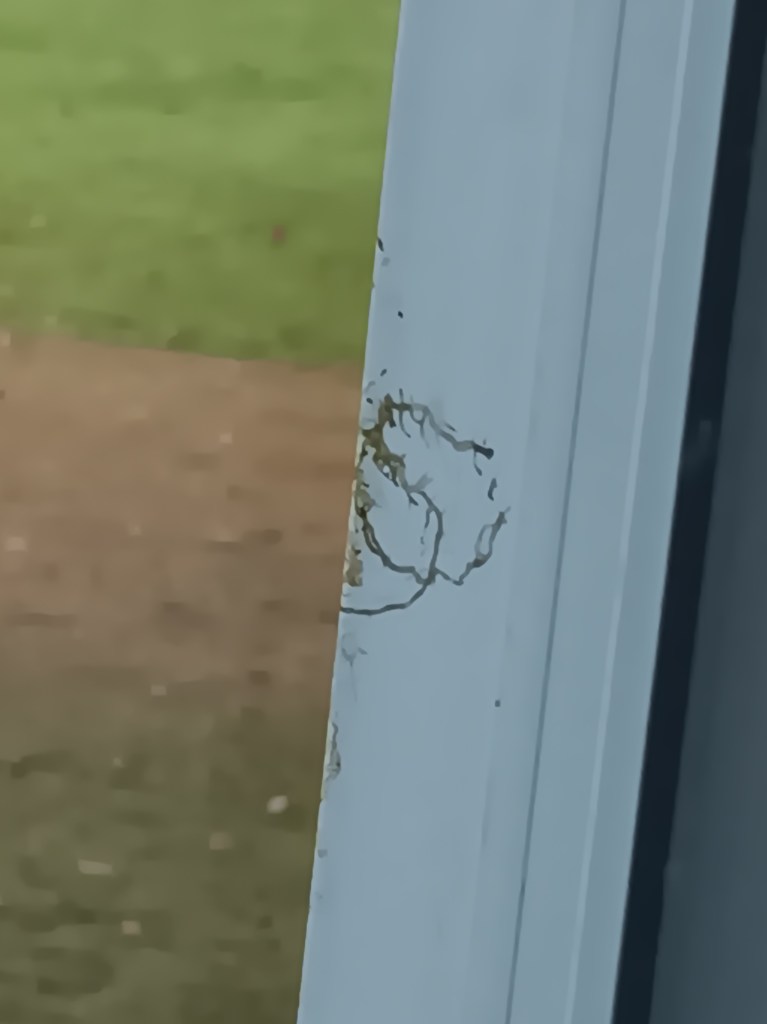
When these critters arrive, they emit a distinctive light scent; it is pheromones that attract others and guide them to where they are to land and winter. I am susceptible to this scent, and it triggers my asthma, so I have learned to be ready and on top as far as my meds are. These pheromones are left where they land to signal other lady beetles, “Hey, come over; the party is here.” After a couple of years of JLB invasions, I started noticing two intertwined circles all over the home siding. One day, I saw a lady beetle leaving the distinctive mark, which always looks the same. It is the pheromone-scented invitation for other lady beetles to find. Here is a picture of two different markings, one at the window siding and another at the side entrance storm door glass. I took the pictures this morning, and because the temperature dropped to the twenties last night, the glass is foggy, but you can see the two circles.
It took me a while to realize that these were love letters. I find this fact so interesting. By now, I think their arrival is complete, and if there are a few stragglers, they will arrive at the first warm day we have before winter sets. After ten years living in the area, I don’t think I will ever get used to these critters and certainly will never step a foot outside when they are arriving, but I have learned to understand their life cycle and have been amazed on a few occasions by their survival skills. If anything, I have learned to accept their very short presence and nuance because I live in an agricultural area. I hope I inspired you to learn a bit more about these lady bugs look-alikes.
Following up on the previous blogpost about sprucing up the front entrance. Although there is much more we would like to do with the entrance area as far as adding more color with plantings, it has proven to be a bit challenging due to being a shaded area; however, we have managed to transform it from a messy and unruly, full of weeds area, to a rest area with a little bench, a few plantings and garden decor, as well as solar lights. It has taken some time and effort, but I am loving the result so far. One thing that I needed to add to this area was a sign with the name of our home, Black Crow Cottage. My husband recycled and repainted an old metal sign that I thought had no more life to it, and I was able to use it in a new way. I am so glad he did. It adds charm and sweetness to the entrance.
Black Crow Cottage was named after the many crows that live and nest here. I love them. Photo by M.A.D.
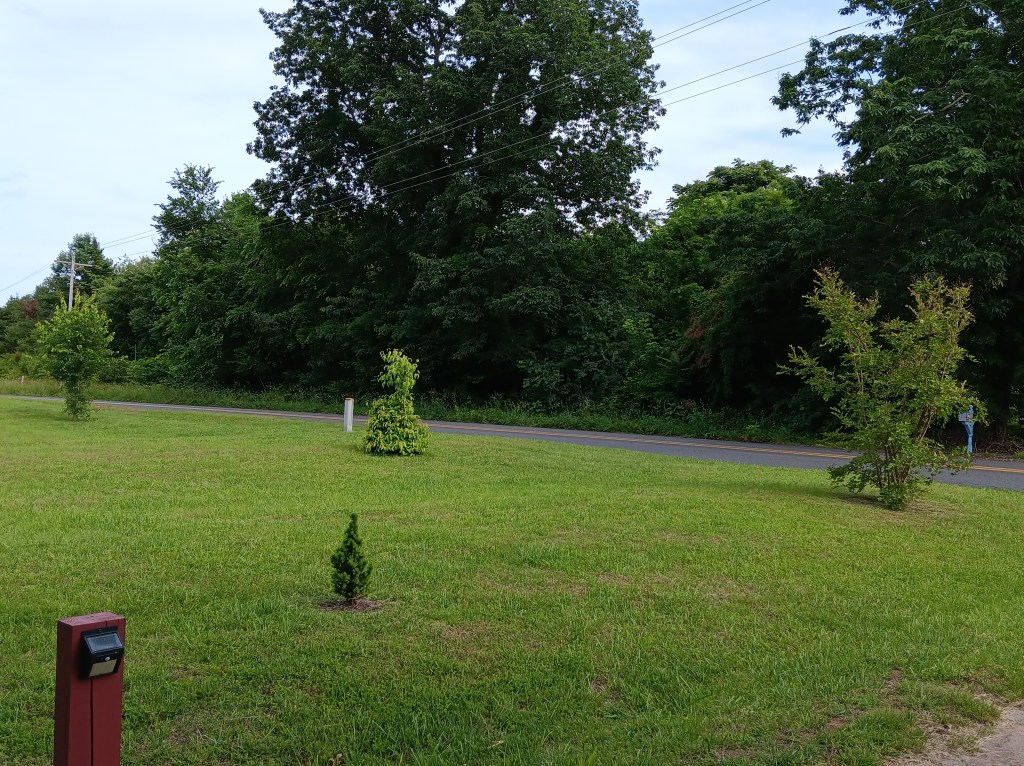
The front area of the property was covered in tall grass and some overgrown bushes intertwined that we had to remove. I was able to plant some free trees from The Arbor Day Foundation and after a few years they have grown well and are beautiful. To get the trees, I sent a small donation, and they sent me 10 dormant trees suitable for my area. Here is their website – Arbor Day Foundation. When I first saw the dormant trees, I did not know what to expect, and I thought these were dead sticks. After reading the instructions, I learned that these sticks were actually dormant trees that would come to life when planted properly. I planted them and watered them for the first two years, and they are lovely now. Of the five planted, I only lost one, the Dogwood tree. I gave five to my sister, which she planted in her previous home. The Crape Myrtle was the first one to bloom and the fastest to grow. The other grew at a slower pace, but steady. This year, the Hawthorn bloomed for the first time, and so did the Redbud tree. The Lilac bush has not bloom yet, but I read that it might take 5-6 years for it to bloom. Here is a picture of these lovely trees.
From left to right: Hawthorn, Lilac, and Crape Myrtle. The tiny tree closest to the red-light post is a small Christmas tree that I planted last Christmas. (Photo by M.A.D.)
This lovely Redbud surprised me this year by blooming allover before putting out its leaves. Photo by M.A.D.
For those new to this website, here is a picture of the front entrance area when we first bought the place.
This was the front entrance before, when we first saw the place. The driveway was completely covered. It was a real mess that required vision, and the grass was very tall, up to my hips. (Photo by M.A.D.)
I wish to be able to see these trees when they become majestic and full grown. It will take years, but I am willing to wait. I hope you enjoyed this update.
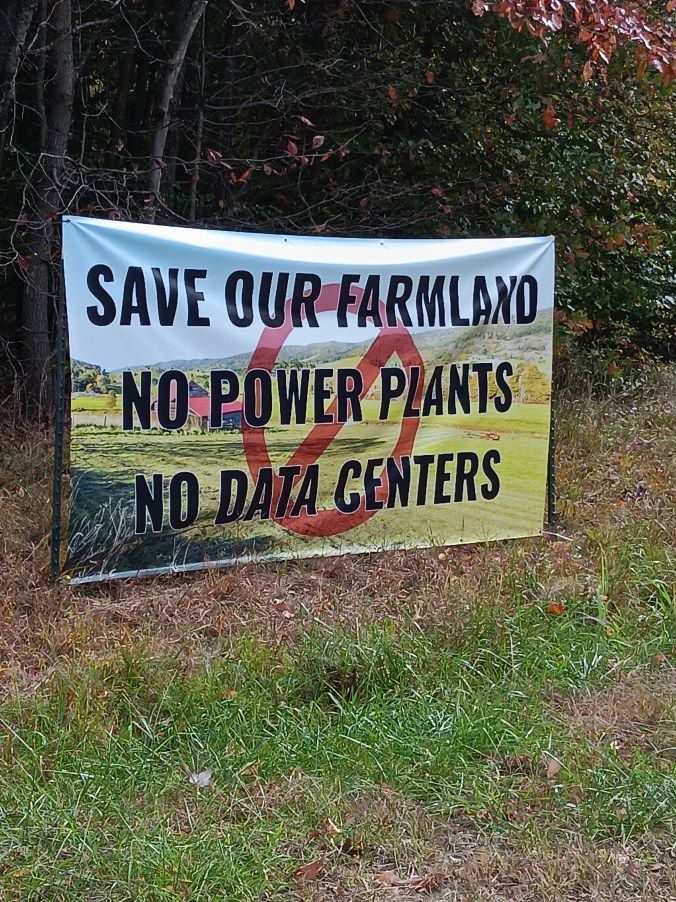
I feel I owe an update to a previous blogpost (Never Faithless) written on November 21, 2024. As I wrote before, my neighborhood was recently challenged by a proposal by Balico, LLC. to build a mega compound of data centers and a large power plant, that would have engulfed an entire community and caused irreparable damage, in my opinion (please, visit previous post for the details). After much opposition by local and county residents (and tons of prayers), Balico decided to withdraw its modified project, thus resulting on a denial of rezoning by the Board of Supervisors, and after the Planning Board did not recommend the project.
Now, Balico is considering other development options on 750 acres of land. The company has expressed the desire to utilize such land for the future construction of a very large housing development project. Assuming the use of the 750 acres, current zoning would allow two dwellings per acre (1500 dwellings). In my opinion, each dwelling can house more than one person, of course, and I think that this number of dwellings would more than double, possible triple or quadruple, the population of our small town, which as of the latest 2020 Census has around 1232 people. With a small population, our town lacks the infrastructure to accumulate such an influx of people; we simply don’t have the resources. It would add a strain in our country roads, schools, mail delivery system, water consumption, and much more. Small towns grow slowly into smaller cities and so on, not overnight.
I see a company that does not care at all for the footprint that it leaves behind but cares only about fast profit without regard of how it is made. Although Balico is in the early stages of exploring other development options for the land, and it has not rendered any concrete plans as of now, one thing is very clear, Balico does not understand us, our values, our way of life.






 Inkspeare