On Writing – When Dialogue is Long

In part, a purpose for this blog is to write about my journey as a writer, as well as to share what has worked for me, and my approach to writing a novel. There are so many books and information online on this topic, which will always be of some benefit; however, I find that much of that information is very technical and sometimes, even discouraging to someone who is just starting the journey, hence why I try to simplify when I am writing about a subject. In this case, dialogue, specifically, when it needs to be long.

When I am writing a novel, I strive to have a balance between dialogue, description, and narration. My novels tend to be rich in dialogue, sometimes long (if needed). If not careful, the reader might be lost in the conversation. Although sometimes a long conversation is required between two or more characters, I try my best to include other elements, whether having a character make a gesture, change positions, observe something, or anything that might give the reader a small break from the dialogue. I have a tendency to write in long sentences, as you might have noticed if you have been following this blog, and that is reason enough for me to be aware when I am writing dialogue, or even description in my novels (there you go, that was a long sentence.)

When dialogue is long, such as in the case of a character recounting a story, or a past event, I interject with something in the third person. As an example, Joe is recounting an event. He has been talking for a while, so in order to break it up a bit, as the writer, I can interject with having Emily react to what Joe is saying. Emily’s eyes grew wider with anticipation… or depending on the scene, Emily grabbed Victor’s hand tightly while Joey …. or a character might break the dialog with a question. These are all actions but should never feel forced on the characters. Those small breaks in dialogue give a break to the reader, but also make the other characters present in the conversation while they are silent. When I write dialogue, I want to make it as natural as when I am in conversation with another person or group of people. Characters have different personalities and when they are active in dialogue, their personalities are reflected through their words. It goes a step beyond she said/he said. A reader should never be confused about who said what. Just as chapters are a continuous clean break, so should interjections in dialogue. One follows the next naturally, without leaving the reader behind.

Finding My Way Back, an Update (and books and roses)

Finding my way back to my book in progress, The Girl Who Could Not Love, hasn’t been easy. I stopped. I tried. I stopped once more. I had to put it aside for some time despite wanting to continue writing it. Something was not right. It lay dormant, and eventually, I knew I had to come back to it. It has been on my mind all this time, morning, night, and in between; however, distant, but calling me. It is the book that begs to be written to a hesitant writer that has finally surrender to it. Whether to answer the call or not, is not important anymore; it is why. Why is this story haunting me? Why the fight between pen and heart? Why do I want to write this story? Why won’t the story quit? Why won’t I quit?

While reading Never Too Late (or was it Shine On? I read them back-to-back) by Claire Cook, I thought about something she mentioned. It is to ask yourself in the reinvention journey, but in her case while writing a book, what stands in the way of my protagonist? I asked that question about my novel, and my protagonist. The answer, me. I was standing in the way. So, I had to ask myself the question, and I got my deep-rooted answer. I am working on it.

In the meantime, I have been reading up a storm, some of which are these. I am currently reading It’s Rising Time by Kim Kiyosaki. I am enjoying this book very much. I like the writing style of Kim Kiyosaki; it is straight and to the point. So far, I think that this is a book that every woman should read. Next on the agenda is Life Glows On by Claire Cook. Her non-fiction books are straight from the heart and fueled by her experience, as a woman who reinvented herself.

Photo by M.A.D.
Photo by M.A.D.

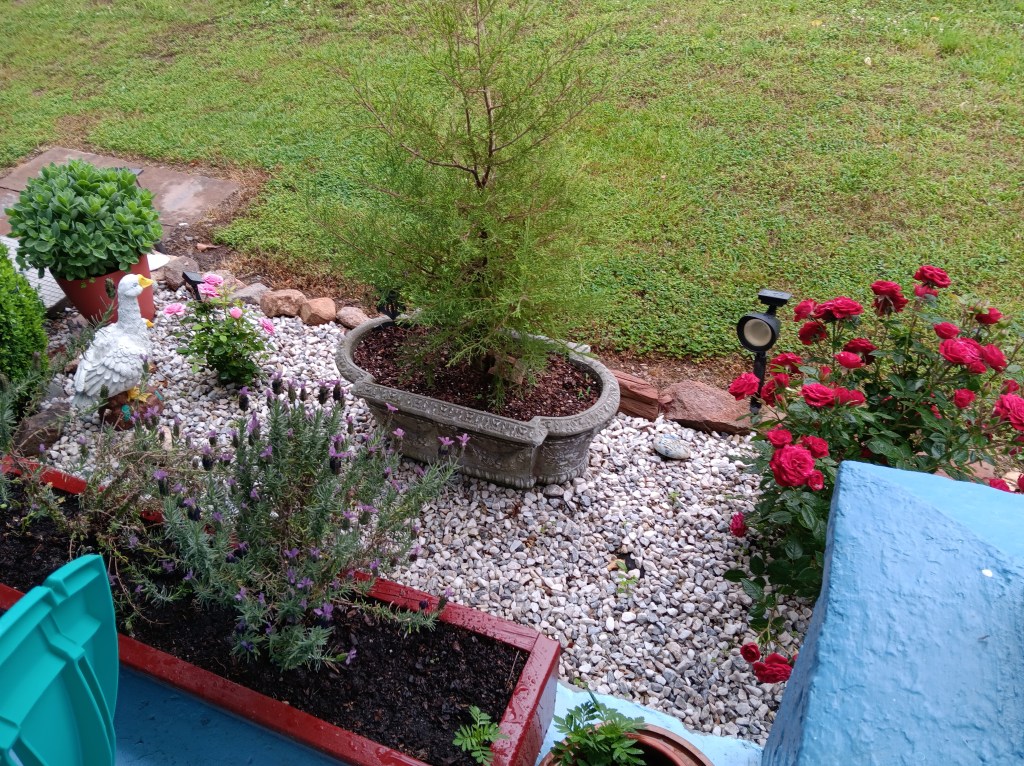
The garden always calls this time of the year. About two years ago, I planted two tiny rose bushes. One of them, the red rose bush, has grown considerably when compared to the other, a pink rose bush. I planted these at the same time, and they have grown under similar conditions. Both were labeled miniature rose bushes. Just as people, they continue to grow at a different pace. Just like writer’s stories, they bloom and develop at different stages.

To the left, near the duck, the pink rose bush, and on the right, the red rose bush. Photo by M.A.D.
Red rose bush. Miniature? Not so much, but spectacular. Photo by M.A.D.

Miniature or not, both rose bushes have their own enchantment.

The Question You Never Asked

As writers developing a story, we have questions in the back of our mind. Questions about our characters, situations, details in the story… and much more. Many times, these questions define a character, personality, and its story within the main story. As writers we are not afraid to ask or answer those questions. As people, many times we avoid the questions and answers in our own story. Ever wanted to know the answer to a question you did not want to ask? Sometimes, the truth might hurt more than the question. Sometimes, the question you never asked is the answer you don’t want to know. Life is full of questions and answers; some questions are better left unanswered.

Writing Through Your Emotions

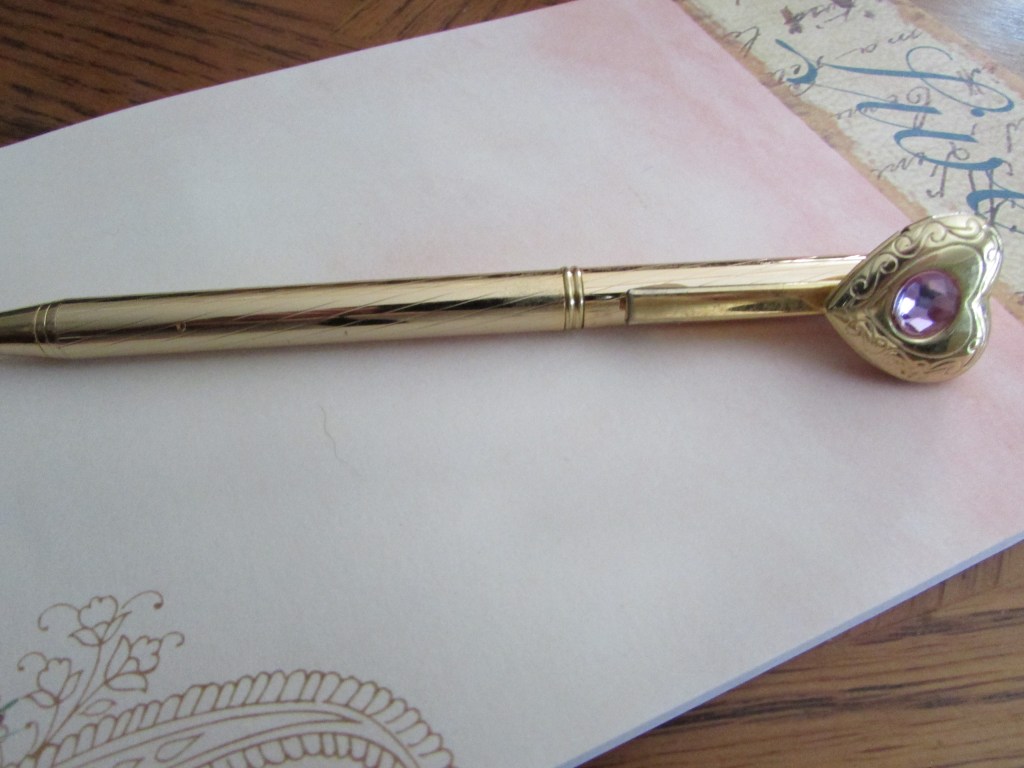
Photo by M.A.D.

I think that writers can be pragmatic, but also drama queens set free in their own worlds. Not only do we deal with our character’s emotions but also our own as we write these characters throughout the story. Sometimes, it becomes overwhelming, other times, cathartic. In my experience, I have found that sometimes a roadblock in writing goes deeper than the pen I am holding. That pause, that resistance, comes from an emotion that I might not want to acknowledge, usually indirectly. What might seem at the beginning a distraction or even a mild case of writer’s block, is no other than an emotion that does not want to be recognized for what it is, whether a painful memory, a weakness, or a more deep-rooted emotion. It resists the pen however it was triggered. Sure, a writer can always go around it and find an excuse for the pen; however, it won’t be the last time.

Dealing with our feelings as we write will eventually release the words that have been held hostage, and result in a better flow of the story. Many times, acknowledging that the emotion is present might be enough. Sometimes, characters become mirrors; most of the time, they are just beings from the imagination being brought to life by a passionate pen. Other times, the ink takes a bit longer to dry.

A Writer Evolves with the Characters

I am writing this blogpost from the point of view of the evolution of the writer as opposed to how a character evolves in the story. Throughout the story all characters evolve, change, as experiences and challenges are introduced by the writer. The interaction of the characters and the different situations the god-pen writes for them makes this evolution possible. Where there is no change there is no story, it comes naturally. In a series, this process is more evident and so much more engrained in a character, not only because of the many situations a character goes throughout a series, but also because there is the fictional pass of time. Most likely, the character is very different from the first book until the end of the series. This is also where the writer’s evolution takes place.

From that first concept of a character until the end of a story or series, the writer has been learning, feeling, and even listening to the needs of the characters. Sometimes, a character will fight a writer’s pen, and the writer’s best decision for this character will entail listening to it, and analyzing the particular issues that are present. At that moment, not only the writer has changed, but the original intention as well. As characters mature and go along in the story, so does the view and “feeling” the writer has of them and for them. A writer that doesn’t “feel” a character has not listened to it. A stubborn pen is worse than a stubborn character.

At the end of a story/series, a relationship, a connection has been attained but also, there has been a mutual understanding, a symbiotic evolution.

The End of the Road is Just a Bend in the Journey

Thirteen years or so ago I decided to follow a long-lost dream, publishing my first book. Around the same time, I started blogging about my journey as an independent writer, as well as capturing and renewing the dilapidated soul of an old farmhouse while moving to another state. While the transition took some time, my intention remained the same. My intention was at that time, to not only share the journey but to inspire other fellow writers and readers, and to share what I had learn over the years.

Time does go by quickly, and in retrospect, I think that I accomplished what I set out to do and more; however, the journey continues, and with it the desire to inspire others through a few written lines on this blog, and my novels. This journey brought into perspective sweet challenges, tons of education and effort, as well as understanding myself as a writer, and on that last one, I am still doing so. On the home front, the soul of an old farmhouse has been restored, and now it must be refined. The writer feels the same way. For the DIY lover, this blog is a friendly place as well. I have made my best effort to maintain it simple and honest, not fussy or too “crafted.”

During this journey, I published five novels, and I am currently writing the 6th. The pace has been dictated by the story, and I have tried to be the best steward of words I could be. It hasn’t been easy, but I hope that throughout the years, if you have visited this blog, that you have found at least a bit of what you were hoping to find in it. Many of you have been around for as long or longer than I have, and it has truly been a pleasure to not only share this tiny dot of cyberspace but to read many of your blogs and comments as well. It has been my delight, and I hope that I have reciprocated in some way.

So now what? I am at peace with the pen, my pen that is. I don’t know what the future might hold, but I hope that I can continue to share this journey, and if along the way I am able to inspire a soul, then, I have been of service. For now, part of my work is done, but it is not the end of the road.

Disconnecting From the Story

Photo by M.A.D.

Call it writer’s block, a dry spell, or anything else, it happens to many writers. It is the dreaded ailment of the pen, the disheartenment of a writer’s soul, without notice, unexpectedly and untimely. It is that break in the connection with the story, like a broken bridge that is hard to repair. Whatever prompts the disruption is unique to the writer, as it is the healing process, the timing when writer and story will be in communion once more.

Writer’s block might feel as falling out of love with the story, or not finding the right angle to continue writing. It might come in the form of disillusion with the story or even the craft, a broken heart of sorts that refuses to pump ink. Waiting and longing for the magic moment only seems to make this disease of the inkwell more acute and prolonged. Ironically, its only cure seems to be time. Drip, drip, drip … the ink flows again.

The Simple Life – Balance

Sometimes, living simply requires certain balance, and the simple acknowledgement that too much of something wrecks equilibrium. Dealing with the sense that what’s on the right does not equal what’s on the left, in whatever circumstance or area in our life, puts us off, and it reflects in everything we do. The past two years left me off balance, and I have been trying to find that golden nugget that will get the scale back in equilibrium, and it hasn’t been easy. It has reflected in my writing, especially on the current novel that I am still trying to write but have put aside. Faith has been my comfort blanket, and counting blessings always seem to put things into perspective. Simple living has been a source of joy and contentment. Gardening an escape that offers many delights, especially when everything around seems to be screaming silently – new beginnings. I have found refuge in such things, meaningless to many, therapeutic for others. Sometimes, balance can be pursued in the simplest of things, and found in the least expected places. For me, I have found it in God’s word, in the garden, and even in the mundane chores of daily living. Where there’s a constant, there’s peace of mind, and peace of mind is the closest thing to that golden nugget.

I have been working in the garden and setting up new areas, planning other areas, and just enjoying the good weather, but in the back of my mind there is always that untouched novel, like a ghostly thought that lingers in the crevices of the brain and the depths of the soul. When? Who knows? One day I will wake up with a little golden nugget on my hand.

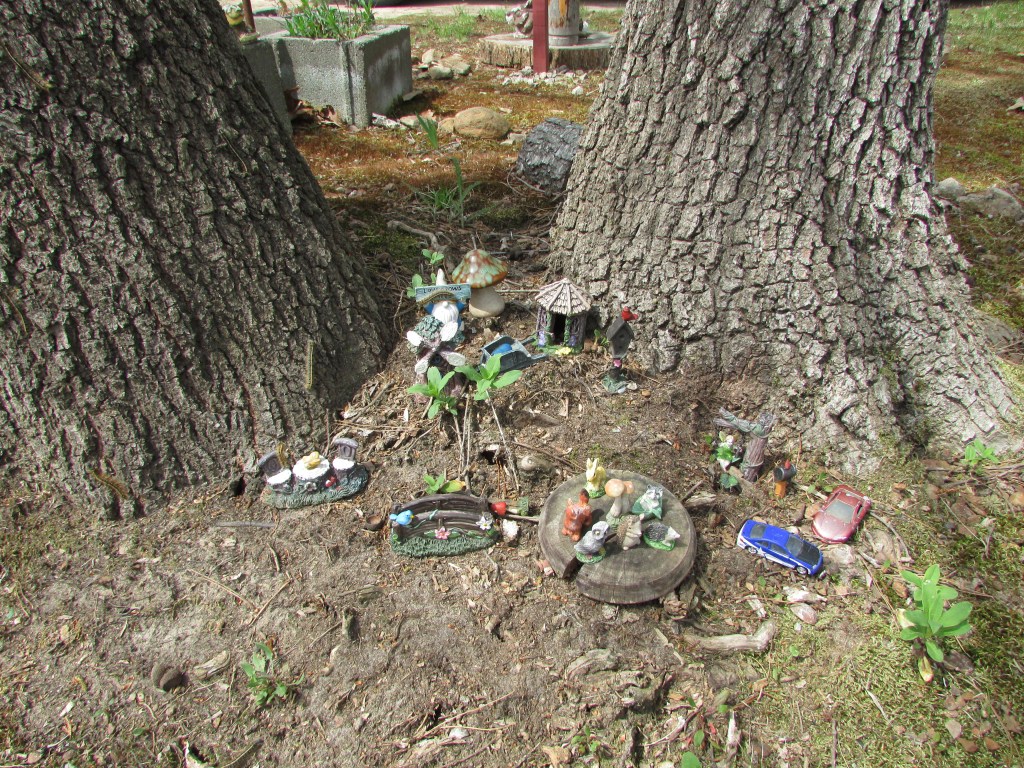
Here’s a new area I started in the fairy garden.

This is a shade area, and it has been hard to plant anything, even hostas. It is part of the faerie garden and is covered in moss. Right now, moss is starting to change color to green; I love when it turns thick and green, like nature’s carpet. We have been invaded by moth caterpillars; they are everywhere. Can you spot three of them in the tree trunk at the left?

Home Sweet Home?

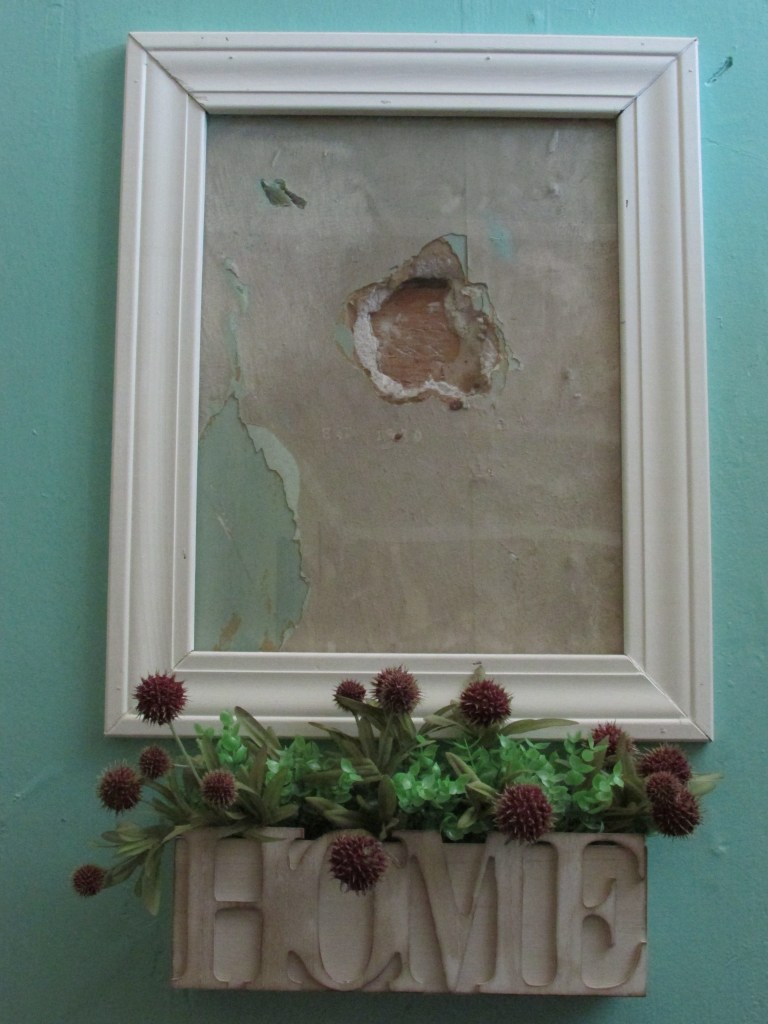
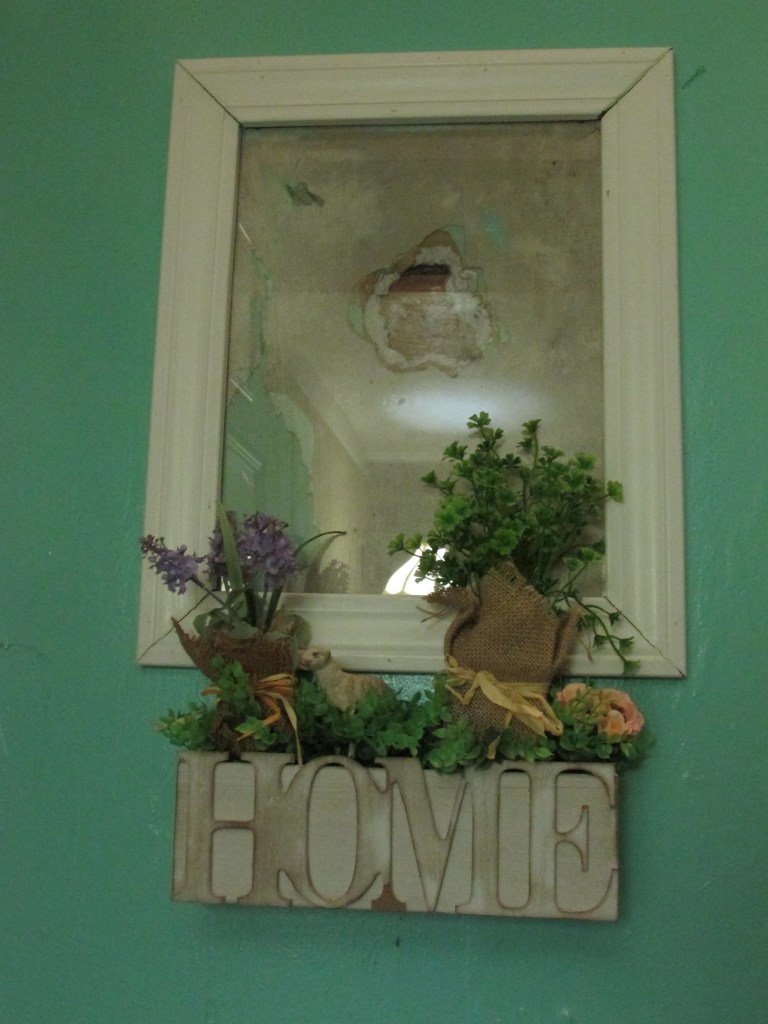
When we started to fix this old farmhouse, we decided to frame part of an original wall as a picture, a reminder of where we had been. I placed a flower box under it, and I was very happy with it until a few weeks ago. Every time I passed by it, I felt a bit annoyed and definitely not at ease but had no idea why. Suddenly, I disliked the flower box. It puzzled me. It wasn’t until I looked at it and asked myself what about it bothered me that I made the connection. The flowers that I added to the box reminded me of an image I had seen over and over everywhere I looked during the past two years – the coronavirus spiked ball shape. I knew I had to replace them right away, so I discarded the ill-looking flowers and placed a different greenery with a happier vibe.

Before
Now.

This was a good example of how media can influence one’s perception and emotional response to people, concepts, things; even the same things one liked before. As writers, we are in the quest of using words and imagery to create a story that translate into emotions and perception for the reader. The words we select, not only tell the story, but live beyond it.

On Reading the Classics

Sometimes, there is a wall between the reader and a classic novel, and it results on the abandonment of it. On occasion, I have felt disconnected with the story. I have found that it is not the story per se, but a combination of elements: the time when it was written, the culture, and the (old) language that was used during the time. Many times, I have come across a word that I don’t recognize, and I have paused reading to look it up. In a way, it interrupts the flow of the story when reading and becomes a distraction. One can get the gist of it and continue reading, but for some reason something feels missing.

In order to do justice to that classic novel one has to become an archeologist of words. It must be treated as an adventure, a special read, unearthing a world that one does not know well or at all. Viewing it from the point of view of the writer’s times, the period in which it was written, the social/political conditions of the time, the writer’s life, and other considerations of that period, is something that helps the reader appreciate the story more, and understand it as well, finding common ground with it, and giving it a chance to reveal itself, and reconnect with it.

I find that doing light research about the author and the times prior to reading, helps and enhances the reading experience. Before tossing that classic novel aside, try this; maybe it will help in viewing it with different eyes.