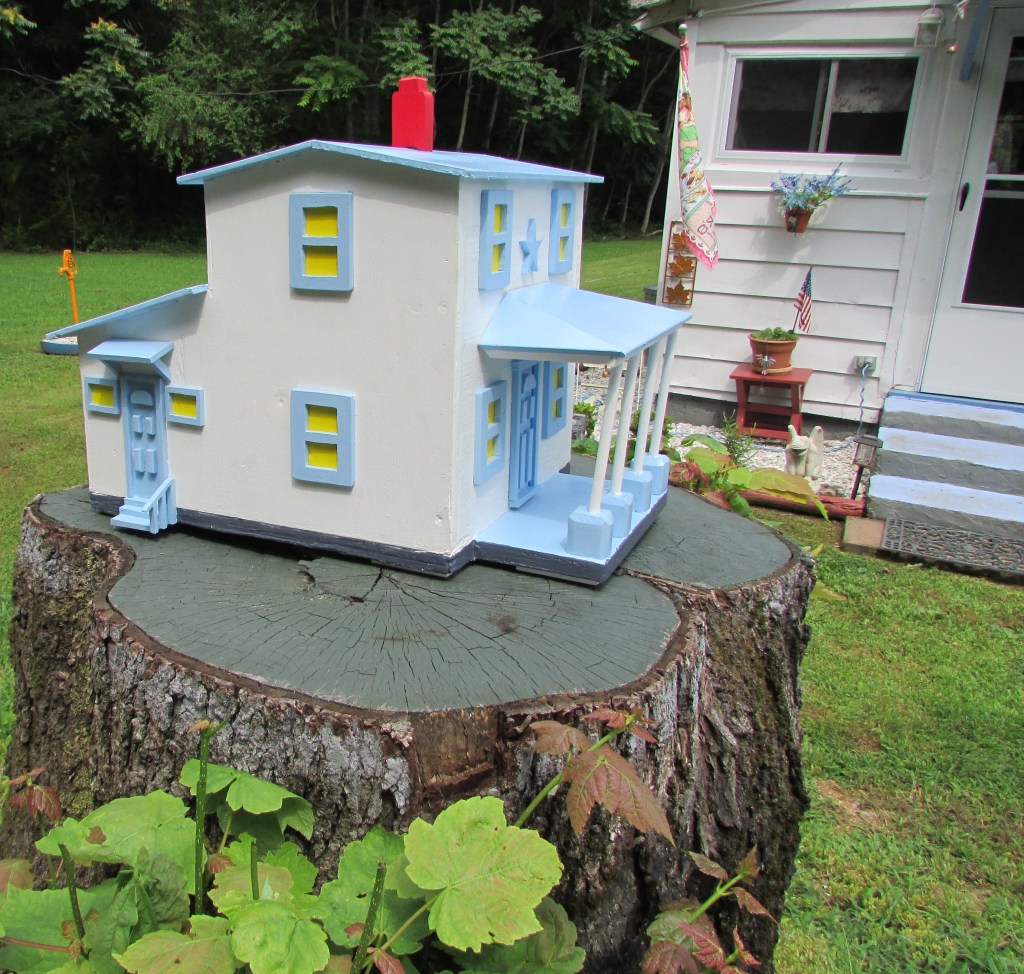
Finally, the stump of the old tree that was taken down is being honored. I felt so sad when I had to get rid of the very old tree. It was a liability and dangerously close to the house; besides, it was showing signs of disease. But the tree refused to go down; it came to life again. I thought of a way in which to make us both happy.
I trimmed its new branches. My husband built a replica of the farmhouse, and we placed it atop the trunk. He decided to paint the window trim blue as well. Our window trim is white, but we thought it would look better that way. The inside painted in yellow suggests that the lights are on. We added a few woodland critters, a welcome sign, a mailbox, and sitting arrangement on the porch. I recycled those miniatures from the faerie garden. I think he did a great job and I love it. (Photo by M.A.D.)
Side view. All materials, with the exception of the gray paint and clear coat, are recycled. We want to build or paint a faerie door on the trunk. (Photo by M.A.D.)
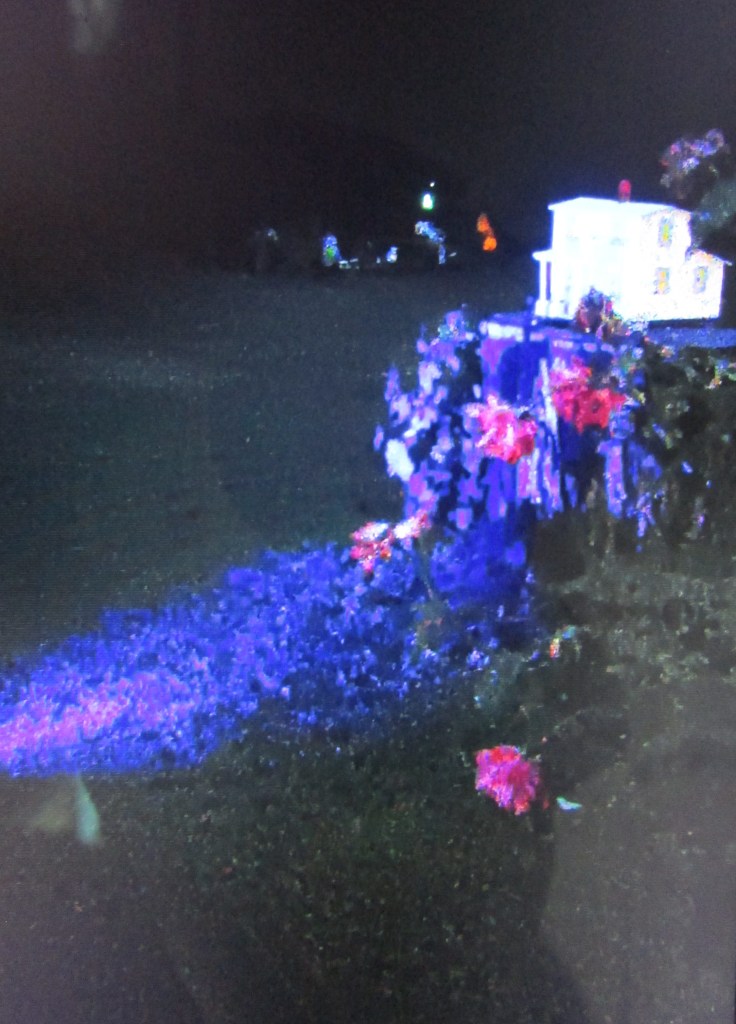
We added a color changing spotlight. I took this picture from indoors through the window glass at night (too many night crawlers around). The rosebush gives a nice touch to it. (Photo by M.A.D.)
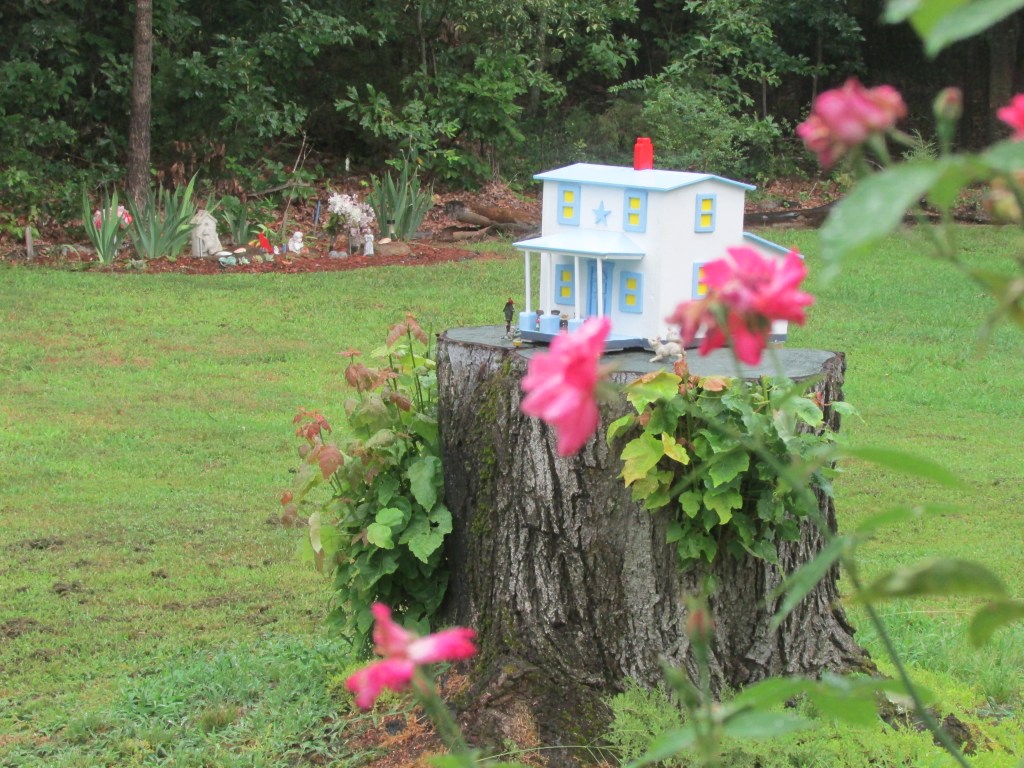
Same view during the day. (Photo by M.A.D.)
This is a project that we had scheduled for some time this year. The original plan was to add faerie lights and a Clematis plant or a type of vine to the trunk; however, we thought that a spotlight would be better, and the tree branches that grew again took the place of the Clematis plant. Hope you enjoy reading about this project.
UPDATE
My husband finished the faerie door. All materials used are recycled. I think he did an awesome job. Love it!
Faerie door using recycled materials. Photo by M.A.D.
This year, I started the veggie garden a bit later due to changes in weather. Too late for seeds now, and all my germinated seeds died, so I had to buy a few plants at the garden center. The prices were astronomically high at $3.95 for one tiny tomato plant. There are a few squash seeds coming out in the back area. We just threw them on the ground, and they took well. This year, the veggie garden will be very simple and with little variety. We planted tomatoes, sweet peppers, eggplant, potatoes, and onions. We also have a blueberry bush and planted two strawberry roots. The grape vine will produce fruit this year; right now, it is covered in tiny grapes. The lettuce came back from last year, and also a few tomato plants grew from fallen seeds. The Brussel sprouts did not produce last year but I left it alone for seeds; let’s see how that goes. Little birds have been eating them. Once it is done seeding, I will remove the old plants because these will not produce anymore.
We are planning to add a raspberry and blackberry bush, and maybe peach, pear, and apple trees in the future. The idea is to develop this garden over time, so we don’t overwhelm ourselves with maintenance; instead, ease into it slowly, and by stages. It is what we have been doing with the rest of the garden, overall. We also have to do some rearranging of the boxes and eliminate some containers that seem to be too small and not performing well enough, so we can make a better use of the space by configurating it better.
This veggie garden was built from recycled pallets. It has hold well over the years.
This is the area of the veggie garden before, when we bought the place.
The same area during cleanup, from another angle. Most of the overgrown bushes and weeds are gone; only the large cedar and ornamental grass on the picture remain today.
Now that the weather is pleasant, my husband gets lost tinkering outdoors, so I insisted on installing a dinner bell on the porch so I can ring the bell when he doesn’t hear my call. Practical, loud, and charming.
There are many other projects on the list for this year. Let’s see how many we can tackle before Autumn arrives. I will share some here. The labor of love will continue.
One practice that I did not think I would take on was keeping a journal for gardening. I did not think I needed to keep track of plants or make notations about it. The practice started out of necessity. The first year I started a veggie garden, many things did not take or survive. I was puzzled because I never had a problem growing flowers and had a healthy garden in Jersey near the beach, a challenging soil. I assumed growing veggies from seed was challenging, but also found out that the crazy changing on and off weather here in Southern Virginia had a lot to do with it. I decided to start a journal to track what I did, and the results. By doing this I identified many things I could do differently and others that did not work, but also, things I could improve on. The second year was much better. I was pleased and decided to keep the practice for a few more years.
This little garden journal has evolved quite a bit from where it started. Today it serves more than one purpose. It helps me plan the next year garden, holds sketches for garden projects, and other things garden related. I carry checklists that represent garden goals for the year, materials needed, and the goals that were not accomplished by the end of the gardening season will go on next year’s list. Something so simple ended up being an important resource for me. It has also become a very enjoyable pastime.
The LORD will guide you always; he will satisfy your needs in a sun-scorched land and will strengthen your frame. You will be like a well-watered garden, like a spring whose waters never fail.
The work continues in trying to bring back the garden. When we bought the old farmhouse, it was covered in weeds, grass, and a morass of trees growing intertwined altogether. The driveway was covered in tall grass up to our knees and bushes. The house had been abandoned for many years and in disrepair, hidden by the same overgrown trees and bushes. We knew it would be a ton of work, but we were up for it. One by one, we started to remove bushes, weeds, grass, garbage … and we cleaned up the garden. Next, we tried to save any plant we could and revive others. The next step was to create new garden areas. This is a process that will take longer, and some simple planning. We try to add a new area every year. Adding areas one at a time seems a bit more manageable for us. This year, we added two areas. One was created using recycled plants and materials. It is located at the front entrance to the property, close to the year-round lighted pine tree which we have ended up calling The Hope Tree.
I started this area a few weeks ago and completed it yesterday. I had to wait until some of the plants were ready to be divided in order to be planted. So far, they took well in the ground, and hopefully, will grow and become fuller. This area is a mix of shade and sun and should be easy to manage. Red mulch is my favorite.
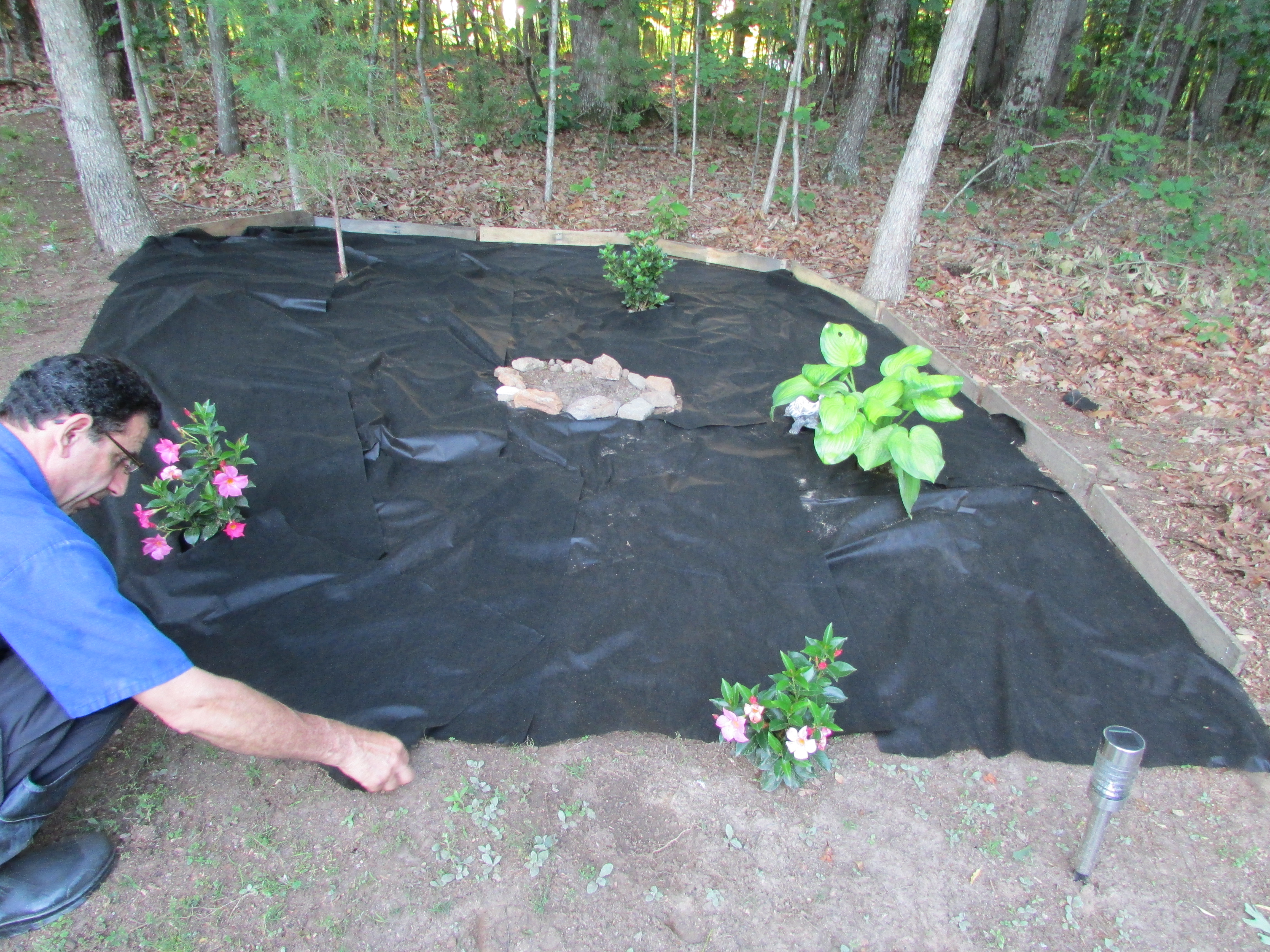
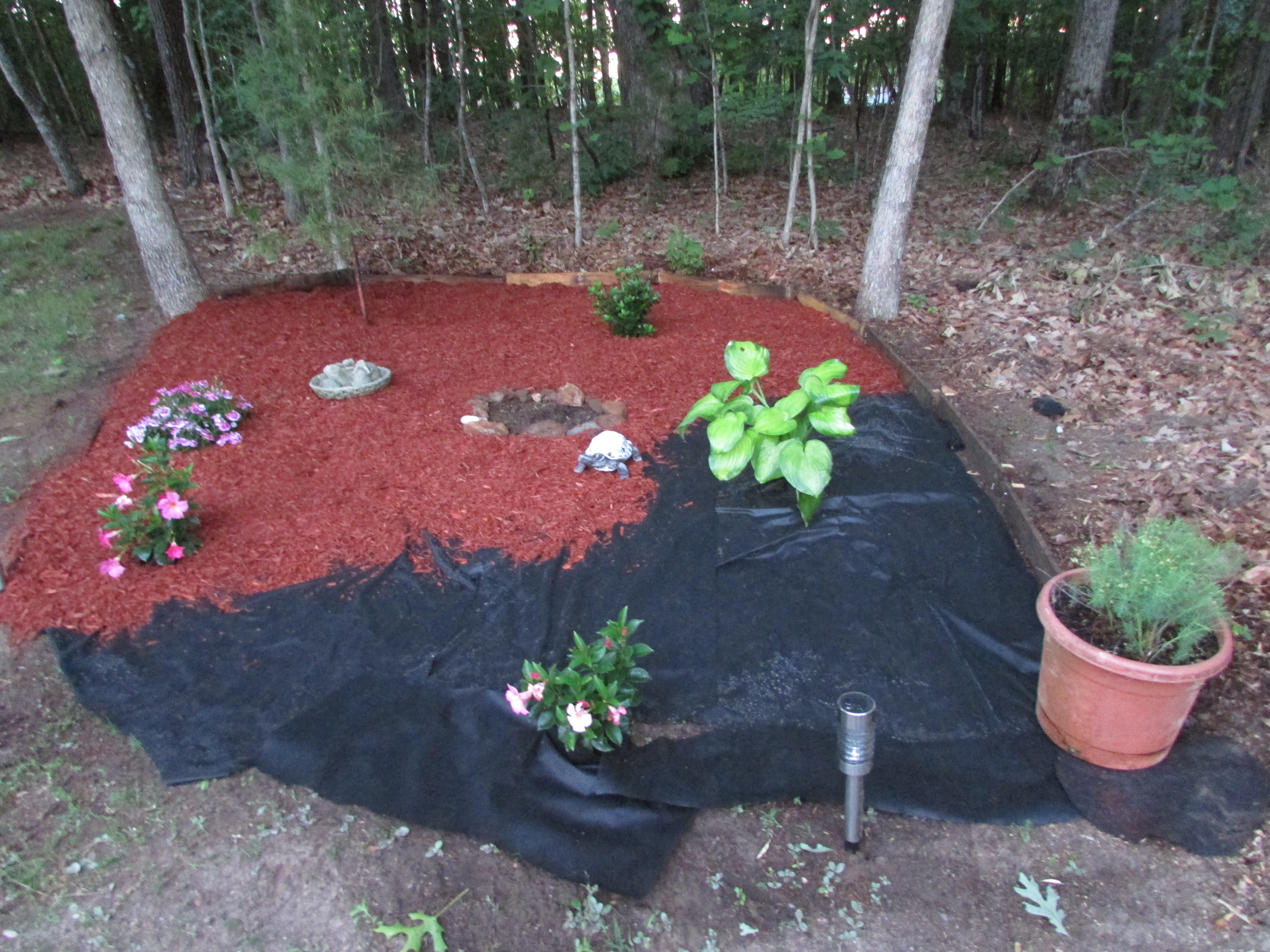
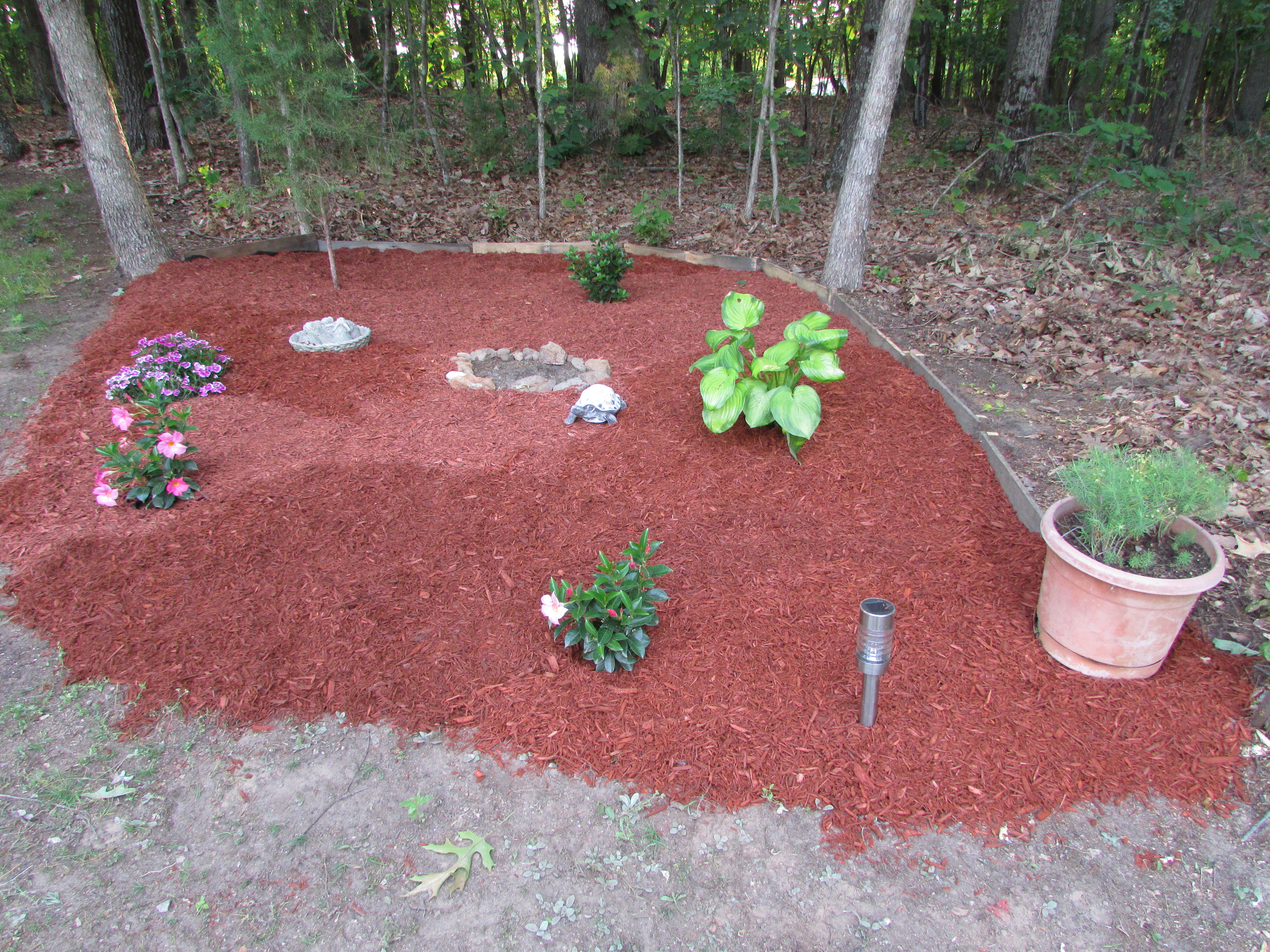
The next area was my husband’s pet project. It is next to the small patio area and the faerie garden. This area has been covered by overgrown mixed bushes and tons of weeds. Last December, he took them all out and decided to do a small garden. Most of the area is in the shade with only a few hours of sun, so we had to select plants that required minimal sun exposure. He made the borders out of recycled pallets, and we still have to find and dig a few stones around the property to place them. This area needed a ground cover, after we took out all the weeds. These plants will grow and expand, so we had to leave enough space in between them. We planted bulbs inside the stone circle. Two garden sculptures and a potted plant were recycled from the garden and won’t be missed in the previous area. We added two new solar lights and red mulch. The small cedar tree in the back was already there and will be trimmed so it does not fully grow. This area resulted in a mix of new and recycled materials. It is a very low-cost improvement to this area.
The veggie garden was spruced up a bit, and we decided to use two recycled large containers cut in half for the new plantings instead of building a new box. Eventually, we will change these to a more permanent material like cinderblocks or metal boxes. We started the veggie garden a couple of years after we fixed the interior of the farmhouse. All the materials used on building and setting up the veggie garden are recycled, except for mulch, but sometimes, we use red pine needles from the property when these are available.
The veggie garden has been evolving over time.
And after all that work, it is always good to eat something hearty.
If you would like to read more on the process of fixing this old place, please visit a series of posts under Restoring an Old Farmhouse or Restoring an Old Garden. I hope you enjoyed this post.






 Inkspeare