On Writing Prophecy

All tips I share on this blog are based on my experience, on what I have learned in my journey as a writer. I understand that every writer has her/his own road to take, own style, writing goals, work ethic … so what I share here is based on my perception, as far as my pathway takes me. When I wrote The Dinorah Chronicles, I did not plan to include a prophet in the series. This character appeared unexpected, and pretty much wrote itself – a child named Jenna Callaway, who was confused and scared about the gift of prophecy. Jenna did not know she had this gift. Dinorah Sandbeck, the main character in the series, helps her develop her gift, and eventually, the last prophecy comes through Jenna in the last book- Sunrise Souls. At first, Jenna wrote (in Latin) the words that she heard in her mind, without understanding the meaning. She kept it a secret, until she met Dinorah in book 2 of the chronicles. She delivers as few prophecies throughout books 2 and 3 (The Book of Sharon/Sunrise Souls).

Other than thinking that the wording/content should sound ancient/old, I did not have any other guidelines on how to write these prophecies. I relied on the deep connection that I felt with the story and the character throughout the series, and this is how these prophecies came about. These wrote themselves, and by that I mean that the flow of the words through the pen was smooth, not forced or over developed by a thought process. Here is a short excerpt of Jenna’s first prophecy. It is about a page long, and the rest of it can be found on The Book of Sharon on page 95.

“Write; write these words so the lost can find them, for they are searching in the days when love is scarce and the ego consumes the spirit. Do not think that I have abandoned thee, for when the heart searches, the soul is ready to receive. I am close to every soul of my creation. I do not cry with the vane, but with the humble, the seeker of truth, and the pure in spirit. When they cry, I console. Their path I make soft, their days I turn bright; not even the stars can equal in light. For the light I give is of the spirit, and the love I pour covers their scars. The heart I console, the mind I heal, the spirit I refresh.” (The Dinorah Chronicles – The Book of Sharon)

As a writer, I wish I could tell you more on writing prophecies for a story, but I did not follow any specific guidelines or writing rules, other than feeling connected to the story and letting the pen flow freely, as it wished. In my experience, there has to be a connection when writing a story, otherwise the story does not flow, feels forced, and sometimes, I cannot write even a word if I feel the connection is missing. There are many ways in which you can connect with your story, and as personal and varied as writing is for you – writing everyday or when you feel it is the best time of day, clearing your mind before you write, whether that is exercising, taking a walk in nature ,,, relaxing, or anything that feeds your inspiration. In my case, I love to observe nature, and I always say a short prayer before I write. Whatever fuels your pen, and makes you closer to your story. Sometimes, it is just simplicity in our lives.


The Book of Sharon (Book 2 The Dinorah Chronicles) is available in eBook and paperback via Amazon.

On Writing Anarths and Other Celestial Beings

When I think of heaven, I think of blue and white (Photo by M.A.D.)

When I set out to write Moonlit Valley, I didn’t know it would take me to a highly organized, supernatural world that operated on Earth through many beings, one kind called Anarths. Anarths are celestial beings who take human form in order to fulfill their assigned duty on Earth. They do not age, possess strength and speed abilities, are capable of traveling between realms in less than milliseconds, and possess enhanced senses, hence why human emotions overwhelm them. They are sentinels of Earth and they monitor and protect key humans who are important in human evolution according to a divine plan. They are not angels, and are a few ranks below.

Writing Anarths presented a challenge – they were not humans but they had to act human-like. However, for the sake of these characters in the story, they had to be written in a distinctive way, that is, aside from their supernatural qualities. They also could not resemble each other or act like clones; they owned their personality on Earth. They experienced emotions, so they could not behave like robots or android-like. They had to present a soul-like side, even that they didn’t have souls. Description/descriptive behavior and characteristics were good to a certain point, so I relied on dialog to achieve this.

Another challenge that presented itself later on, when these characters made it to The Dinorah Chronicles, which had a story time lapse of 20 plus years forward, was the need to evolve them along with the humans they interacted previously, but because they didn’t age, they could not be “totally present” in some parts of the story. They had to act more human-like across the whole series/story and throughout the years, but also develop a familiarity with certain key human characters in the story. All this had to be reflected in the dialog throughout the trilogy. Because they had blended well with humans, they had acquire certain personality and behavior patterns that had to be reflected in the trilogy. Simply, they could not have remained the same. One way to achieve this was to make them sort of “break a few rules” but without sacrificing their righteousness. Their personalities and behavior throughout the series had to evolve without being to evident, because after all, they had a divine makeup, and a divine purpose/duty, which had to remain untouched by me (the writer). An example of this is prohibited and brief, but necessary, negotiations with a neutral element of The Other Side in order to obtain information that would advance the cause.

A simple example of the use of dialog in the early stages of an Anarth who has been assigned on Earth but has not spent enough time or develop many human relationships yet, would be something like this:

Human dialog“Hey, why are you not going?” or roughly “Hey, why aren’t you going?”

An Anarth would say it like this – “What is the reason for you not attending?” or “Does your intended absence has a purpose?” or “Is there a purpose to your absence?” There are many ways to construct the sentence, many variations, but all intending a certain degree of order.

Another simple example.

Human “Do you want lunch?”

Anarth“Are you in need of nourishment?”

An Anarth in the early stages of human contact would not say “can’t” instead, he/she would say “can not.” As relationships become stronger, the dialog evolves, thus becoming more relaxed. The darker (evil) the character, the more impersonal and less “caring” the dialog became. Writing these characters was fun and I learned much from their interaction and evolution throughout the story as I wrote them.

Moonlit Valley and The Dinorah Chronicles are available via Amazon in eBook and paperback.

Placing Yourself Inside the Scene

Sometimes, a writer must enter a scene that he/she is writing. By that I mean that the writer must place himself/herself inside the scene and next to the character in order to engage all the senses and see/hear/taste/feel what the character is experiencing at that moment. It has been my experience that when I jump inside the scene with the character (mentally of course) it helps me write the scene better, not only describe it better, but give it life. By experiencing the scene along with the character(s) it becomes more than watching it unfold, the senses become engaged at once, thus resulting in more vivid writing. I don’t follow this process with every scene I write (that would be too draining), only the ones that seem to have more movement or require a higher perception/involvement of the senses. Usually it is an important scene, a climatic scene that will result in greater change in the novel. It could be a battle, but it could also be a scene with less physical action but in which a higher level of the senses is needed. An example of this is the scene in the church parking lot in Moonlit Valley (chapter – The Battle). In this scene Rose is being attacked by The Other Side, a supernatural realm of evil. Rose is in between the physical/material and supernatural realms when this is happening, and no one can see this happening except the Anarths, her protectors. Although most of the chapter is very sensory engaging, here is a very short excerpt to give you an idea.

“I saw a shadow get near me. A blast of light took it out and left only a heavy smoke that seemed raggedy; the smell was the worst I had experienced. I saw the same happening all around. At one point, I wanted to vomit; I could not take the smell of putrefaction, decay, and sulfur surrounding me.”

Here is another example, same scene.

“I tried to run but I froze in place, unable to move a limb. I was cold, surrounded by a heavy mist of grayish color. A putrefaction smell made me nauseated. Figures were forming out of the mist, several of them approaching me, surrounding me in a circle, a circle of death.”

This is just a brief example of a scene in which I had to place myself next to the character (Rose) to understand her experience. As writers, we are used to hearing the phrase, “Show, don’t tell” as a magic recipe for better writing. There is some truth to it, but I think there is more to showing and not telling. There needs to be a balance between the two, and sometimes a writer needs to jump in.

MOONLIT VALLEY is available via Amazon.

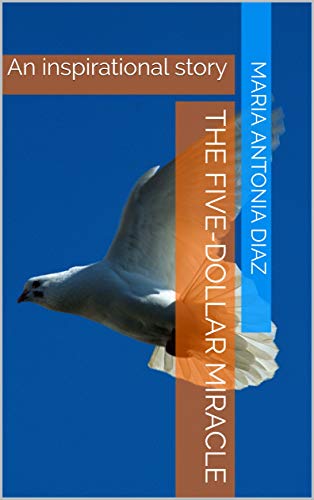
The Five-dollar Miracle

THE FIVE-DOLLAR MIRACLE

The inspirational story of how a small miracle – a five-dollar miracle – changed a stranger, a pastor, a congregation, and an entire country.

The Five-dollar Miracle is my latest published book. I have to say that this one broke the mold for me. It is different from my other novels, and does not follow the same style. It does have supernatural elements, however, not in the same way as my other novels. I would say that this book took me by surprise, as a writer that is, because I never expected to write it. It appeared one day as a title in my mind while I was writing Sunrise Souls, and it did not leave my mind until I sat to write it. I had no idea of what it was going to be about, neither did I have any notes or plot idea, only a title. So I went with it for the ride.

My biggest challenge writing The Five-dollar Miracle was to trust the process. With no preconceive ideas to start, it was a bit “nerve-racking”? Every day, I sat to write trusting the process. I had to trust it because I had already announced it as an upcoming novel; I had no choice. I wrote in faith. Although compared to my other novels it is short, the story did not need any add-ons. I tried to make it longer; it did not work. The story was what it was. It is different, and reader friendly.

Currently, I am writing The Girl Who Could Not Love, and I have to say that it has presented its challenges so far. Most likely, it will be ready for next year. As it has happened to many of you, the current affairs in the country and worldwide, have influenced my mood as a writer, and therefore my pen. This book will be ready when it is ready, and I am fine with that. This one, as all my other novels, will be made available via Amazon in paperback and eBook.

On the Writing Front

002

Photo by M.A.D.

What is happening on the writing front? Not much these days. The state of our country, protests, the pandemic, and the political turmoil, have influenced my writing mode, and mood. My mind and heart have not been in the right place, and I have not been able to write my latest novel – The Girl Who Could Not Love – after the first five chapters. I feel as if I am not connecting with my novel, my writing, and my thoughts have been scattered. This presents a reality; I will not be able to meet my original deadline. If I do, it would be a miracle.

Many of you are going through similar writing experiences. It is called being human, and not a writing machine. Many of us draw from our inner emotions when we write. It is understandable that there might be a storm in the sea of emotions during this time. I am allowing myself the necessary time to work through this period. I am being creative in many other ways, which helps my state of mind and heart. I have decided to approach the writing of this novel in a different way.

Usually, I write the first draft by pen and paper. It is my preferred method. My thoughts flow freely, easily, and at times it feels as dictation. This is not working at this time. it is rare that I start a first draft on the computer, although my first novel, Moonlit Valley, was a combination of pen/paper and screen time. This time, I feel I need grounding, a way to slow down my feelings, so my mind can connect with the story. At this moment, it feels as if the story is somewhere out there, floating in the air (or my brain) and I cannot access it. All I know is that it is there, present, and waiting on me to find a way.

While I was planning my work the other day, I happened to glance at the old typewriter in front of me. I have not written on it for sometime, and it occurred to me that it could be the tool I need to write this story. It could slow down my thoughts enough that I might be able to listen to the story, and it may provide an audible rhythm, which could be beneficial in harnessing my focus. I am going to give it a try. Maybe it will be the bridge between me and the story.

If you are struggling with your writing due to the present worldwide (or local) climate, see if you can find a way to jumpstart your focus, but allow yourself enough time to work through your feelings/emotions.

Secondary Themes

When I wrote The Five-dollar Miracle, I recognized the main theme as being faith, and much like the story I am currently writing – The Girl Who Could Not Love – the story developed as I wrote, with no preconceived ideas or outlines. However, as I wrote, the main theme became obvious. Usually, one expects a story to follow or develop around a main theme, and a few secondary themes appear throughout, but mostly, the main theme carries the story to the end. With The Five-dollar Miracle, I was a bit surprised at how many secondary themes I could identify once I finished writing it. It was never intended this way, but all these themes had a strong link with the main one (faith), and helped carry it, propelled it, which of course worked out well for the story. Some of these topics are:

Loss – different types, especially the loss of a loved one.

Financial ruin

Addiction

Righteousness – as a judgemental trait

The spirit of cooperation/generosity/kindness

Respect thy neighbor – accepting differences

Serendipity

I enjoyed writing The Five-dollar Miracle, and it was a welcomed change of pace, as well as refreshing. I am excited about my next novel, and can’t wait to finish it. From my point of view as a writer, it is presenting its challenges, something I welcome, while at the same time, I am hoping that the story flows well, and that by the end, I make peace with it.

Home Sweet Home

Today, I find myself wishing for spring, even summer, unusual for a winter lover. I yearn for the sounds and warmth of summer. It usually takes me about four to five years to acclimate well to a new place or new surroundings. It may seem a lot of time for many people, but for me to call a place home that seems to be right. Although I welcome change, I am a bit set on my ways and my memories. The concept of home has always been very important to me. I need my four walls, and I make sure they feel cozy and beautiful to me. My husband seems to adapt fairly fast, and I think it has to do with our upbringing. While I lived in the same house until I got married, he moved many times during his childhood.

I love the phrase Home Sweet Home, but I also admire people who travel and can feel at home in any place around the world. I can honestly say that I feel at home now, although I will always miss my beloved Jersey shore. This way of adaptation translates to other things in life for me, although at different time frames. When I start a new novel, there is a period of time in which I have not yet fully adapted to the story. The time varies with each novel. It takes me some time to acclimate/bond with the story. What I find is that I cannot rush this process; it happens naturally. Once I am in sync with it I feel at home. Then, I can “settle in” and “decorate” the place with my pen.

Home is where the heart is, the adage says, but I think the tic-toc of the heart determines when it becomes home.

New Novel Update

I am currently writing The Girl Who Could Not Love. I am only a few chapters in, and it already seems as if this story will present its challenges. Not so much about writing it, but instead, on the road it is taking me so far. It is one that is new to me, and one which I am not comfortable with as it deals with the main character’s state of mind/heart/soul from the get go. I had no intention to take that route but I will trust the process and be open to it. I have sensed a resistance to write it, and I am wondering why. At the same time, I feel a sense of discovery and excitement mixed with apprehension. For the sake of writing this story and of being faithful to the process, I have decided to put aside my reserves and continue on the journey, as far and deep as the pen wants to take me.

I wish I could tell you more about it but I am discovering it as I write. For the first time I find myself at the mercy of my pen, and I am willing to follow it in faith, if not blindly.

Faith – A confident belief; trust. Loyalty; allegiance. (American Heritage Dictionary)

Medieval Social Times

Times have changed in the last few decades, or have they? With the advantages and perils that the internet brought to our society, what looks to me like an extreme righteous mentality seems to dominate social media. This strict social conscience – a righteous mob – seems eager to point a finger and to burn the victim/person right away. It seems to feed itself, and the power of the mob creates martyrs of social media when guilt is assumed without giving the person the benefit of the doubt, a chance to present truth or facts that will point to redemption/innocence. Sometimes it seems as it is not even about the cause, but of how I ( the me, me, me) fit into it and can also participate in the latest crucifixion.

Why am I bringing this up? Well, as writers we develop characters and we try to portray them as credible and real as the pen allows. This only means that we make use of language, imagery, certain types of words – historical and period appropriate, popular and unpopular views, and even cliches, which might be necessary to create the story’s “environment” in order to tell it as best we can. How does this forced mentality, this “medieval” social mob hysteria affects writers today? Are we faithful to our story without letting the pressure of the times bind the pen, or do we quietly censor it? Do we exercise its free will or are we cautious about being perceived as the personification of our words? How do we separate character from writer without giving in to the righteous mob inquisition? It seems to me that sometimes, people cannot separate one from theother, and this might present a challenge for writers.

Will these medieval social times have an influence on future writers, their minds, and by default the pen? Will stories become diluted? Diluted enough to be politically correct? Historical fiction writers are presented with a challenge. It has been said that books, whether fiction or not, speak of the times when these were written, of the social conditions and atmosphere of the time. It permeates throughout the pages of a book, and many times, it remains alive between the lines.

Standing at the Edge

I am about to plunge into writing my next novel – The Girl Who Could Not Love. I’ve always compared the feeling of starting a new story to the feeling of standing at the edge of a cliff and peering out to see what is below and beyond. One approaches the edge carefully, respectful of the abyss below, and at the same time with apprehensive wonderment, excitement, and a certain kind of childish joy. The deeper and farther I look out, the more I see, and images start emerging and becoming clear. Suddenly, that edge is not as defined and scary as it was at the beginning. A couple of chapters inside the story the edge has disappeared and I am floating, observing and being a part of the story. It is always like a little adventure.

The writing of this novel is an exciting undertaking because I have nothing to start with, no plot, no outline, no initial lines or ideas, only a title and the main character’s name. I am halfway the first chapter and I have to say that I was not expecting it to develop the way it is, so I am in for the ride. Hopefully, it will be completed by next year, but I am only the writer.