Spooky Excerpt

It is October and spooky is everywhere, so I decided to share an excerpt from Sunrise Souls, last book in The Dinorah Chronicles trilogy. It is found on page 66.

… but this time I saw the evil energy that embodied her soul gazing through her eyes. A blaze of fire danced in her eyes with the fury of an unholy cadence. I jumped and delivered a lethal kick to her chest as she came charging with the force of a raging bull. We met in mid-air as she fell back foaming in hate, her mouth spouting a poisonous river of filth.

You can find SUNRISE SOULS on Amazon or order it where books are sold.

On Writing – When Dialogue is Long

In part, a purpose for this blog is to write about my journey as a writer, as well as to share what has worked for me, and my approach to writing a novel. There are so many books and information online on this topic, which will always be of some benefit; however, I find that much of that information is very technical and sometimes, even discouraging to someone who is just starting the journey, hence why I try to simplify when I am writing about a subject. In this case, dialogue, specifically, when it needs to be long.

When I am writing a novel, I strive to have a balance between dialogue, description, and narration. My novels tend to be rich in dialogue, sometimes long (if needed). If not careful, the reader might be lost in the conversation. Although sometimes a long conversation is required between two or more characters, I try my best to include other elements, whether having a character make a gesture, change positions, observe something, or anything that might give the reader a small break from the dialogue. I have a tendency to write in long sentences, as you might have noticed if you have been following this blog, and that is reason enough for me to be aware when I am writing dialogue, or even description in my novels (there you go, that was a long sentence.)

When dialogue is long, such as in the case of a character recounting a story, or a past event, I interject with something in the third person. As an example, Joe is recounting an event. He has been talking for a while, so in order to break it up a bit, as the writer, I can interject with having Emily react to what Joe is saying. Emily’s eyes grew wider with anticipation… or depending on the scene, Emily grabbed Victor’s hand tightly while Joey …. or a character might break the dialog with a question. These are all actions but should never feel forced on the characters. Those small breaks in dialogue give a break to the reader, but also make the other characters present in the conversation while they are silent. When I write dialogue, I want to make it as natural as when I am in conversation with another person or group of people. Characters have different personalities and when they are active in dialogue, their personalities are reflected through their words. It goes a step beyond she said/he said. A reader should never be confused about who said what. Just as chapters are a continuous clean break, so should interjections in dialogue. One follows the next naturally, without leaving the reader behind.

Writing Through Your Emotions

Photo by M.A.D.

I think that writers can be pragmatic, but also drama queens set free in their own worlds. Not only do we deal with our character’s emotions but also our own as we write these characters throughout the story. Sometimes, it becomes overwhelming, other times, cathartic. In my experience, I have found that sometimes a roadblock in writing goes deeper than the pen I am holding. That pause, that resistance, comes from an emotion that I might not want to acknowledge, usually indirectly. What might seem at the beginning a distraction or even a mild case of writer’s block, is no other than an emotion that does not want to be recognized for what it is, whether a painful memory, a weakness, or a more deep-rooted emotion. It resists the pen however it was triggered. Sure, a writer can always go around it and find an excuse for the pen; however, it won’t be the last time.

Dealing with our feelings as we write will eventually release the words that have been held hostage, and result in a better flow of the story. Many times, acknowledging that the emotion is present might be enough. Sometimes, characters become mirrors; most of the time, they are just beings from the imagination being brought to life by a passionate pen. Other times, the ink takes a bit longer to dry.

On Writing – My Experience So Far

From time to time, I like to go back and think about my writing journey and how I feel about it so far. Although I have always written, since I can remember, it wasn’t until the conditions were in my favor that I was able to become an independent author; technology made it possible. In the early days and childhood, stories became broken pieces of paper, maybe because of my mistaken perception, the mystery that surrounded famous writers, and the extreme cost of publishing a book in those days, along with my dislike of pursuing traditional publishing. Although independent publishing has always been looked down in ways more than one, it seems that the idea has become more accepted, and even veterans in the field, traditionally published writers, have embraced it. For me, it has been the realization of a long lost dream, and hopefully, the delight of a lifetime. It has entailed much learning, but also growth. It has been elating as well as confusing at times. For me, the decision to publish independently was as daunting as baring one’s soul to the world, but also a natural one, that is in the sense that I always knew that traditional publishing was not for me. However, before committing, I made sure to learn as much as I could about both venues. That is something that has always been consistent with me – the willingness to study/learn both sides of something before committing to one. This time was not different, although I knew where my heart belonged.

I admire authors who were indies before it was even “a thing.” Back 30-40 plus years ago, it wasn’t as accepted or technologically viable as it is today. Maybe why I don’t take it for granted. It took real guts to be an independent author, and much more work and money. In my view, those writers had a reverence and respect for the craft, way different. As for me, I am so grateful for the times.

Writing for the masses has never been appealing to me, or following the latest trends in writing. In that sense, traditional publishing would have been as jail time. I love to write the story that knocks at my door, the one that begs to be written. Writing for money has never been an important goal, so in that sense, it has not been a disappointment. Delighting a reader, inspiring another, is more appealing these days. Making a decent living at it would only be counted as a blessing.

The future is too short or long, no one knows for sure, so I am very happy writing one story at a time while ignoring numbers; although, for some mysterious reason, thirty books in a lifetime sounds appealing to me, not sure why. However, that number is not a goal, just appealing. Overall, it has been an enjoyable, meaningful, soulful experience that I hope to be able to do for many years to come. When I started on this journey, at the same time, I was experiencing what I would call the most challenging period in my life so far, and also changing an entire lifestyle. Today, while reminiscing, I can say that it has been a good and satisfying journey.

Synergy in Writing

The other day, I saw a commercial for one of the latest James Patterson novels. It is known that Mr. Patterson coauthors many of his books. This prolific author is a good example of the power of two for a common goal. In other words, there is strength in many. Although he has been criticized for this approach, it seems to have worked very well. The novels are under his well-known name (and in smaller lettering the co-author) and coauthoring has not diminish his author presence, maybe because he built a strong name before coauthoring. In this case, the other author has benefited as well, if not more. What might have not worked as well by oneself is made possible by a joint effort. Two purposes meet and unify under one common goal benefiting both parties. I saw this a lot when I was in Real Estate. Two agents would partner, and enter into a beneficial and profitable relationship. Sometimes it worked, sometimes it did not.

I think it takes a strong and confident personality to enter into this type of arrangement. After all, authors are very protective of their name and the work under that name. Profitability might make things easier and more enticing. In this case, I think it is genius. It increases image/credibility as a team effort, helps time management, and provides other benefits such as more ground covered, support and encouragement, as well as safety. For many of these partnerships it was a win-win situation. How do you view co-authoring?

Unrelated – When life gives you hard sugar, make a sculpture.

Sugar Cat
From cat to dog. Unfortunately, from dog to duck crumbled. But that was the purpose.

When Others Don’t Understand What You Do

This is a light humor post, but one that will resonate with many writers who have gone through similar situations. It is written in the spirit of encouraging new and aspiring writers, as well as the veterans in the field whose work have not been found or given recognition. Consider this scenario, very common.

“What do you do?”

“I’m a writer.”

“Hum, a car dealership writer, an underwriter?” (Fill the blank on this one)

“No, I write books.”

“Oh …” (followed by a blank stare)

For most people, unless you last name is King or you live at a coastal mansion, you are not a real writer. You are “playing writer” or are going through a phase. In their minds, Writing books = $$$, and a real writer is supposed to have status of some kind. You become one when you achieve this. If not, why do it? Sometimes, we entertain those same thoughts and feelings; you know what I mean. It seems to go deeper than that.

I would like to share a funny story, a conversation I had along those lines. About two years ago, a nearby neighbor had someone fixing her roof. She knew the person since he was a kid. He was starting his roofing business and she needed a new roof, so it was a perfect match. I was at her home when he arrived for that day, and since I had some questions about metal roofs, we began a casual conversation which centered on the type of roof for my 1910 farmhouse, which has an old style construction (beams) and an original stone foundation. The weight of a new roof on the structure was my main concern. After a few exchanges, he asked me what I did for a living. I told him that I was a writer, without going into much detail. Immediately, he shared that he always wanted to write a book and that he knew someone who worked at a local radio station “BUT” she was a “REAL” writer. (Imagine my polite smile). I asked him, “Really, and how many books does she have under her belt?” He answered that she had written a book sometime ago. I smiled, but could not help myself and said, “Oh, just one? I am in my sixth, and it doesn’t get any easier.” I thanked him, waved a goodbye, and walked home. Now we know who will not get my business when it is time for a new roof. I will hire a real roofer.

This is a perfect example of how writers are viewed based on status, which usually equals money in the mind of many people. Which brings another issue – fame before talent. These days, if you are a celebrity a publisher is ready and waiting, and your celebrity name/status precedes your book. You can write about anything and it will be published, promoted, and praised, because in most minds, celebrities can be writers. Ask a Cover Girl model what she thinks about that.

At another level, the sting is more bothersome when it comes from someone closer, who is viewed as a line of support, such a family or a close friend. A friend related to me how annoyed and hurt she was when her mother became very excited about someone’s first book, a person she barely knew, but not hers (many) because her books did not sell much. OUCH!

When I published my first novel, I was excited and proud of myself. I had prepared and waited years for this. I gifted a copy to someone I truly thought would be happy for me, and whom I knew for over 30 years, and for whom I had been there always as needed. Her response baffled me. She threw the book on top of the dinning table and said, “I won’t be reading it; I don’t have time for that.” I was shocked. I did not have a quick comeback for that one. It is different when it doesn’t come from a stranger.

People had asked, “Do you make any money?” or “How much money do you make doing that?” One of my favorites is, “Oh, you should write a book about this or that; I bet it will make money.” We know it doesn’t work like that, and for most of us, it is not even about the money. I am sure you have many similar stories as well. My point to all this? Many people don’t understand what writers do or why we do it. In truth, it is not about how many books, or how much money you make … it is about perception, people’s values, and about what it is important to them, ultimately the reason why they don’t understand what you do. Hence why you should be above it all, don’t give it two thoughts, and keep on doing “your thing.” When people don’t understand what you do, it is inconsequential as long as you know why you do it. Never judge a book by its cover?

The Right to Create Responsibly

These days, phrases and words like cultural appropriation, woke, and many other, are common in our vocabulary. We hear them in social media, the news … These concepts have become “a thing” and many are using them and are “finger-ready” to point it at the first sign of such heresy. The self-righteous mob found a new quest, and with it the holy grail of the times, the “woke” got up and chanted a new song of mob shaming. Just because we are so perfect and spotless, right? The taste of new blood becomes an obsession in social media, and in mainstream media as well. It has migrated into writing, with the latest censoring of old books, the shaming of “old culture”, and the removal of many from social media and the shelves. How will it all play out in the end? It is a question I ask myself. Will we become better people? Will we become better communicators and writers/creatives? Will we sensor ourselves, diluting the words as much as we can so we are not perceived as offensive? What about the writers who are in the historical fiction genre? How will they write a scene that has accurate historical influences in wording because it might be perceived as offensive? Will writers avoid certain ethnicities in their novels for fear of being misunderstood? Will writers of crime thrillers be accused of “inspiring” or “inciting” a crime if an unstable person decides to recreate that particular crime? Will authors be censored, arrested, and prosecuted? Will writing and every form of creativity become “illegal” in the future?

I ask myself those questions and many more. I don’t think I am too crazy and far off. Lone gone are the days when you and I could disagree on something, have a conversation about it, have an opinion, and express it freely without being chastised. We must respect one another by learning to listen to one another all over again, by learning to find common ground even when we disagree on many things, and by understanding that we are more alike than we think we are. As writers, I think that we should strive to write the best story we can write without being disrespectful while being true to the story and history, in the case of historical fiction based on facts. As humans, we are less than perfect, and I believe that most of us try to be as decent as we can, and strive to do better each day. When we look at another as a reflection of ourselves, most likely we end up seeing ourselves in that person in some way or another.

We are more alike than we care to admit (photo by M.A.D.)

Intermittent Writing

No one expected last year, and certainly, this year is already showing up as challenging in many ways for this country. It has affected people in many different ways and aspects of their lives. No one the same. This post is about an update on my latest novel, The Girl Who Could Not Love. What’s up with my novel? The quick answer is nothing is up. I have had to put it aside for a while, after periods of long intermittent writing. The past year has affected my writing in ways that I did not expect, after all, as a writer I enjoyed solitude, and it helped my writing in the past. However, I find myself with a dry inkwell and no desire to tackle my current novel, something very unusual for me. Everything that last year brought, which hasn’t changed much this year, played a number on my “little psyche” thus affecting my writing disposition. I have been busy with many other projects, but not with what I consider my most important and precious endeavor (it is to me). If you have been able to finish a novel during the past year until now, I congratulate you, and please, give yourself a pat in the back, because I know it has not been an easy task. God bless you. You are a Warrior Writer.

So what now? This post serves (me) as an outlet, a source of release, a sort of permission, a passing ritual, and an acknowledgement to myself – the writer – that it is fine to feel this way, that is is ok to put the guilt feelings of a writer aside, and to pick up that novel again sometime in the future, when the writer has healed the soul. For now, all previous self-imposed deadlines are released, and each day will be received and acknowledged with a grateful heart.

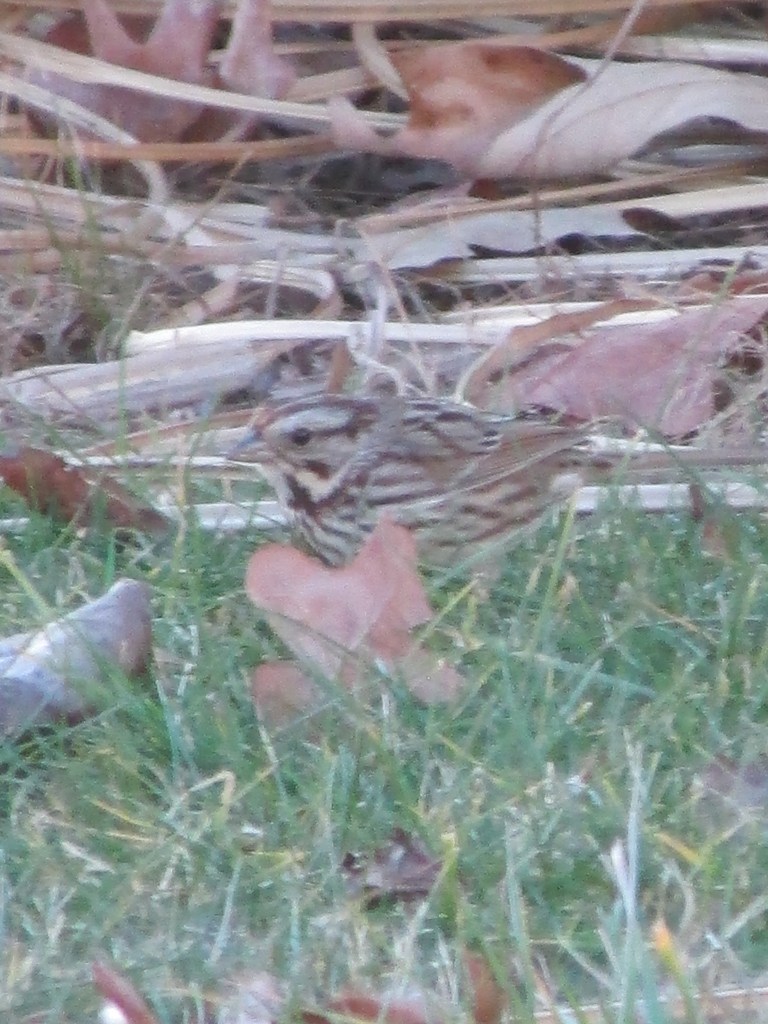
Totally unrelated – Find the bird in this picture.

Can you find the bird? (Photo by M.A.D.)

On Writing Anarths and Other Celestial Beings

When I think of heaven, I think of blue and white (Photo by M.A.D.)

When I set out to write Moonlit Valley, I didn’t know it would take me to a highly organized, supernatural world that operated on Earth through many beings, one kind called Anarths. Anarths are celestial beings who take human form in order to fulfill their assigned duty on Earth. They do not age, possess strength and speed abilities, are capable of traveling between realms in less than milliseconds, and possess enhanced senses, hence why human emotions overwhelm them. They are sentinels of Earth and they monitor and protect key humans who are important in human evolution according to a divine plan. They are not angels, and are a few ranks below.

Writing Anarths presented a challenge – they were not humans but they had to act human-like. However, for the sake of these characters in the story, they had to be written in a distinctive way, that is, aside from their supernatural qualities. They also could not resemble each other or act like clones; they owned their personality on Earth. They experienced emotions, so they could not behave like robots or android-like. They had to present a soul-like side, even that they didn’t have souls. Description/descriptive behavior and characteristics were good to a certain point, so I relied on dialog to achieve this.

Another challenge that presented itself later on, when these characters made it to The Dinorah Chronicles, which had a story time lapse of 20 plus years forward, was the need to evolve them along with the humans they interacted previously, but because they didn’t age, they could not be “totally present” in some parts of the story. They had to act more human-like across the whole series/story and throughout the years, but also develop a familiarity with certain key human characters in the story. All this had to be reflected in the dialog throughout the trilogy. Because they had blended well with humans, they had acquire certain personality and behavior patterns that had to be reflected in the trilogy. Simply, they could not have remained the same. One way to achieve this was to make them sort of “break a few rules” but without sacrificing their righteousness. Their personalities and behavior throughout the series had to evolve without being to evident, because after all, they had a divine makeup, and a divine purpose/duty, which had to remain untouched by me (the writer). An example of this is prohibited and brief, but necessary, negotiations with a neutral element of The Other Side in order to obtain information that would advance the cause.

A simple example of the use of dialog in the early stages of an Anarth who has been assigned on Earth but has not spent enough time or develop many human relationships yet, would be something like this:

Human dialog“Hey, why are you not going?” or roughly “Hey, why aren’t you going?”

An Anarth would say it like this – “What is the reason for you not attending?” or “Does your intended absence has a purpose?” or “Is there a purpose to your absence?” There are many ways to construct the sentence, many variations, but all intending a certain degree of order.

Another simple example.

Human “Do you want lunch?”

Anarth“Are you in need of nourishment?”

An Anarth in the early stages of human contact would not say “can’t” instead, he/she would say “can not.” As relationships become stronger, the dialog evolves, thus becoming more relaxed. The darker (evil) the character, the more impersonal and less “caring” the dialog became. Writing these characters was fun and I learned much from their interaction and evolution throughout the story as I wrote them.

Moonlit Valley and The Dinorah Chronicles are available via Amazon in eBook and paperback.

Placing Yourself Inside the Scene

Sometimes, a writer must enter a scene that he/she is writing. By that I mean that the writer must place himself/herself inside the scene and next to the character in order to engage all the senses and see/hear/taste/feel what the character is experiencing at that moment. It has been my experience that when I jump inside the scene with the character (mentally of course) it helps me write the scene better, not only describe it better, but give it life. By experiencing the scene along with the character(s) it becomes more than watching it unfold, the senses become engaged at once, thus resulting in more vivid writing. I don’t follow this process with every scene I write (that would be too draining), only the ones that seem to have more movement or require a higher perception/involvement of the senses. Usually it is an important scene, a climatic scene that will result in greater change in the novel. It could be a battle, but it could also be a scene with less physical action but in which a higher level of the senses is needed. An example of this is the scene in the church parking lot in Moonlit Valley (chapter – The Battle). In this scene Rose is being attacked by The Other Side, a supernatural realm of evil. Rose is in between the physical/material and supernatural realms when this is happening, and no one can see this happening except the Anarths, her protectors. Although most of the chapter is very sensory engaging, here is a very short excerpt to give you an idea.

“I saw a shadow get near me. A blast of light took it out and left only a heavy smoke that seemed raggedy; the smell was the worst I had experienced. I saw the same happening all around. At one point, I wanted to vomit; I could not take the smell of putrefaction, decay, and sulfur surrounding me.”

Here is another example, same scene.

“I tried to run but I froze in place, unable to move a limb. I was cold, surrounded by a heavy mist of grayish color. A putrefaction smell made me nauseated. Figures were forming out of the mist, several of them approaching me, surrounding me in a circle, a circle of death.”

This is just a brief example of a scene in which I had to place myself next to the character (Rose) to understand her experience. As writers, we are used to hearing the phrase, “Show, don’t tell” as a magic recipe for better writing. There is some truth to it, but I think there is more to showing and not telling. There needs to be a balance between the two, and sometimes a writer needs to jump in.

MOONLIT VALLEY is available via Amazon.