Inevitable

How did you fall into writing? The inevitable question. I’ve been asked the question many times. Other times, followed by, “I never knew you were into that?”

How do you answer it? I fell into a pile of books while going downstairs half asleep. No seriously, have you thought of the moment when you became interested in writing? Not when you felt “a writer,” because that moment might never come. The usual answer people give is, “I’ve written since I can remember.”  If I go back in time, I can see a child who read everything she got her hands on, a child who amassed a large quantity of pens and pencils, a child who thought that a typewriter was the greatest invention on the planet, and also loved the scent of new notebooks and old books (I still do). I also see a child who followed members of the family, while holding a notebook and pen, and wrote in it everything they did. I see a child who kept diaries, and then, burned them. How many stories do I have from my early years, my teenage years, and the years until I decided to become a writer? None. Not even one. Why? For some inexplicable reason, I had a habit; I burned everything I wrote or broke it into tiny pieces. I never kept one story. It puzzles me today. Although I had the desire to become a writer, I never pursued it. I went into many different careers, pretty much anything that I fancied at the time, but always kept that secret desire well-kept inside me. I had an image of writers that didn’t fit who I thought I was. I saw writers as old people with money. Where did that image came from? I don’t know.

Well, to answer the question – How did I fall into writing? When I resigned from my last job, I felt a strong urge to write, and I did. Almost as a long-lost calling, too loud to keep ignoring. At that same job, in one of our meetings my former boss asked an exercise question to start the meeting. It was, “If you were not here, what would you rather be doing; what is your ideal job?” Each one of us was urged to answer, and we did. Some of us answered honestly, including her, who’d rather be a detective. I answered, “I see myself writing at a cottage near the sea.” Of course, I got the weird looks, but not from her. She said, “I can see you doing exactly that.” Going back to that memory, I think that was the moment when I fell into writing.
My Forever Books

I love books. I love to read. Since I can remember. I am an eclectic reader. I read different genres, pretty much anything that will hold my attention, from fiction to self-help, to finances, reference, anything and everything. After I read a book, it will either be put aside to be read again much later in the future, probably years, at least one more time. It will be donated or given away to someone, or kept for reference for some time. However, there are books that I loved so much the first time I read them, that I know for sure they will have a permanent place on my bookshelves. I will revisit them all my life. I call them my forever books. I would love to share some of these on this post.

Although the Bible, some of the classics, and (important for me) reference books will be permanently on my bookshelves, I am referring to the books that on that first reading, enchanted me somehow. Here are a few.

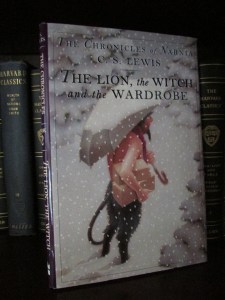
The Lion, the Witch, and the Wardrobe by C.S. Lewis

IMG_3894

I wish I had kept the early copy when I read this one as a child.


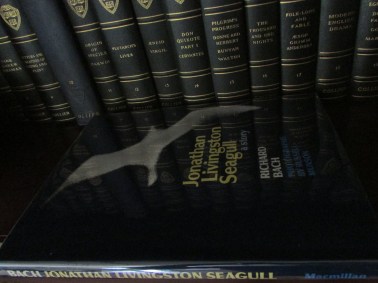
Jonathan Livingston Seagull by Richard Bach

IMG_3896


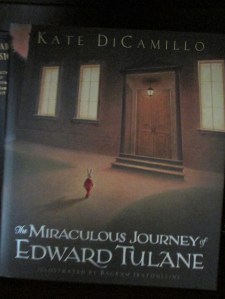
The Miraculous Journey of Edward Tulane by Kate DiCamillo

IMG_3890


The Grievers by Marc Schuster

IMG_3888


The Last Hunt by Cliff Burns

IMG_3887


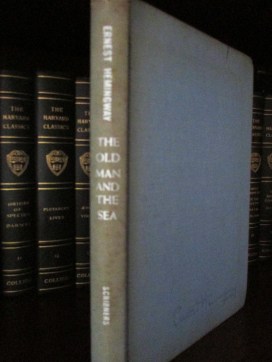
The Old Man and The Sea by Ernest Hemingway

IMG_3893


How to Stop Worrying and Start Living by Dale Carnegie

IMG_3892


The Last Lecture by Randy Pausch

IMG_3889

Love the book, but much more because it is a gift from my sister.


These are just a few that will be forever on my bookshelf. I enjoyed them immensely. As you can see, they range in topic, genre, and time written. To me, reading is almost a religious experience, and I understand that every reader experiences and interprets a book in a very personal way, and therefore, a book can touch lives and entertain in countless ways. This is why reviews are not as important as we think they are. The same books that I love so much, another reader might dislike. I may love a book, but that doesn’t mean that I will like or enjoy other books from the same author in the same way. I might read them, and enjoy them very much, however, not necessarily give them a permanent spot, reserved only for those enchanting tomes.

As an author, I am in a different state of mind and “being” every time I write, so I think it would be unusual that I would write in the same way or with the same degree of inspiration all the time. To expect the same degree of inspirational awe from an author every time he/she publishes a book is like expecting coffee to taste the same all the time (I love coffee), and maybe that is why I’ve never understood traditional publishing. On the same note, as a reader, I approach a book with different intent at different stages in my life. It seems so as I mature. Life takes on another color, another flavor, and things evolve in importance. Although a story remains as it was written, another story lives and breathes in between the lines, waiting for the reader to find it and give it the meaning that is so unique and special to each person. That is why I am so careful with my opinion of a book, and any reviews are only my experience with, my view, my take, on a book that I enjoyed reading. My interpretation, that is ultimately influenced by the stage I am in life, and my surroundings, as well as all the thoughts, feelings, and emotions that accompany it. A good example is The Lion, the Witch, and the Wardrobe by C.S. Lewis. I read it when I was around 10 years old, maybe earlier, and at that time I thought it was the most exciting adventure I had encounter in the pages of a book. I lived it, and I loved it. I read it again as an adult, and I got so much more out of the same story. The story in between the lines emerged.

I hope I have inspired you to give these books a try, if you haven’t done so already. On a future post, I will share some of my dearest collections that I treasure and will also keep on my bookshelves forever.

Five Annoying Questions For Indie Writers and Possible Answers

If you are an independent writer, it is likely that you have been asked one or more of these annoying questions, and usually by people who have not read any of your books. These are questions that are “meant to happen” at one point or another, so might as well have some fun answering them.

Question: Why do you write?

Answer: Why do you breathe?

Question: Are you really published? I mean not self-published.

Answer: Do you own the company you work for?

Question: Do you make any money doing that?

Answer: How much money do you make at your job?

Question: What is your real job?

Answer: What is your life purpose?

Question: Is it true that self-publishing killed literature?

Answer: Is it dead? Oh, my sincere condolences.


It is probable that you have been asked at least one of the questions above mentioned. Instead of becoming annoyed, have fun answering them. I invite you to share some of your own.


Turmoil

Turmoil – Great confusion; extreme agitation. (American Heritage Dictionary)


Sometimes, it takes turmoil in life to be able to live as intended. It takes confusion and agitation to wake up a soul, to appreciate the little things and to understand what is meaningful in life. To slow down to the speed of now, and realize that now is all there is. To understand the fragility of everything else and its immensity, as well as its simplicity. To understand divine connection between all and between one moment and the next.

Sometimes, it takes turmoil to shake us to the core so we can center our being once more. So we can forget about purpose and become purpose, so we can indulge in being for the sake of being, and listen to the poem of life whispering its verses as we are and we become.

Sometimes it takes turmoil to realize that divinity is just a veil away, and that veil is always wrapped around us, and within us. Sometimes turmoil is all it takes.

Track-by-Track: “66th and City” — Zapateria: The World of Zapatero

I am sharing this wonderful and amazing song from The World of Zapatero. I enjoyed it so much that I must share it. I wouldn’t want anyone to miss it. In one phrase, it is full of feeling.


https://bandcamp.com/EmbeddedPlayer/v=2/track=3615006918/album=178845971/size=large/bgcol=ffffff/linkcol=0687f5/tracklist=false/

Back in June, I read an article about prog rock in the New Yorker. If you’re not familiar with prog, it’s a category of rock exemplified by bands like Yes, King Crimson, early Genesis, and arguably Pink Floyd whose songs tended to be fairly long pieces marked by various movements akin to those in classical […]

via Track-by-Track: “66th and City” — Zapateria: The World of Zapatero

Simple Beginnings

The other day, I was looking outside at the first signs of autumn, looking for an amber or red leaf here and there, while enjoying the silence that surrounded me. I could only hear the birds outside. The cats were sleeping, so the silence embraced the home. I love the green-yellow color of the grass as it is getting ready for winter to come. Autumn is a transition for nature, just as people have their own autumn seasons in life.

As I glanced at the tiny winding dirt path going from my neighbor’s home to her next door neighbor, I realized that I missed those early childhood signs of friendship and closeness between neighbors. The paths that were created by the frequent walks to a neighbor’s home, all natural friendly foot traffic. After living in New Jersey USA, for so many years, and closer to the city, I had forgotten those tiny paths crossing lawns that were so common in my childhood.

I understood that life has changed, and that the tiny dirt roads I admire so much in paintings depicting country settings had become my reality and a symbol of simple beginnings – unpretentious, serene, simple beginnings. I found myself reminiscing, with a smile and teary eyes. Sometimes what we view as the ending is just a new beginning.

What I’m Reading Now

1999 – Jeff Herman – You can make it big writing books

That is the book I’m reading now. I bought it many years ago, and never got into it. I bought it when my thoughts were around the idea of publishing a book going the traditional route. Although it is an older book, and I am not interested in pursuing traditional publishing, I find it is a good read and interesting. If you are considering traditional publishing this book gives you a glimpse of the work, publishing experiences of many top writers in the industry. If you are contemplating a writing career or are interested in learning more about the traditional publishing experience from many traditionally published authors, this book is good for that. It is brief and set up as a series of short pieces of advice from 60 bestselling authors who have been in the industry for years. They talk about their writing experience, beginnings, as well as offering advice to the reader.

Most likely, by now there are more/better books on traditional publishing but I had that one sitting on the shelf for a while, and decided to give it a try. So far, I am enjoying it. I have a goal of reading everything in my bookshelves that still calls on my curiosity. I have gotten rid of everything else that does not. I will continue to share any other interesting books that I get to read.

The Tree of Life

Sometime ago, my husband and I were sitting on the porch conversing and looking at our new surroundings. He said, “Trees are funny.” I asked, “How come?” He answered, “They go around each other and bend around to continue.”

I looked at the trees he was talking about and I was mesmerized by what I saw. Many branches giving way to other branches of other trees, twisting and bending just right so there was room for every tree to continue to grow and expand. Unlike ivy, climbers, and other plants and bushes that choke one another to overpower and survive. I said to my husband, “We humans should be more like trees.” He smiled.

Sweet Familiarity

As much as we plan our lives, unpredictability may knock at our doors at any time and we are forced to answer. Life is happening every day; life is every millisecond that unravels and it is continuity whether we understand it at the moment or not. Whether we measure life in heartbeats, brain function, hours, years, or the moment we open our eyes in the morning to mark another day, life goes on, and is, all the time. We may hope for better days but we are constantly living; we cannot hope to start living.

We take many things for granted – jobs, material things, water, electricity, a home, food, and unfortunately, even people. It is in the absence of any of these things (or all at once) when we realize their value. Have you ever thought of the possibility of losing any or all of these? How would you react? If the safety of your everyday routine were to be shaken and threatened, would you appreciate life more, however you measure life? Think of these things for a couple of minutes – from your basic needs to your more sophisticated needs or wants, and the people who make up your life circle.

To quote Forest Gump – “Life is like a box of chocolates … .” However,  we don’t expect to find the box empty. Our challenges in life determine our level of strength. Our perception of these determine our level of sweetness many times, but it is up to us to add the sugar. Maybe tomorrow may start and be similar to today, but it is when this sweet familiarity disappears that we miss it the most.

Sanctum

SanctumA sacred or holy place. A private room or study. (American Heritage Dictionary)

As writers, we tend to be protective of our space, our writing space and writing time. We view interruptions as muse killings. We need our focus and total concentration on the piece at hand. Our space, whether a corner, office or other, is our sanctum. It is where we retire to create.

There is another type of sanctum, an emotional and psychological one, where we retire to recharge or survive when things are not going as expected or life brings on a new challenge. It is in that very private space in the heart and mind that we thrive, and because of it, we are able to come back, stronger and wiser.

Every person has a sanctum and the ability to access it depends in part of our vision of the now (the present events), and our vision of the future. Our vision is important, especially in times of duress and calamity, because from it depends if we have the courage to open the door to our sanctum. Opening that door means safety, in a way, and also that we give ourselves permission to rest before we fight back with all our strength and wisdom. Instead of hiding in plain view, we retreat to become stronger, wiser; we enter the safety and warmth of our holy place, our private space, in order to survive, be, and become.