Write, Write, Write, Then Take the Plunge and Make Things Happen

Lao Tzu, traditionally the author of the Tao T...

Lao Tzu, traditionally the author of the Tao Te Ching (Photo credit: Wikipedia)

When I was in elementary school, I read a quote from the Chinese philosopher Lao Tse (also known as Lao Tzu, Lao Tze, Laosi …), and it stood with me for the rest of my life. In Spanish, because that is the language in which I read it, it read “De las cosas ni lo mucho ni lo poco, en el termino medio reside el equilibrio.” Translating it to English it means, “Of things, not too little nor too much, in the middle resides the equilibrium.”  I don’t know why when I read this from a book being read in the classroom that day, this quote made a home in my memory but it has lived with me since. I remember reading it over, and liking it for some reason. In a way, I think it has permeated how I lived my life, and I don’t know if that is good or bad. It sounds the opposite to “live to the fullest all the way!” But I have always beware of excess. Thank you Lao Tse?

As a writer,  I applied that philosophy, most likely unaware of it. In the beginning, I wrote, and wrote, researched the craft, learned, pondered, kept learning, pondered some more, and decided to take the plunge. I became an indie and published my work.  The key here is that it was not a rushed or prolonged decision; it was taken after much research and deliberation, but at a comfortable time for me as a writer.  I think this quote applies to the process I experienced before self-publishing. Thank you Lao Tse.

At times, aspiring writers follow the advice “write, write, write” but that is as far as they go. They get stuck in the writing phase, and maybe do a little research about the craft, and begin doubting themselves. Fear is a normal part of the process, so is doubt. Researching and learning, while writing, will take care of those two nuisances. However, not too little nor too much (or too long) that you become paralyzed and do nothing about your future as a writer, whether that is embracing the traditional model of publishing or becoming and indie writer. At one point, you will have to find your equilibrium before taking the plunge.

The middle is where balance resides but you have to find your own middle to find your equilibrium, and decide when it is the right time for you as a writer to take the plunge. Not too little as to be unprepared, not too much as to become paralyzed by procrastination or doubt/fear. In the later, you might have to see if there are some areas where you need strength by learning a bit more, and find your balance. Once you find your equilibrium, you can make a comfortable and informed decision.  You will have found your equilibrium.

Just a Few Words

New Orleans: Thank you message in the grotto o...

New Orleans: Thank you message in the grotto of Our Lady of Guadalupe Church; added by those for whom prayer or miracles were granted (Photo credit: Wikipedia)

This was not the intended post for today, but it is what I needed to write. I write it for you, as for myself. The truth is that I probably need these words more than you do. Sometimes, life has a funny way of showing up. It shows up in the expected as well as the unexpected. It would not be call living if it weren’t that way. It would be programming instead, and I particularly don’t like the word programming that much. So I have assumed the attitude of welcoming life with its expectations as well as with its surprises; in the end, I know that it serves the purpose – it completes the picture. It is the journey. Sometimes, the journey might not be as easy as expected or work  as you have planned; however, it is your journey, my journey, and it must be lived. Living the unexpected journey is the challenging part. Living the expected is always easy. It is the unexpected that shapes your character. Whoever said “what doesn’t kill you makes you stronger” was probably thinking along those lines. And it is a fine line sometimes. But in the end, you know, I know, who holds the pen to draw those lines. You/I hold the pen with gratitude and keep on drawing along the way or we break it into pieces. But know (I know) that a broken pen ceases to write. It is gratitude that holds the picture together.

Whatever events/challenges/the unexpected life brings you, live it with gratitude. In the end, when you halt to rest, and look back, you will do so with a smile. If you smile, then you will know that you are ready to keep walking the journey, stronger, and maybe wise as well. In your heart, my heart, we know that sometimes it takes just a few words … of gratitude, strength, wisdom, encouragement, sometimes the right unexpected words for the unexpected part of the journey. I need them, you need them, we all need them at some point in our lives.

With gratitude,

Inkspeare

The Learning Process Sets You Free

This post is for aspiring writers who want to write but are fighting demons of fear and thoughts of indecision, many times due to dated beliefs. I have met people who are passionate about writing and want to publish their works but will not act on it because they do not feel ready. However, I’ve noticed some misinformation clouding their thoughts and preventing them to act. Some of it has to do with the dated concept of “the self-publishing taboo,” and with the indecision or ambivalence of not knowing which road to take – traditional or self-publishing. It is true that they might not be ready, but only because they are not well-informed. While time goes by, and indecision grows, passion is dormant.

It is true that the publishing industry is undergoing a fast and furious transformation, as we speak. However, it has broken many chains and developed other pathways giving new choices to writers. Despite the turmoil (different in many countries), one thing is for sure – the old model is broken, and change will be continuous from now on.  Aspiring writers who do not embrace learning about the changes and believe only one side of the story may be missing opportunity but only because of lack of information or failure to research and learn. By learning as much as they can about the many venues, pros and cons, writers broaden the picture, and can make a better decision. For some, traditional publishing will be best. Other writers will discover that self-publishing fits more with their personality, work ethics, and writing goals.  It is impossible to discover this if one does not research both industries. Following a crowd (any crowd) while misinformed is not the answer.

Writers who embrace learning do not rush into a decision, but consider all sides and possibilities. When they know the path that best suits them, they embrace it. They have no doubt that they have made the best decision, they don’t regret it, and become free of preconceptions and the damage that misinformation causes.

I want to distinguish between self-publishers and independent authors/publishers. The later group is well-informed, have clear and specific goals, and treat their craft as not only their passion because they approach it with entrepreneurial spirit, and with a long-term vision. This is the case because they did their due diligence well. They know what they want, they know were they are headed, and are happy with their decision – they are free. It is this freedom that lets them deal with the consequences of their decision, despite of whatever the industry is doing at any particular moment.  It is not about the industry anymore; it is about their vision. They are free because the industry does not dictate what their vision must be. They are free to act, to write, to be.

A Big OOPS! and the Shameless Seagulls are Back

Ok, sometimes the simple things are the most confusing. I have a Facebook account and I had an Author’s Page in Facebook. Months ago, I canceled the Author’s Page, thinking that it would be the same as my Facebook account and I don’t like duplicates. I thought it was just like Twitter. I thought, “why not just have the Facebook account; why do I need a page?” So I closed the page. Little did I know that no one can reach my Facebook account without being invited first, not the case with a FB Page. Therefore, all my links were not working (a big Ha, ha), and no one could reach the account. It was only after clicking on my links and getting the message of “This content is unavailable, that I asked my Aunt (a Facebook connoisseur and avid FB user) that she told me what was wrong. I laughed out loud (no pun intended).

So, despite liking simplicity, not duplicating, I recognize the need for a Facebook Page, so I reopened it and was able to change the links on this blog and add the widget. Ha, nothing is as easy as it seems. Just wanted to share in case any of you ( I doubt that) made the same mistake.

On an unrelated topic, here is a picture of the Shameless Seagulls, an example of shameless (or shameful) promo for your novels.

photo by MAD

photo by MAD


In addition, I wanted to let you know that I am giving away an e-book (Bits of Inspiration for Indies) on my website. If you would like it, click here and it will take you there. Click on the About/contact tab and request it.

And last, I want to thank all the readers and followers of this blog; I never take anything for granted and truly enjoy the WordPress family.  Every time I see a new click or a new follow it brings a smile. I think that this is such an amazing venue to share and meet bits of someone’s world, and I enjoy doing so. So a big Hooray to that. That is all I had to say today.

Genre Hopping

Netscher, Caspar - The Man Writing a Letter - ...

Netscher, Caspar – The Man Writing a Letter – 17th c (Photo credit: Wikipedia)

In writing, the topic of exploring genres generates many opinions. On one side, the traditional views advice us to pick a genre and stick with it, while other less conventional views encourage exploration of various genres, until you settle on one. Other writers believe that you should write what you want, when you want. I think it all depends on your long-term goals as a writer.

What you want to achieve down the road, and how you view your writing career in the future will determine many of the decisions you make today about your writing. Most aspiring authors who are serious about writing as a career, are mindful of it, from the beginning. No one picks a pen and paper one day and says, “I am going to be a writer.”  At least I hope not. There is some thinking or dreaming, a desire that turns into research about the topic, consideration, learning, and planning. Whether you prepare early in life and follow that road after high school, or whether you know the path but other life circumstances take you away from it, there is always a process that brings you back to decide, research, learn, and plan. For example, someone who wants to take advantage of the technology and writing venues of today to make quick money will bypass the process, and self-publish in a haste whatever they want just to make a quick buck. If not profitable, the person will abandon the endeavor. I wanted to make this distinction because how a serious writer approaches his/her career is very different from how a person who wants to publish a few books to make quick money does it. This shows in the writing, the reader can tell.

The first thing a serious writer will consider, besides publishing traditionally or self-publish, is what genre(s) appeal to her/him. Most likely, the aspiring author will read and learn about those genres, and mentally make a decision to write or not write in that genre. Most likely, we write what appeals to us. Then the aspiring writer considers the dilemma of publishing – traditional versus self-publishing. Most likely, that will lead to learning and researching before deciding. If the writer wants to follow the traditional path of publishing, he/she will stick with a genre for a while. Many times, will change pen names to write another genre. A writer who decides to self-publish will stick to a genre in the beginning but might end up writing in other genres that interest him/her. The pressure of traditional publishing is off as far as selecting another pen name for different genres, so the writer makes a decision about this in a way that works best for her/him.  The goal is a long-term writing career, so there is no need to make quick decisions or judgements as far as following genres, trends, because the goal is not quick money but establishing his career path and growing in it.

Genre hopping without a plan/goal in my opinion is risky for a writer, especially if the writer has not decided yet if traditional publishing is what he/she really wants. A few successful self-published authors have gone back to the traditional model once they have been discovered and offered contracts. However, the reason they were discovered is because they managed to write successful books in a particular genre, and they grew in it, resulting in a decent amount of readers. Now, these authors have the freedom to publish traditionally, and self-publish on the side, depending on their contracts. On the other side, many known best-selling authors who published traditionally, are abandoning this model, and are self-publishing. The issue of genre matters whether you are starting out or have written for a long time. It does not matter so much if you are not serious about a long-term writing career, since the goal is to follow the trends and make money. Don’t get me wrong, serious writers want to make a living too, but they hold their craft at a different standard. The craft becomes priority, not the money. Watch the interviews of best-selling authors who have been writing for some time, and you will see that most of them did not set out to write to make money; they did it because they had a passion for it.

Consider your long-term goals as a writer at the same time that you are considering genre hopping.


Inspirational Pictures

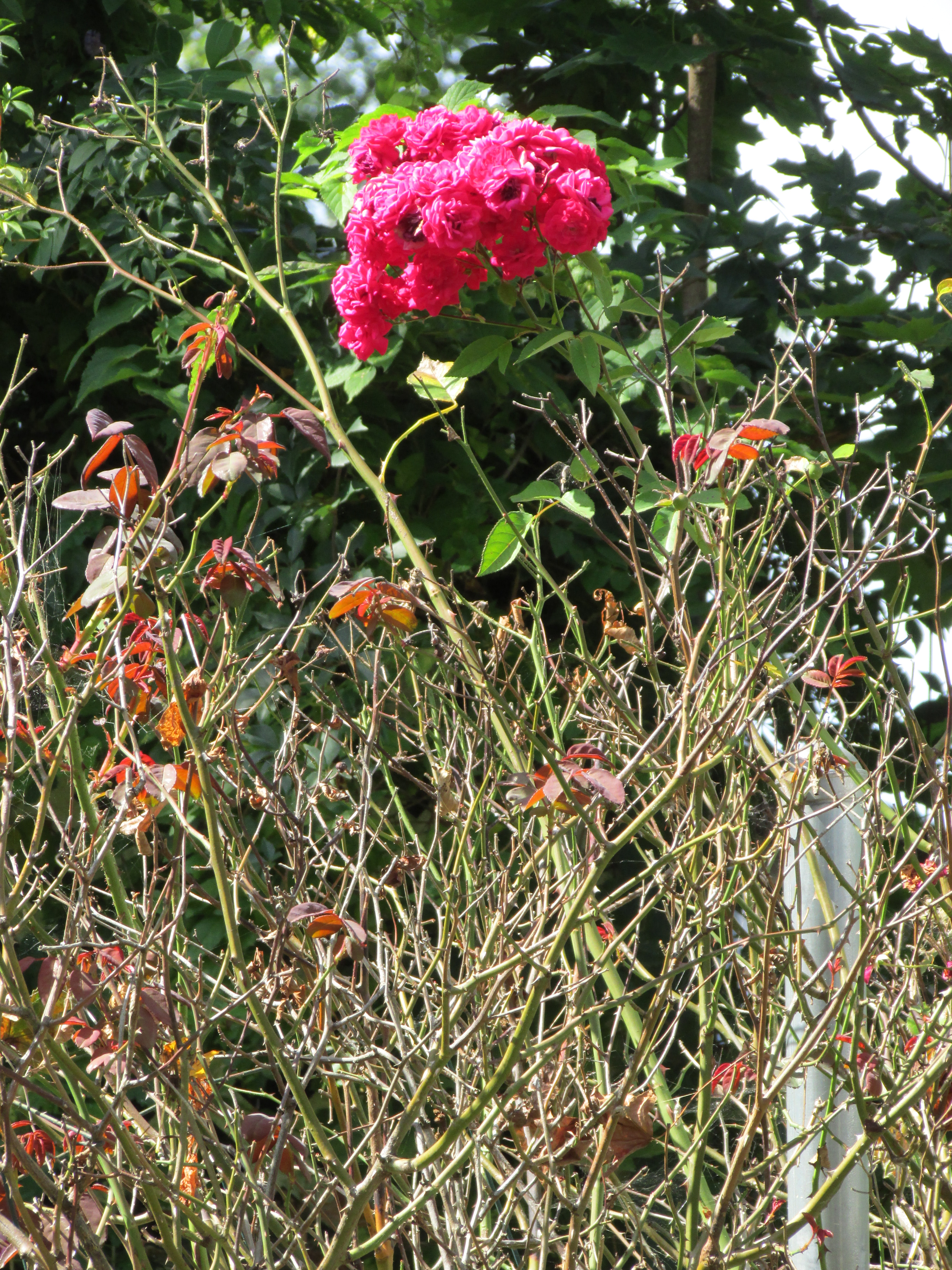
I have not done an inspirational picture post in a while, and since it is Wednesday, hump day, why not? These, I took around my home. I gave them titles to inspire you.

LIGHT AS A FEATHER

Photo by MAD

Photo by MAD

AMONG THORNS, I STAND PROUD

Photo by MAD

Photo by MAD

AS ABOVE, SO BELOW

Photo by MAD

Photo by MAD

I hope you enjoy these and wish that they inspire you to write/create.

Acceptance is Transformation

Following my earlier post about core topics on my novels, I decided to write today about the core theme in Ramblings of the Spirit. Although there are many themes throughout the novel, these are driven by one core theme – acceptance. I mentioned before that change is transformation, but before transformation takes place, acceptance must be present.

Acceptance just as change, is never easy. This is because when we come to the point (at a place in heart and mind) to accept, we have fought a battle (physically, emotionally, mentally, and spiritually). If we are to receive growth and transformation, we must let acceptance in. Acceptance is very personal and different for individuals . Why? Because it draws from all the above mentioned (four) areas and prepares the person (the whole) to undergo transformation.

In Ramblings of the Spirit the theme of Acceptance is shown through different characters, but mostly through Dinorah Sandbeck, the main character. At one point or another in our lives, we will undergo change and transformation, and in between, lies acceptance. The battles that we fight in the four areas of our whole persona are fought at once, whether we realize it or not. Acceptance becomes the vehicle, the bridge towards transformation. When we learn to accept, we open these four areas to receive, and to receive what fits us at the moment of transformation. Acceptance does not equal resignation or giving up, on the contrary, it keeps us going so we can be transformed. When we accept, we view our situation with the eyes of understanding, knowledge, physical strength, and spiritual discernment – all leading to transformation.

I leave you with an excerpt from Ramblings of the Spirit (Book 1 of The Dinorah Chronicles). It is a good example of the senses and four areas engaged during transformation.

“The run there cleared my thoughts. I was ready to handle the consequences, for better or worse. The water was cold so I sat by the dock. The water had a purifying effect on my soul, always did. Every time I visited the lake, I felt renewed. The sound of the water hitting the canoes was relaxing, and the scent of dead leaves was intoxicating. I abandoned myself to the kiss of the sun and the coldness of the dying grass. The sky was crisp blue and a few clouds seemed to dance on it. All this magnificence surrounded me, and yet I felt so tiny inside. My heart was shriveled with pain, the pain and fear of …” – Dinorah Sandbeck.


Cover for Ramblings of the Spirit

Cover for Ramblings of the Spirit


Change is Transformation

Yesterday, I was thinking about all the themes in Moonlit Valley, my first novel. Throughout, I could identify many underlying topics such as love, trust, spirituality, the paranormal … and many others; however, I wanted to identify a core theme, and I think that if I was going to select only one theme, it would have to be the idea of Change.

In Moonlit Valley, the idea of change carries all the other themes, and it makes itself present throughout the entire story, up to the ending.  Change is never easy. It may be good or bad, but never easy. Why? Because it shakes our foundation, causing us to react, and pushes us forward. Even when we resist change, we have to react to it – whether for better or worse.

When change manifests (or we bring it about), inevitably, we become engaged in body, mind, and spirit, as well as emotionally. Our reaction and action will engage those aspects in different degrees, and how we deal with each part, will propel or slow us down.  Many times, we “hover” but not necessarily resist change; sometimes, hovering is what we need – a truce – to be able to proceed with the proper action for us.  Whether that time is short or long does not matter, as long as we recognize the need for it. It is after the truce, that transformation occurs.

Because change is never easy, we should prepare our mind, body, and spirit for it and through it. We do that by minding each aspect, and doing what is needed to promote its wellness, as an example, you would nourish your body by eating well, healthy foods, and exercising it, and avoiding unnecessary stress situations, patterns, or habits. Nourishing the mind and spirit as well, will ease transformation. Many times, change brings with it a sense of spirituality or spiritual transformation, of growth and connection. How we deal with change, during the transformation, will determine our growth, or stagnation – but it is always up to us. We are in control of our emotions.

I leave you with a small excerpt from Moonlit Valley.

“Loss changes your perception of things. It sweeps the hallways of your mind and dusts off your most precious memories. It forces you to open the doors of rooms closed for a long time and peer into your soul, looking for the last ray of hope, of faith. The hope you desperately need now, knowing that at one point, you had put it somewhere and forgotten about it. When you find it, you grab a hold of it, tight, fearing that when you wake up tomorrow, it could be gone. Tomorrow arrives and you realize that although in a faint state, it is still there, and you hold on to it again.” – Rose Carrigan 

MOONLIT VALLEY

MOONLIT VALLEY

Indie Exhaustion and Social Media Fatigue

"I Am Tired" - NARA - 558861

“I Am Tired” – NARA – 558861 (Photo credit: Wikipedia)

This is a topic that most independent authors know very well. Our society has changed much and continues to evolve. The way we do things, the way we work and communicate, the way we live and handle time – all this has changed dramatically over the past decades. The old models don’t seem to be working anymore, and new generations find themselves in the middle of an old system and the emerging of another.

Social media and internet communication/socialization is growing at high speeds. For independent authors it is the best of times, however it is all happening so fast, and it might be exhausting for many. Indies do it all, but they also want to keep up with social media trends.  I have read advice about “becoming involved in everything, in as many sites and social media venues as possible.” I think that this is advice that I cannot take to heart, at least in my case. Why? Because it leads to exhaustion, mental chaos/fatigue, and worry (in the sense of having to keep up with all those social media sites).

I keep things to a minimum. I cannot write under exhaustion or mental chaos, neither will I be able to do much of my work, if I was to follow that advice. I keep this blog that I enjoy immensely, an author website (that I am developing slowly), a Facebook page (that I don’t visit as much as I’d like because I truly enjoy Facebook), and a Twitter account, which I plug-in with this blog, and might visit from time to time (and I have considered removing the Twitter account since I am not very active in it, other than posting through this blog).  I do have other work related websites that I keep up as well. I was tempted to join Goodreads and Shelfari (and almost did), but realized that doing so would add a layer of fatigue, and more sites to worry about keeping up. I believe that I am not involved in as many sites as other authors are, and I know my limitations. I believe in being involved in fewer sites and being active than in too many that I cannot keep up with them. That is why I decided not to join Goodreads and other sites that interest me (at least for now). I love interacting with people through social media, but need to keep a balance on what I can truly handle. I believe in answering posts and emails, as well as visiting other sites and sharing. I believe that it is not possible to do this on too many sites at once. I also believe that belonging to too many sites at once would impact the quality of the interaction, and the enjoyment of it as well.  Therefore my need to keep it as simple as I can.  I’ve seen blogs were the blogger limits himself/herself to post and does not answer comments or interact with readers. To me, it defies the purpose of blogging and social media in general. Why would I want to post/write something if I am not going to answer a comment about it? That would be as talking to myself in the mirror. Communication, sharing of ideas … is the purpose of social media, among other things.

My point to all this rambling is that if you (as an indie) are feeling a bit exhausted only from your social media interaction, and feel that you cannot keep up with it, and it is affecting you (and possibly your work), maybe it is time to cut some of it, and only become active on the sites you truly enjoy.

I would love to hear from you on this topic.