Should I give my chapters a title? I’ve asked myself that question, and while there is no right or wrong answer, I prefer numbering the chapters. However, in a few of my novels, I opted to give chapters a title. I think there are pros and cons to that approach, and it depends on what I am writing. Titles can be grounding to me, as the writer; it gives me a parameter to adhere to as I write. For a reader, it might enhance anticipation, or arouse curiosity and the need to continue reading, however, it might also set expectation. The reader might expect something different.
Is the title a giveaway of the entire chapter? Not necessarily, a hint maybe, but I don’t think chapter titles should be written like a blog/article title, hence letting the reader know what the content is about. I think of it more like an invitation to continue reading, a mystery that unravels in the next few pages. In Moonlit Valley, I used chapter titles such as: Exile (for chapter 1), Boundaries, A New Truth … These titles don’t say much, however, they set the stage for what’s coming in the next few pages. In Ramblings of the Spirit (book 1 of The Dinorah Chronicles) I used a combination of chapter number followed by title. For example, Chapter 4 Dark Waters. I used the same format for the entire trilogy. However, when I wrote The Five-dollar Miracle, I numbered the chapters, only. For my current novel, The Girl Who Could Not Love, I prefer to use chapter numbers, although I could have used titles instead. For that particular novel, both formats seemed to fit well.
For me, the flow of the story dictates what I will do, but I find that the traditional numbered chapters work well always.
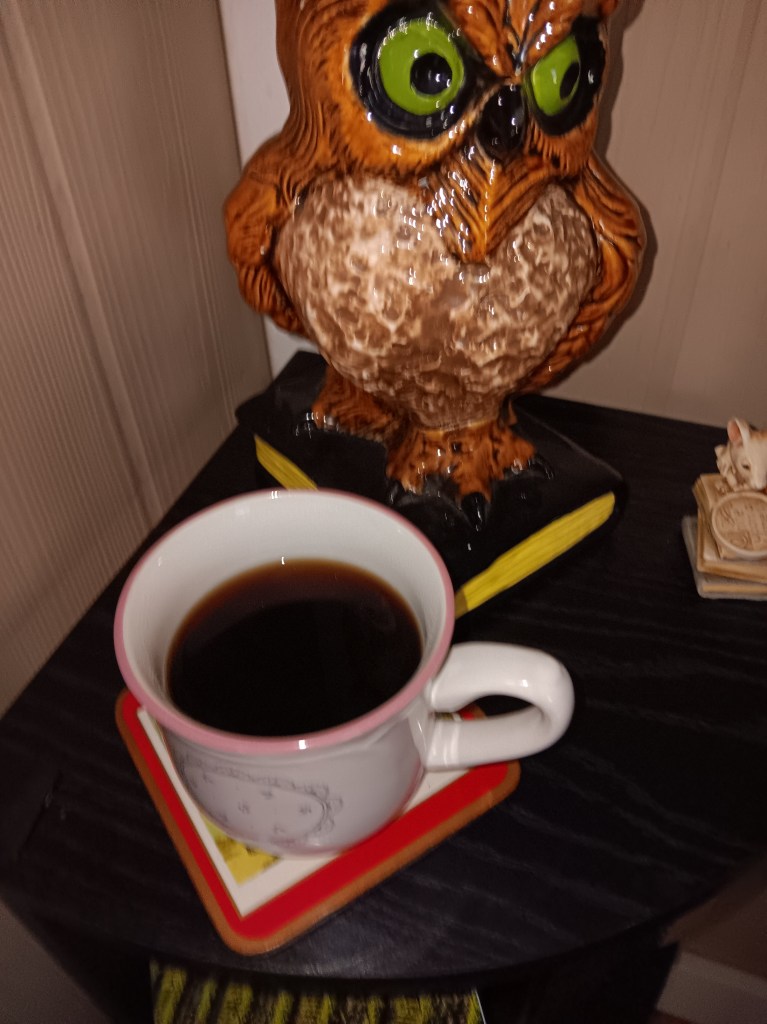
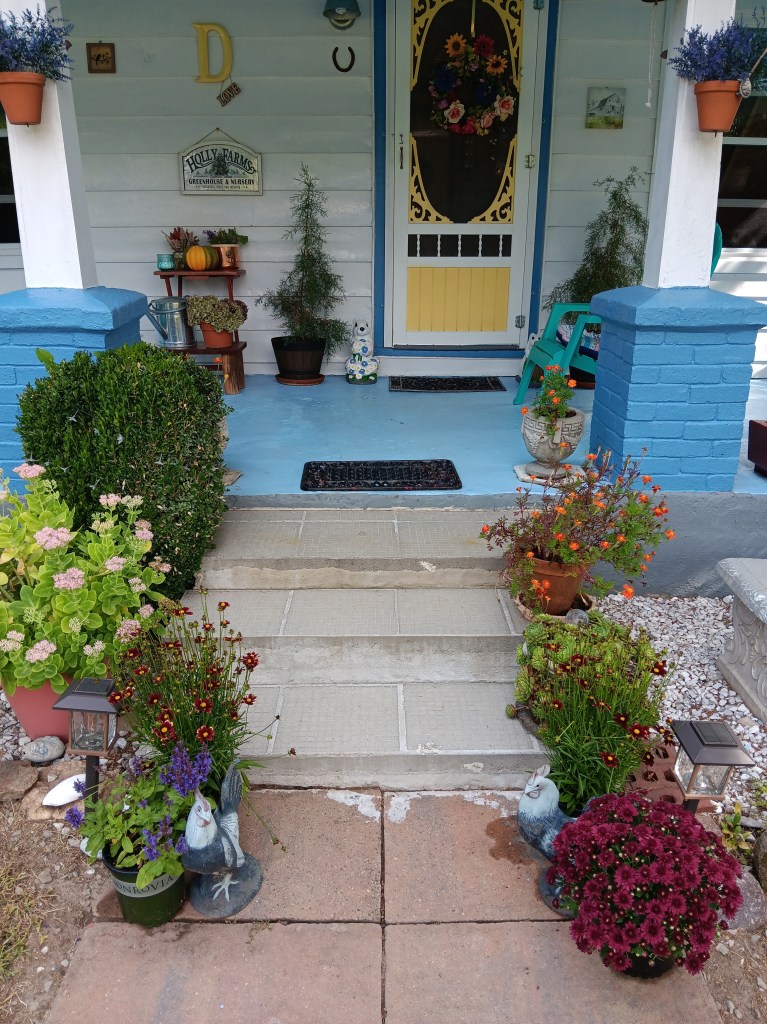
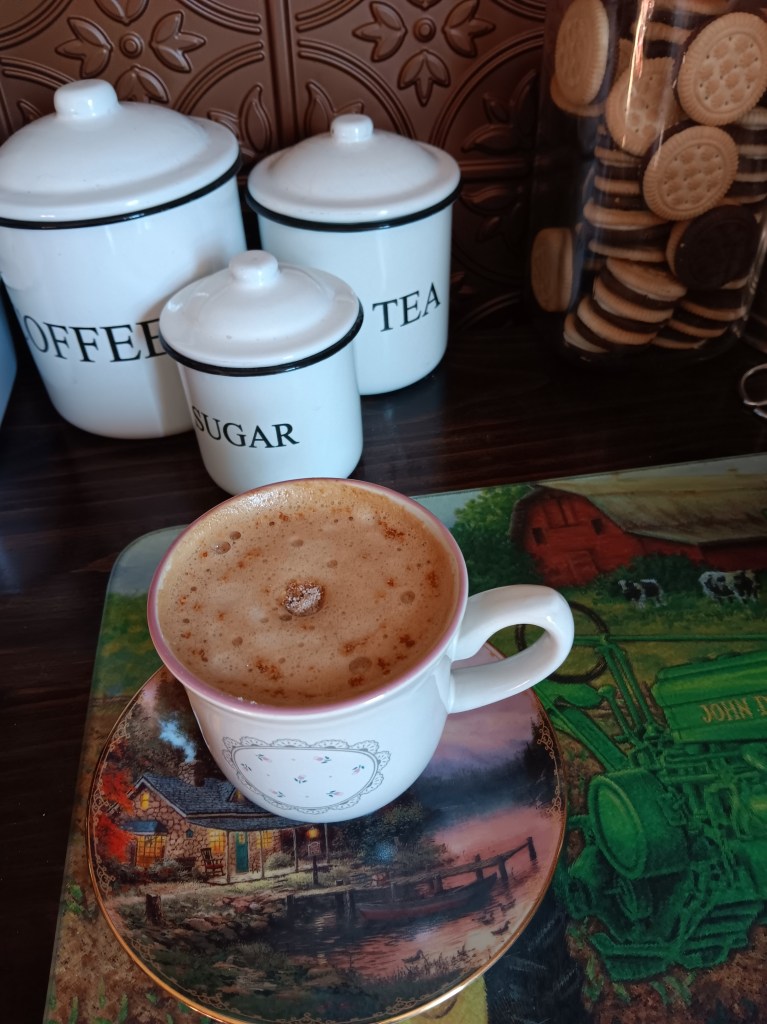
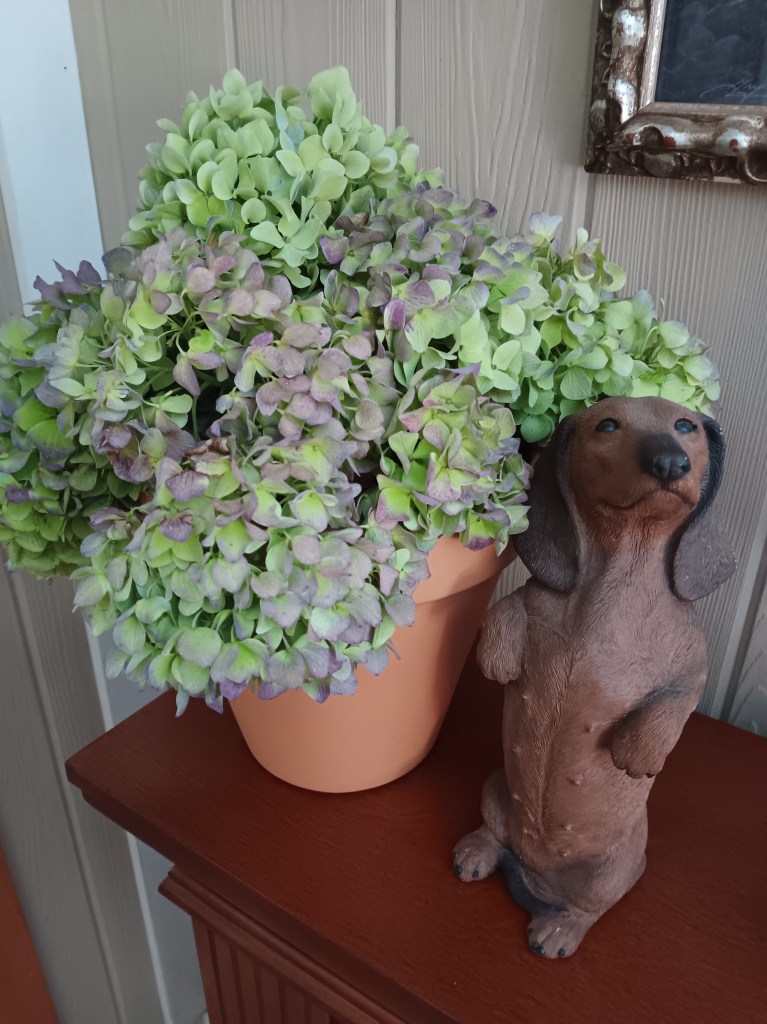
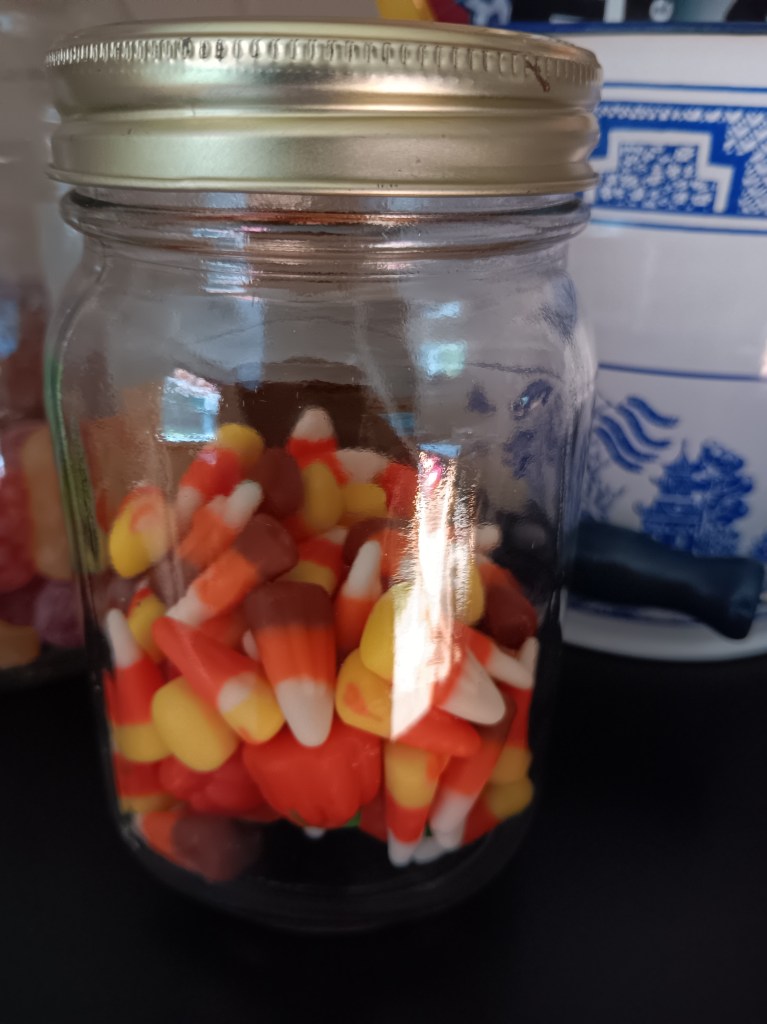
There is a crisp in the air, the birds are leaving, squirrels are starting to look busier, and leaves are changing. All of this speaks, Welcome Autumn! Inspired by all of this, I decided to welcome the season in a simple way.
A favorite cup of coffee (photo by M.A.D.)Hydrangeas from the garden (photo by M.A.D.)A tradition (photo by M.A.D.)Indulging scents (photo by M.A.D.)The porch (photo by M.A.D.)Oranges, reds, and yellows (photo by M.A.D.)The warmth of Home Sweet Home (photo by M.A.D.)
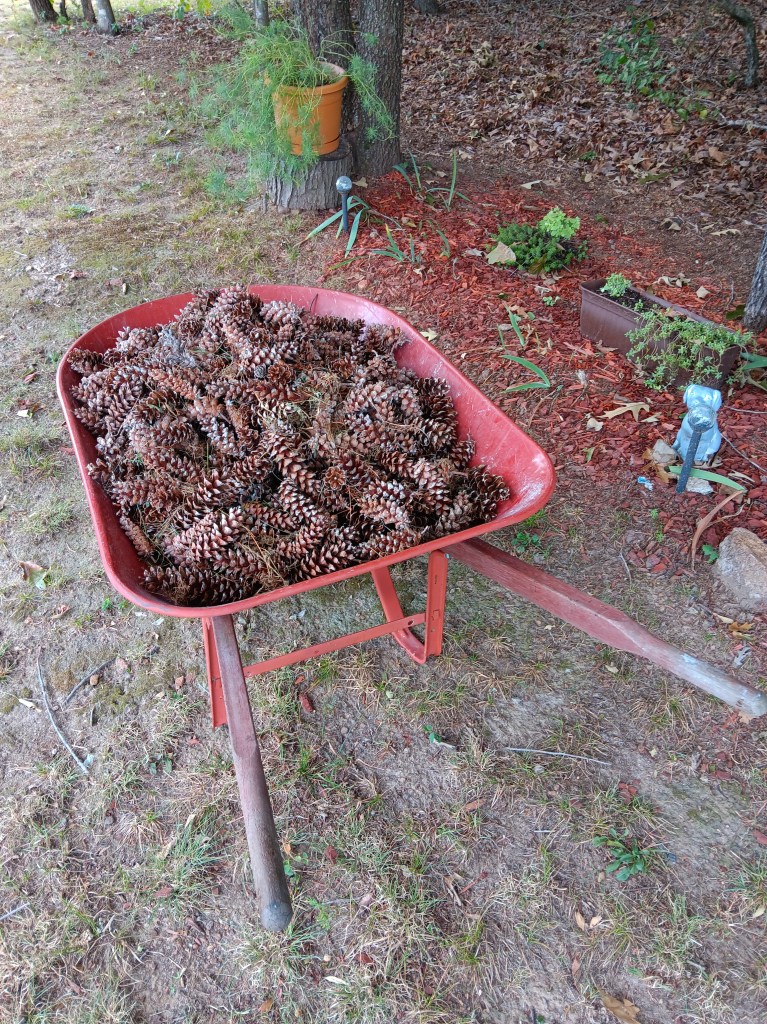
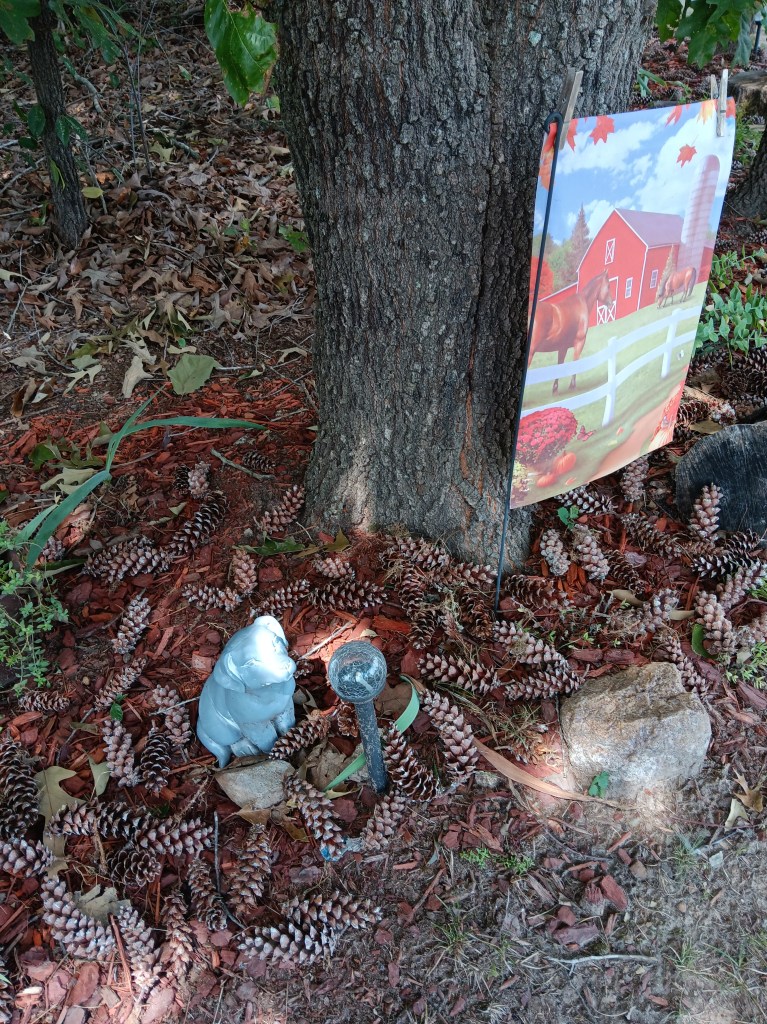
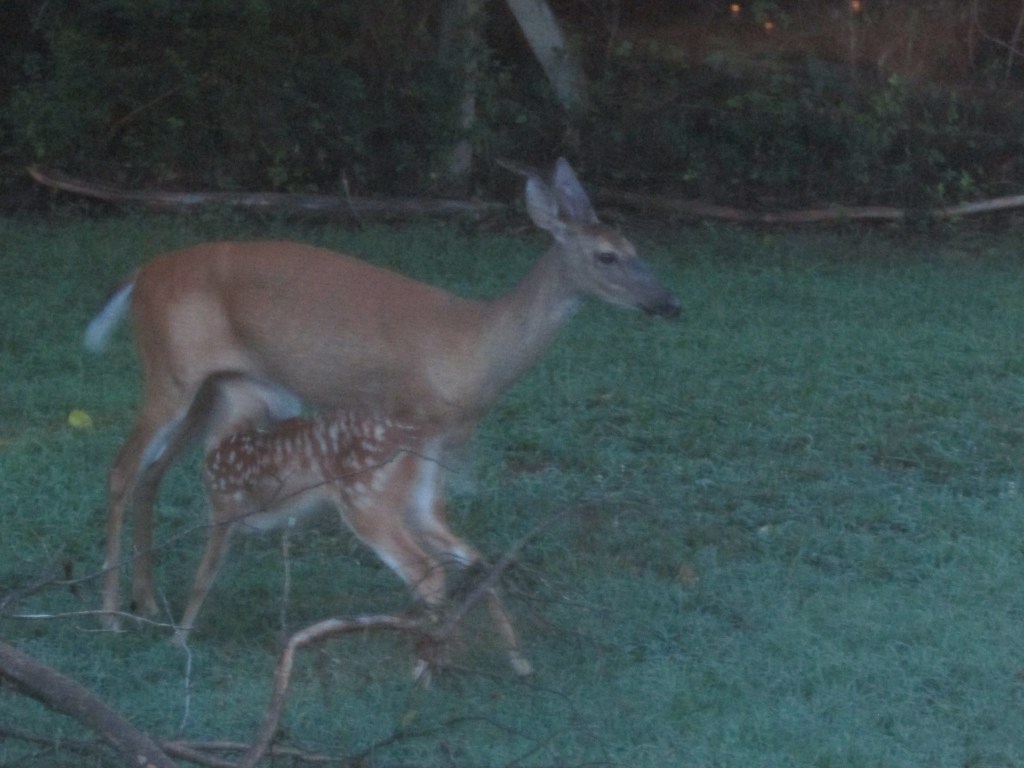
The pine trees are starting to give their presents, and I collected a wheelbarrow of these. I decided to spread the pinecones all over the front garden. Another bunch fell after that, possibly one or two more wheelbarrows full. We will put them to good use. Unfortunately, this year deer ate many plants, but I love to see them around, especially, the baby deer jumping and chasing crows. The crows are not afraid, they seem to play as well. A lovely sight.
A wheelbarrow full of presents (photo by M.A.D.)Pinecones made a lovely mulch (photo by M.A.D.)
Hope you enjoyed the photos, and that it inspired you to welcome the season as well.
“Then I will send rain on your land in its season, both autumn and spring rains, so that you may gather in your grain, new wine and olive oil.”Deuteronomy 11:14
In part, a purpose for this blog is to write about my journey as a writer, as well as to share what has worked for me, and my approach to writing a novel. There are so many books and information online on this topic, which will always be of some benefit; however, I find that much of that information is very technical and sometimes, even discouraging to someone who is just starting the journey, hence why I try to simplify when I am writing about a subject. In this case, dialogue, specifically, when it needs to be long.
When I am writing a novel, I strive to have a balance between dialogue, description, and narration. My novels tend to be rich in dialogue, sometimes long (if needed). If not careful, the reader might be lost in the conversation. Although sometimes a long conversation is required between two or more characters, I try my best to include other elements, whether having a character make a gesture, change positions, observe something, or anything that might give the reader a small break from the dialogue. I have a tendency to write in long sentences, as you might have noticed if you have been following this blog, and that is reason enough for me to be aware when I am writing dialogue, or even description in my novels (there you go, that was a long sentence.)
When dialogue is long, such as in the case of a character recounting a story, or a past event, I interject with something in the third person. As an example, Joe is recounting an event. He has been talking for a while, so in order to break it up a bit, as the writer, I can interject with having Emily react to what Joe is saying. Emily’s eyes grew wider with anticipation… or depending on the scene, Emily grabbed Victor’s hand tightly while Joey …. or a character might break the dialog with a question. These are all actions but should never feel forced on the characters. Those small breaks in dialogue give a break to the reader, but also make the other characters present in the conversation while they are silent. When I write dialogue, I want to make it as natural as when I am in conversation with another person or group of people. Characters have different personalities and when they are active in dialogue, their personalities are reflected through their words. It goes a step beyond she said/he said. A reader should never be confused about who said what. Just as chapters are a continuous clean break, so should interjections in dialogue. One follows the next naturally, without leaving the reader behind.
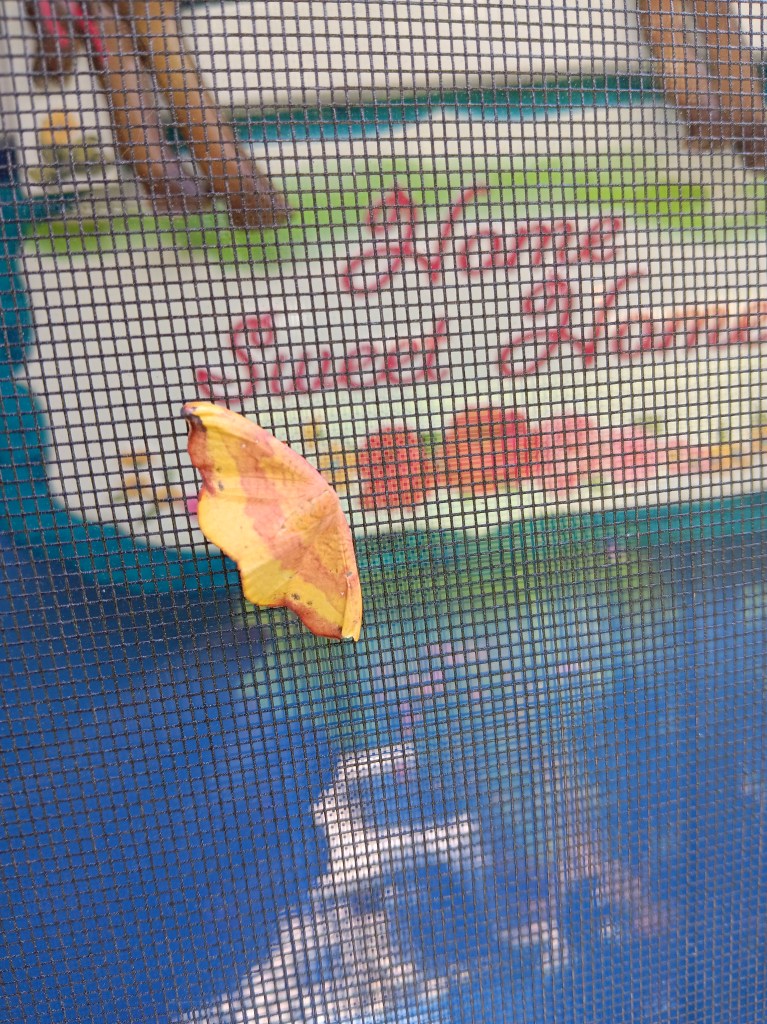
For me, moving from Jersey to rural Virginia was a significant change; everything was different. Close to nine years have gone by, and I have learned to appreciate the natural beauty surrounding me. I miss many things about Jersey, and I think these will always be in my heart; however, home is what you make of it, and how you receive the blessing of another day. This Summer has been particularly very hot, with the exception of last week, which offered autumnal temperatures. I have never been a fan of weather that is too hot or humid, or of the sun; I prefer cooler temperatures, and I don’t like to spend too much time in the sun. I have never been a sun-bathing person; even as a kid growing up in Puerto Rico, I avoided the sun. My husband loves the sun and prefers Summer to any other season. With only a few more weeks of Summer, I find myself thinking of all the lovely things that I will not see around once this season gives way to another. Such things as Mama Deer with her babies, Mama Crows raising families together, and crows playing in the rain, all kinds of unexpected critters, giant mushrooms popping up everywhere, tending the garden and enjoying its offerings, unique butterflies, the first leaf that turns red, and so much more.
It all speaks of Home Sweet Home. Home is in the details.
The blue moon that we have been enjoying over the past couple of days has been magnificent. Of course, I had to write her a poem. Here are a few pictures from my little corner of the world.
I like to walk very early in the morning. The temperature is cool and there is certainly a calmness around. I do my walking in town. The country road I live in might not be the ideal place to take a walk that early. Cars fly by and on many occasions my hair has been blown back by the wind left by a fast-passing car, too close for comfort. Main Street is quiet early in the morning. Businesses are still closed, and people are just about ready to start the day. I encounter a few runners or people walking their dogs. There are few cars heading to the daily destination. I mostly hear birds singing and the noise of a few other summer critters. By the time I am done with my exercise, something magical happens, as if taken from a final scene of “The Langoliers (Stephen King).” The town starts waking up. Soon there are more cars on the road, and the noise level starts rising slowly. Businesses start opening their doors, and employees arrive. People chat briefly on the street. Slowly, the town awakens to another day. As if by magic, the town is alive. There is something sweet and beautiful about that moment, the blessing of another day.
Influence – to affect or change how someone or something develops, behaves, or thinks. (Cambridge Dictionary)
We are in the information era; however, I think we are a bit further along than that. We are in the influence era. Although we have always been influenced by others, whether family, friends, education, marketing, politics, religion … it is now when “influencers” are found everywhere, at every level of society, and even recognized as an occupation, that is, thanks to the development of the internet, and with it, social media venues. However, artificial intelligence is adding another layer to this era of influence, and this is only the beginning. I think that all markets will be changed by this in a significant way. In my opinion, we are entering a new era.
Aside from this, we have always been influenced by something or someone, directly or indirectly. The adage, “Birds of a feather flock (fly) together”, speaks of this influence. Who we allow in our close circle, whether we realize it or not, will influence us in a positive or negative way. Even when we think that we are strong enough to remain neutral in our relationships, there is always a part that is influenced by the other person(s). Sometimes, by the time we realize the type, depth, and degree of such influential forces, some damage has been done. Whom we have listened to, walk with, and entertained in life, those influences, have molded some of our responses/decisions, and views in life. Sometimes, an influential relationship will be beneficial, other times, the opposite, and years of such relationship(s) will affect, change, our development. It is usually after a long period of time that we begin to realize how a particular relationship influenced our outlook and behavior as well, and down the road, many of the results we observe in life due to choices we have made. This is not to blame others for our own choices, but to recognize the power of influences in our daily living. I have heard many times that “you become who you befriend.” You can develop a positive outlook or a “poor and doom” mentality. The other day, I was listening to someone talk, and every other word was can’t, never … words along those lines. I understood what was being said behind the scenes.
We are social beings, we tend to form groups, and we have a basic need for belonging. How that need is filled is up to us, as adults, that is. When I watch the news, and I see so much turmoil, hate, irrational behavior, verbal and physical attacks, and other less than civilized behavior, I see “influence” at play. When there is extreme polarity, taking sides becomes harder for the observer. The least of two evils might not be enough. Values are there for a reason, a sort of compass, but those values are subject to influences throughout our life. White or black might not be enough, and gray seems a forced compromise sometimes.
Blaming others (influencers) for our choices is denying personal responsibility and eventually, hindering our growth as human beings; it diminishes our humanity, and in a way, our ability to recognize influential forces in our lives, including our own. We reject our free-will, our most precious gift and essence.
Herbert presents, The Laws of Human Nature by Robert Greene (Photo by M.A.D.)
This was a lovely surprise, a gift from my nephew on my birthday. The Laws of Human Nature by Robert Greene is about the understanding of human behavior but from a historical perspective, with examples throughout history. The bestselling author explains basic human nature behavior through historical examples in order to teach you how to apply decoding the same behavior today, in others and in yourself, and how to better understand and get a hold of your emotions once you understand this behavior, as well as become more understanding of others, thus improving your relationships.
So far, I am enjoying this book immensely; so far, a good read for sure.
For most of my life, writing and publishing seemed a dream hard to reach. Mostly because the image of most famous writers that was presented by the media to my generation was a bit intimidating and hard to reach. It was one of seclusion, selectivity, money, unwanted-wanted fame, and reserved for the few great ones. This was a different time, one without internet, social media, and writer-friendly technology. Traditional publishing ruled the roost, and the few brave independent authors who dared cross to another dimension were viewed as vane, and even rebels who could not abide and bow down to a perfectly run system that would vomit you if you were deemed not good enough, or below its standards. Many dreamers like me would not dare enter the nightmare, and the ones who became rebels of the system knew they have to pay the price, and a very expensive one it was, literally and figurative, reputation included, and with it, down the dream of being even considered for a traditional publishing contract. Independent publishing was viewed as a mortal sin. Thank God these days are different, although not without its problems. When I realized that my dream of writing could be resuscitated under a new set of rules, I didn’t think twice. It was a new dawn. However, I had many questions. Many of these questions are the same ones that aspiring writers have today, although it is much easier to find the answers now. This post is about some of those questions and how I answered them, as well as questions I’ve encountered.
I want to write, but how do I start?
The short answer to that is just do it, write, but there is so much more to that. When I thought about that question, it wasn’t as easy to answer as I thought it would be. There was so much to consider, and so much more knowledge I needed to gather. I spent nearly two years learning (while writing and transitioning) as much as I could about this new system and independent publishing, but as well about traditional publishing at the time. Many myths were alive, other were just that. I found that the most important issue was my Why. Why did I want to write? Was it just because it was a life dream resurrected or was there more to it? I knew I had to answer that question before taking the plunge. I did. My why is not relevant here, every writer will have a why. So, to answer the question, start with your why. Why do you want to write? How do you see yourself as a writer? Is it for money or a call, or something else? When did your desire/passion for writing start? What triggered it? Have you written anything in the past? Why not? Were you intimidated by misinformation? How do you view writing? As a business? As a hobby? As a career? As a calling? How do you view other writers? Would you consider becoming an independent writer (indie writer) or does traditional publishing align more with your vision? Would you consider becoming a hybrid author?
How do I publish my book?
There is much to learn about this subject, and the good news is that today there is much information on this subject online and in books written by many independent authors, as well as hybrid authors. A hybrid author is one who has published via the traditional model, but also independently. The way to answer this question is for you to educate yourself as much about the publishing industry as you can. Learn about both models, but also, about the different methods to publish your work independently, because there are many, and the cost vary widely between these, from very minimal expense to thousands of dollars. Most important, and once you study this information, is to apply what you learned when you answered question number 1 to answering these other questions about publishing. What attracts you more about each model? Which model mirrors more your work ethic? Would you consider becoming a hybrid author? Would you consider working with an agent? What is your ultimate publishing goal?
Do I have to be an avid reader to be a writer?
Most writers are. It is part of your education. You will learn different styles, voices … Develop your writing style and voice. Never try to imitate another writer. It is a disservice to you, and you would be disrespecting your craft. There is nothing wrong with admiring a best-selling author and learning from that author’s style and work; however, develop your own. Understand that it takes time to learn and grow. Most likely, the author that you admire most has been at it for decades.
Do I have to belong to book clubs or writer’s groups?
Short answer, no, and in other words, you do you (or to each its own). You know what you like and dislike, you know your personality well, and you know what ultimately educates you and fuels you. If these groups work for you and excite you, then go for it. If not, there is no sin in that. These can be a great educational tool, but it depends on your personality, preferences, and goals as a writer.
What is the process of writing and publishing a book?
First, read and learn as much as you can about the topic. Aside from the educational part of this question, it is different for every writer. Inspiration comes in many ways. Most serious writers are disciplined enough to have a schedule or method. Many writers use an outline before writing a book, other writers do not. I don’t outline, but a small outline sometimes develops on the side as I am writing. Many times, as a way of remembering important points, or as new ideas pop. There is no right or wrong way here. It also depends on what publishing model you decide better fits your working style and ethic. There are many ways of publishing a book; learn those venues and their differences. Cost ranges from minimal expense to thousands of dollars. The more you contract out the more money you spend. You can use a publishing house for independent writers, which takes care of formatting, editing, etc. or you can hire each phase yourself, from formatting, to edition, from cover to cover, all the way to publishing your book, hardcopy or electronically (eBook). Amazon is a great way to start, if in doubt, and in my opinion, one of the least expensive ways to publish a book, and still put out a decent product. They offer editing and other services as well. There is also a good amount of information on their site, as a way to educate aspiring writers, which translate in more revenue for the company, eventually. Follow the method that you prefer and one that lets you present a well-crafted quality book for your readers, one that you are proud to offer.
Who promotes my book?
You do. Whether you publish traditionally or independently, you will have to do some work to promote your book, and the venue you use is up to you, whether that is social media, blogging, related products (physical products) and promotional materials, giveaways, activities … However, when you have a team behind you, such as in traditional publishing, there are advantages to that, as well as an established name behind your book and proven methods to spread the good news. As an indie writer and publisher, you can do the job yourself or hire people to do it for you, depending on how deep your pockets are. There is also the issue of personal preferences, for example, you might not enjoy social media as much, but prefer blogging, or other methods. I have to say, although I don’t follow this, that being robustly involved in social media, having a YouTube channel, a podcast … does help in spreading the good news about your work faster and widely. It is something that I recognize as a great advantage but not necessarily follow. It all depends on what your ultimate goal is. There are three very good sources to further your education that I like, that is, if you don’t know where to start. One is Stephen King’s book On Writing, Joanna Penn’s book The Indie Author Guide, and a copy of The Writer’s Market (for traditional publishing). Joanna Penn is an independent best-selling author. Her YouTube channel and blog are a great place to start. There are more suggestions under the tab On Writing -FAQ on this blog.
Do I need to be involved in social media? How much is too much?
The short answer is yes. You should have some kind of internet presence. Times have changed, and it is part of a very fast environment and culture development. However, you should not have to feel obligated to join every social media site. If you enjoy that, by all means, the more exposure the better, but not at the expense of your writing time. I think balance is key. I only have this blog as my online platform; other authors prefer a much robust involvement in social media venues. There is an advantage to online exposure and interaction. Again, it depends on your ultimate goal. If selling as many books as you can is your goal, then you will need a well-crafted and thought-out online presence.
Will I make tons of money?
Making tons of money is the wrong reason to enter the writing world. Most writers, good or bad, do not make a high income. A better approach would be to treat “making money” as a byproduct of your love for writing; however, passion/love alone doesn’t pay the bills. At one point, you will reconsider and go back to your Why, and make a decision. You will consider your ultimate goal and adjust your plan if necessary. Many independent authors are doing very well.
What about branding and trademark?
Developing a brand is to your advantage, whether you become a traditionally publish author or an indie author. People tend to associate a name with branding. Study the books of best-selling authors, and notice common characteristics such as color, typography, mood… It is cohesive and recognizable. This is something you will develop with time, because in the beginning you are learning about yourself as an author. However, when traditionally published you will be coached and steered towards an image/brand. The experts take care of that, in a way. When you publish traditionally, you are under contract with a particular publishing house, for the duration of your contract, and both sides have legal obligations to fulfill; you are also represented by an agent. As an independent author, it is up to you to develop a brand (or not), and your work falls under copyright laws and protected by it. I advise to educate yourself on this topic.
How fast should I write a book and publish it?
Writing a book is not an easy endeavor. It takes much crafting, editing, reviewing, research, and other considerations, aside from the publishing part, which has its own challenges. You should not be in a rush but take as necessary to present a well-crafted book always, one you are proud of as an indie writer. Under traditional publishing, you are under contract and must meet the deadlines expected.
Do I have to stick to a particular genre?
There is no right or wrong answer here. I recognize the advantage of sticking to a particular genre, one you have some kind of degree of passion, but I don’t see it as a rule. The experts will tell you different. From the point of view of developing a brand and polishing your style there is definitely a strong reason to try to write in one genre. Know that the boundaries of writing go as far as the mind of the writer, and in my opinion, imagination and creativity and boundless. I don’t follow the stick to a genre rule. The answer becomes clearer as you grow in your craft.
What is the most important thing to do when trying to become a writer?
Write, but aside from developing a writing process/schedule, I think that it is educating yourself as much as you can in anything related to writing and publishing. You cannot craft a plan to follow a path without information, and knowing where you are headed. There are many books available now as well as websites, podcasts, videos, that you can utilize. Visit bestselling authors websites. Many of them offer tips for aspiring authors. Even the visual education you gain by studying their well-crafted websites is worth it.
I hope this has been helpful and that you continue to educate yourself in the craft, but most of all that you embrace your passion for writing and run with it.