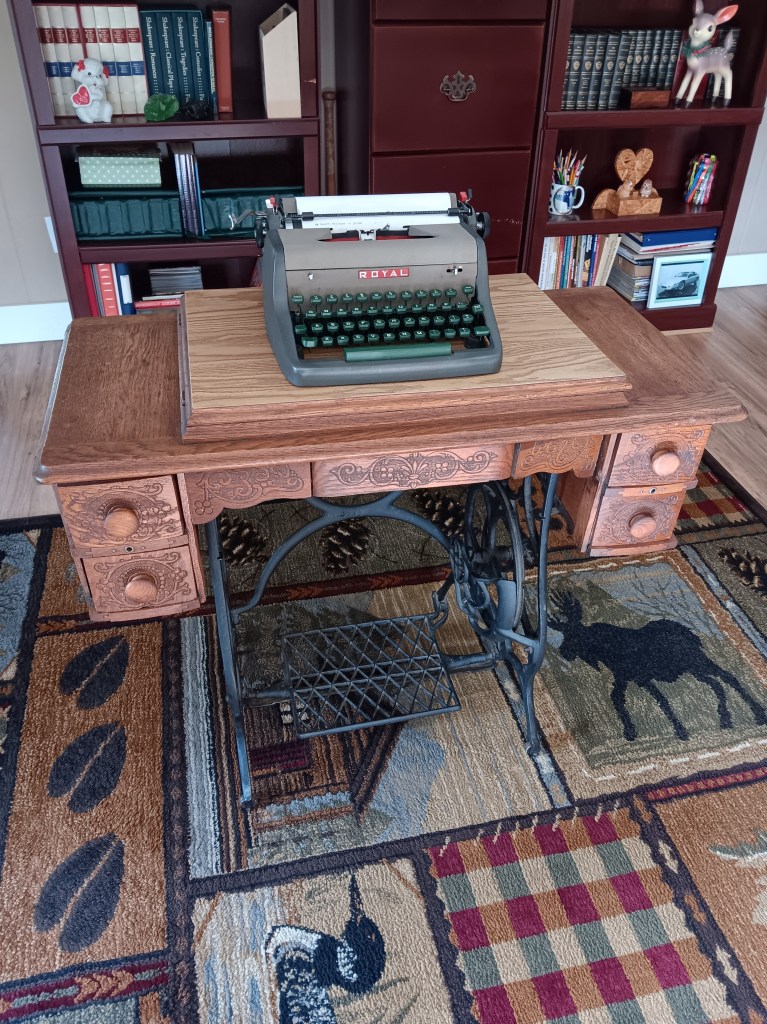
Sewing Words
Many years ago, I wrote about my decision to pursue independent publishing, specifically, print on demand method, and how important this technological development was in making my dream of becoming an indie author possible. At the time, there were many views on independent publishing vs traditional publishing, but mostly, the disdain for independent publishing by the traditional publishing industry. Basically, they viewed it as an author’s career suicide. At the time, and after much research done, I decided that independent publishing aligned more with my views and expectations, work ethic, and my writing style and future endeavors.
For a while, as independent publishing in venues like Amazon and others continued to develop and evolve, it seemed promising and liberating for many authors, as well as affordable. However, with the passing of time, a “gold rush” environment emerged, and it seemed to attract other people who wanted to make a quick buck, who could care less about writing, and who plain and simple stole other author’s work, modified it, and published it as their own. The worst-case scenario that traditional publishing so warned us about, materialized. Now, with the development of AI, another layer has been added to the chaos that already enveloped the independent publishing industry. The speedy AI creation of stories and even the modification of stolen work by using AI is real. Indie authors who care about the craft are facing an overcrowded environment where it is hard to distinguish the good from the ugly, making it harder for their work to be found by readers.
So, how do I feel about independent publishing now, after all the new challenges, perils, and a less than attractive environment for indie authors? How do I feel about traditional publishing now, after seeing what has become of the independent publishing industry? Because honestly, even the so-called vanity publishers of the past seem more attractive now in comparison. If anything, the farmers who own the cows are the ones who benefited either way. Well, I have to say that independent publishing still aligns more with my writing style, the method, that is; however, if back then, I knew what the future would hold for the industry, I would definitely be discouraged to follow that path, and I would seriously have considered traditional publishing. It has become a garbage dump, a less than attractive venue for my taste, and I have to admit that traditional publishing still holds the golden medal, as far as a reputable venue, although much of it has changed in various ways. The flood gates were opened without any type of filtration system, and now, at least for me, this type of venue for independent publishing lacks appeal, honesty, and trust worth.
I don’t know what the future will hold for me as an indie writer, and I may have to go back to basics through research and study of an industry that seems to have fallen short of my expectations. Writing is what I love to do, and I guess that I should be asking myself if I want to do it under today’s circumstances of a less than appealing environment for me as an independent author. It is something that I have to answer myself, seriously and with honesty.

This post is about my feelings on AI (artificial intelligence) and the future of writing and publishing. First, I should disclose that I am biased, and also old-school. I am more like the character Will Smith plays in I-Robot. Of course, when new inventions have been introduced in the history of humankind, there has been distrust, inquisition, questions, trepidation, and so much more. Much has been said about AI, especially, during the past year, and by now most of you must be familiar with some applications in technology, including writing. My concern is with the future of writing and the quality of content, as well as the increase on an already saturated market full of the good, the bad, and the ugly. Must all be doom and gloom? Of course not. The same was said about print on demand and independent publishing, and here we are today. Saturation? Yes. I am sure that there are many benefits to AI, probably across and extended to all endeavors. Going back to the topic of quality and quantity, AI will be a best friend to those who want to make a quick buck while saturating the writing market with stories/content written at a fast pace and without care or soul.
That being said, so many questions arise, at least on my mind.
Will the publishing giants favor their own mass-produced stories?
Will freelance writers compete with AI on speed and delivery or will they embrace it?
Will they be paid less for their originality? What are the parameters for originality when it comes down to AI? Is it possible for AI to commit plagiarism?
Will readers appreciate a book written in what will become the “classical way” or will they become consumers of fast stories that might cater to their need for “more and quickly, please.”
Will the quality of stories suffer, or will it challenge writers? Will readers even notice?
Will AI become a favorite tool of writers or an archenemy?
Will it help with writer’s block or make it worse?
Will writers who care for quality and not quantity feel threatened by AI?
Will human writing even exist in the future or will “Robotina” kill the writer?
Of course, it is too early to tell, and I don’t have a crystal ball on my desk. As for this old-school writer, I believe that words evoke feelings, and that might or might not matter in a not-so-distant future.
Many years ago, I was watching a best-selling author being interviewed and she was asked if her husband read her books. She answered no, and proceeded to explain that he was very supportive and encouraging of her career, however, he had never read one of her novels. The interviewer seemed a bit puzzled; however, I think that in most cases, a spouse or significant other, even family and very close friends, do not jump into the reader’s pool right away, or ever.
This is something that for some writers is a sensitive topic, and they feel hurt when the people closest to them seem to disregard their books. It happens more than we might admit, in all fields/careers. Personally, I don’t think that if a close person has not read my books that it translates into not caring or a lack of support. Many times, people are not avid readers, or just don’t have enough time, or interest in the genre. If my work is treated with disdain or uninformed harsh criticism, (happened on one occasion, and by a person who I thought would be very happy for me) then, I view that as a different issue that is rooted in that person’s issues and not in my work. There is a distinction to be made.
As human beings, it is natural to expect the support and cheers of the people who matter most to us, and most likely, these are the same people who have supported us in many other ways throughout our entire life, so when something that is very dear and important to us doesn’t seem to have equal importance in their lives, we tend to feel hurt. Support comes in a variety of ways and people show their support differently. For example, my husband has not read any of my novels, but he has been very supportive in many ways, whether that is flashing a big smile when I publish a new book, economic support, giving away copies or promo cards to people he knows and I don’t, and many other ways. Do I mind that he has not read my books? Absolutely not. Having his support is having him on my team, and that is valuable to me.
For writers, sometimes just a caring or congratulatory word suffices; it shows that the person acknowledges their effort and is present, even if that person never reads one page.
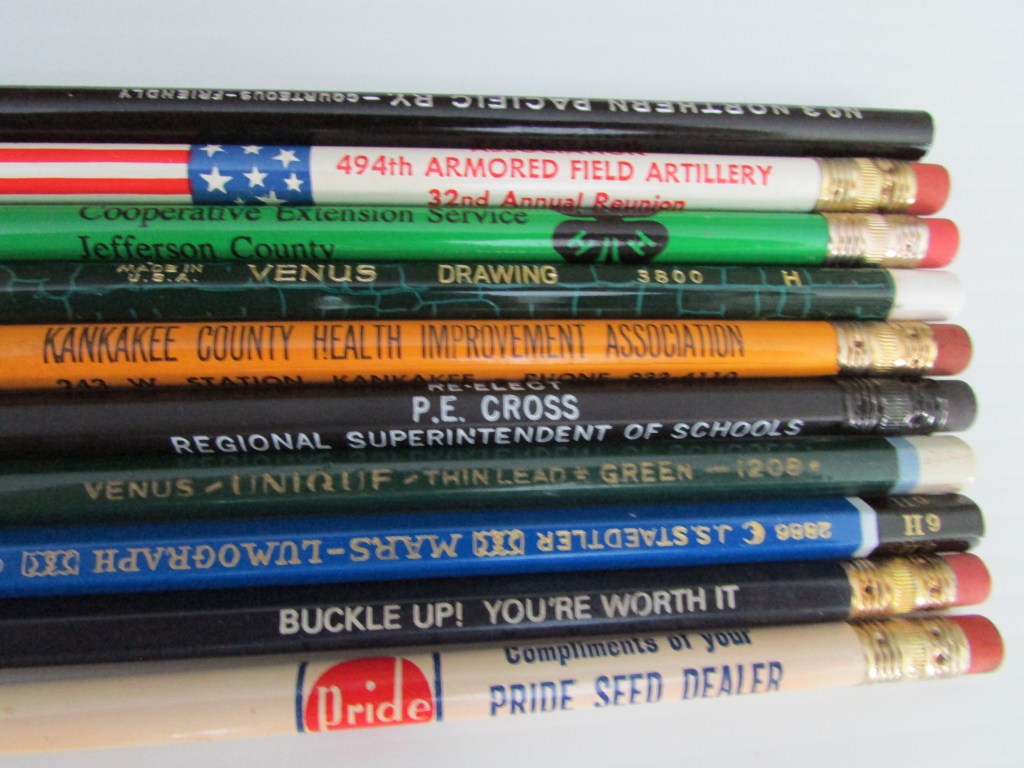
What parameters do you have as a writer?
Every writer has a style that continues to develop over a lifetime of writing. Writing embodies more than putting pen to paper. Every writer has do’s and don’ts that are related to work ethic, style, personal development, goals, and even personality. These are parameters or boundaries that the writer establishes, and many are non-negotiable. As an example, some writers would not consider publishing the traditional route, and they prefer to continue an independent path to their creativity. Other writers would prefer to skip the public appearances or hoopla, although I think this group is a minority. From deciding to stick with a genre to venturing into another, and other considerations, the writer has developed a set of values and principles that will determine most of the career path. It might not be set on stone, but this is the fuel that produces the spark that moves the engine. That is why when it comes down to becoming a writer, there is no one size fits all. There are industry standards, of course, but when it comes down to creativity, each writer has a “code of conduct/ethics,” a system of values of sort, that serves as a guiding light, a beacon for the pen.
Cloning never ends up well, and it doesn’t mean that a writer cannot experiment in the latest genre appeal or what is moving the market at a particular moment; however, eventually a writer will come back to the parameters that were established and are deeply rooted. Can a contract sway the most devoted indie? Maybe or maybe not. It might depend on how deep the writing shrine is rooted and of many other factors, from personal beliefs and values to more work-related, practical, and concrete likes and dislikes. Sometimes, the what-if’s play a role, and other times, it is all a game of roulette, but in the end every writer is its own cliche or its own refuge, although the adage says that no man is an island.
A little mind exercise.
Can you spot the 9 cliches in this blog post?
An update.
One thing that I can say for sure is that writing never becomes easy. I have been plugging and unplugging, on and off, in relation to my book in progress, The Girl Who Could Not Love. This never happened before. On the contrary, most books have been a flowing delight to write. I have never experienced a certain distance or disconnection from a story before. It truly puzzles me. I have made some progress, more like the progress of a tortoise on a ten-mile run. I am not sure of what it is holding my pen hostage, but it feels like I am missing in writing, as if a degree of the angle is missing. And that is mostly why I have pulled the plug a few times, give it a rest, and try to restart the engine.
If I were to compare it to an engine, I would say that my pen is misfiring (my husband is a mechanic; terminology just sticks with me). Right now, I have ended a sabbatical in relation to my novel, with the hope that the pieces have come together at the right angle, at least in my head, and that my focus has sharpen. It was my intention to have a release by the end of the year, but good intentions do not fill the inkwell, neither do they publish a book.
The missing link is out there inside my head, and I just have to find it and make the connection. Because I am no James Patterson, prolific and able to work on several stories at a time, a well-oiled writing machine in my opinion, I will have to approach the story from several angles until I find the right one, the one that fits. Scrapping it would be too painful to bare at this point. May Parker be with me.
Birthright – A right or privilege to which a person is entitled by birth.
Destiny – The seemingly preordained or inevitable course of events.
Free Will – The power or discretion to choose.
(American Heritage Dictionary)
These are topics/ideas that are common in many novels, whether paranormal, historical fiction or other. The Dinorah Chronicles trilogy presents the idea of birthright as central to the series from denial to acceptance to fulfillment. At first glance, these three concepts might appear different or even contradictory to each other, however, these fuel each other, and in the end, the character chooses (free will) to fulfill a birthright and/or what might be viewed as destiny. A birthright might be given but a destiny is chosen by the exercise of free will, whether that birthright is fulfilled or not. In the end, the character finds “self” or grows into the pursuit of knowledge.

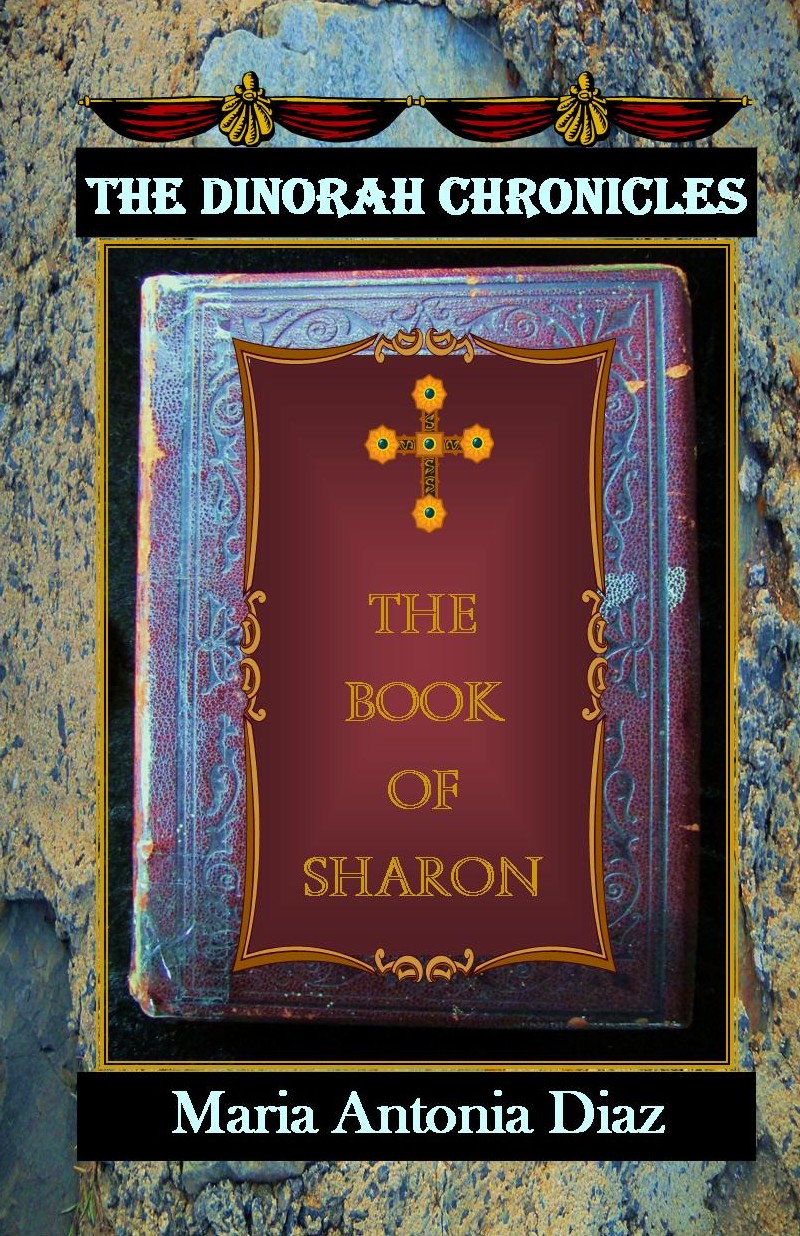
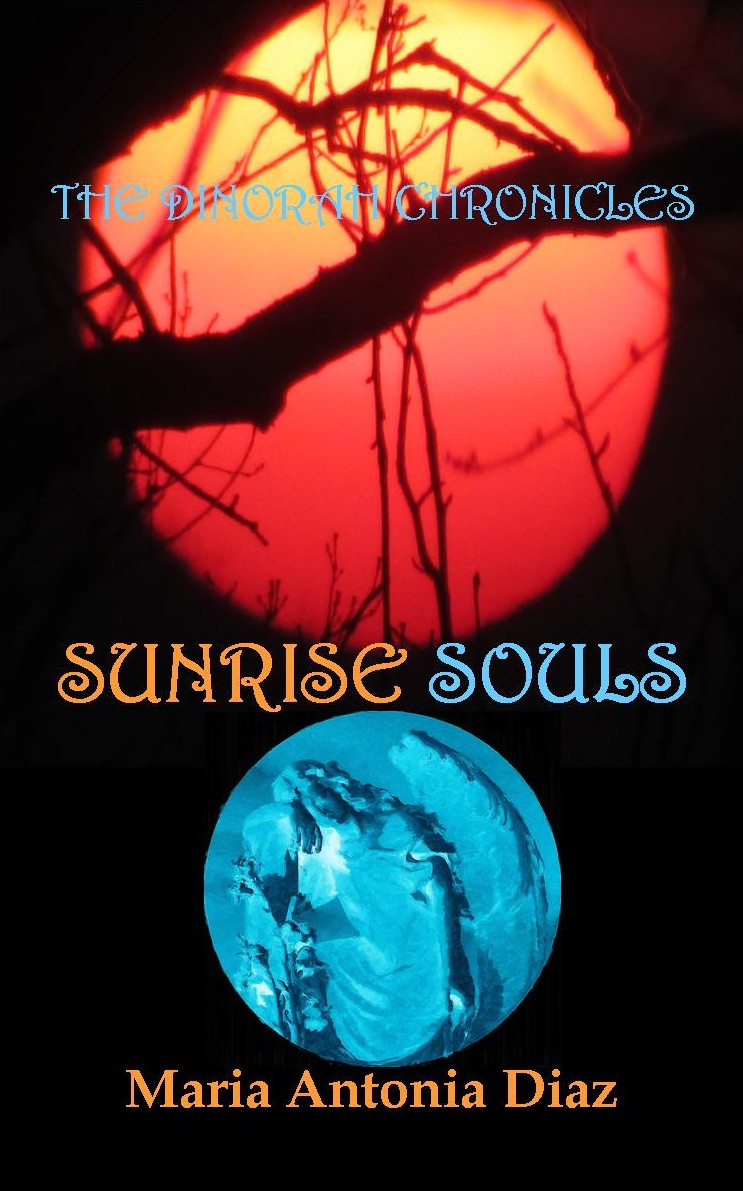
The Dinorah Chronicles is available via Amazon in eBook and paperback format.
From time to time, I like to go back and think about my writing journey and how I feel about it so far. Although I have always written, since I can remember, it wasn’t until the conditions were in my favor that I was able to become an independent author; technology made it possible. In the early days and childhood, stories became broken pieces of paper, maybe because of my mistaken perception, the mystery that surrounded famous writers, and the extreme cost of publishing a book in those days, along with my dislike of pursuing traditional publishing. Although independent publishing has always been looked down in ways more than one, it seems that the idea has become more accepted, and even veterans in the field, traditionally published writers, have embraced it. For me, it has been the realization of a long lost dream, and hopefully, the delight of a lifetime. It has entailed much learning, but also growth. It has been elating as well as confusing at times. For me, the decision to publish independently was as daunting as baring one’s soul to the world, but also a natural one, that is in the sense that I always knew that traditional publishing was not for me. However, before committing, I made sure to learn as much as I could about both venues. That is something that has always been consistent with me – the willingness to study/learn both sides of something before committing to one. This time was not different, although I knew where my heart belonged.
I admire authors who were indies before it was even “a thing.” Back 30-40 plus years ago, it wasn’t as accepted or technologically viable as it is today. Maybe why I don’t take it for granted. It took real guts to be an independent author, and much more work and money. In my view, those writers had a reverence and respect for the craft, way different. As for me, I am so grateful for the times.
Writing for the masses has never been appealing to me, or following the latest trends in writing. In that sense, traditional publishing would have been as jail time. I love to write the story that knocks at my door, the one that begs to be written. Writing for money has never been an important goal, so in that sense, it has not been a disappointment. Delighting a reader, inspiring another, is more appealing these days. Making a decent living at it would only be counted as a blessing.
The future is too short or long, no one knows for sure, so I am very happy writing one story at a time while ignoring numbers; although, for some mysterious reason, thirty books in a lifetime sounds appealing to me, not sure why. However, that number is not a goal, just appealing. Overall, it has been an enjoyable, meaningful, soulful experience that I hope to be able to do for many years to come. When I started on this journey, at the same time, I was experiencing what I would call the most challenging period in my life so far, and also changing an entire lifestyle. Today, while reminiscing, I can say that it has been a good and satisfying journey.
This is a light humor post, but one that will resonate with many writers who have gone through similar situations. It is written in the spirit of encouraging new and aspiring writers, as well as the veterans in the field whose work have not been found or given recognition. Consider this scenario, very common.
“What do you do?”
“I’m a writer.”
“Hum, a car dealership writer, an underwriter?” (Fill the blank on this one)
“No, I write books.”
“Oh …” (followed by a blank stare)
For most people, unless you last name is King or you live at a coastal mansion, you are not a real writer. You are “playing writer” or are going through a phase. In their minds, Writing books = $$$, and a real writer is supposed to have status of some kind. You become one when you achieve this. If not, why do it? Sometimes, we entertain those same thoughts and feelings; you know what I mean. It seems to go deeper than that.
I would like to share a funny story, a conversation I had along those lines. About two years ago, a nearby neighbor had someone fixing her roof. She knew the person since he was a kid. He was starting his roofing business and she needed a new roof, so it was a perfect match. I was at her home when he arrived for that day, and since I had some questions about metal roofs, we began a casual conversation which centered on the type of roof for my 1910 farmhouse, which has an old style construction (beams) and an original stone foundation. The weight of a new roof on the structure was my main concern. After a few exchanges, he asked me what I did for a living. I told him that I was a writer, without going into much detail. Immediately, he shared that he always wanted to write a book and that he knew someone who worked at a local radio station “BUT” she was a “REAL” writer. (Imagine my polite smile). I asked him, “Really, and how many books does she have under her belt?” He answered that she had written a book sometime ago. I smiled, but could not help myself and said, “Oh, just one? I am in my sixth, and it doesn’t get any easier.” I thanked him, waved a goodbye, and walked home. Now we know who will not get my business when it is time for a new roof. I will hire a real roofer.
This is a perfect example of how writers are viewed based on status, which usually equals money in the mind of many people. Which brings another issue – fame before talent. These days, if you are a celebrity a publisher is ready and waiting, and your celebrity name/status precedes your book. You can write about anything and it will be published, promoted, and praised, because in most minds, celebrities can be writers. Ask a Cover Girl model what she thinks about that.
At another level, the sting is more bothersome when it comes from someone closer, who is viewed as a line of support, such a family or a close friend. A friend related to me how annoyed and hurt she was when her mother became very excited about someone’s first book, a person she barely knew, but not hers (many) because her books did not sell much. OUCH!
When I published my first novel, I was excited and proud of myself. I had prepared and waited years for this. I gifted a copy to someone I truly thought would be happy for me, and whom I knew for over 30 years, and for whom I had been there always as needed. Her response baffled me. She threw the book on top of the dinning table and said, “I won’t be reading it; I don’t have time for that.” I was shocked. I did not have a quick comeback for that one. It is different when it doesn’t come from a stranger.
People had asked, “Do you make any money?” or “How much money do you make doing that?” One of my favorites is, “Oh, you should write a book about this or that; I bet it will make money.” We know it doesn’t work like that, and for most of us, it is not even about the money. I am sure you have many similar stories as well. My point to all this? Many people don’t understand what writers do or why we do it. In truth, it is not about how many books, or how much money you make … it is about perception, people’s values, and about what it is important to them, ultimately the reason why they don’t understand what you do. Hence why you should be above it all, don’t give it two thoughts, and keep on doing “your thing.” When people don’t understand what you do, it is inconsequential as long as you know why you do it. Never judge a book by its cover?
These days, phrases and words like cultural appropriation, woke, and many other, are common in our vocabulary. We hear them in social media, the news … These concepts have become “a thing” and many are using them and are “finger-ready” to point it at the first sign of such heresy. The self-righteous mob found a new quest, and with it the holy grail of the times, the “woke” got up and chanted a new song of mob shaming. Just because we are so perfect and spotless, right? The taste of new blood becomes an obsession in social media, and in mainstream media as well. It has migrated into writing, with the latest censoring of old books, the shaming of “old culture”, and the removal of many from social media and the shelves. How will it all play out in the end? It is a question I ask myself. Will we become better people? Will we become better communicators and writers/creatives? Will we sensor ourselves, diluting the words as much as we can so we are not perceived as offensive? What about the writers who are in the historical fiction genre? How will they write a scene that has accurate historical influences in wording because it might be perceived as offensive? Will writers avoid certain ethnicities in their novels for fear of being misunderstood? Will writers of crime thrillers be accused of “inspiring” or “inciting” a crime if an unstable person decides to recreate that particular crime? Will authors be censored, arrested, and prosecuted? Will writing and every form of creativity become “illegal” in the future?
I ask myself those questions and many more. I don’t think I am too crazy and far off. Lone gone are the days when you and I could disagree on something, have a conversation about it, have an opinion, and express it freely without being chastised. We must respect one another by learning to listen to one another all over again, by learning to find common ground even when we disagree on many things, and by understanding that we are more alike than we think we are. As writers, I think that we should strive to write the best story we can write without being disrespectful while being true to the story and history, in the case of historical fiction based on facts. As humans, we are less than perfect, and I believe that most of us try to be as decent as we can, and strive to do better each day. When we look at another as a reflection of ourselves, most likely we end up seeing ourselves in that person in some way or another.

 Inkspeare