Writing Your Book’s Elevator Pitch

It is never too late to write your book’s elevator pitch. Most likely, you won’t think about it until you face the question “what’s your book about?” How would you answer this question if you only had a minute or less? How would you craft the answer in one quick but meaningful sentence? It may seem daunting to think about summarizing your book in one sentence, but it is not that difficult. Here is how.

Think of the title followed by the genre, then about your main character(s), then think about your character’s dilemma – and leave it at that. Let me give you an example using my novels.

Moonlit Valley is an inspirational paranormal romance about a young couple fighting to hold on to their love and trust while overcoming a series of unfortunate events and surreal destiny.

MOONLIT VALLEY

MOONLIT VALLEY


Ramblings of the Spirit is an inspirational paranormal romance about a young librarian who resents her origins but must find a way to fulfill her birthright in a struggle with love, self, and duty.

Cover for Ramblings of the Spirit (The Dinorah Chronicles) - Girl Image by Lunagirl Images. Design by Maria Antonia Diaz

Ramblings of the Spirit


There you have it, Title + genre + main character(s) + dilemma = elevator pitch.

You might feel tempted to add more to it, but then, you will succumb to explaining your novel. You can always add a bit of more interest by mentioning secondary topics of conflict without giving the story away, if you have more time to converse. I have read about many approaches to this, but this works for me.

This works for fiction but you can easily modify it for non-fiction by replacing the main character with your topic and the dilemma with what you are trying to do for the reader (goal).

Hope this post was useful.

The Indie Trap – Avoid This

English: Mouse trap - "Promax" brand...

English: Mouse trap – “Promax” brand Español: Ratonera de ratones (Photo credit: Wikipedia)

Before deciding to become an indie author, I learned as much about it as I could, and continue to learn, knowing that it is an ongoing effort. Indie publishing is evolving fast, and furiously. Honestly, I am not so sure how it will continue to develop and how this movement will be seen in the future. What I have noticed is a frenzy about publishing volume, many times with disregard of quality, by new authors, and even more seasoned ones. What caused this? I am not sure either. It is as if everyone is in a panic, a mania, as if independent publishing will cease to exist so, “I better write a lot of books and publish them before it is too late” or it could be ” too many people publishing, too many books out, soon, it will be impossible for my work to get noticed; it is saturated already.”  That is the impression I get when I read or hear other authors recommending to write many books fast, have them out there soon enough, or publishing many short stories, and novellas just to grab readers. It is indie mania out there!

My take on it is this, if you are planning on writing for a lifetime, of being an author for the long run, avoid the temptation. Write at your own pace, write the best book you can present to readers (you owe this to your readers), and publish it when you are one hundred percent plus sure that you have given it your best effort. Forget about what everyone else is rushing about and doing, and focus on your goals and vision as a long-term author. Write your best story, and present it as a humble sacrifice to your readers. When I say sacrifice I am referring to an offering, your best work.

It is hard to foresee what is going to happen to independent publishing, but you will certainly regret it if you put out work that you are not proud of being your best, that you can certainly foresee, so don’t fall in this trap. Don’t let algorithms, ranking, number of books a year … get in the way of your best work. However the industry develops, let it be; you will continue to be an indie author, if that is your vision.

Developing a Brand Statement

I should have written about this topic sometime ago, but it is something that you do not think about unless you are making a conscious effort to create, evaluate, or develop/expand your brand. Whether you are an author, artist, entrepreneur … or are starting to create a brand, eventually, you will have to develop a statement. In this case, I will refer to your statement as a branded author.

What is a brand statement? To make it easy, compare it to your novel’s elevator pitch. I have read in several sources about many variations of expressing it, but it can be easily explained as the sum of what you/your product is, plus the type of customer/reader that is your target, plus what you/your product offers/does for them (your intention). Once you put that into words, in a short sentence, you have developed your brand statement. For example, my brand statement is: “Inspirational fiction author Maria Antonia Diaz delights readers of fiction and non-fiction by offering works that combine adventure with the supernatural and the divine.”

If you look at that statement it tells who I am/my product as an author, it mentions my target market, and what the product (books) offers the readers. The reason that I include the non-fiction sector, is because my novels have an inspirational tone to them, which might be of interest to that sector. If you think about it in those simple terms, you can develop a simple brand statement that you can sum up in a sentence.  It is an easy way to keep the focus of your brand in front of you, and make it clear to others. Think about who you are as an author and who your readers are, and what you want to do for them through your work. That should lead you to express your brand statement.

What Makes a Bestseller?

What makes a bestseller?

I am as clueless as you are. I don’t know that anyone knows for sure. These days, it is a hit or miss. If you write whatever happens to be selling well, you might have a slight chance of being discovered; however, there is no guarantee, as these times seem to be characterized by fast and furious writing, of aiming a target market and pleasing the publishers. Indies might not try to please the publishers but the readers who crave the craze at the time. Pleasing readers is good; however, not if you are writing something hoping that it sells but your heart is on another place. In that case, you lost your writer.

The other day, I picked up a small paperback, a fantasy/paranormal romance that promised a bit of adventure, just for fun reading; I was in the mood for it. It was from a bestselling author on that genre, who had written many novels, and had won awards. I was truly surprised when (just my opinion) I discovered poor content, weak, poor dialog, and honestly, it needed a decent amount of editing. I continue reading (stunned) but had to skip pages, and eventually, had to put it down. I was puzzled – a best seller, but how? Your guess is my guess.

What makes a bestseller these days? Lots of luck, maybe? Good writing doesn’t seem to cut it anymore. I am an eclectic reader; I enjoy many genres. I have read very good books that are not best sellers. I understand the fever and craze that a genre might cause at a particular moment, but I don’t understand how a poor written story becomes a bestseller. Maybe it is all about sales and hoopla. Your guess is my guess. I would love to hear your experiences (as a reader) on this topic.

What’s in a Name?

Spanish Language Wikipedia logo

Spanish Language Wikipedia logo (Photo credit: Wikipedia)

Short answer – Nothing and everything.

Why? Naming something, whether a character, selecting your author name, or naming a website … unfortunately gives an impression to the person who happens to read it – positive or negative, maybe even neutral. Some authors opt for using a pen name because their names are not “suitable” for the genre they are writing, or because they prefer not to use the real name.  As an example, I will use my own. When you read my author name (Maria Antonia Diaz), you may (or not) assume that I write in Spanish, when I don’t; so far inspiration has come in English, but that doesn’t mean anything because one day, I may sit down and write a novel in Spanish (translations do not count here). Perception of a name depends on many factors – personal, cultural, social … you get the idea. Fame adds another layer. As an example, I will mention J.K. Rowling (famous) and her recent pen name of Robert Galbraith (not famous, at least until he became J.K. Rowling and the book started selling hot, hot, hot).

Recently, I was reading about the importance of obtaining the .com for your author name if available, and how to forgo another domain (.net, .org …) if it was already taken. The reason given is that people are conditioned to search for a .com first, and the mind makes an association with that first name (the .com owner). In addition, people will land on the .com first, and it may not be to your best interest if the association with the already taken domain is not a positive one, especially after so much work and dedication crafting your path. The author’s opinion was that it was better to obtain a .com by tweaking your name, or by choosing some important point/feature from one of your novels to drive attention to your work. This was when panic hit. I realized that I had never bother to see if a .com was available for my author name. After so many years of research and work, how this simple point escaped my attention? If I was so serious about my path as a writer, how something so basic eluded me? The answer to that had to do with how I viewed my two work-related domains, as an intricate part of me, the author. That was the wrong answer. Why? Because readers don’t make that connection, I do.  You can guess what happened next.

I found out that the .com was available, and I grabbed it. In addition, I decided to build a separate website as an author. It is in the making. I could have done that from the beginning, but Inkspeare was the name for this blog, and it is how it developed. Changing the name of it at this point, would be a mistake. This takes me once more, to the importance of thinking your author name and its developement, not only well, but separate from your other online personas/entities. You might view yourself as one and only one, but this is only your perception, and not necessarily translates into the reader’s perception. As far as readers concern, they don’t care about your other jobs, sites, or online entities; they just don’t make that connection that you have internalized.

If you are contemplating a career as a writer, a long and serious one, think about separating the author from your other online personas that do not relate to you as an author, and which readers will not make a connection with, because in reality, it does not pertain to your name as an author.  In the long run, it will be easier for you, and less confusing for the readers. It doesn’t matter if you don’t have many readers now because you are setting the foundation for your future as an author.

So what’s in a name? Nothing and everything.

Great Book for Indies

When I think about all the hours, years of research and learning that I spent as an aspiring author, I have to say that I wished that some of the information I was craving would come in a more cohesive format. Unsure of the path I wanted to take in relation to publishing, after learning as much as I could about not only the craft, but about the different publishing venues, I found that a great part of the information was scattered, biased, and sometimes, not clear enough. Eventually, after separating this information, I finally decided that the indie path was the best choice I could make, and I did.

Recently, I came across an excellent book for indie authors or aspiring authors – The Indie Author Guide by April L. Hamilton. It was first published in 2010, and I wish that I have found it then, because it is a great resource for aspiring authors or indie authors. So I am passing you this bit of information that I am sure you will appreciate. If you are serious about writing and becoming an independent author, or even if you don’t know about it much but want to know more so you can make the best decision when it comes down to publishing your work, this guide is for you. I got my copy from Amazon. It is a treasure, especially if you are starting out; it will save you much time and wasted effort.

So if you are serious about writing, go get your copy; it will be very useful and enlightening. By the way, this is my opinion and I am not endorsing or affiliated in any way; just passing along a great source.

Watercolors Friday – The Story Within

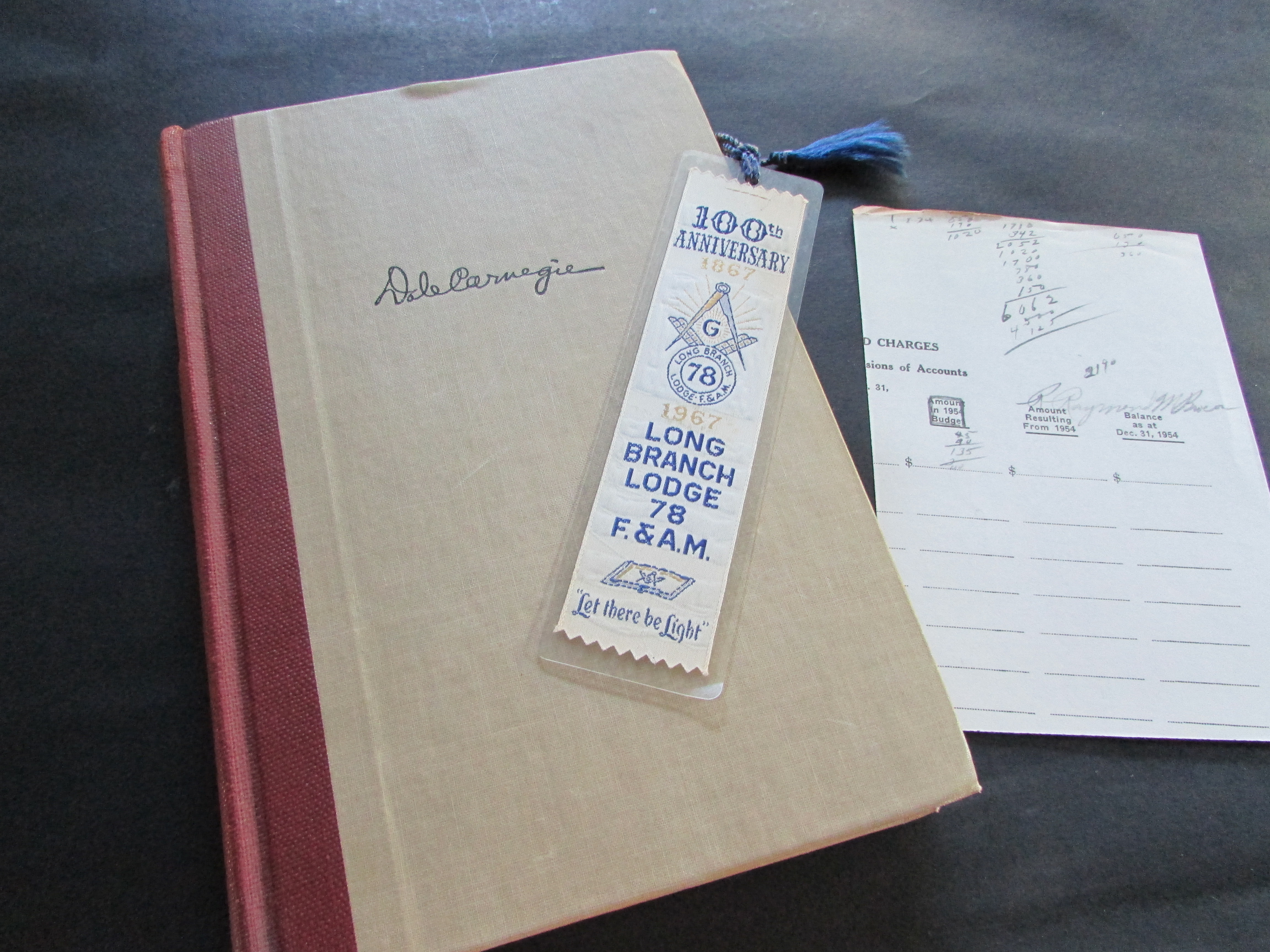
Not long ago I was rummaging through some antique books, and a few caught my eye. Among these was an old copy of Dale Carnegie – How to Stop Worrying and Start Living. I have read other books from this author, but not this one. I took it home, and as many of his books, what a treat it was.  It has a copyright date of 1948, and that old pages scent that goes so well with the right amount of yellowing. No pages are missing and overall, it is in great shape. Besides these features, what else do I love about these old tomes?

Well, one thing that I love about an old book is that it usually contains a story within its main story. It is the story of the previous owner(s), and one that is written throughout the entire book. I love to have a glimpse of who was this person, and to imagine a bit about his/her life. Sometimes, I find their name handwritten, a year, a dedication signed by the person who gifted it, and other times, even the occasion for such gift. Other times, I may find a marker, a cut out from an old newspaper, or even a dry little flower. What made them buy this book? Many times, you can see the reason by the passages underlined, or the notations carefully made throughout the pages.  Other times, you will find a business card or a written piece of paper that may be revealing. It is always a treat.

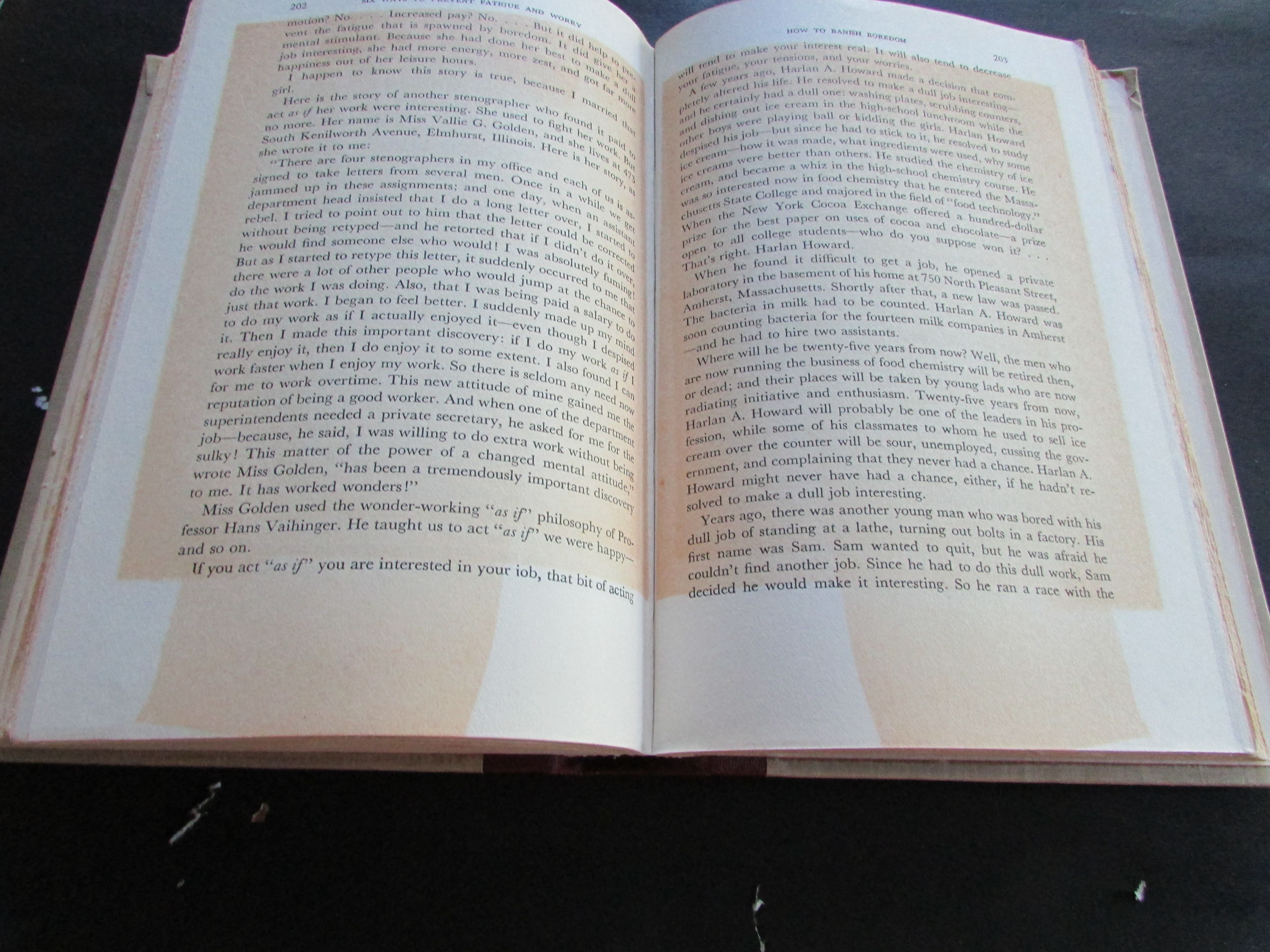
On this particular tome, I found an old piece of scrap paper taken from a budget sheet from 1954. It had some numbers in it, written not in the proper space, but added, what seemed as in a rush.  The column Amount in 1954 budget was encased in a square made with pencil markings, and a name was written atop the other two columns. In addition, there was a bookmark from a masonic lodge celebrating 100 year anniversary. The inside had no underlining. What was the story here? Well, the owner was probably a Mason, a business person, maybe an accountant? and he must have scribbled numbers while talking on the phone with the person who’s name was carefully written, and while he was on the phone, he must have doodled the square in pencil, as it seemed to have more than one line, as if this person, went over the square with his pencil several times. Inside the book, there is a large yellow mark made by a paper that must have been placed there for some time. It marked the shape of a large piece of paper and a small one, probably on top of it or attached to it – maybe a receipt (hence why I chose the profession of accountant). This is the story that these clues inspired, but it could be far from the truth; however, I had fun imagining all this. As usual, here are a few pictures.

Photo by M.A.D.

Photo by M.A.D.

007


That day, I found a small collection of small prayer books/bible from the USA army. Back then, the Army, Navy … gave these books to soldiers, and many were presented at service by their chaplain . One of them had the soldier’s name, the chaplain’s name, date, time, and where it was presented. What caught my eye was the heavy underlining on this one, especially passages that talk about war, peace, and righteousness, as well as other passages that made reference to water, which led me to think that the soldier might have been in the navy. There was one underlined passage that referred to a man being healed, one who couldn’t walk. The story I imagine here made me sad.

Next time you happen to come across an old book, examine it, and hear the story it whispers within. Today, we celebrate old authors, as well as book lovers of the past – HAPPY WATERCOLORS FRIDAY!

A Symphony of Human Comfort – The Magic of One in Many

The Antennae Galaxies are undergoing a collisi...

The Antennae Galaxies are undergoing a collision that will result in their eventual merger. (Photo credit: Wikipedia)

Have you ever gotten the right words of comfort when you needed them? Has the right book suddenly came into your hands when you were looking for answers or pondering an issue, deeply looking for some comfort? Somehow, it seems that we experience these occurrences when we seem to have lost our hope, or when our mind/heart is experiencing turmoil, and need to find a little ray of hope or “something” that will point us in the right direction, as our life compass has undergone a little interference. When we happen to find that ray of light, we feel comforted, as well as grateful. Grateful for the ones who have written the words that seem to make so much sense today, as sometime ago. It is like a symphony of human comfort that is as old as we are, that transcends time, space, culture, race … the right words at the right time. “In the beginning was the Word, and the Word was with God, and the Word was God.” – John 1:1

We are part of everything, and everything in us, a concept that for some is difficult to grasp, and that is understandable. Many times, I see a connection in everything that surrounds me. It is in those little moments of serendipity that I feel that connection stronger. It is when the works of someone who lived many years or centuries ago, happen to touch my soul today, and offer insight – whether spiritual insight, or one of those “aha” moments, when my questions seem to have been answered. It is then that I understand that we are one in many. As if our collective knowledge comforts our collective souls. We are part of a greater process, each one contributing in perfect time and harmony, each one influencing one another.

I leave you with a poem that I wrote sometime ago – “One in Many”

One in Many

On this day I shall wish

many blessings, harmony

When the night gives in to day

and the day nestles the night,

we will be as one in many.

Shine your light for it will be

as the beacon one will see

Always seek your love to give

without measure, plenty and free.

As you give you will receive,

one in many it has been.

Me, You, It, one and the same,

Love, One Source, is One in many.

As you wish it will be done,

may you wish, joy, peace, and love

For it returns the wish to wisher,

two ten fold, as one in many.

Watercolors Friday – Celebrating Words

"Study drawing shows the allegorical figu...

“Study drawing shows the allegorical figure of Romance nude. She bends her head to read a book on her lap. Romance was one figure in a painting, The arts, in the north end lunette of the Southwest Gallery in the Library of Congress’ Jefferson Building.” Graphite drawing (Photo credit: Wikipedia)

Last week, I took a few days off, needing to unplug a bit, and decided to spend most of my time just reading. If ever the time comes when machines take over and we are reduced to sources of energy, as in the movie The Matrix, just plug me all over within a virtual library, and I will be happy, yielding an entire grid of energy source. I am also a junkie for inspirational and self-help books. Although I always prefered to read from an actual tome, mostly due to an engagement of the senses – touch, smell, visual – (too bad taste is not involved, as I would devour the book as well, but I have to agree that in a way ,the auditory is present in a physical tome, as characters talk and evolve in the ears of the mind, and maybe so the palate), I have found that I can read faster and consume more books using an electronic device, in this case a Nook. I read over 19 books, some shorter than others, and found myself in a delightful state, surprised as well that I have taken so much liking to e-reading.  Propped myself at the same chair, I wonder if my new neighbors would question if I am a manequin or a real person, as it happened that everytime they came home, there I was, in the same position.

I read all kinds of topics, mostly inspirational and self-help ebooks. Some I liked more than others, and a few I loved. Those, I want to share in this post, therefore celebrating words, whether printed on paper or electronic devices. The medium might evolve, however words will always remain. So as part of Watercolors Friday, I celebrate these ebooks.

  • The Beach Misses You by Steve Rhode
  • Attack Your Day Before it Attacks You by Mark Woods and Trapper Woods
  • The Path to Happiness and Wealth by Steve Rhode
  • As a Man Thinketh by James Allen (finally I crossed this one off the list, believe it or not, and so the next one.)
  • Acres of Diamonds by Russell Herman Conwell

Those are excellent in my opinion and worth celebrating today – HAPPY WATERCOLORS FRIDAY!

Watercolors Friday – On Writing

On Writing

On Writing (Photo credit: Wikipedia)

Today, I want to share with you a few of my favorite writing websites, and to celebrate the book that I think made the most sense on learning about writing. That book is On Writing by Stephen King. To me, it is the best book I have read on the topic. Why is that? I feel that way because,

  • The approach is simple, honest, sincere, and experienced, and as it promises, it goes to the point, bypassing the bullshit – at least that is the vibe I got.
  • It shows you besides telling you.
  • It gives you hope.
  • It scares you.
  • It motivates you.
  • It takes you to a different level of understanding of the craft.
  • It is unlike all the other writing books I have read.
  • It puzzled me, and “un-puzzled” me.
  • It does not preach what it does not know.
  • It shows you the complexity and simplicity of writing via the author’s experience and the examples he gives to illustrate some points.
  • Stephen King wrote it.

I recommend this book to every aspiring writer and every writer, even if you have a few novels published. It takes you to a different writing reality.

Now, let me share a few author/writing websites that I like, and have found very helpful.  Some I may have mentioned on earlier posts.

These are just a few of the sites I enjoy and find very helpful/informative to aspiring writers. Today we celebrate Stephen King, and these awesome sites.

Happy Watercolors Friday everyone!