Writer’s Wisdom 81

What happens when writing does not meet your expectations?

There are many ways we can approach the answer to that question.  It is a matter of individual experience, and whatever your expectations are as a writer.  At one point or another we will ask that question to ourselves, to the writer inside, and we may or may not like the answer.  Or maybe, we might not have an answer at all – at least yet. 

Sometimes, you will work hard, and harder, but the results and rewards just don’t show up in a pretty package.  What then?  Do you beat yourself up?  Do you get discouraged and stop writing?  Do you take a break to clear your mind and find a new path?  Do you just ignore your feelings and keep writing anyway?  Maybe, you will think of another approach to your writing.

Whatever your answer, it is one that you must deal with to be able to find your way as a writer – I am still figuring that one.  If writing is your passion, keep at it.  If you have to try different approaches, then try them.  If you need to take a break and clear your mind, then do so.   Do what you have to do, and what you need to do to find your writing path.  For some it will take longer than others.  Look at the different life stories of best-selling authors.  For some it happened fast, while others took years figuring out that they belonged writing.

I guess my point is, a true writer finds a path.
Writer’s Wisdom 80

Live and Write

If you are busy freelance writing, you may find that it takes most of your day, and sometimes, a few hours at night.  It may also take some of your weekends.  Assignments come and go, and the competition is fierce – you are lucky if you can grab it.  However, how much is too much?  You know you have to eat, right?  But at what cost?  Be thankful for the assignments you get, but also live your life.  Make time for your spirit, yourself, your family, your pets, and your friends.   If you don’t, you will find yourself in a less than perfect mood for writing.

Create a balance, and write.  Live and write.

Writer’s Wisdom 79

Change your daily routine – fool your Muse.

Most of us have a daily routine for writing.  You might wake up early in the morning, turn your PC on, while waiting for a cup of coffee, or maybe you check your email right away.  Well, one thing leads to another, task after task, and soon you are following your usual routine.  Sometimes, you feel inspiration may have left you for a while, and you fall into a writing rut.

Sound familiar?  It may take, a simple change, such as sitting outside to write (weather permitting) or just move to your living room with pen and paper instead of your PC, to break the rut and feel inspired once more.  Maybe your Muse was asleep and you surprised her by changing your routine.

Give it a try, and see if it changes the atmosphere for you.  Surprise your Muse!

Writer’s Wisdom 78

Writing for Pleasure

You have deadlines to meet, and many writing projects awaiting you, but there are times when you just need to write for pure pleasure – just for you.  It is important to nurture this part of writing and give it a place in your hectic schedule.  If you only write because you want to get paid, you will be missing on this important aspect.

When you write for pleasure, you enter a realm of enjoyment, and you are opening the gates of inspiration.  When this happens, ideas can come from anywhere, and you will experience the power of the written word.  Many of us are so worried about making the deadlines and earning a living (out of necessity,of course) that we forget to take a bit of time to just relax and write for ourselves – just for the pure enjoyment of it.

From time to time, relive the early days of your writing career, and take a few minutes to write for the simple pleasure of it; recapture the magic.

Writer’s Wisdom 77

Planning Your Writing Day

Your computer’s calendar is your best friend – the best tool to plan a day’s full of writing and other projects.  Time goes fast when you write, and the hours do not seem enough to cover everything that you have to do in a day.  Learning to log your tasks in your calendar and timing them, is a big help to focus and handle your most important assignments.

When logging your tasks, prioritize them from the ones that are due first and assign a time to work on them, set an automatic reminder to let you know when your next task is about to commence, so you know how much time you have left with the present task.  Also, spend and hour in small tasks that can take 10 or 15 mins – you will eliminate the small tasks and will warm up for your bigger tasks.  Don’t forget to allocate a few minutes here and there for breaks and lunch, and of course personal time and errands.

This is not to say that you have to function like a robot tied to a computer.  It just helps you to keep track of time and also to organize your writing throughout the day.  It also prevents the wasted minutes surfing the net.  At the end of the day, when you look back at your schedule, the satisfaction you feel for a good work’s day will become fuel to make you more productive.  It will all pay off in the end.

Writer’s Wisdom 74

Selling Content

As a freelance writer, especially if you are doing it full-time, you have to get creative to bring the bacon home.  Article writing can be a good way of supplementing your income.  You can also take on blogging to add a few dollars to the pot of gold.  Whatever you decide to take on, there is one thing that is essential – selling your content.

Assuming that you have material that is original, interesting,  informative, and free of errors, the next step will be to see how you can get money out of it.  I already mentioned PLR packages on my earlier post, a way you can use to market several articles on one topic.  You can search online for writing sites that will pay you for views and clicks on your articles, or you can take on blogging assignments, or sign up with sites that will hire you to complete writing tasks.  Some of these gigs may become long-term gigs, if you are good at it.

Another option is to sell your content on your website or sign up with a site where you can post your content for sale.  You will have to share a percentage of your earnings with the site, but that is part of using their services. 

Promoting yourself in social networking sites, your blog, your web, and placing ads in the newspaper or around the community or colleges, is another way to sell your content.  Send proposals out to prospect clients.  Sell your content to magazines or newspapers.  Local publications is a good way to start,  although these last two venues are full of competition.  This is a characteristic of freelance writing in present times.  The internet has opened a whole new side to freelance writing, and many writers – good and bad – are taking advantage.

If you are going to sell your content, make sure that you approach clients in a professional way and that you take pride in your work, by fulfilling your part of the deal as promised.

Writer’s Wisdom 72

 What stops you from writing?

Since I can remember I’ve had a love affair with the written word.  I’ve been an avid reader my entire life.  My desire to write was in the back of my mind for many years.  Deep down, I knew that I was meant to write, but I could not start.  It was always something I would do one day, when I had more time, and life wasn’t so busy.   Many years passed, and life got busier and busier, and I completely forgot about it – or at least did not think about it that much.  It wasn’t until a series of unfortunate events, that I was forced to slow down and look into my soul.  There it was, my desire for writing.  Since I had nothing to lose, I gave it a try.  It felt like a good pair of well-fitting jeans – comfortable and fitted.  That day, I decided that no matter what happened I was going to continue writing – and I have.

There are many things on my plate now, but I won’t stop writing.  Take a look into your soul – what is stopping you?  For me it was the illusion of more time and the fear of not knowing what to write.  At one point I was petrified, to glance at the piece of paper in front of me.  It took something bigger than my doubt to put things in motion.

If you have thought about writing, but it seems very far in the future, get that image out of your mind.  Pick up that pen or PC and start writing whatever comes to mind.  It is just that first step away.

Writer’s Wisdom 71

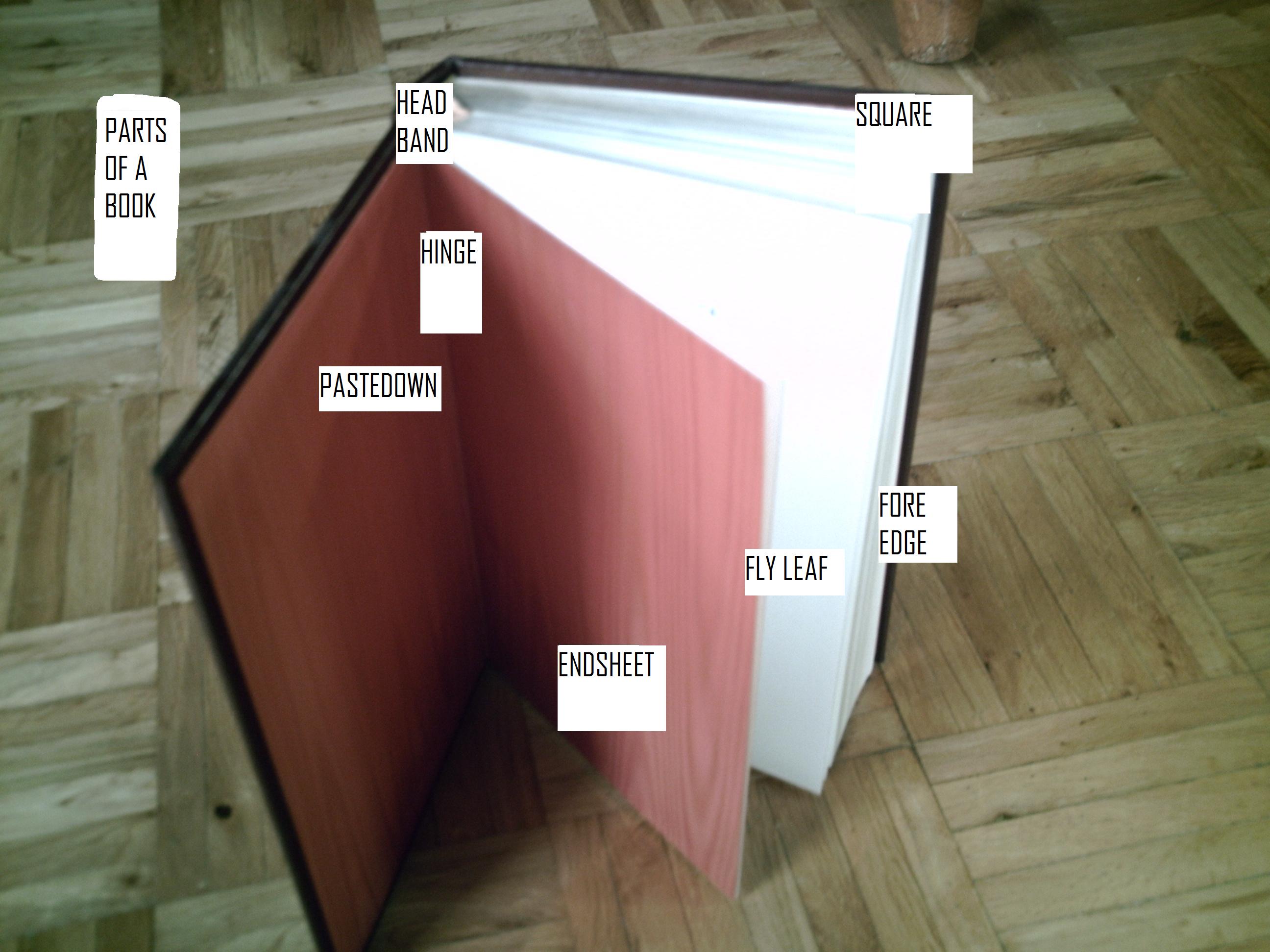
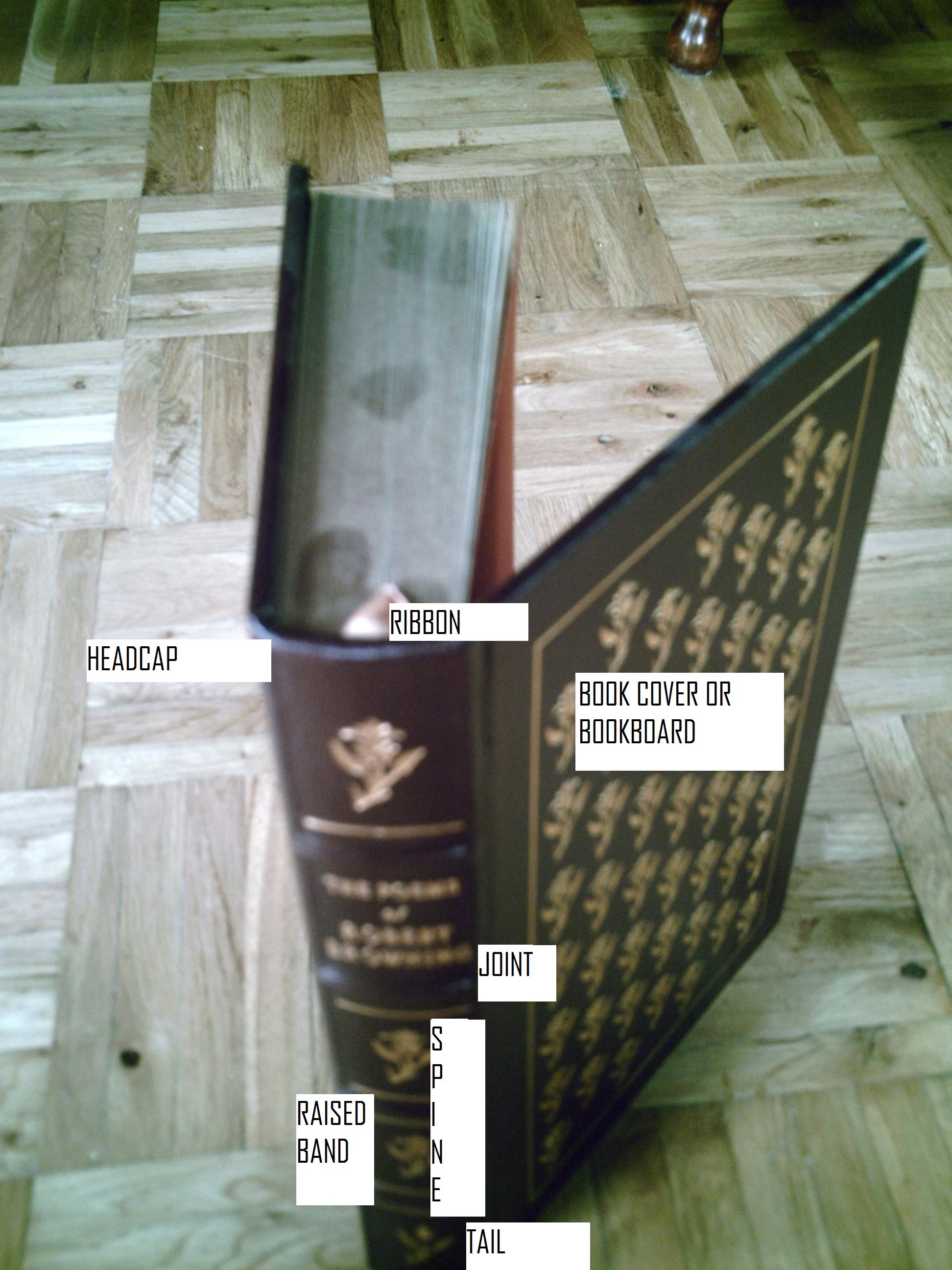
PARTS OF A BOOK

Most writers are also avid book readers.  The amount of time that we spend reading is above average.  We also love the feel of a book, and yes, the smell.  I appreciate the new technology on electronic books, but nothing compared to handling a tome.  This got me thinking that many of us are not familiar with the proper names for the parts that make up a book – the physical parts.  So, I decided to make this post and include an image to point them out.  In this case, pictures say more than words.  Here it is. 

Writer’s Wisdom 70

Balancing emotions

Emotions are everywhere, there is no way to escape them.  From the very happy cashier to the very upset man next to you in traffic, from the time you wake up till the time you go to rest – even in your sleep, while having some very emotionally charged dreams.  So, if emotions are all around you, why wouldn’t they be part of your writing?

When writing a piece, pay special attention to the emotions of the characters.  Emotions should match the situation, and the character type.  It would be weird to have a character that just suffered a heartbreaking loss, be worried about triviality (just to continue the story) – unless it is done on purpose to stress the unusual personality of this character or the particular way to cope with trauma.  Such is the case of the serial killer experiencing ecstasy while murdering someone.  It is all a balancing act.  When you balance emotions in a piece of writing, it helps the natural flow of the story.

The question is, can you use emotion to dictate the story?  Some pieces of flash fiction are a very good example of this.  It starts with an emotion and the emotion develops the story to the end.  Do a little experiment; when writing your next piece, pay special attention to what the characters are feeling and see how it is relating to the flow of the story.

Writer’s Wisdom 69

“Write what you know.”

I have heard many authors say this, when watching their interviews.  This is a very good point and excellent advice for us aspiring writers.  Even when writing fiction and creating our own universes, those universes have to be filled with something – and that is when “what you know” comes handy.   At the beginning, it is easier to write from knowledge than going through lots of research and deep waters.  It is good practice and it comes from you.  If you have a background in law, you will probably apply your knowledge in that mystery or crime novel, and so on …

That doesn’t mean that we will be writing what we know forever; at one point or another, we will embark towards unknown seas and shake our confidence a bit.  It just means that it is easier to write about something that will flow naturally to us and keep us going.  Eventually, we all know when it is time to cross that bridge.