In Retrospect

As the end of the year approaches it is natural to look back and contemplate all the things that we could have done better, and those that were accomplished, but usually, as human nature dictates, we focus on the first. As writers, many times we are hard on ourselves for not producing more, faster, even when we have dedicated an entire year to the craft. It is as if madness had taken over our souls, that is, the madness of the pen, and for a while the only thing that may count, absorbing all our energy and persona. Is it madness of the soul or of the mind? Maybe a bit of both, maybe none. Maybe of the heart. And we dare to follow our heart where it will take us because we are writers, and mad at it.

Well, for me this year has been a bit of a surprise in many areas but one thing that is a constant is my love for the story. I am still working on trying to meet the deadline for Sunrise Souls, however insane that may seem.

One thing I learned over the past year is that inspiration listens to mood, and mood to no one, however I control my mood – allow the mood in understanding – to regain inspiration. Many times, we take inspiration for granted, and it lets us know that it lives in us but we must give it life. It doesn’t flutter around like the Muse we call it, or resides outside ourselves, in another realm – no, it is a part of us, one that is to be summoned by will and faith, and even by desire, one that must be respected and encouraged, and dignify. When we respect ourselves, our work, our surroundings, we are summoning inspiration, our Muse of all sorts, and with it Creativity and audacity. Writing is not for the faint of heart or spirit; in it many souls have gone mad or desolate, but also in it others have grown wings to other realities, paths to other worlds, the solace of the word, inkblood to the soul, inkspear to the heart, and freedom to the mind, but overall essence of the soul.

I will continue to try to meet my goal this year, and await the next with joyful anticipation of good things to come, although these have always been in the now. I wish you all a happy and healthy Holiday Season, and beyond, and a very Merry Christmas to those who celebrate it. May you inspire this new year.

Love,

Inkspeare

Indie Resources

Since I took the path of becoming an indie author, a priority has been to learn more of the evolving and growing movement. From time to time, I come across material that in my opinion, every independent author should read, as it may be very beneficial. I came across two important books that I am reading now, and a third that I am planning to read next. I could not pass on the opportunity to mention them here, hoping that any indie authors out there that need this information will benefit. These have been written by people who have walk the path and done the job, as well as independent authors, entrepreneurs. Here they are,

  • Business for Authors – How to be an author entrepreneur – Joanna Penn

Joanna Penn is a very successful independent author and entrepreneur, and one of the leading figures of the movement.

A book about the subject of intellectual property,

  • How to Use Eye-catching Images Without Paying a Fortune or a Lawyer – Helen Sedwick

Helen Sedwick is a California attorney and independent author who represents small businesses and entrepreneurs.

Another book by Helen Sedwick on my “to own” list is Self-publishers Legal Handbook. 

If you have embraced becoming an indie author for the long run, I advice you to start your own learning library, as I am doing. The more you know the better, and knowledge will enhance your journey, and hopefully, will make it fruitful.


How I Care for my Old Books

Many of us read from electronic devices but that does not mean that we do not enjoy a book in our hands from time to time. When I love a book so much I buy the hardcover edition or paperback. It goes on my collection of loved-to-death tomes, and I take good care of it. I enjoy buying older books to add to a very small and modest collection. These become my jewels. Whether antique or new, a much-loved book gets good treatment. Instead of writing a post on How to care for antiques books, I will leave that to the true-experts. You can find plenty of that information on the internet. However, I will write about how I care for my precious books under my real and down to earth circumstances.

Many elements are observed when caring for my precious books. I think of temperature, location, space, air flow, position on shelf, handling, and other issues that may affect the condition of the book over time. Because I do not live in a museum or a mansion, I must adapt my environment to the best conditions for my tomes, as well as my behavior or handling of these. Although my items are in storage now due to a pending move, I can tell you what I did. Here is what I always do.

  • The first rule I observe is to never leave a book unattended. I have six cats and some of them love to chew on paper, or play with it. Old books have a plethora of enticing scents and will become a favorite toy or prey.
  • The second rule is to treat my books as if they were vampires. I avoid exposing them to direct sunlight or leaving them where I know that the sun rays will hit for some time. Sunlight rays work fast on discoloration and even drying out a cover or spine.
  • Third rule – In my case, temperature and location go together. I try to select the best placement in my home – not too humid, not too dry or hot. For example, never leave a favorite in the bathroom or near a cooking stove or on top or near a heater or vent. I don’t have a basement but do have an attic, and neither those would be a good place to store a book.
  • Fourth rule – Air flow goes tied to location and placement on the shelf, so I will address those altogether. I try to select a location away from drafts, cold/hot air, sunlight, as well as having a nice airflow where the books will be stored. My shelving is made of wood and it is soft, not rough. Rough shelving might cause tears on your cover and pages, as well as damage on the spine. I don’t place the books too tight, even if I am tempted due to lack of space (wanting to fit another one). I allow a bit of space between, but also, I never lean a book against each other because this will damage its shape and pages eventually. If I have space, I use a felted book end. I’d rather it rests flat than leaning it, although if I lay it flat, another book on top should not be so heavy that the pressure will damage the cover, if it sticks together.
  • The fifth rule has to do with how I handle the book. I love when books have dust jackets because of the obvious. I place them upright, but if a book is a softcopy/paperback and it is tall, I’d rather store that one flat on its side because I know that it will bend eventually. I think I only have one or two that are that tall, if memory serves me well. One thing that I try not to do when selecting a book from the shelf is to pull on its spine because I did this once and the thing just came off a bit, so now I rather push the book out from the back and grab it firm with my hand when pulling it out. If there is a decent amount of space between books it should be retrieved easily. In the previous disaster, the book was stored too snug; sometimes you learn the hard way. Under handling, I should mention that I never have cream, lotion or oil in my hands when I am about to read a book that falls under the “precious” category, and by precious I mean “my precious” because I don’t own any valuable or expensive tomes, although I do have a few that are one or two centuries old, and those I have to be very careful when handling them.  The reason for this is that the old pages were made of a different material than today’s or more recent books, I think of wood pulp, back in the days when trees were murdered or sacrificed for knowledge. Anything oily or acidic will wreak havoc on the pages (old or new). I do have a pair of white gloves that I keep for the day that I encounter (or afford) that very special specimen. If you have opened an older book you may have noticed that the pages are dry, yellowed, and sometimes a page will crack/crumble when handled. Also, when returning my book to its nest, I try to be gentle, especially with the corners, and try not to touch the wood or the neighboring book. I also don’t dog-ear mark a page or leave a marker inside. Some papers are acidic and will damage it eventually. I bet you have seen the imprint of a marker on a page or its image, even when the marker has been removed.
  • The sixth rule has to do with cleaning, and that is simply being aware of using cleaners, oils, and sprays near books or the shelving, dusting gently and regularly so dust does not accumulate heavily. I use a soft duster, but honestly, I don’t even know what kind is better, although I would assume that feathers have oil compared to synthetic dusters; and of course, a separate duster would be better, not the one used around the house.

Other than that, I just try my best to love and care for my books, nothing fancy. Speaking about fancy, if you are into it and want to do it the professional way, there are many book care supplies available such as acid-free protective jackets, gloves, book furniture with glass doors, slip cases, special boxes … . If you own a very special and expensive book then you should consult a antique book specialist or expert that will educate you in the care and or restoration of older volumes. You may want to insure it of course, if it is very valuable. Overall, I just use common sense and TLC.

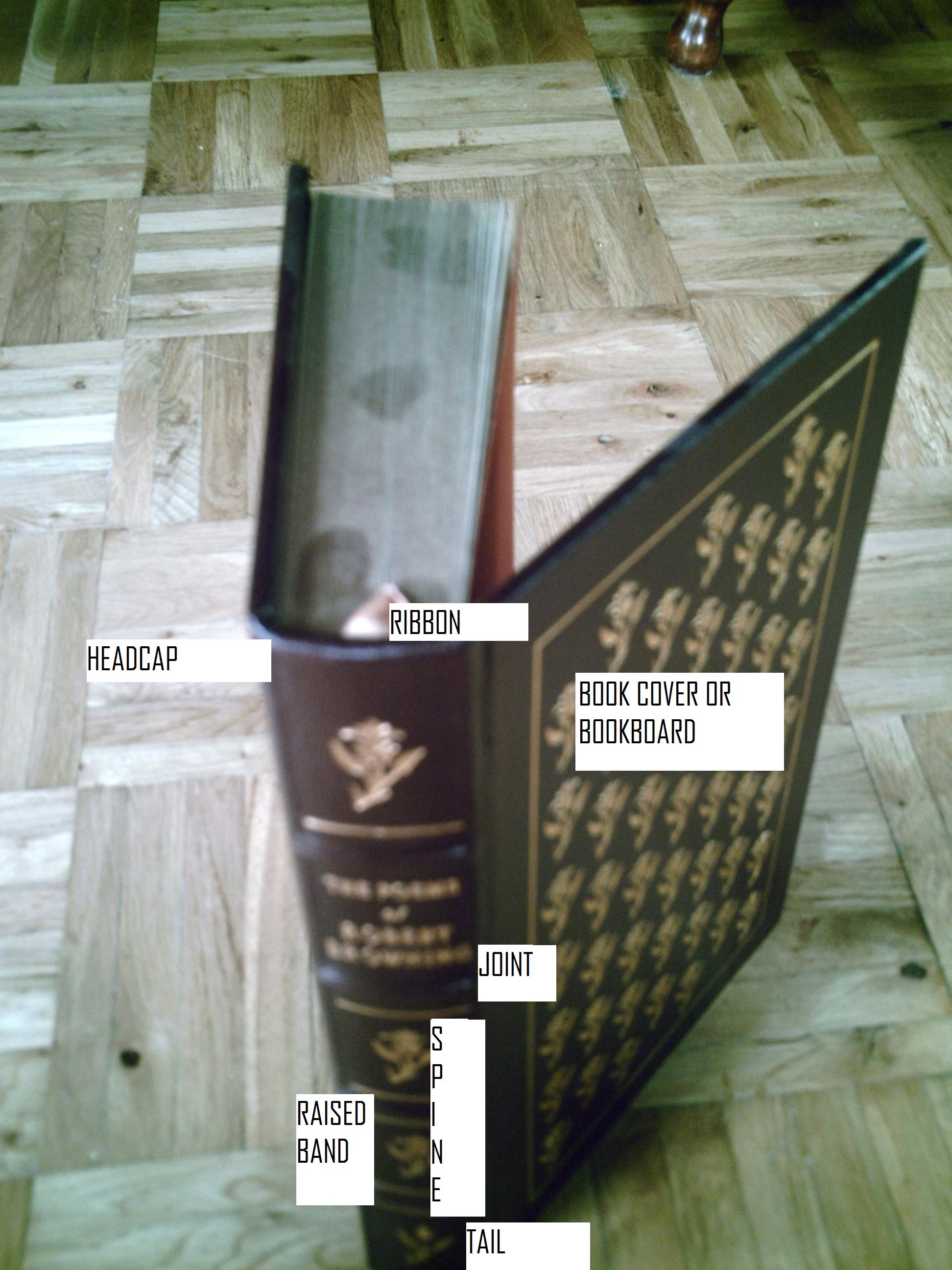
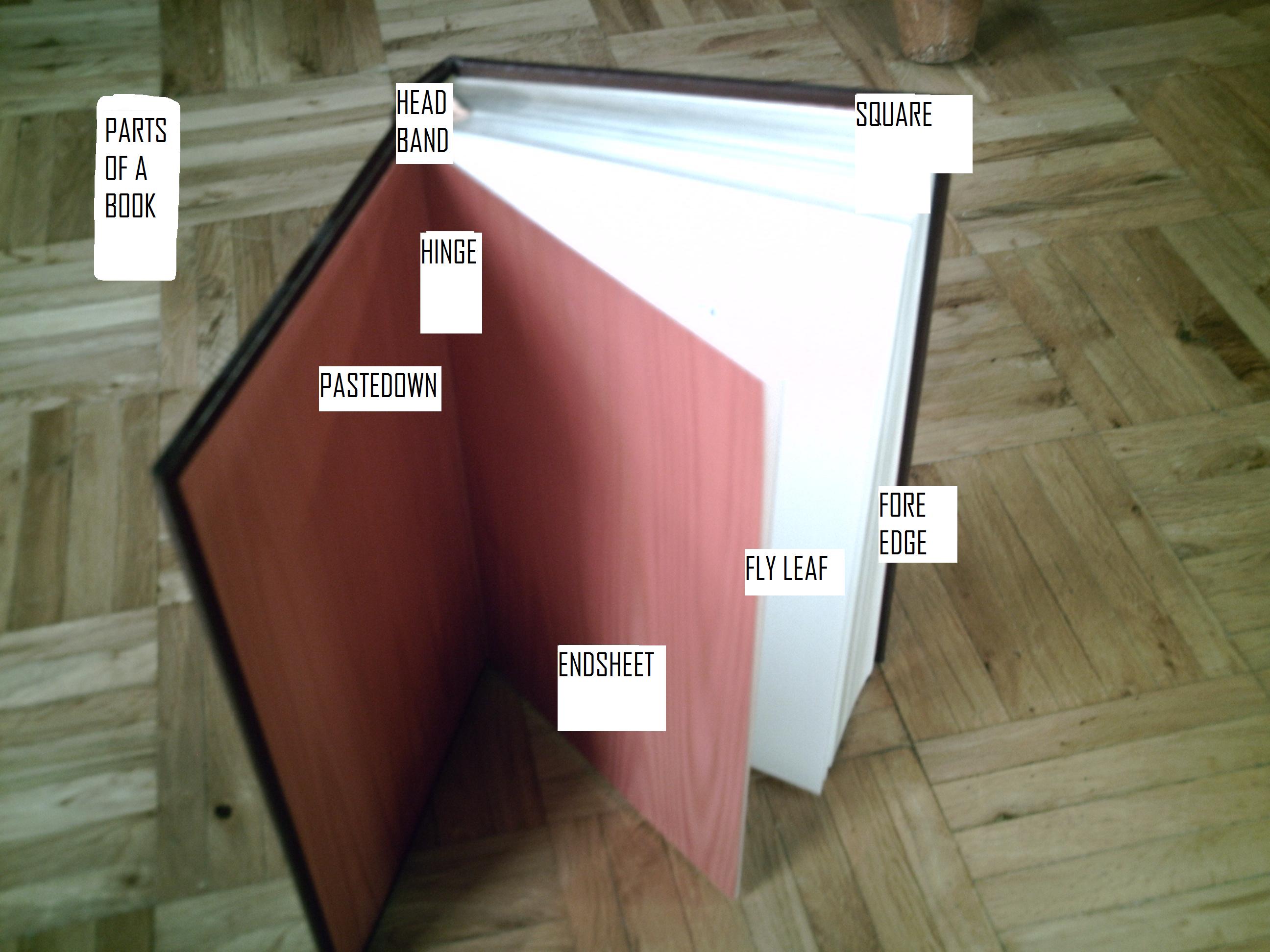
Ever wondered about the parts of a book? Here is a picture I put together sometime ago. If you notice, at one point, this book was handled with oily fingers because it has markings on the gold-leaf pages; just to give you an example of how something so simple and natural may affect a book later on.

book parts 1

book parts 2

I hope you enjoyed this post.


On Falling Behind and a Carton of Eggs

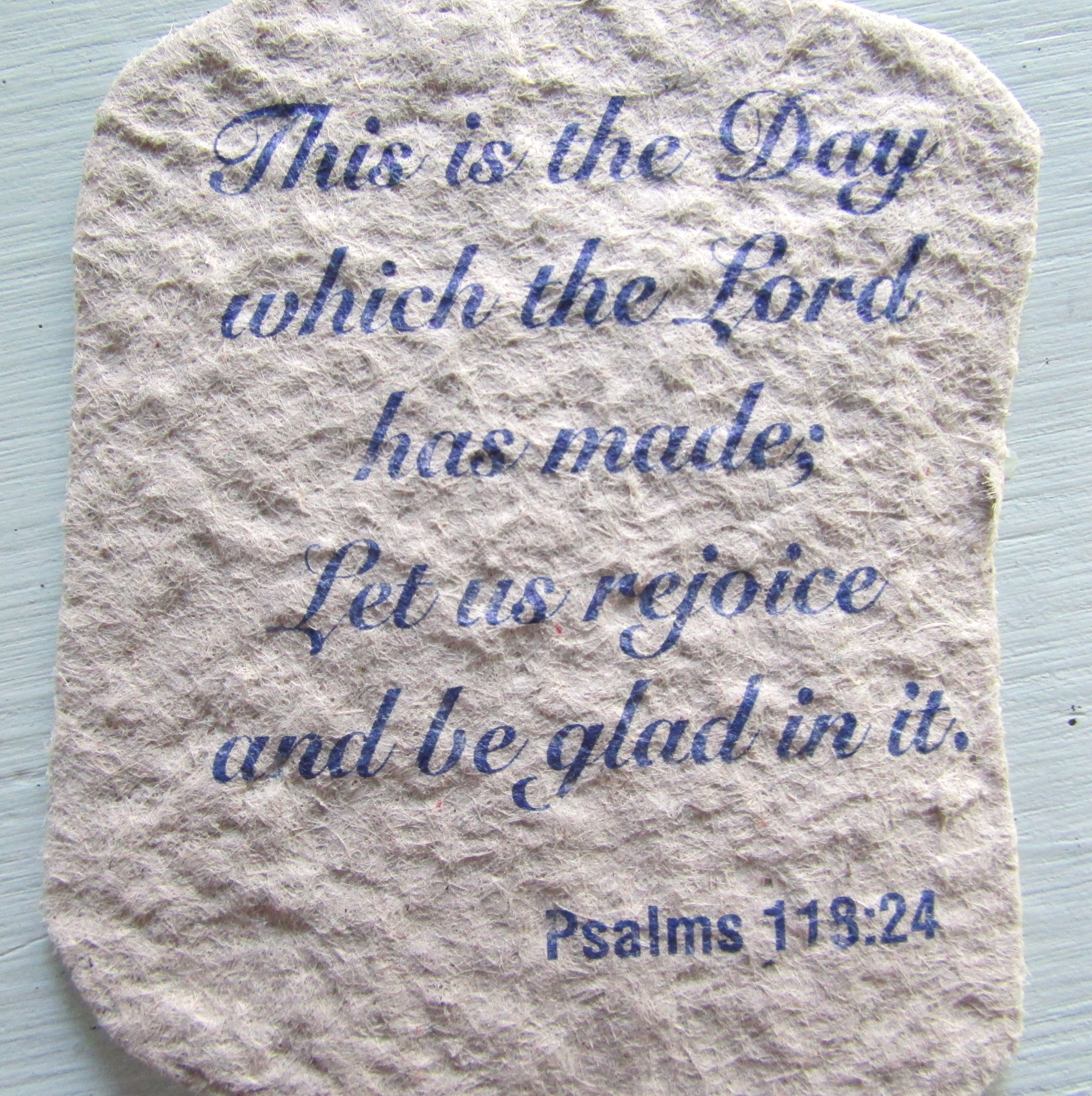
Today, the dreary feeling that has haunted me for weeks grew stronger as I made my morning cup of coffee. The thought blinded my conscience as if plastered in large neon green letters all over my head – I AM BEHIND! Worry settled in another day and inspiration took cover behind my wishful thinking. One thought led to another and before I was aware a feeling of guilt creeped inside my heart. Desperation fluttered inside my gut and I gasped for air as I stared at the carton of eggs that I had just emptied. Somehow, the printed cursive blue letters called on me, and I read – “This is the Day which the Lord has made; let us rejoice and be glad in it.” Psalms 118:24  What an oddity, I thought, printed on the inside of the egg carton I found the perfect words that I needed to hear. I decided to make those words my inspiration today and every time I might feel that I AM BEHIND. Because it does not matter if I am behind or not, or my perception of it – my truth is that behind or not, “this is the day which the Lord has made; let us rejoice and be glad in it.” And that is what I decided to do.

I realized that my perception of time and reality has nothing to do with God’s timing and plan; and that even when I might feel that I am behind (on work, on chores, on projects, on life … fill the blank) I might not be at all – I might be just where I am supposed to be on my journey. Although I have heard and read these words many times, it took a carton of eggs at the right time to make them meaningful when I needed them. I grabbed the scissors and cut out the words from the egg carton and placed them in front of me, at eye level near the computer screen, as a daily reminder. Somehow, breakfast tasted better. Here is a picture of the cut-out. I hope it inspires you as well.

Photo by M.A.D.

Photo by M.A.D.


What’s New

To me, reviews are just opinions and the reason I never leave negative reviews. What I don’t like someone might enjoy. When I enjoy a book I leave a positive review, and if I think the book will be of great help to writers I will mention it here. I just finished reading Never Too Late – Your Roadmap to Reinvention by Claire Cook. I enjoyed this book. It is her first non-fiction and shares her experiences as a best-selling author and her views on reinvention. It is written in a conversational and warm tone, as she talks to the reader and shares her wisdom through many years of hard work and dedication to the craft. She shares many personal and significant experiences that many writers will appreciate. The book is great for aspiring writers who are looking for an honest and real view of what navigating these waters feels like. In addition, it will benefit people who are on a journey of reinvention and betterment of their lives. As most of you know, Claire Cook is the author of many novels and she has a unique style. One of her first novels was made into a movie – Must Love Dogs.

I added her book to my website under the recommended reads on writing. In addition, I added a FAQ on writing and indie publishing. I am planning on sharing a few posts on what I am doing to get back on the saddle and sort of renew my vows to myself and my work/life. I see it as a way of reinvention or starting a new page. There is no such thing as jumping out of your skin into another but you can certainly shed off what doesn’t serve you anymore. It is one journey with many roads, detours, and wherever you need to turn, backtrack or rest along the way, there is a place to reflect, breathe, and figure out your next step. After all, it is your journey and you make it whatever it may be.

As You Become

ProphecyAn inspired utterance of a prophet, viewed as a revelation of divine will. A prediction of the future, made under divine inspiration. Such an inspired message or prediction transmitted orally or in writing. The vocation or condition of a prophet. A prediction. (Definition by The American Heritage Dictionary)


The topic of prophecy is found in my novels, and I find it very interesting and compelling. Our history is filled with prophecies (good and bad), although I find that our fascination for Doomsday supersede the good examples. From apocalyptic predictions/revelations to hopeful promises of a new Earth, and heaven, our curiosity extends as we try to make sense of the world(s) that surround us. Whether we belief on prophecy or not, of any kind, I think that it begins with us, and the extent of our minds in the material world – what we believe, what we entertain, and what we do or how we react to natural and man-created events. As I ———-(fill the blank) I ———— (fill the blank). As we believe, think, focus, and act/react we become. We create and fulfill our own prophecy.

People might argue that some things we cannot control and are beyond our manipulation – Acts of God/Nature – we call them. However, every step we take (before or after) leads to a path. Nothing happens “just because” (that would be called God/Universe). Science looks for explanation, so it falls outside. What about a natural disaster? We do not control natural (not manmade) events; however, why were we in the vicinity when it happened? Certainly, there where steps that took us to reside there, travel there, born and stay there … it is called “the free-will” to decide our lives (without knowing the future and under present circumstances) – it is Life! It is the steps that we take (how we react and act) when natural or unnatural events occur in our lives that determine how the story unveils. As we write the story of our lifes, we become.

Most of us cannot read minds, foresee the future, or are psychics. We rely on our senses, information, intuition, and emotions to decide. We create our own prophecy as we go, but what we cannot do is expect different results from obvious or predictable behavior. We might have a revelation along the way that will serve as warning to change our behavior and set on a different path to obtain different results. Free will is not so much set on the absence of future events but on how we constantly create the future in the now, and how our past has become our future for the same reason.

In living we prophesy as we become.

Photo by M.A.D.

Photo by M.A.D.

My husband keeps this on his desk, and I will add that the game goes on and on and …


Making Sense of the Indie Movement

We are living in exciting times for independent writers, musicians, artists … and it is so thanks to the technological developments and new venues of communication. Therefore, the independent (indie) movement was bound to gain new heights. I say new heights because indies have been around for long. It is because these changes and ease of publishing (almost at no upfront cost) that the indie movement flourished the way it has, and will continue. The publishing industry has been jolted, and this is just the early stages. It is not clear what will happen next, but for now, the doors are open and independent writers may share their work openly and become as creative as they dare. Daring times!

However, every time there is a revolution, people tend to make sense of the process, share experiences, groups are born, and in the hopes of giving cohesiveness to the experience, sets of rules appear, “ways of doing things the new way,” and leaders, preachers, and experts emerge. It is all a normal process and it is meant to grow and move along the revolution. However, as indies we should beware of a tendency – that the revolution does not morph into tradition, rendering the movement powerless. This is where our responsibility as independent writers stands. Each one of us must learn, consume, and study the movement, the fruits of it, to decide our role in it. Just because trends show up does not mean that it is a “one size fits all” kind of deal. On the contrary, it is the opposite to the indie movement.

To an aspiring writer who wants to publish independently, it is like a huge treasure box full of many tools, advice, do’s and don’ts, experiences … but it is also very confusing, and if the person does not continue to educate herself/himself and becomes a follower, it all may backfire and become overwhelming none the least, and even uninspiring. I am convinced the indie evolution will continue, and I think we have taken baby steps so far – there is more to come. This is why my approach to all this is one of learning and observing while doing. It is my way of making sense of the indie movement. How?

For once, before deciding to become and independent author, I learned as much as I could about it, compared it to what information was available about traditional publishing, and then, examined my personal criteria – values, work ethic, working style, expectations, and goals. Over some time, I was not sure of what path to follow, and I had not submitted work to agents, which made my decision solely based on the above mentioned personal criteria. Once I deeply thought of these things that were very important to me, and considered all the information I gathered, the decision became obvious and clear to me – I wanted to become and indie author. Then I took the steps. However, because all the changes occurring in the publishing industry and all the new information available, new faces rising, leaders, preachers … I will not deny that as exciting as it was, the experience was also overwhelming and exhausting. And this is when I decided to stop following advice, and instead treat each available piece of information and experience  as precious, be grateful for it, study it, evaluate it against my personal criteria, and look inside myself and embrace only the advice and information/methods/”to do’s” and so much more … that were aligned and in balance with my personal criteria, while developing my own style. This is how I embrace independent publishing.

It is just the beginning, and I think that over the next few years we will be amazed at what is to come, and many will be inside the process, outside of it, while others will be it. Daring times!


The Book of Sharon Excerpt

Here’s a short excerpt from The Book of Sharon – book 2 of The Dinorah Chronicles – that I wanted to share with you. I hope you enjoy it. If you’d like you can read the first two chapters on Amazon here. Just click look inside.

This excerpt is from Chapter 3 – A Letter to the Lost. It is an excerpt from Dinorah’s book, as she is inspired to reveal the ancient tome’s secrets, without revealing her ancestry or the actual book. Her book is called The Book of Sharon. I wrote The Book of Sharon as if it was a book inside a book inside a book. A bit different but I am happy with the effort.

Chapter 3 – A Letter to the Lost (excerpt)

Dear Child,

     Know that what you are asking has been done long time ago. All I ask of you is that you do what you know you have to do, in your heart. It is the plan inside you; you created it, and the spirit knows more than the flesh. The spirit knows the nourishment the flesh needs. Follow your heart wherever it leads you, and know that I am here. If you hold back you will not prosper – right now, you are holding back.”


And here is my demanding assistant (more like boss) Chanti, making sure that the shift runs smoothly.

Photo by M.A.D.

Photo by M.A.D.


In Between the Lines – Trust

Trust – Firm reliance; confident belief; faith; hope. (American Heritage Dictionary)

Here is one of several definitions that the dictionary gives for the word trust, and the one that I will use for the purpose of this post. Trust is another theme in my novels, and one that I find the cornerstone of everyday living – how we interact with our environment and people around us. We trust systems, people, routines … It goes from an external dimension to a personal and inner dimension to a spiritual one. When we lose trust (in whatever) our balance is shaken, and so is our reliance, confidence, beliefs, faith, and hope. Our feelings hurt. The issue is that once we lose trust in someone or something, it is very hard to recover. It takes change for us to consider trusting again, and as far as people go, many times the only thing that will make someone trust again is the presence of Love. In a way, Trust encompasses the above mentioned conditions; however, Love supersedes all.

In today’s society, it seems that trust has almost ceased to exist. We pay attention to conspiracy theories, and many people delight on these. Whether these theories are true or not is not the issue. It is how you process and internalize the information that you receive every day that will determine your level of trust – external, internal, and spiritual. Pay attention to your “trust process” and see how your balance is being affected. I will use myself as an example. When I start watching more television or increase watching the news, I immediately feel a direct effect on my balance. I like to be informed but I find that if I am going to listen to the news or watch television, I have to place a conscious filter before doing so, otherwise this simple activity may end up influencing the way I feel, and if I pay too much attention to negative news, so does my level of trust. This is just a simple exercise on a very mundane level, but a good example to illustrate.

We use Shakespeare’s line very often – To be or not to be, that is the question – but many times, the To Be depends on our level of trust, externally, internally, and spiritually. The question might be to trust or not to trust.

Photo by M.A.D.

Photo by M.A.D.


In Between the Lines – Good vs. Evil

The topic of Good vs. Evil fascinates me. Since I was a child, this idea has evolved being shaped by my upbringing, religion, stories that my grandmother told, urban legends, books, Hollywood movies … in short, by how my mind made sense of all this, and how it interpreted it in the material and spiritual. Although good and evil might seem as black and white, I suspect that there are many shades of gray in between, and our human nature battles in the midst, making sense of it all. If anything, we deserve credit for that. This theme is present in my novels as well.

As a species we thrive in the material contributing to the good and bad on this planet. As spiritual beings we strive to do better. Whether you believe or not in the concept of good vs. evil, of God and the Devil, yin and yang, polarities … or however you want to explain this duality or antithesis, the reality is that we all get sucked in by its allure and fascination, even if you practice atheism – engaging in a hot topic. Good vs. Evil captures the human mind since the beginning of the Homo Sapiens (wise man) or Adam and Eve in the Garden of Eden, if you prefer that version.

According to one of the most influential books in history, Adam and Eve were seduced by evil, and disobeyed God. But before this, Lucifer had become the devil, and taken a few fallen angels with him. Cain ( son of Adam and Eve) had a bit to do with evil as well. And this is where the concept of evil gets interesting and were shades of gray start painting shades of humanity. When we think of Cain, immediately, we process in our minds (if you know the story or read it in the Bible) that his sin was the act of killing his brother Abel. Yes this was a horrible offense, and so far the first murder in the Bible, since mankind was born. However, the book of Genesis tells a more interesting story – what happened before the murder. What was it?

This is what the book of Genesis tells us about the sin before the sin (in short). This is from the New International Version.

Now Abel kept flocks, and Cain worked the soil. 3 In the course of time Cain brought some of the fruits of the soil as an offering to the Lord. 4 And Abel also brought an offering—fat portions from some of the firstborn of his flock. The Lord looked with favor on Abel and his offering, 5 but on Cain and his offering he did not look with favor. So Cain was very angry, and his face was downcast.

6 Then the Lord said to Cain, “Why are you angry? Why is your face downcast? 7 If you do what is right, will you not be accepted? But if you do not do what is right, sin is crouching at your door; it desires to have you, but you must rule over it.” (Genesis 4: 3-7)


It seems that Cain got upset and jealous of Abel because God liked Abel’s offering better than his. Why this? Upon reading this passage it shows that Abel offered God the fat portions from the first-born of the flock, in other words, the best of the best. While Cain gave “some of the fruits of the soil” or in other words, a good-enough offering, but not the best of the best. And this is what God saw, and I guess that he read both brothers hearts in the offerings, and why he liked one offering better than the other.  This made Cain angry and jealous of his brother, but God, being God and all, gave him a warning of things to come, if he continued with this attitude (If you do what is right, will you not be accepted? But if you do not do what is right, sin is crouching at your door; it desires to have you, but you must rule over it.” ). This is profound. When I read this, I saw Cain’s sin issue in respect to his brother, in a new light, and it made me think of the layers of depth in the concept of good vs. evil. These few verses have so much to chew on, but it was this prelude to Cain’s sin of murder that fascinated me the most. Then, I thought – Why did Cain give a mediocre offering? What was going through his mind? It was this thinking that started it all. Then, I came up with a possible explanation. Since Cain worked the land very hard to yield some crops, must likely he knew that his goodies were hard to come by and with much effort (after all, this wasn’t Eden anymore and he had to work for it) therefore, he gave “some.” In other words, he was being stingy with the one who gave and made all – his God. Again, this is so profound because it reveals another layer. In venturing to read Cain’s thought and personality, I think that he had a trust issue. He lacked Trust. Cain was not so sure that God would provide for him, therefore, he was a bit stingy with his offering, and this was in my opinion, Cain’s first offense. He did not trust his Creator and he did not show his trust/love in his offering like Abel did. This attitude was the catalyst that opened the gates that caused Abel’s blood to flow by his hand.

Pondering the shades between Good and Evil may help us to write better and deeper characters, and to craft a story that would give the reader more layers to peel. As writers, we should not be stingy with our offering to the reader, and always try to give the best of the best, according to our ability.


Next In Between the Lines topic – Trust