After the Series – What Now?

What now? or What’s next? These are questions that I will answer after I write the last book of The Dinorah Chronicles series. At the moment, I’m ready to start the third re-write of The Book of Sharon, book 2 of the trilogy. If I’m lucky, I’ll have the first draft of Sunrise Souls ready by the end of the year (9 months left). What have I learned?

Moonlit Valley inspired the writing of The Dinorah Chronicles. I never intended to write a series, but it developed as a natural process, so I let it be. I have found that writing a series gives me a bit of comfort in the sense that I am navigating known territory, as opposed to writing a new story. However, I have to admit that I enjoy the process of writing a single story more than writing a series. I never say never, but I think that in the future, I will focus on single stories rather than writing a series (unless I’m inspired otherwise). This took me to ask, What’s next? The answer is not as simple as I thought.

As an indie author, I have the flexibility to do pretty much what I desire. I don’t have contracts to fulfill, or lined up books/deadlines, or commitments abroad. The deadlines are the ones I imposed on myself. My commitment is to the story and to the reader. When I asked myself – What’s next? – I understood that many roads were right in front of me, and the one I take is not so clear yet. Why?

The writing industry changed so much in the last few years, and as an independent author, I need to balance my energy and efforts. It means that I do all the work, and any assistance hired is tied to funds available (if any). Also, it means that it does not make sense to follow trends if I don’t love the process. So naturally, my attention will hover around those projects that I am ready for and will enjoy. These days, the speed of publishing and everything else that surrounds it has multiplied, and indie authors are bombarded with many choices and possible projects that they might feel obligated to undertake to follow the developing industry and current trends – podcasts, audio book, channels, speaking/teaching engagements, the translation of their books, and many other endeavors. I admire indie authors who have the energy and focus to have many of those endeavors developing at once; I called them the Super Indies. They are an inspiration.

All the above considered, I sat down with pen and paper at hand, and thought hard about where I am on my journey, and tried to answer the question (now). I felt that my next natural step (after finishing the series)  would be to write a new single story, and focus on the Spanish translation of my first book, and possibly the series. Any other components of marketing books, gaining exposure, or other writing-related projects will be assigned secondary status (as far as focus and effort). This is a prelude, a peek, an early answer to my question, but of course, it all may change. What’s important is that I challenged myself to think about it and took a glance at the possibilities. It also helped me measure my level of readiness according to where I am on my journey. It was worth considering.

As an indie author, how do you feel about balancing current trends and your own journey?

photo by Maria Antonia Diaz

photo by Maria Antonia Diaz


On Faith and Writing

When I read poetry I notice one thing, the poem is sad/dark, almost as if it bleeds through the page, or on the other hand, it celebrates life, is an exaltation of nature or love, or whatever the subject seems to be, therefore transmitting a peaceful or joyful vibe through the page. It seems as if a tormented soul or a happy one wrote the lines, although that is not necessarily true.

Ernest Hemingway once said,”There is nothing to writing. All you do is sit down at a typewriter and bleed.” Maybe he was right, but what comes out of your veins? What do you bleed? I have found that for me, inspiration may come from nowhere, unexpected, and sometimes, it is directly influenced by my mood. I’ve noticed that when my faith dwindles, so does my writing. It is when my faith is up that I do my best writing, whether I may be going through a difficult situation or not. By faith I don’t mean religion, but my disposition to believe and trust. That said, I can predict when my motivation will suffer, and when my writing will lack. How to prevent this?

The answer is not so much to prevent, because life is full of ups and downs – it is human life’s nature. Instead, maintaining a conscious positive and high disposition (with effort and despite the circumstances) is what seems to help. I must keep up a high level of trust and frequency to support the flow of my writing, otherwise, it becomes forced, superficial, and dense. So my writing seems to be tied to my faith.

“I learned never to empty the well of my writing, but always to stop when there was still something there in the deep part of the well, and let it refill at night from the springs that fed it.” Ernest Hemingway

The Old Writers

While reading a 2011 Country Diary, I came across these old writing quotes, and I think they are interesting and reflect the old writing wisdom, and still applicable today. I decided to share them with you.

“Anyone who wishes to become a good writer should endeavor, before he allows himself to be tempted by the more showy qualities, to be direct, simple, brief, vigorous, and lucid.” – Henry Watson Fowler, The King’s English, 1908

“Dear authors! Suit your topics to your strength, and ponder well your subject and its length; or lift your load before you’re quite aware what weight your shoulder will, or will not, bear.” – George Gordon, Lord Byron (1788-1824)

“Then, rising with Aurora’s light, the Muse invoked, sit down to write; Blot out, correct, insert, refine, enlarge, diminish, interline.”Jonathan Swift (1667-1745)

“Sleep on your writing; take a walk over it; scrutinize it of a morning; review it of an afternoon; digest it after a meal; let it sleep in your drawer a twelvemonth; never venture a whisper about it to your friend, if he be an author especially.” Amos Bronson Alcott (1799-1888)


I think there is good wisdom here. I found the last line of the last one a bit funny, but certainly speaks of how protective and zealous as writers we are with our work and ideas. However, today the internet has blessed us with a way of coming together and share those ideas, ask for advice, and give to one another. I hope you enjoy these bits of old wisdom.


Heartless Dissection Ready

I hope I didn’t scare you with the title of this post. Almost a month has gone by since I put aside the first draft of The Book of Sharon. The time away is necessary for what comes next – a heartless dissection of it, and I’m ready.

As writers, we pour our heart and soul into our work, then the time comes to forget about it, followed by a cold stare before we are ready to slash it into pieces – heartless and purposely, not an easy thing to do but necessary. From this dismemberment a second draft is assembled. The process goes on until the story is as ready as it can be.

During this time, emotions run wild – from doubt, insecurity, uncertainty, and not wanting to let go, to perfectionism, pride, fear, doubt again, restlessness, exhilaration, incessant questioning … all of it culminating in exhaustion, and all of it necessary. Sounds painful and not too enticing, but it is what writers subject themselves to repeteadly, and beyond scrupulous consideration, and all for the love of the story.

A love affair with words, a crime of passion?


My next victim.

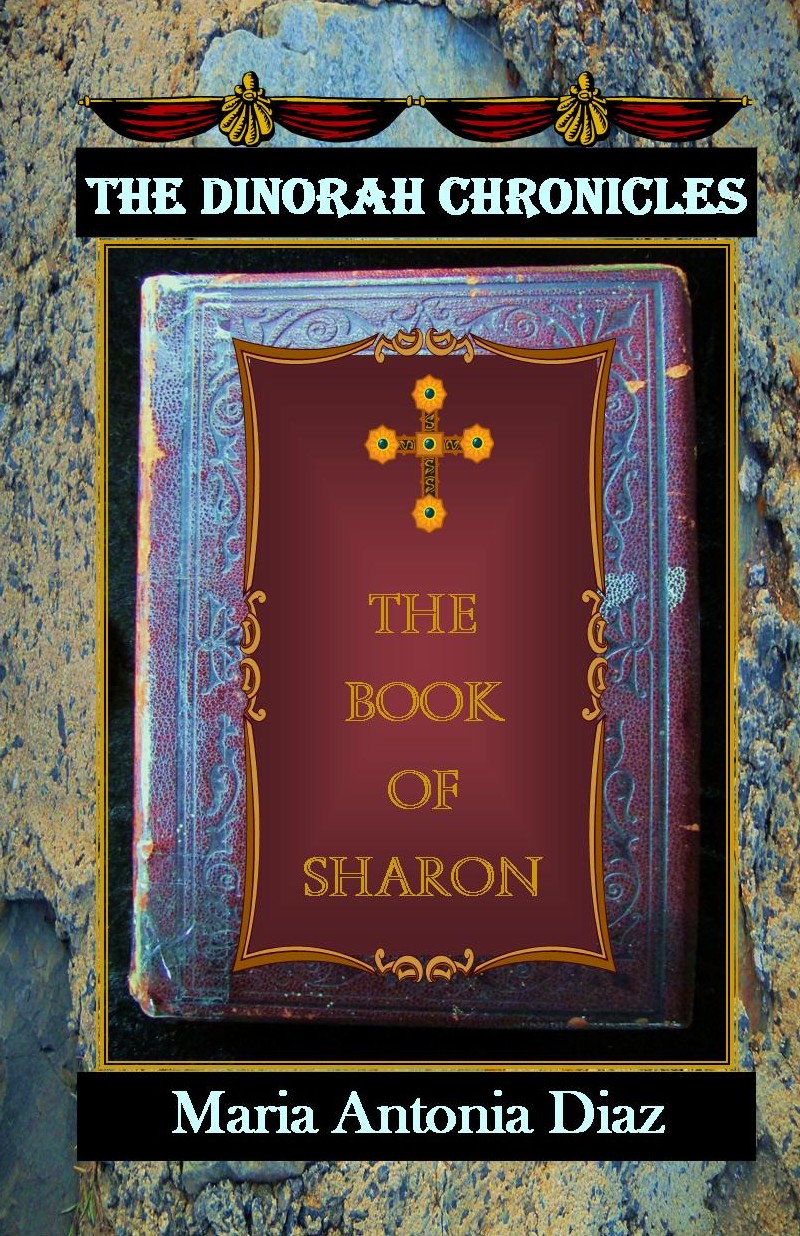
First draft of The Book of Sharon

First draft of The Book of Sharon

For Aspiring Writers

Today, I completed (finally) the Resources and Tips section on my website. This is an ongoing labor; however, it had been left as Coming Soon! for a while, and my goal was to have it ready for January. There are some good websites and recommended reading for aspiring writers. I hope it serves its purpose, and that it may be useful to someone.  Here is the link . I hope it helps a bit. I know that when I started, it took a lot of time and effort to find the best sites, as well as to separate the husk, so this is only a very small list but good for starters. I included a few websites at the end, good for exploration, inspiration, research, and learning. I will keep adding with time, as well as updating this section.

A Happy Coincidence

Sometimes, writing takes life on its own. With my first novel, Moonlit Valley, I felt as if the story wrote itself. The characters presented themselves, and I dare to say, named themselves. The writing process is different for everyone, and I have to say that I enjoyed the writing of that first novel; it was an adventure. After a while, I went back and looked at it with different eyes. I found symbolism in it, and a happy coincidence with some of the character’s names. When I looked at the common meaning of their names, what I found intrigued me and excited me. The meaning match the character in an almost eerie coincidence; it is how I imagined them. Here are a few of the names. If you read Moonlit Valley, you will understand what I mean.

  • Jeremy = God will uplift
  • Rose = Flower
  • Cole Angelou = Victorious + Angel
  • Lara = Cheerful
  • Hael = Immense/living in hall
  • Dinorah = Judgement
  • Leah = Weary
  • Olga = Holy
  • Anne = Gracious
  • Maurice = Dark skinned (I imagined this character tall and dark)
  • Jake = Pale/supplanter
  • Robert (town’s mayor) = Famous (of importance)

I found very amusing the coincidence of the meaning matching the characters and my idea of them. After all, writing is a very profound and spiritual endeavor, an act of letting go, of listening, and of invention and communion between writer and characters/story.

moonlit-valley-coverfrontnew.jpg


2014 Reading Agenda

I think that life is too short, not long enough to read everything that I want to read. I have a large backlog of books that I want to read, from new authors, classics, and topics that I want to explore in-depth. This year I have a few books in mind, some of which are of new indie authors, other are inspirational books, and so on – a mix of everything. I would love to get to all the ones I have waiting for me in electronic form as well – tons. So I force myself to prioritize just a few.

Currently, I am reading How to Market a Book by successful indie author Joanna Penn. So far, I am loving it, and I think if you are considering making the jump to become an indie author, you should read this one.

Next in line is Break Out by Joel Osteen (five keys to go beyond your barriers and live and extraordinary life) – and inspirational book. This one, followed by Count Lucanor by Prince Don Juan Manuel.

I am planning to read Time Flies by Claire Cook. Followed by Libre de Saviesa by James King of Aragon.  Also from James I King of Aragon – The Chronicle. In addition, I want to try to get to The Complete Writings of St. Francis of Assisi.

After that one, I would love to read three indie books that I’ve wanted to read for some time now – God’s Whisper, a book by Margaret Long, Exceptions and Deceptions by Cliff Burns (collection of short stories), and Galapagos Man by Kenton Lewis.

I am dying to read Confessions by St. Augustine, and Letters from Father Christmas by Tolkien. Also, if I can get to it – Twilight of the Gods by Adam Pfeffer.

These are my must read this year, but the list is very long, and I wish I can get to many more. As it usually happens, some books may come out in 2014 that will grab my interest and derail me from my mission. A bit of everything, I describe myself as an eclectic reader.

The Perpetual Planner

Although this year I’m living it at 000, each day anew, I understand the importance of healthy planning. We are starting a new year, so I want this post to be about planning in 2014. Are you a perpetual planner? Do you love goal-lists, to-do lists, and planning? I know I do; however, I have to keep myself in check (pun intended) otherwise, I may become a perpetual planner, a living-breathing human calendar, and we all know that is not good. Why? Because you run a thin line between perpetual planning and procrastination by it. Too many To-do lists and planning may keep you from doing. Whether we use planning as a good tool to advance us or as a safe heaven to keep us from jumping into the next step is up to us. Here are a few tips.

  • Research the goals you have in mind. You need to have as much information to clarify your goals. Warning – don’t run into perpetual research mode.
  • Clarify your goals (know what you want and why).
  • Think of a time-frame to achieve the goal (when).
  • Think of a way to do it (or ways). This is the How.
  • Once that is clear in your mind, it is time to put it in paper, bits at a time, following your calendar schedule for the year. Time to be specific.
  • Avoid the double plan. This is not about plan 2; it is about over-planning or making lists on top of lists that end up confusing or derailing you (believe me, I know). Stick to a clear black and white plan stated in simple terms. Gray areas might open doors to exploration, which may lead to over-planning or derailment. This is why you make a clear plan and stick with it. Don’t get me wrong, exploration and spontaneity are good, as long as they don’t open the door that will take you away from your main focus.
  • Always have a plan 2. If plan 1 (yes, I’m tired of the phrase plan A or plan B) doesn’t seem to be working modify it without changing your main goals, that is unless you find out that it is not a goal for you anymore, and in that case, this is why research helps in the beginning. But we are human, and we change, so if by the first quarter of 2014, you find that you are not sure you want to do what you set out to do, don’t drop it yet; do a little more research, and then, decide (exploration and spontaneity may help here). Sometimes, a bit more clarification is what you need to put you on track.
  • Acknowledge your efforts, and celebrate each milestone during the year. This is very important. I used to ignore this step, and because of it, my sense of progress was clouded, opening a door for frustration. When you go back and see how far you’ve come (quarterly is a good way to do it), then, it is as a fresh breath of air that propels you to the next stage (even when you might be your own cheerleader). This is necessary but human nature will tell you to skip it and propel ahead – don’t.
  • Evaluate your steps every quarter (or whatever works for you) and readjust your plan as needed, but not by over-planning.
  • Whether you achieve your goal or are almost there, realize that you are closer to it thanks to your healthy planning, and congratulate yourself. If you hit your goal, celebrate! Understand that you are human, and you might have it all down on paper, but life gets in the way sometimes, and after all, living life is what you do best, so don’t be too hard on yourself.
  • Be grateful every step of the way.

Best Wishes for this year, and may you carry out your 2014 dreams.


The Book of Sharon – Update

First draft of The Book of Sharon

First draft of The Book of Sharon

There it is, the first draft of The Book of Sharon. I met my goal. Now, I will put it to sleep for a few weeks, so I can revisit it with fresh eyes to start the editing process. It will get fatter, smaller, skinnier, fat again, until it feels just right, and hopefully, see the light by the end of the first quarter of this year.  After this one, I need a mental vacation. It feels good to have written it, and now the fun begins.

Developing Your Writing Style

English: Quill pen

English: Quill pen (Photo credit: Wikipedia)

I compare a writer’s style to her/his fingerprint, a unique signature style that develops over time. If you have a favorite author, then you probably know that author’s style; it permeates the work of the author as a scent picked up by the reader. The author has embedded in the story not only his soul but also his creativity, and in a way that reflects a distinctive writing personality, the writer’s style. Even when the work has gone through several rounds of editing and re-writing, the author’s style remains, embracing the story.

I think that every writer sets out to tell a story, maybe influenced by his/her favorite author, genre, but in time that writer finds his own voice and style. It shines through inevitably, and the writer chooses to develop it or ignore it. In the latest, the writer would be forcing someone else’s style into his work, preventing the free flow of the story, and his growth as a writer. No one can be the next Stephen King or Dan Brown, for example. You might admire their styles, and decide that you want to write in their specific genres, but eventually, you will need to embrace your own style. How do you develop your writing style? How do you facilitate the process?

I think that there are four ways to do this, and all four relate to one another and take time. To develop a writing style you will have to:

  1. Read – Read as much as you can, and in every genre. Read the good, the bad, and the ugly. The more you read, the more you learn the do’s and don’ts, but also you train your brain to pick up on many other things between the lines. Research falls into the read category, so research what you must. It is not possible to become an author if you do not like to read. It is like trying to make a cat lay eggs (imagine that disaster).
  2. Write – It may seem so simple, but to develop your writing style you will have to do tons/miles of writing. It is that hard and that simple. The more you write, the more you attune your brain (and soul) into developing your unique voice. Compare it to cooking or riding a bike for the first time, and the difference that practice makes.
  3. Listen – Listen to the flow of the story but also to your characters. Many times, characters know best. Sometimes, forcing the story will end up confusing/erasing your characters. Imagine going into another dimension while trying to stay in the present at the same time; there is conflict, and eventually, something is got to give. Listen to your characters and compromise. For example, when I set to write my first novel (Moonlit Valley), one of the main characters was imagined as being a bit nerdy, second to the female character, and a complete opposite to the character that emerged when I began to write. This character fought me from the start, to the point that I was forcing my writing. In the end, I let him be and Jeremy Sandbeck emerged. After that, it was easy to write him.
  4. Trust your instinct/go with your gut – In other words, listen to your Healthy Inner Voice. This is the voice that looks after you and cheers you up – the one that “feels just right.” At the same time beware of the Inner Critic – that is the archenemy of your Healthy Inner Voice, and it doesn’t feel good; it puts you down. Learn to discern them; balance the first, and ignore the second.

I honestly think that this is the best way to develop your writing style, and it is a writer’s journey.