The Indie Trap – Avoid This

English: Mouse trap - "Promax" brand...

English: Mouse trap – “Promax” brand Español: Ratonera de ratones (Photo credit: Wikipedia)

Before deciding to become an indie author, I learned as much about it as I could, and continue to learn, knowing that it is an ongoing effort. Indie publishing is evolving fast, and furiously. Honestly, I am not so sure how it will continue to develop and how this movement will be seen in the future. What I have noticed is a frenzy about publishing volume, many times with disregard of quality, by new authors, and even more seasoned ones. What caused this? I am not sure either. It is as if everyone is in a panic, a mania, as if independent publishing will cease to exist so, “I better write a lot of books and publish them before it is too late” or it could be ” too many people publishing, too many books out, soon, it will be impossible for my work to get noticed; it is saturated already.”  That is the impression I get when I read or hear other authors recommending to write many books fast, have them out there soon enough, or publishing many short stories, and novellas just to grab readers. It is indie mania out there!

My take on it is this, if you are planning on writing for a lifetime, of being an author for the long run, avoid the temptation. Write at your own pace, write the best book you can present to readers (you owe this to your readers), and publish it when you are one hundred percent plus sure that you have given it your best effort. Forget about what everyone else is rushing about and doing, and focus on your goals and vision as a long-term author. Write your best story, and present it as a humble sacrifice to your readers. When I say sacrifice I am referring to an offering, your best work.

It is hard to foresee what is going to happen to independent publishing, but you will certainly regret it if you put out work that you are not proud of being your best, that you can certainly foresee, so don’t fall in this trap. Don’t let algorithms, ranking, number of books a year … get in the way of your best work. However the industry develops, let it be; you will continue to be an indie author, if that is your vision.

The Good, the Bad, and the Ugly – Use it All

Sensitive, sculpture by Miquel Blay (1910)

Sensitive, sculpture by Miquel Blay (1910) (Photo credit: Wikipedia)

Today’s post is about how you can use your good, bad, and ugly in your writing. That is, the experiences that have taught you much, and that you acknowledge as being of impact. It may bring good or bad feelings to memory, maybe even ugly emotions, but despite that truth, all are very valuable to use in your writing. Be thankful for all you experience, because as a writer, it will translate into genuine characters, giving credibility, strength, and sentiment to your story.

Maybe you were back-stabbed by a best friend, cheated, or even experienced an excruciating event. As sad as it might be for you to remember, it serves you well as a writer because you know how it feels and you can translate the feeling into words. Given that you use the right words, readers will experience the feeling. In a way, achieving intimacy between author and reader.

Bad and ugly experiences can have an inspirational or paralyzing effect because they are that powerful, emotionally speaking. You control the response. You can let feelings and emotions control you to the point of writer’s block, or you can try to understand those and absorb strength/focus/inspiration from the experience; it is up to you, and the time for dealing with the bad and the ugly varies from person to person; however, the time for resolve/action always comes, leaving it to you to make the best or worst of it. You will emerge stronger or weaker, and so the writer in you.

Embrace the good, the bad, and the ugly, grieve and understand it, and let it serve you well.

Developing a Brand Statement

I should have written about this topic sometime ago, but it is something that you do not think about unless you are making a conscious effort to create, evaluate, or develop/expand your brand. Whether you are an author, artist, entrepreneur … or are starting to create a brand, eventually, you will have to develop a statement. In this case, I will refer to your statement as a branded author.

What is a brand statement? To make it easy, compare it to your novel’s elevator pitch. I have read in several sources about many variations of expressing it, but it can be easily explained as the sum of what you/your product is, plus the type of customer/reader that is your target, plus what you/your product offers/does for them (your intention). Once you put that into words, in a short sentence, you have developed your brand statement. For example, my brand statement is: “Inspirational fiction author Maria Antonia Diaz delights readers of fiction and non-fiction by offering works that combine adventure with the supernatural and the divine.”

If you look at that statement it tells who I am/my product as an author, it mentions my target market, and what the product (books) offers the readers. The reason that I include the non-fiction sector, is because my novels have an inspirational tone to them, which might be of interest to that sector. If you think about it in those simple terms, you can develop a simple brand statement that you can sum up in a sentence.  It is an easy way to keep the focus of your brand in front of you, and make it clear to others. Think about who you are as an author and who your readers are, and what you want to do for them through your work. That should lead you to express your brand statement.

What Makes a Bestseller?

What makes a bestseller?

I am as clueless as you are. I don’t know that anyone knows for sure. These days, it is a hit or miss. If you write whatever happens to be selling well, you might have a slight chance of being discovered; however, there is no guarantee, as these times seem to be characterized by fast and furious writing, of aiming a target market and pleasing the publishers. Indies might not try to please the publishers but the readers who crave the craze at the time. Pleasing readers is good; however, not if you are writing something hoping that it sells but your heart is on another place. In that case, you lost your writer.

The other day, I picked up a small paperback, a fantasy/paranormal romance that promised a bit of adventure, just for fun reading; I was in the mood for it. It was from a bestselling author on that genre, who had written many novels, and had won awards. I was truly surprised when (just my opinion) I discovered poor content, weak, poor dialog, and honestly, it needed a decent amount of editing. I continue reading (stunned) but had to skip pages, and eventually, had to put it down. I was puzzled – a best seller, but how? Your guess is my guess.

What makes a bestseller these days? Lots of luck, maybe? Good writing doesn’t seem to cut it anymore. I am an eclectic reader; I enjoy many genres. I have read very good books that are not best sellers. I understand the fever and craze that a genre might cause at a particular moment, but I don’t understand how a poor written story becomes a bestseller. Maybe it is all about sales and hoopla. Your guess is my guess. I would love to hear your experiences (as a reader) on this topic.

What’s in a Name?

Spanish Language Wikipedia logo

Spanish Language Wikipedia logo (Photo credit: Wikipedia)

Short answer – Nothing and everything.

Why? Naming something, whether a character, selecting your author name, or naming a website … unfortunately gives an impression to the person who happens to read it – positive or negative, maybe even neutral. Some authors opt for using a pen name because their names are not “suitable” for the genre they are writing, or because they prefer not to use the real name.  As an example, I will use my own. When you read my author name (Maria Antonia Diaz), you may (or not) assume that I write in Spanish, when I don’t; so far inspiration has come in English, but that doesn’t mean anything because one day, I may sit down and write a novel in Spanish (translations do not count here). Perception of a name depends on many factors – personal, cultural, social … you get the idea. Fame adds another layer. As an example, I will mention J.K. Rowling (famous) and her recent pen name of Robert Galbraith (not famous, at least until he became J.K. Rowling and the book started selling hot, hot, hot).

Recently, I was reading about the importance of obtaining the .com for your author name if available, and how to forgo another domain (.net, .org …) if it was already taken. The reason given is that people are conditioned to search for a .com first, and the mind makes an association with that first name (the .com owner). In addition, people will land on the .com first, and it may not be to your best interest if the association with the already taken domain is not a positive one, especially after so much work and dedication crafting your path. The author’s opinion was that it was better to obtain a .com by tweaking your name, or by choosing some important point/feature from one of your novels to drive attention to your work. This was when panic hit. I realized that I had never bother to see if a .com was available for my author name. After so many years of research and work, how this simple point escaped my attention? If I was so serious about my path as a writer, how something so basic eluded me? The answer to that had to do with how I viewed my two work-related domains, as an intricate part of me, the author. That was the wrong answer. Why? Because readers don’t make that connection, I do.  You can guess what happened next.

I found out that the .com was available, and I grabbed it. In addition, I decided to build a separate website as an author. It is in the making. I could have done that from the beginning, but Inkspeare was the name for this blog, and it is how it developed. Changing the name of it at this point, would be a mistake. This takes me once more, to the importance of thinking your author name and its developement, not only well, but separate from your other online personas/entities. You might view yourself as one and only one, but this is only your perception, and not necessarily translates into the reader’s perception. As far as readers concern, they don’t care about your other jobs, sites, or online entities; they just don’t make that connection that you have internalized.

If you are contemplating a career as a writer, a long and serious one, think about separating the author from your other online personas that do not relate to you as an author, and which readers will not make a connection with, because in reality, it does not pertain to your name as an author.  In the long run, it will be easier for you, and less confusing for the readers. It doesn’t matter if you don’t have many readers now because you are setting the foundation for your future as an author.

So what’s in a name? Nothing and everything.

Great Book for Indies

When I think about all the hours, years of research and learning that I spent as an aspiring author, I have to say that I wished that some of the information I was craving would come in a more cohesive format. Unsure of the path I wanted to take in relation to publishing, after learning as much as I could about not only the craft, but about the different publishing venues, I found that a great part of the information was scattered, biased, and sometimes, not clear enough. Eventually, after separating this information, I finally decided that the indie path was the best choice I could make, and I did.

Recently, I came across an excellent book for indie authors or aspiring authors – The Indie Author Guide by April L. Hamilton. It was first published in 2010, and I wish that I have found it then, because it is a great resource for aspiring authors or indie authors. So I am passing you this bit of information that I am sure you will appreciate. If you are serious about writing and becoming an independent author, or even if you don’t know about it much but want to know more so you can make the best decision when it comes down to publishing your work, this guide is for you. I got my copy from Amazon. It is a treasure, especially if you are starting out; it will save you much time and wasted effort.

So if you are serious about writing, go get your copy; it will be very useful and enlightening. By the way, this is my opinion and I am not endorsing or affiliated in any way; just passing along a great source.

Watercolors Friday – The Story Within

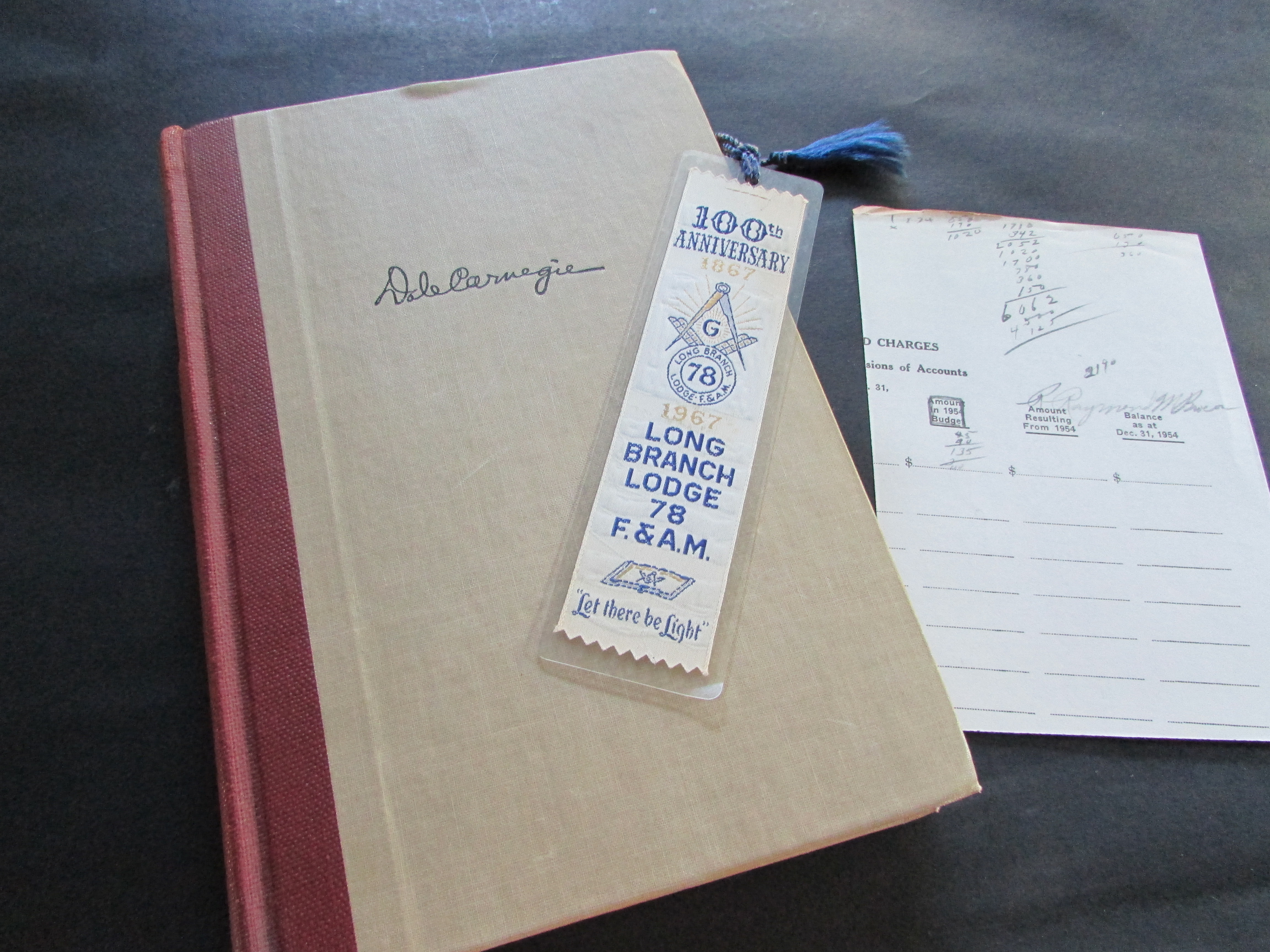
Not long ago I was rummaging through some antique books, and a few caught my eye. Among these was an old copy of Dale Carnegie – How to Stop Worrying and Start Living. I have read other books from this author, but not this one. I took it home, and as many of his books, what a treat it was.  It has a copyright date of 1948, and that old pages scent that goes so well with the right amount of yellowing. No pages are missing and overall, it is in great shape. Besides these features, what else do I love about these old tomes?

Well, one thing that I love about an old book is that it usually contains a story within its main story. It is the story of the previous owner(s), and one that is written throughout the entire book. I love to have a glimpse of who was this person, and to imagine a bit about his/her life. Sometimes, I find their name handwritten, a year, a dedication signed by the person who gifted it, and other times, even the occasion for such gift. Other times, I may find a marker, a cut out from an old newspaper, or even a dry little flower. What made them buy this book? Many times, you can see the reason by the passages underlined, or the notations carefully made throughout the pages.  Other times, you will find a business card or a written piece of paper that may be revealing. It is always a treat.

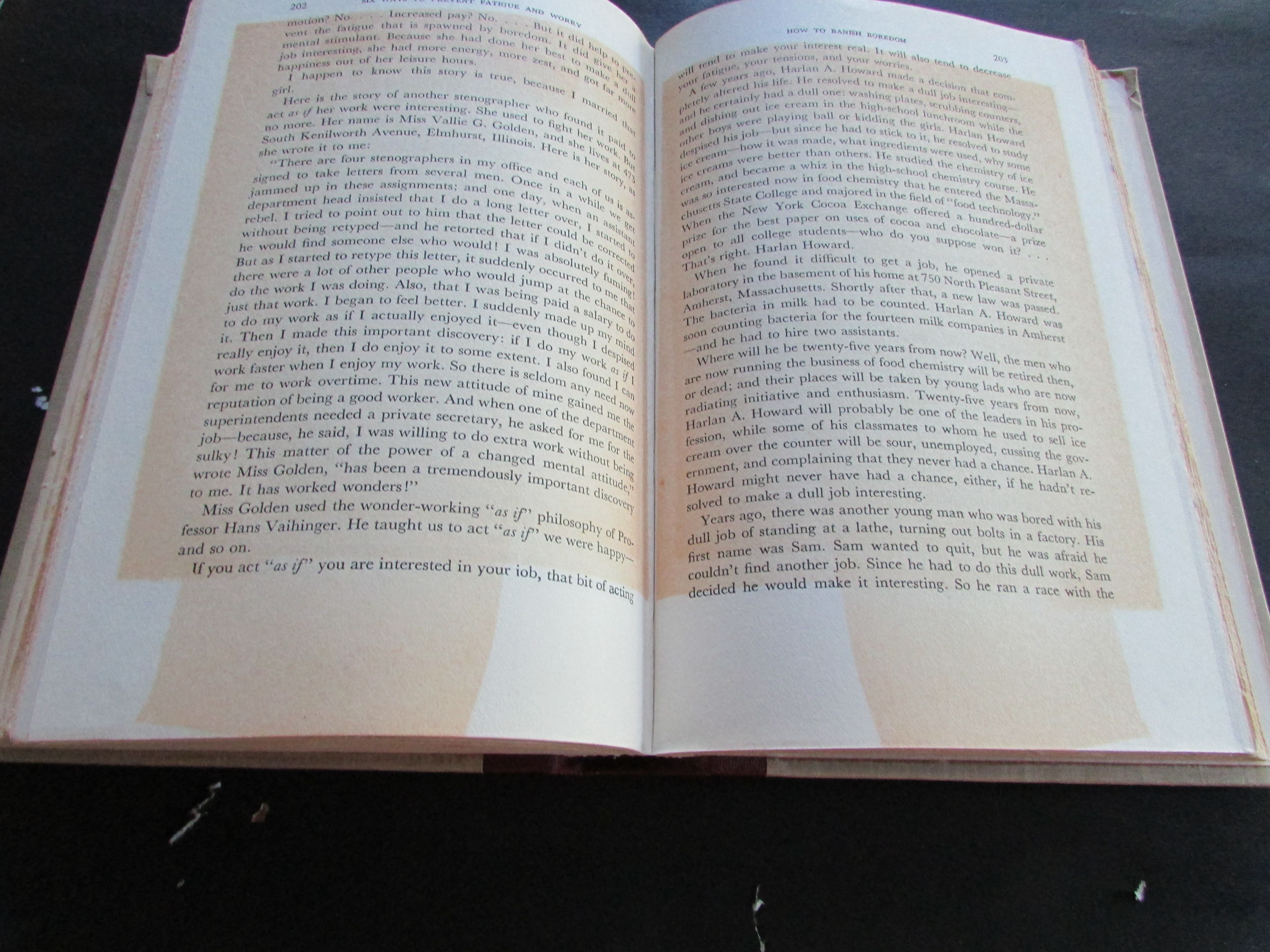
On this particular tome, I found an old piece of scrap paper taken from a budget sheet from 1954. It had some numbers in it, written not in the proper space, but added, what seemed as in a rush.  The column Amount in 1954 budget was encased in a square made with pencil markings, and a name was written atop the other two columns. In addition, there was a bookmark from a masonic lodge celebrating 100 year anniversary. The inside had no underlining. What was the story here? Well, the owner was probably a Mason, a business person, maybe an accountant? and he must have scribbled numbers while talking on the phone with the person who’s name was carefully written, and while he was on the phone, he must have doodled the square in pencil, as it seemed to have more than one line, as if this person, went over the square with his pencil several times. Inside the book, there is a large yellow mark made by a paper that must have been placed there for some time. It marked the shape of a large piece of paper and a small one, probably on top of it or attached to it – maybe a receipt (hence why I chose the profession of accountant). This is the story that these clues inspired, but it could be far from the truth; however, I had fun imagining all this. As usual, here are a few pictures.

Photo by M.A.D.

Photo by M.A.D.

007


That day, I found a small collection of small prayer books/bible from the USA army. Back then, the Army, Navy … gave these books to soldiers, and many were presented at service by their chaplain . One of them had the soldier’s name, the chaplain’s name, date, time, and where it was presented. What caught my eye was the heavy underlining on this one, especially passages that talk about war, peace, and righteousness, as well as other passages that made reference to water, which led me to think that the soldier might have been in the navy. There was one underlined passage that referred to a man being healed, one who couldn’t walk. The story I imagine here made me sad.

Next time you happen to come across an old book, examine it, and hear the story it whispers within. Today, we celebrate old authors, as well as book lovers of the past – HAPPY WATERCOLORS FRIDAY!

Doubting Your Path, Saving Your Step

In most cultures, education is important and regarded as primordial in obtaining a great job, and a better future/life. I agree that education is one of the greatest tools/steps a person can take to enrich his/her life, as well as to open doors to a good future (and present); however, at times, society blinds us to accept expectations that may not be our own. It is not unheard of the person who becomes a lawyer planning to earn a healthy income, when his/her heart is speaking art, and every cell of his/her body is aching to live creating art (whatever the form), but the mind is focusing on the material/monetary part of making a living, therefore he/she chooses the path of less resistance, a more secure path. Years later, despite a successful career and many achievements, there is a void that can be felt, despite futile attempts to fill it with —————– fill in the blank. What is that void, and why?

Most likely, it is the crevices of the creative self, drying out and opening up, longing for a fresh start, and a bit of creativity.  It is the soul that starved for art for so many years and the creative spirit that has not died because it still has not fulfilled its joy. Some answer the call, changing careers and accepting a joyful way of life, while others ignore the call, deciding to stay safe, and sacrificing the experience of a more fulfilling journey. They have their own reasons, all valid, however costly.

The myth of the starving artist continues to keep the creative spirit at bay, preventing some artists to use education as a great and valuable tool to perfect their craft and create a satisfying pathway when they embark on the journey of their lives – selecting a career they love, loving what they do, doing what they love. Education enriches the journey. When you doubt your path, you can save your step, or a lifetime of steps, by using education to enhance your passion.

What if you doubt your path, even when you know that it is what you should be doing? You have listened to your heart, took a few steps in the right direction, and now, you doubt. You may have come to a halt, saving your step, and puzzled, frustrated at the lack of results, enveloped in exhaustion, saturated with the sweat of your hard work, dedication, and tears … collapsing almost, with every heartbeat that becomes faint, as you fall into your knees, looking at the dirt on the road, the dust that surrounds your creative self, and you see the drops that seem to kiss it, as they fall, the tears, the sweat … . I am so tired, you think, because you cannot utter the words. The lack of results (whatever your measure) rendered you mute, numb to creativity, desolated, angry. Angry with you and the entire world. Why? you think. I have done everything I should, and more; why? you whisper, why? you cry out! In your hands, the dirt of frustration you hold tight, squeezing every grain, until you open them, and slowly release the sand into the breeze, watching it go, lifting your eyes up, up from the dirt of the pathway, and taking in the same breeze that carries the sand. Then you notice the sky, the clouds, the birds … as if for the first time.  Because you have looked at your steps for so long, focusing on the pathway, hurried in your journey, dying to get there fast, you forgot to look up and take in all the beauty that looking up held for you. It is a new perspective now, and all it took was to save your step. Now, somehow your path seems anew, the journey seems full of possibility, and your creative soul, refreshed. Doubt? You don’t seem to find it. You breathe, you dust yourself up, you smile, and feeling grateful you happen to find yourself standing up, ready to take the next step. It is a new perspective, and all it took was to save your step.

The Vintage Office

If you have followed this blog, you are aware of my love for vintage items. I love the yesteryear charm of these things, the detail in workmanship, as well as the durability of many vintage objects compared to a similar object manufactured today. In addition, selecting vintage is my way of contributing to the planet by giving a second chance to things, and preventing some of these things from landing on our landfills.

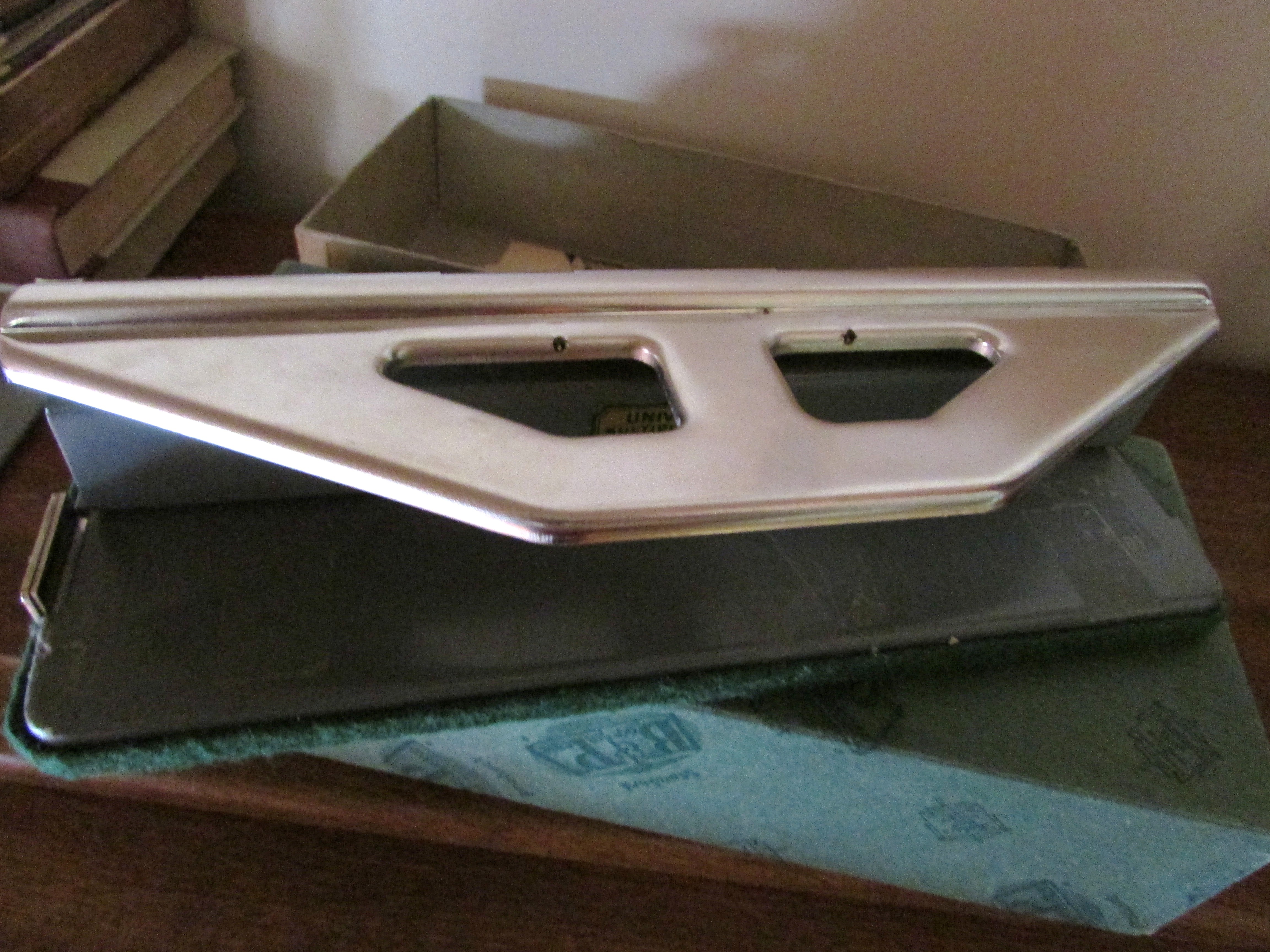
As a writer and entrepreneur, I try to create a space that will inspire me during my working hours, but also that is environmentally friendly. Many times, before heading to the nearest staples, I try to plan purchases ahead of time, looking to see if I can find a vintage item instead of buying new. Sometimes, this action saves me money, sometimes it does not; however, it always helps the environment by preventing an item from going into the landfill.  Many times, I am buying new old stock (NOS) – new items from the past, never used or that have survived sometimes more than a 100 years and are still in great usable shape. Examples of these items are vintage pencils, hole punchers, metal pencil sharpeners, ledgers, paper, refillable pens, paperclips, card holders, heavy-duty Rolodex and refill cards, note cards … you get the idea. Of course, some things require new technology, which I buy new.

The trick here is to plan so you have time to look around; therefore, you don’t make a hurried purchase, which could end up being more expensive. However, Mother Earth is always grateful. As an example – if you know that you will need to buy a stapler in a few weeks, now is a good time to look. If you need to replace your stapler, the heavy metal vintage ones are excellent and perform well and you can still find original staples online, whether NOS or new replacements. I stress this point, planning a purchase, because let’s face it, if you need something right away, you will not have time to shop, compare, and most likely, you will rush to the nearest office supply store because you cannot wait for delivery.

Sometimes the detail in craftsmanship of these items is inspirational in itself – you see a well thought and designed item, proudly displayed, which may inspire you to reach for the same in your work output.  So there is an added benefit. If you are a techie who loves the latest gadgets, this post may not be for you, but you can help by organizing your work and schedule electronically, thus reducing much paper output, in a way, which is great too. And since we are in the topic of paper, if you alternate between writing your drafts on the computer and paper, you can use vintage journals or ledgers for that purpose. I have been lucky to find an entire box of NOS copy paper for three dollars. Other great writing materials are fax paper or the old printing paper with the removable sides. Just a few ideas.

Here are pictures of some items in my writing/working space. By the way, the desk was a Craigslist buy for $10.00 (no zeros are missing here).


Roll Top Desk - photo by M.A.D.

Roll Top Desk – photo by M.A.D.

Heavy metal Rolodex, 7 position industrial hole puncher, industrial stapler (takes three sizes)

Heavy metal Rolodex, 7 position industrial hole puncher, industrial stapler (takes three sizes)

017 018   Photo by M.A.D.

Vintage Camera Case - fits perfectly my Canon Powershot. Photo by M.A.D.

Vintage Camera Case – fits perfectly my Canon Powershot. Photo by M.A.D.

Journal Ledger - Photo by M.A.D.

Journal Ledger – Photo by M.A.D.

002 004El Dorado pencils and metal sharpener

So there you have it; all these items are vintage, some more than 50 years old, some new old stock, but all ready to give many more years of service. I hope you enjoy this post, and that it inspires you to give a second chance to vintage items to help our environment.