Use a Mirror to Manage Writer’s Block

Hot air balloon water reflection Quebec

Image via Wikipedia

At one point or another, you may feel as if you cannot write or as if the story is not flowing quite the way it is supposed to flow.  You may think that you have been plagued by writer’s block (or artist’s block) and when you try to work on your novel or art, you cannot go back to it, as if something prevents you from it.  I have been there and what I found out was that it was not so much of a writer’s block, but more of a conflict with a particular part of the story.  It may be a character, beliefs, philosophy, or even a particular scene.  Somehow, you have an internal reaction or “a problem” with it.  It may be that you do not agree with something that you happen to be writing, but know that you have to write, whether it is to keep the story going, or by mere inspiration.  When you feel that you are stuck with the story, take a break and ponder about the last thing you wrote.  Take notice of how you feel about it, and if an internal bell rings.  This is a sign that you have something to work on (on yourself) before proceeding ahead with the story.  The way I see it (and this is only by my experience with this) is that you either,

  • acknowledge it and ignore it, meaning that you know the bug is there but you will ignore it and keep writing; however, it will come back along the way, impeding total free flow of your writing.
  • take a short break, acknowledge it, ponder it, and make peace with it.  I find that just because I may not agree with something in my story, that does not mean that I am selling out my beliefs.  In the case of an internal conflict that one of your characters or scenes brings up, acknowledge it, try to find the link between your conflict and the story, understand it and move on.

The main thing here is that by recognizing that there is an internal conflict you are looking in a mirror, and therefore, are starting to open the flow of your writing once more.  The mere act of looking at that reflection in the mirror is going to help unblock your writing.  At least for me, it works that way.

Hope this tip is of any help.

When Misery Loves Company

Finger pointing

Image via Wikipedia

We have heard this line many times – “Misery loves company.”  It is a very damaging way to live by.  Why?  When we sulk in our misery and surround ourselves with people who feel the same way, we are becoming victims of whatever situation it is that we sulk about and prolong.  Some people may even live a lifetime this way.  They have become victims and most likely, blame another for their misfortune.

I wholehearted believe that I cannot blame anyone for whatever happens in my life, because ultimately, I make the decisions, whether these are decisions that I make or think I have to make, but is not what I would like to do – in any case, I always decide, like it or not; therefore, there is no assigning blame.  When I fully understood this truth, I became free.  I saw that no matter the circumstances, I chose and that meant accepting responsibility for those decisions – positive and negative.

When we say ” it is ______ (fill the blank) fault, we are closing the door to growth.  Only by understanding that you are responsible for every path taken, and letting go of blame, there can be growth.  For some people, this is difficult to accept and they don’t want to be reminded of it.  If you do, they will find something wrong with you to be able to refute this truth, whether it is your lack of experience in certain area or life situation or something else.  For them, this is ground for invalidation of what you have to say.  Many times, that same “lack” is what helps you be neutral and understand many points of view.  Keep playing the same misery song and you will keep dancing the same misery dance.  If you don’t change the tunes, don’t expect your feet to move at a different rhythm.  That is what I say.

The artist/writer is many times, misunderstood and labeled.  Many artists/writers know that there is a price to pay when they chose to welcome creativity and change in their lives, specially when others don’t understand their art or path.  They may be accused of daydreaming, having unrealistic expectations, not working, being too emotional … and many other things, tons of other things.  If you find yourself wanting your dream very much and on the path to make it real, to survive this you must avoid becoming discouraged by what others may or may not think of you and you must work your dream against the odds.  Most important, don’t invite company to celebrate misery, because misery loves company, and growth will stop.

Expanding Your Horizon

Rendition of Homer's view of the world (prior ...

Image via Wikipedia

If you are human, you have a set of beliefs.  Those beliefs form as you grow up and are highly influenced by culture, family, country … and many other things.  In a way, you identify with those beliefs, in a way, they are you, part of you.  I know people who are so set in their beliefs that refuse to explore beyond their horizon or entertain another point of view.  These people may fear that by opening their mind to receive information that may or may not contradict their belief system, they might cheat on that same system or worst, lose themselves – I pity them.  Why?  Because opening your mind to try to understand something and exploring information does not in any way diminish what you think, or believe; on the contrary, if you truly respect your beliefs, there is no need to fear new information.  What would have happened if all the explorers and scientists of the past had not stepped one foot pass their comfort zone (beliefs) and try to expand what they already knew or believed?  You answer that question, since the answer is obvious.

I used to write for a site and the community there seemed very friendly and loved commenting on each other’s work.  There was only one thing that drove me nuts, especially when I wrote a piece of poetry.  I write about many things, true or fictional, and many times, I love to imagine things poetically.  What drove me nuts?  That most times, people thought that the piece of poetry was directly related to me, as in true life.  I was too lazy to explain that it was just a piece of writing, many times fictional.

Don’t believe everything you read or are told; expand your horizon, move one step over the flat ocean’s edge and refresh your mind and spirit.  Think for yourself, believe what you must but after you consider the opposite point of view, there is no harm in that; who knows, it may even strengthen your beliefs.  As a writer, you owe it to yourself, and your readers … believe and expand your horizon.

Yesteryear Craftsmanship – From Screwdrivers to Writing

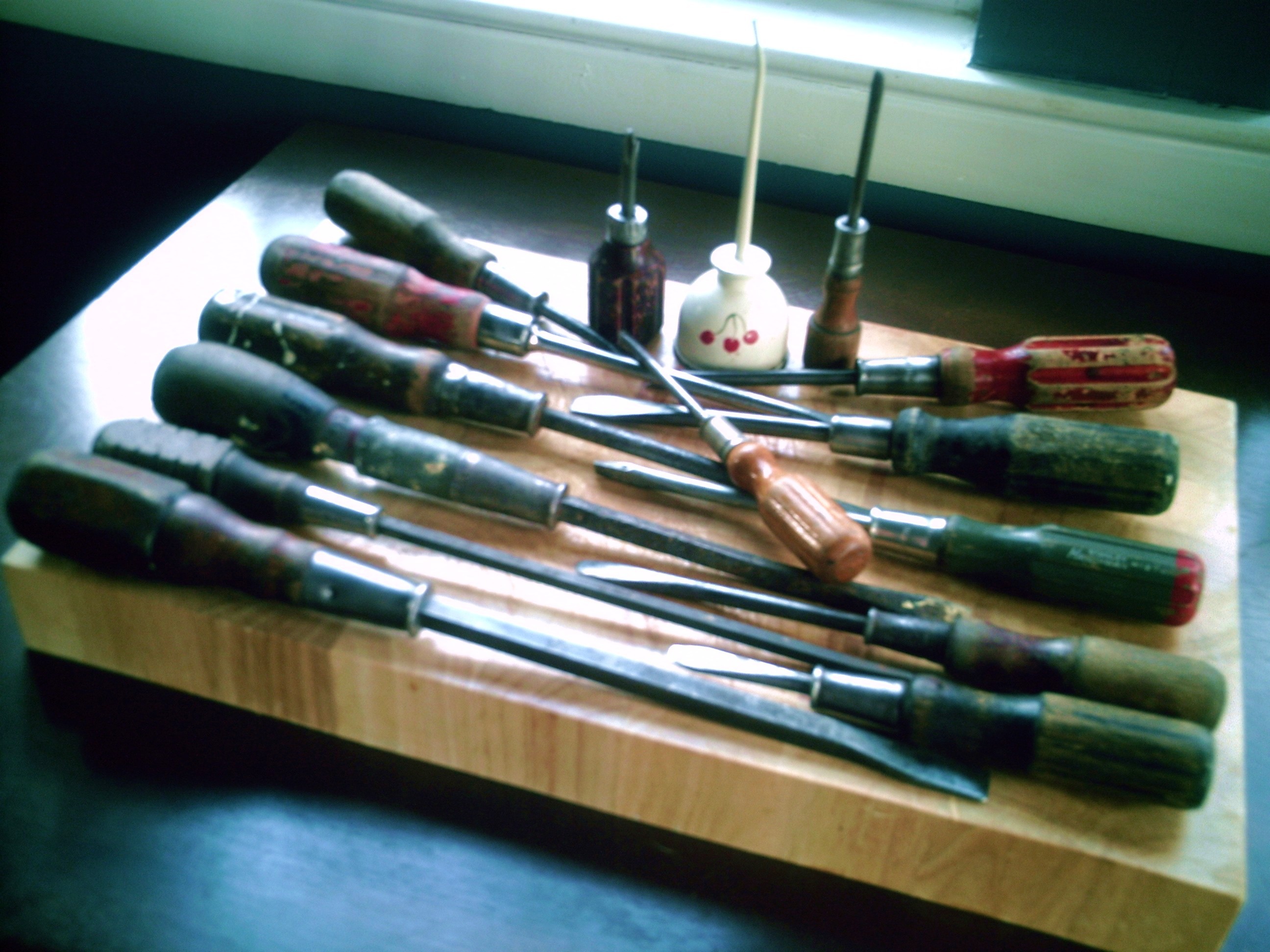
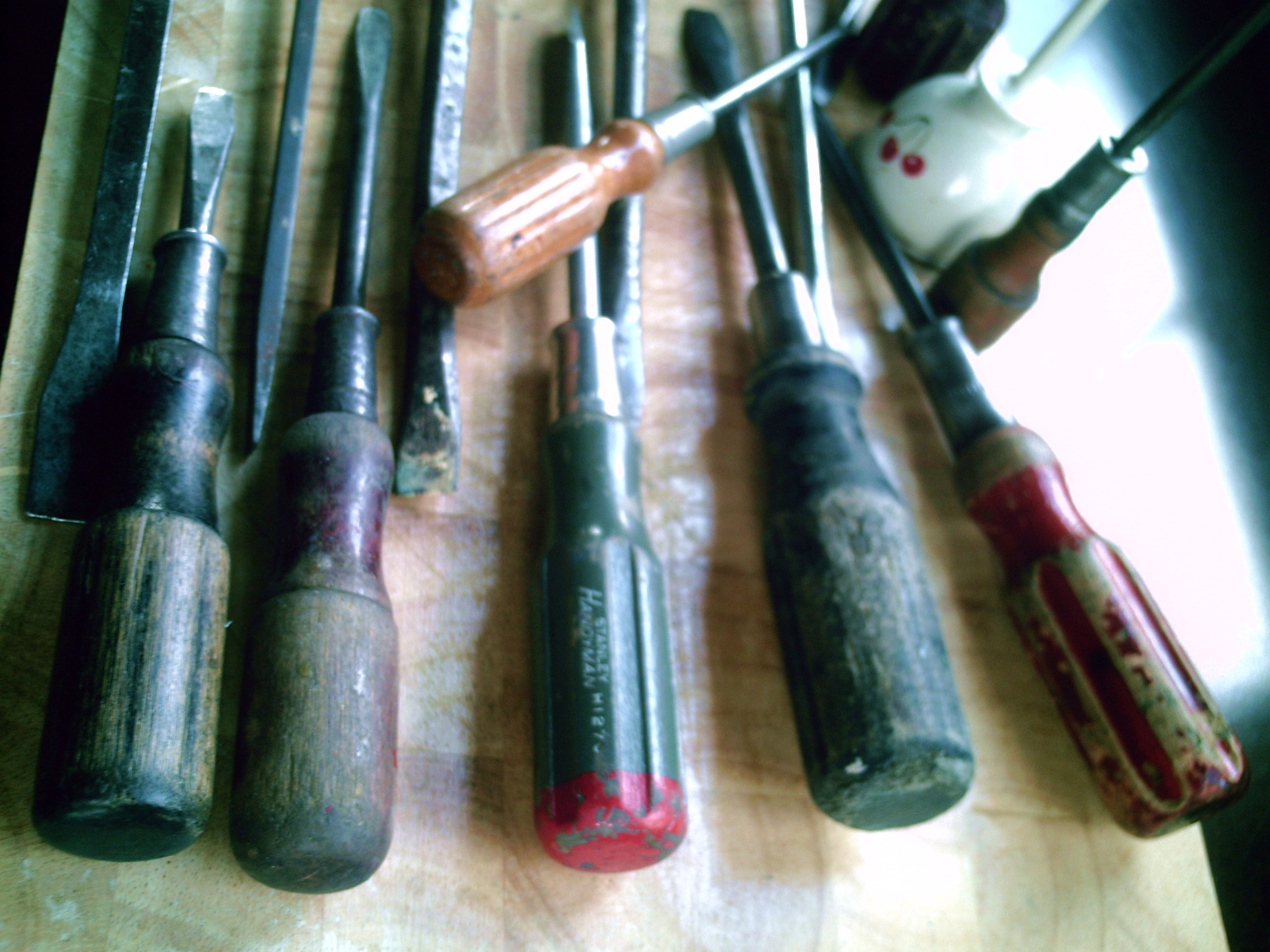
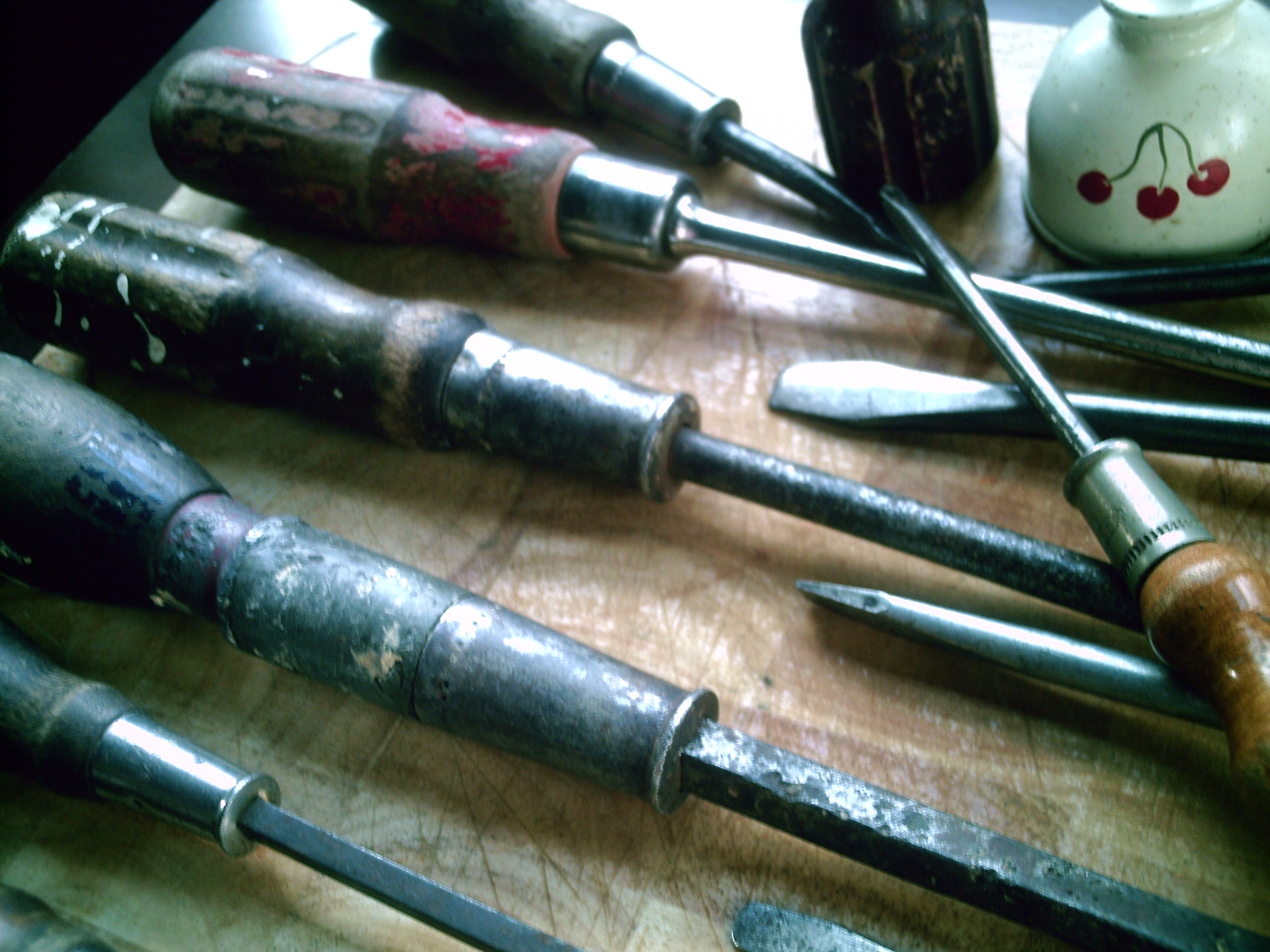
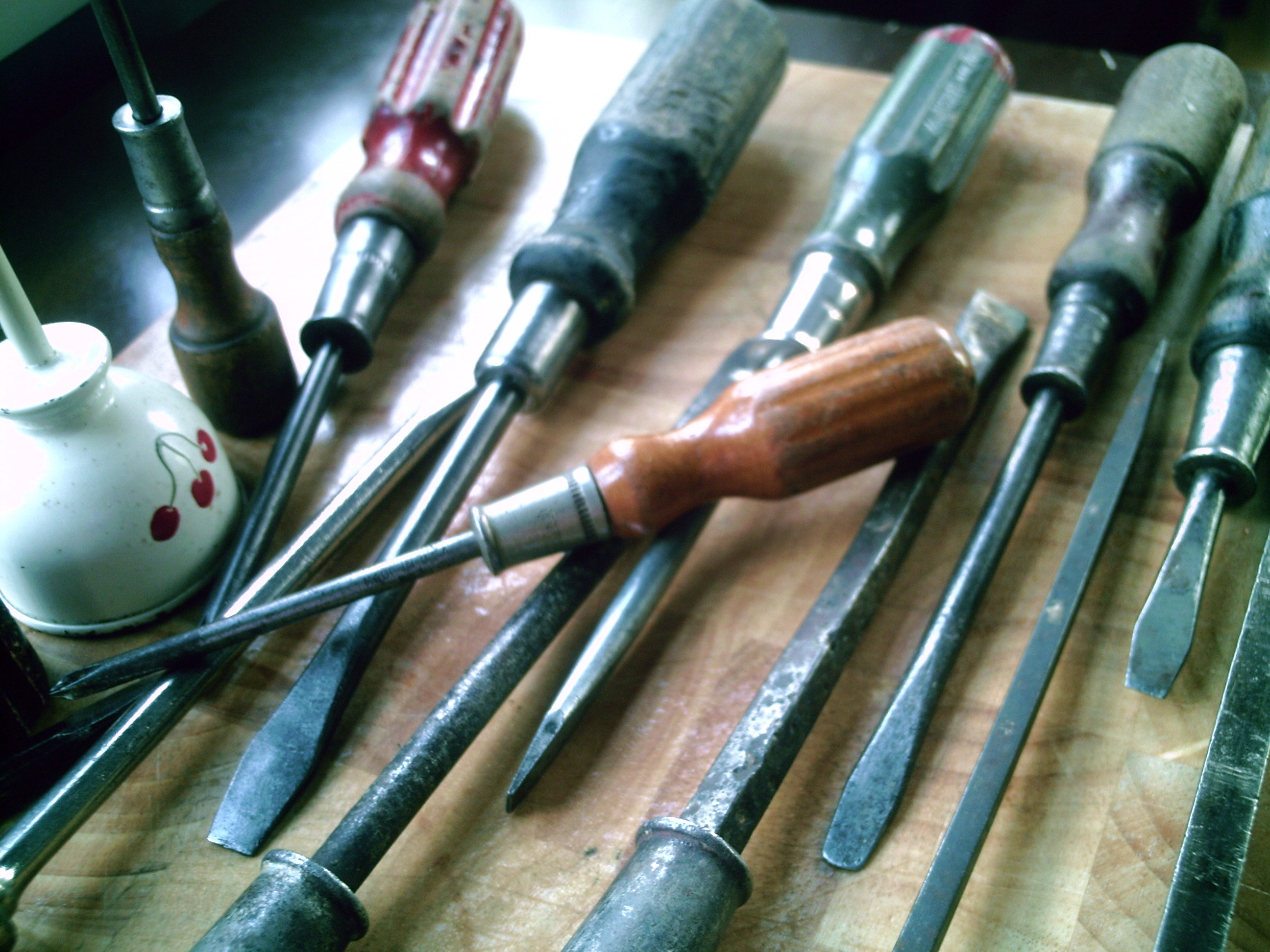
I love old tools.  I guess it comes from growing up with my grandfather who had the coolest tools and from watching him use them with pride.  He even let me handle a few, with much care of course.  There is something about vintage tools that you cannot find in the new ones; it is that attention to detail, that craftsmanship that seems to have been lost over the years.  It is that history embeded in them that is not present in the new ones – from the paint chip that tells you that someone was trying to open an old paint can long time ago with the screwdriver, to the markings on the top that tells you that someone attempted to use it as a hammer once.  You cannot read this in a new tool – it has no story to tell, at least not yet.  New technology offers great designs and materials, but somehow, it misses the soul into the piece.  I don’t know if you can understand me, but that is how I see it, when I look at those pieces and compare them to the new ones.

A few years ago, I came across an old wooden toolbox and kept it on the side, with the intention of using it one day.  As my life has taken a turn, and I am headed to a different lifestyle, I decided to continue to build my old tool collection.  Recently, I was lucky to get a set of vintage screwdrivers at a steal.  I say a steal, because for some reason, vintage tools are starting to get popular with collectors, and you cannot get your hands in a good lot.  Well, I guess my grandfather was looking after me and I was able to find and win this set.  It even has the approval of Gadget Man (my husband) who loves new tools and all kinds of crazy designs.  He is starting to appreciate them now, and he even told me that he was going to build me an old fashion tool box to accommodate my growing collection.  This is why I love him so much – he gets me, and I get him.

As writers, we can look and study old literature, but also, appreciate the new works that many talented writers are sharing these days.  It can all  blend beautifully and cohabit in peace.  There is “Soul” in writing, in the classic works as well as the new works that are born of inspiration, are well crafted, and proudly presented to the reader, not because the writer wants to run after the market to make a quick buck, but because He/she has fallen in love with the piece and wants to share it with the world.

Here are some pictures of my latest tool bounty, which I proudly share with you.

I hope you enjoyed this post.

40 Tips from Best Selling Authors

Revisited – I wrote this sometime ago and decided to revisit it as I think these tips from best selling authors are worth reading once more.


As a writer, I love to hear what other writers have to say about writing, especially, best-selling authors.  I sat down, coffee at hand, and listened to many interviews of best-selling authors.  Many hours later, a list of their recommendations was born.  The following list is full of tips, recommendations, and inspiration, from best-selling authors to aspiring writers, although these authors have been published the traditional way, and we all know that the eBook is shaking the publishing world; however, these tips are worth considering.


1.  Write, Write, Write.


2.  Accept rejection.


3.  Send hundreds of queries.


4.  Don’t take no for an answer; keep at it.  Eventually you will get a yes.


5.  It took Janet Evanovich 10 years of trying to get published.


6.  Write every day, even if you stare blank at the computer.


7.  The characters will take life of their own; they will lead you but you still have control.


8.  It is a huge honor to get your book made into a movie; but it is a totally different animal.


9.  Pick a genre and stick with it; at least in the beginning.


10.  Most seemed to have writing on the backburner, and somehow, fell into it as if by chance or destiny.  Some did not even know if they were any good.  Examples are:  Stephenie Meyer, Janet Evanovich, Lalita Tademy and Sara Grwen.


11.  Their backgrounds are so diverse but there is a constant:  they persevered, and they write, write, and write.


12.  Some observe and listen for ideas, others have dreams, others write about what they know.  Sara Grwen saw a picture of a vintage circus and that instance; she knew she would write a story about that, even when she had started a complete different story.


13.  Some used ideas and modified them into complete different stories (careful with copyrights-this author made sure a lawyer handled all details).


14.  They all come across as very content with their lives.  And some of them had hardship or events that lead them into writing.


15.  Christopher Paolini wrote about what he always wanted to read about, but there just was not enough of it (Besinger).


16.  Some seem easy going, go with the flow, while others more uptight, others seem to have fun in the process like Gregory Maguire.


17.  Michel Chabon – “You have to live with the book on your head all the time, even when living your normal daily routine.”  Sometimes he goes away to write for a couple days, or two weeks.


18.  Elizabeth Gilbert – “There is only one way to tell a story and that is to tell it.”


19.   Jody Picoult says – “Ideas come from all over the place – for me usually about an issue that I do not have the answer to.  Characters pop up like mushrooms and take over the book.  I research the subject sometimes months before I start writing.”


20.  Brunania Barry self published 2000 copies, and then hired a PR company.  Took a leap of faith, quit her job, and wrote.  Always knew she wanted to be a novelist.  This book started as a dream.


21.  Mitch Albom weaves own anecdotes into his stories.  He uses a song in every book, kind of his trademark.


22.  Lisa Scittoline – “Try to write something that is inside you, you open your heart and readers open theirs.”


23.  Harlan Coben – “I like to write with heart; otherwise it is not going to work for me.”


24.  Kate Jacobs – “The secret is being persistent and silencing this inner critic.”


25.  John Grisham – Writes mostly legal thrillers, but writes whatever he wants.  He has fun with the genre, he says he does not know where he is going as far as to stick with a genre – “You can’t get to serious, the pages have to turn”.  His style is very disciplined and structured – He writes from 6-12 m mostly 5-6-7-8+ pages a day.  Before writing he has to get his thoughts together.  He makes an extensive outline to follow 40 chapters.  He needs his outline.  Some of his books made into movie, The Appeal/The firm.


26.  Sherrilyn Kenyon – Acheron – “Over, under, around or through, there’s always a way to get where you want to go, you just have to find it.”


27.  Wally Lamb – “Write the book for yourself and let the audience that have to find it find it”.

28.  Anne Lamott – “Writing, just do it.”


29.  Gregory Maguire – “The consolation of the imaginary is not imaginary consolation.”  “Your inventive culture/world should be convincing.  Work this world in your mind, even if you do not write the details in the story.”


30.  Jamie Lee Curtis – “I don’t do it (writing) for achievement, it is pure expression for me.”


31.  Debbie Maccomber – She is an inspiration, she was dyslexic and learned to read in 5th grade.  She loves being a writer.


32.  Claire cook – “Just try it; small steps every day take you there.”  It took her 25 years because she was afraid of the big step.


33.  Donald Trump – Think Big and Kick Ass – “Keep your left up”.  “Never ever quit.”


34.  Nora Roberts: “Well, first: there ain’t no muse. If you sit around and wait to channel the muse, you can sit around and wait a long time.”  She says writing is not effortless.  “So I work really hard to make it as fluid as possible, as readable and entertaining as possible.”

35.  Kate DiCamillo does not do research.  Her book just shows up.


36.  Maggie Stiefvater – “To aspiring authors:  read, read, and read.”  She didn’t take any creative writing classes.


37.  The idea of a character of your book writing a book – James Patterson.


38.  Writing under different pen names – Jayne Ann Kretz is (Jane Castle and Amanda Quick); Lori Foster is L.L. Foster.


39.  Age dilemma when writing – addressing age appropriate dilemmas is important when writing your story.


40.  Eloisa James writes 20 pages a day.  She says that writing is hard work, it is tough.


Well my friends, here you have it:  Many hours of listening compiled into 40 tips for you to enjoy, and apply to your craft.  I love tip number 26.


How Music Influences your Writing

English: Part of the Mood Music Group

Image via Wikipedia

Have you ever thought that what is playing while you are writing may influence your mood?  Despite your writing style and your taste in music, there is a correlation between your mood and the music you are listening to at the time you are writing.  It permeates the piece you are creating at a particular moment.  Of course, this does not happen all the time, as a rule, but you can use music as a tool for writing.

Many best-selling authors play a particular cd in the background to write a particular chapter of a book, or scene.  It inspires them to create the mood in the writing.  Next time you are writing a love poem, try some romantic music on the background.  You will see the shift in mood.  If you are writing a chapter where action takes place, play some rock or fast music.

Movie soundtracks are great too.  The shift in music allows you to play with different moods.  Sometimes, the best writing is done in silence, but for those moments when you need a jolt of sentiment, music does the trick.  If you are stuck in a particular chapter of a novel, try listening to music according to the scene – this will help for sure.

There are many ways you can create a mood for writing; music is just a tool that you can use to shake your muse.

The Healing Effect of Writing

Why do we write?  To inform, to tell a story, to leave a legacy for the next generation and more to come, and for many other reasons.  I say that writing is therapy for the soul.  The written word in a heartfelt poem is like the tear running down your cheek; it is like the cry, or the laughter, immortalized forever (that’s why you should mind what your write).

Writing provides an outlet for the creative spirit, and for any spirit, to express the deep feelings of the soul, the yearnings and the epiphanies, the dreams or the nightmares, the happiness, the sadness …  The simple action of taking a pen in hand (or any writing instrument) is an act of freedom, of expression – a catalyst.

You may argue that music has the same effect, and it too, soothes the spirit and elevates your soul.  But music without words is introspective.  It is only thru dance and movement that it tells a story – and movement becomes word.  Then it becomes the power of the written word – in a song, in a musical note that you can read.

Writing exercises the mind, and gives free range to the imagination.  Fiction is a good example of this.  Creeds, positive affirmations, all relate to the power of the written word.  It is as old as our existence, in one form or another.  It was the thing that God told Moses to do, when he gave him The Ten Commandments – a base for our society’s rules.

As writers, we hold a powerful instrument in our hands, an instrument to edify or to destroy, to bring growth, or to hinder it, to move readers (or to bore them to death) – an instrument to glorify creation.  By writing we appease ourselves, we choose to enter into a world that is only ours, or to remain in reality.  To write is to refuse to cease to exist – to give wings to your soul, to heal wounds, and restore the heart.

7 Tips to Deal with Your Creative Anxiety

One of several versions of the painting "...

Image via Wikipedia

People who are artistic and creative may tend to get anxious at times; I am one of those people.  We tend to over think, over analyze, many times about our art or endeavors, although that may seem as a contradiction.  Creative people are not as flaky as many times they have been misrepresented – if anything I would accuse my self of being silently overly dramatic.  There are many reasons why anxiety might try to creep into your day and ways in which you can deal with it.  Sometimes, it is just a matter of putting order in your day and in your mind.

  1. A creative or artistic person who stops creating ends filled up and ready to explode.  This will lead to a feeling of anxiety and uneasiness.  Keep creating; it may be your bread and butter but also an outlet.
  2. Artistic people love beauty and we see beauty in the oddest of places and objects.  Many creative people are shopaholics.  This may become a source of anxiety – even if you are overspending on work supplies.  We need to control spending because it creeps up in a feeling of guilt; that is a source for anxiety, since many artists and writers are in a controlled budget.
  3. Respect what you do; it is not a hobby (if applicable), it is your job.  When we don’t treat our day as a work day and give it the seriousness that it deserves we are inviting others to think of and view our art/work  as a hobby.  This will come back to haunt the artist/writer and be a source of anxiety as well.  And this takes us to number 4.
  4. Money is necessary but it is not all.  Many times, for the creative person, results are more valuable than money; however it starts with how you view what you do.
  5. Give some structure to your day.  Many creative people refuse to work with a tight schedule or agenda; however, working with none is dangerous as well.  Find a balance to what works for you.  Plan your workday but also leave room for changes and variety – nothing worst for creativity than falling into a rut, it can shut you down.
  6. Take a break during the day.  Do something unrelated; it keeps you sane and happy.
  7. Don’t forget to give thanks.  Start your day by being thankful for everything and you will see a difference in the way your day goes by.  You will approach your art/work with a positive vibe.

I wrote this post with the artists and writers on mind; however, this may apply to your passion, whatever that may be.

To Self Publish or Not – That is the Question

An on-demand book printer at the Internet Arch...

Image via Wikipedia

I’ve been working on my novels, perfecting them as much as I can, and getting ready for publishing – maybe next year.  However, the issue of going the traditional route or self publishing has been on my thoughts especially because self publishing is not the taboo it used to be, and more reputable authors are self publishing.  At the same time, there is a lot of crap out and the stigma may hold true these days, so that is my dilemma.

I have read much on the various routes that I can take – publish on demand (POD), going with a small but long-time established publisher, taking the traditional route and pray for an agent … Although this will not happen now, I worry about the decision – simply, because this is not one to take lightly or to rush.  Once you self-publish your name is out there, therefore, you want to present to the readers your best work at the time.  In addition, English is not my mother tongue, so I have to make sure that there are no linguistic errors besides the usual grammatical, style, punctuation … and so on.  That is why I am not rushing and that is why I see it as a huge responsibility – as if I have been entrusted something to deliver to the world.

In preparation for the big day – the day I decide which route to take – I’ve been following author Cliff Burns’ blog – Beautiful Desolation (a pro at it) and I ‘ve been reading lots on the topic.  One interesting series is the How to Get Published Series that As the Pages Turn is doing.  A few authors get to tell their story on how they got published, some of the challenges they met, and other interesting issues.  I like to read Claire Cook’s blog, who is a best-selling author and have gone through the traditional method of publishing.  Her blog is full of insight and great topics of interest to aspiring writers.  Check out her section dedicated to Aspiring Writers and watch her videos.

Thanks to the development of the internet, there is a lot on the topic that I can research before deciding on which road to take; however, there are tons of scams out there and that is something to be mindful of to avoid making the mistakes that many people in the rush of publishing their books have made.

Wether it is self-publishing or traditional publishing, both require a lot of focus and work.  There are advantages and disadvantages for both, and many will be of a personal matter (financial, likes and dislikes, freedom …)  which is different for every person.  In addition, there is the move to another state, the restoration of a dilapidated farmhouse that will become my permanent home, and many other issues that are pushing the decision to publish further away.  It will be in due time.  I am a firm believer of the adage “things always work for the best.”

Day 4 – Awesome WordPress Bloggers

Today’s post is about Beautiful Desolation by Cliff Burns.  This blog is a great blog to follow, but if you are contemplating self-publishing and want to hear it from the best, head out here.  Cliff Burns went independent more than 20 years ago, when this was unheard and it was tabu.  He tells it like it is and he is not a fan of bandages or patches.  So if you want to see what the indie writer’s life is like visit Beautiful Desolation.

The blog is also visually attractive and well-organized, which I always like.  Cliff Burns takes pride on his work and takes it very seriously, as you can see by reading the blog.  The fact that he shares his expertise and years of work with us is a blessing, and even if you are not contemplating going independent you will learn much from the author.

This blog is valuable and more so inspirational in the sense that agents and editors don’t make you as a writer; it is not the end of your career if you get rejection letters – if you truly care about your writing strive to perfect it.  I have a long way to go  in my writing career, and I love to learn from someone who has walked the long road, and is kind enough to remove a few rocks and boulders with the information and example offered through  Beautiful Desolation.  Check it  out, it is an awesome blog!