Developing a Brand Statement

I should have written about this topic sometime ago, but it is something that you do not think about unless you are making a conscious effort to create, evaluate, or develop/expand your brand. Whether you are an author, artist, entrepreneur … or are starting to create a brand, eventually, you will have to develop a statement. In this case, I will refer to your statement as a branded author.

What is a brand statement? To make it easy, compare it to your novel’s elevator pitch. I have read in several sources about many variations of expressing it, but it can be easily explained as the sum of what you/your product is, plus the type of customer/reader that is your target, plus what you/your product offers/does for them (your intention). Once you put that into words, in a short sentence, you have developed your brand statement. For example, my brand statement is: “Inspirational fiction author Maria Antonia Diaz delights readers of fiction and non-fiction by offering works that combine adventure with the supernatural and the divine.”

If you look at that statement it tells who I am/my product as an author, it mentions my target market, and what the product (books) offers the readers. The reason that I include the non-fiction sector, is because my novels have an inspirational tone to them, which might be of interest to that sector. If you think about it in those simple terms, you can develop a simple brand statement that you can sum up in a sentence.  It is an easy way to keep the focus of your brand in front of you, and make it clear to others. Think about who you are as an author and who your readers are, and what you want to do for them through your work. That should lead you to express your brand statement.

What’s in a Name?

Spanish Language Wikipedia logo

Spanish Language Wikipedia logo (Photo credit: Wikipedia)

Short answer – Nothing and everything.

Why? Naming something, whether a character, selecting your author name, or naming a website … unfortunately gives an impression to the person who happens to read it – positive or negative, maybe even neutral. Some authors opt for using a pen name because their names are not “suitable” for the genre they are writing, or because they prefer not to use the real name.  As an example, I will use my own. When you read my author name (Maria Antonia Diaz), you may (or not) assume that I write in Spanish, when I don’t; so far inspiration has come in English, but that doesn’t mean anything because one day, I may sit down and write a novel in Spanish (translations do not count here). Perception of a name depends on many factors – personal, cultural, social … you get the idea. Fame adds another layer. As an example, I will mention J.K. Rowling (famous) and her recent pen name of Robert Galbraith (not famous, at least until he became J.K. Rowling and the book started selling hot, hot, hot).

Recently, I was reading about the importance of obtaining the .com for your author name if available, and how to forgo another domain (.net, .org …) if it was already taken. The reason given is that people are conditioned to search for a .com first, and the mind makes an association with that first name (the .com owner). In addition, people will land on the .com first, and it may not be to your best interest if the association with the already taken domain is not a positive one, especially after so much work and dedication crafting your path. The author’s opinion was that it was better to obtain a .com by tweaking your name, or by choosing some important point/feature from one of your novels to drive attention to your work. This was when panic hit. I realized that I had never bother to see if a .com was available for my author name. After so many years of research and work, how this simple point escaped my attention? If I was so serious about my path as a writer, how something so basic eluded me? The answer to that had to do with how I viewed my two work-related domains, as an intricate part of me, the author. That was the wrong answer. Why? Because readers don’t make that connection, I do.  You can guess what happened next.

I found out that the .com was available, and I grabbed it. In addition, I decided to build a separate website as an author. It is in the making. I could have done that from the beginning, but Inkspeare was the name for this blog, and it is how it developed. Changing the name of it at this point, would be a mistake. This takes me once more, to the importance of thinking your author name and its developement, not only well, but separate from your other online personas/entities. You might view yourself as one and only one, but this is only your perception, and not necessarily translates into the reader’s perception. As far as readers concern, they don’t care about your other jobs, sites, or online entities; they just don’t make that connection that you have internalized.

If you are contemplating a career as a writer, a long and serious one, think about separating the author from your other online personas that do not relate to you as an author, and which readers will not make a connection with, because in reality, it does not pertain to your name as an author.  In the long run, it will be easier for you, and less confusing for the readers. It doesn’t matter if you don’t have many readers now because you are setting the foundation for your future as an author.

So what’s in a name? Nothing and everything.

Great Book for Indies

When I think about all the hours, years of research and learning that I spent as an aspiring author, I have to say that I wished that some of the information I was craving would come in a more cohesive format. Unsure of the path I wanted to take in relation to publishing, after learning as much as I could about not only the craft, but about the different publishing venues, I found that a great part of the information was scattered, biased, and sometimes, not clear enough. Eventually, after separating this information, I finally decided that the indie path was the best choice I could make, and I did.

Recently, I came across an excellent book for indie authors or aspiring authors – The Indie Author Guide by April L. Hamilton. It was first published in 2010, and I wish that I have found it then, because it is a great resource for aspiring authors or indie authors. So I am passing you this bit of information that I am sure you will appreciate. If you are serious about writing and becoming an independent author, or even if you don’t know about it much but want to know more so you can make the best decision when it comes down to publishing your work, this guide is for you. I got my copy from Amazon. It is a treasure, especially if you are starting out; it will save you much time and wasted effort.

So if you are serious about writing, go get your copy; it will be very useful and enlightening. By the way, this is my opinion and I am not endorsing or affiliated in any way; just passing along a great source.

Why Self-published Authors Succumb to Contracts

Français : FICHE GÉNÉRIQUE Modus operandi, ins...

Français : FICHE GÉNÉRIQUE Modus operandi, installation vidéo-interactive, 2003 Conception et réalisation : Jean-Louis Boissier. Production : laboratoire Esthétique de l’interactivité, Université Paris 8, Association Transports. (Photo credit: Wikipedia)

It is a new world and a new game at the publishing industry. It has opened doors to independent and self-published authors who are enjoying the best time to make their works known without the demands and constraints of the traditional publishing industry model. However, what makes a successful independent or self-published author succumb to a traditional contract? It would be a good idea to differentiate between the terms indie and self-published (this assessment is my view, in general).

I view independent authors (indie) as entrepreneurs who enjoy the freedom and flexibility of maintaining their status as indies, and who have established for themselves  a “modus operandi” that they love and prefer. I view self-published authors as writers who love the craft and have embraced the opportunity with the changes in the industry but whose goal is to one day, become published the traditional way. They might have received rejection notes or not, but their main goal is to obtain publication via the traditional model of publishing, and at the same time, making a name for themselves.

Despite the rules of the traditional publishing model, publishers are turning to Amazon to discover future contracts by following who sells the most/ranking. This works well for self-publishers, who have not been able to reach the system via an agent. For a successful self-publishing author this might eliminate one layer of the traditional method – finding an agent, but agents might be looking for these self-published successes as well, knowing that the sales have been proven, and most likely, will turn into profitable contracts.

Successful Indie authors are smart about all this, and although they love their freedom and flexibility, they would consider the right contract, as long as it proves to be more profitable than what they are already experiencing by their own efforts. For other indie authors, the issue is more about flexibility and the need to control the creative process, and their working style. Indies might or might not want to obtain a contract, depending on their goals.

Successful indie authors who value an entrepreneur model of publishing seem to retain more control over what they want than self-publishers whose goal is to get a contract to validate their status as authors or to make a name in the industry. It seems that it comes down to “what’s in it for me,” and how it falls under “my goals as an author.” Both sides have genuine interests, and there is no right or wrong way to do things, as long as it follows the author’s true values/goals.

Doubting Your Path, Saving Your Step

In most cultures, education is important and regarded as primordial in obtaining a great job, and a better future/life. I agree that education is one of the greatest tools/steps a person can take to enrich his/her life, as well as to open doors to a good future (and present); however, at times, society blinds us to accept expectations that may not be our own. It is not unheard of the person who becomes a lawyer planning to earn a healthy income, when his/her heart is speaking art, and every cell of his/her body is aching to live creating art (whatever the form), but the mind is focusing on the material/monetary part of making a living, therefore he/she chooses the path of less resistance, a more secure path. Years later, despite a successful career and many achievements, there is a void that can be felt, despite futile attempts to fill it with —————– fill in the blank. What is that void, and why?

Most likely, it is the crevices of the creative self, drying out and opening up, longing for a fresh start, and a bit of creativity.  It is the soul that starved for art for so many years and the creative spirit that has not died because it still has not fulfilled its joy. Some answer the call, changing careers and accepting a joyful way of life, while others ignore the call, deciding to stay safe, and sacrificing the experience of a more fulfilling journey. They have their own reasons, all valid, however costly.

The myth of the starving artist continues to keep the creative spirit at bay, preventing some artists to use education as a great and valuable tool to perfect their craft and create a satisfying pathway when they embark on the journey of their lives – selecting a career they love, loving what they do, doing what they love. Education enriches the journey. When you doubt your path, you can save your step, or a lifetime of steps, by using education to enhance your passion.

What if you doubt your path, even when you know that it is what you should be doing? You have listened to your heart, took a few steps in the right direction, and now, you doubt. You may have come to a halt, saving your step, and puzzled, frustrated at the lack of results, enveloped in exhaustion, saturated with the sweat of your hard work, dedication, and tears … collapsing almost, with every heartbeat that becomes faint, as you fall into your knees, looking at the dirt on the road, the dust that surrounds your creative self, and you see the drops that seem to kiss it, as they fall, the tears, the sweat … . I am so tired, you think, because you cannot utter the words. The lack of results (whatever your measure) rendered you mute, numb to creativity, desolated, angry. Angry with you and the entire world. Why? you think. I have done everything I should, and more; why? you whisper, why? you cry out! In your hands, the dirt of frustration you hold tight, squeezing every grain, until you open them, and slowly release the sand into the breeze, watching it go, lifting your eyes up, up from the dirt of the pathway, and taking in the same breeze that carries the sand. Then you notice the sky, the clouds, the birds … as if for the first time.  Because you have looked at your steps for so long, focusing on the pathway, hurried in your journey, dying to get there fast, you forgot to look up and take in all the beauty that looking up held for you. It is a new perspective now, and all it took was to save your step. Now, somehow your path seems anew, the journey seems full of possibility, and your creative soul, refreshed. Doubt? You don’t seem to find it. You breathe, you dust yourself up, you smile, and feeling grateful you happen to find yourself standing up, ready to take the next step. It is a new perspective, and all it took was to save your step.

On Writers and Money

Question book

Question book (Photo credit: Wikipedia)

This may seem an odd topic, but it is one of the most annoying questions I get asked, directly or indirectly by people I know, and by strangers. It is asked as soon as the topic of my writing or books comes up. Besides annoying, I find it intrusive, and a lack of good manners. It comes in many forms, but the root of the question is the same. And the person’s goal is to know if I make money as a writer and how much. Here are some examples of the same question.

  • Are you making a living at it?
  • How much money you make?
  • Is it easy; do you sell a lot of books?
  • How are you doing with it?
  • I see a lot of people publishing books; how easy is that, is there money in it?
  • How long does it take to make it?
  • What else you do to pay the bills?
  • One can’t survive on that, right?
  • I hear the book business is not doing to well; all those book stores closing, right?
  • Oh, do you make good money?

I can go on an on giving you examples of the same question worded directly or indirectly.  When I think about it, the people who ask this question do not understand what writing entails, and most likely, they have a paycheck mentality.  I bet that for most writers who are serious and take their craft to heart, money is the last thing in their minds when they are writing.  Yes, we all want to make a living at doing the thing we love most; this is how it should be. We should all make a living this way, doing the things we love and are passionate about, but most people don’t. Most people don’t understand when someone’s passion goes beyond monetary compensation, or even fame/recognition. I bet that the majority of dedicated writers don’t care about money or fame; it is a byproduct of their love and effort while writing.  However, to be fair to all sides, there are those who write with the hopes of becoming e-book millionaires or gain fame and recognition in the field. Besides, there is nothing wrong about making lots of money and being blessed doing what you love and serving people. To me, writing goes beyond monetary compensation and fame (as a primary goal), and while I hope to one day do exponentially marvelous, that does not mean that I would love the craft more for it, or less if I don’t.

So by now, you are probably thinking what my answer is when I am asked. It usually goes along these lines –

  • I am very happy doing what I do, how about you?
  • I am lucky and blessed to work doing what I love.
  • I don’t price my passions; do you?
  • The day money becomes my story, that day I will stop writing.
  • I let the faeries worry about that part, while my Muse works on the most important one.
  • I am well.

And so along those lines it goes, usually the probing stops there.  So feel free to use those lines if like me, you get annoyed by the question. If you paint, are an artist, or live your passion, most likely, you will be asked the question many times. Some people don’t mind it, some people do, and it has nothing to do with how much money you make. Feel free to comment on the topic, how do you feel about the subject of money and writing?

Moonlit Valley Trivia

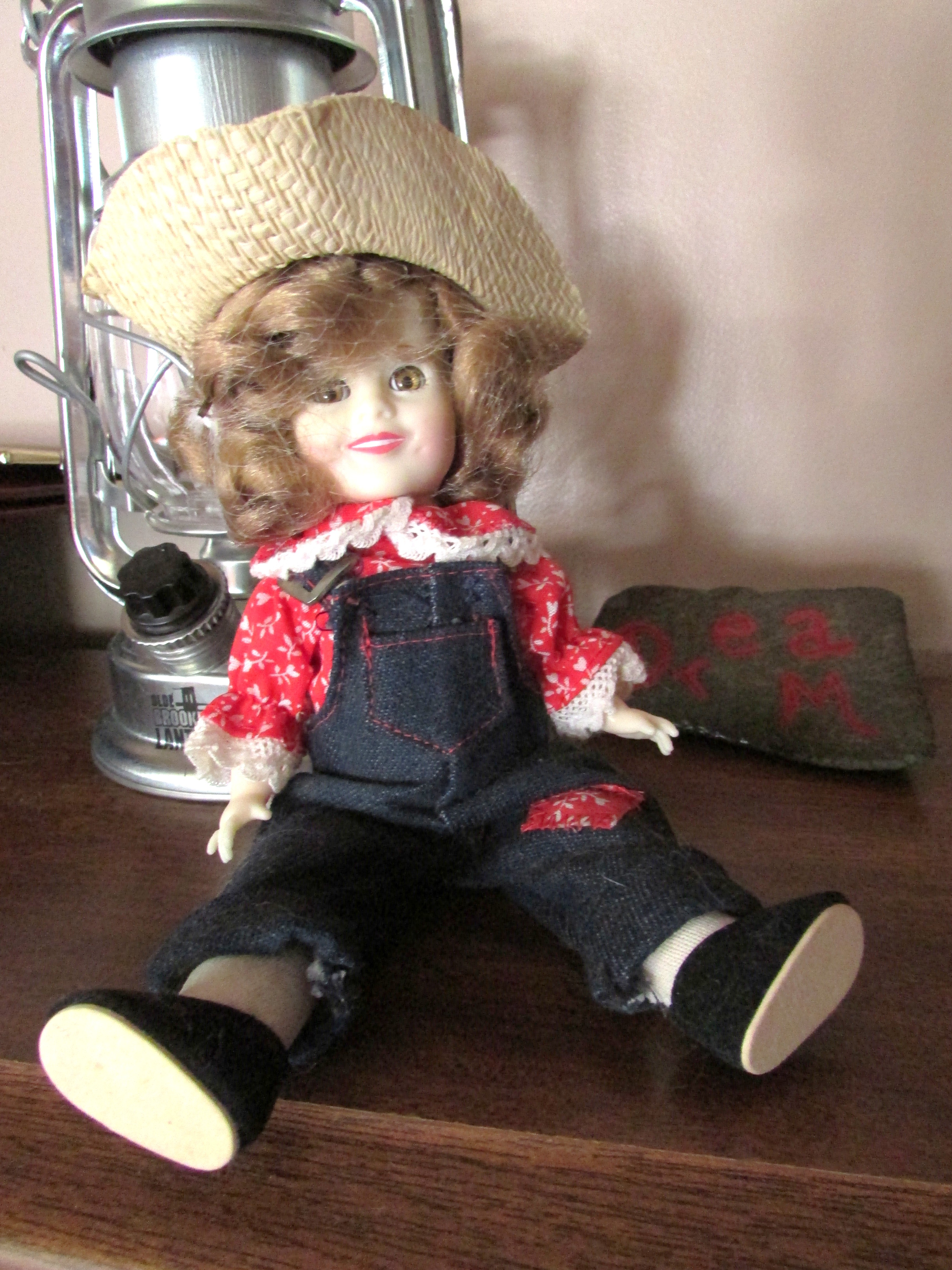
Vintage Shirley Temple Doll - photo by M.A.D.

Vintage Shirley Temple Doll – photo by M.A.D.

Ever wondered what makes writers tick? That is a question with as many answers as there are writers. Well, the doll in the picture, a vintage Shirley Temple doll is featured in Moonlit Valley, in chapter The Key. The doll holds a secret, and this is the first piece of trivia – what is the secret?

If you read Moonlit Valley, and would like to get a free paperback copy for you or a friend, you can play along and answer the following trivia questions.  The first person to email me with the correct answers wins the copy.  You can email your answers to piny@theowlbookandcandle.com .

Here are the questions. Please, if you are playing along, answer them in the email, not here, just to avoid spoilers 🙂 Thanks. Contest ends on July 31st (2013) or when there is a winner (whatever comes first).

  1. What is the secret/clue inside the doll?
  2. What is Rose and Jeremy’s street address?
  3. How many steps to the library?
  4. What is the library’s street address?
  5. What is the name of the funeral parlor?
  6. What is the name of the Lake?
  7. What is the name of Dr. Angelou’s receptionist?
  8. What is the name of the egg market/store near Rose and Jeremy’s home?
  9. What is Olga Gartier’s ladies club/society called?
  10. Name the paintings at the library.

There you have it, the 10 trivia questions to win a copy of Moonlit Valley.  The first reader to email me with the correct answers gets it 🙂 Good luck and have fun playing!

Watercolors Friday – On Writing

On Writing

On Writing (Photo credit: Wikipedia)

Today, I want to share with you a few of my favorite writing websites, and to celebrate the book that I think made the most sense on learning about writing. That book is On Writing by Stephen King. To me, it is the best book I have read on the topic. Why is that? I feel that way because,

  • The approach is simple, honest, sincere, and experienced, and as it promises, it goes to the point, bypassing the bullshit – at least that is the vibe I got.
  • It shows you besides telling you.
  • It gives you hope.
  • It scares you.
  • It motivates you.
  • It takes you to a different level of understanding of the craft.
  • It is unlike all the other writing books I have read.
  • It puzzled me, and “un-puzzled” me.
  • It does not preach what it does not know.
  • It shows you the complexity and simplicity of writing via the author’s experience and the examples he gives to illustrate some points.
  • Stephen King wrote it.

I recommend this book to every aspiring writer and every writer, even if you have a few novels published. It takes you to a different writing reality.

Now, let me share a few author/writing websites that I like, and have found very helpful.  Some I may have mentioned on earlier posts.

These are just a few of the sites I enjoy and find very helpful/informative to aspiring writers. Today we celebrate Stephen King, and these awesome sites.

Happy Watercolors Friday everyone!

Dichotomy: Learning and Doing

Learning and doing are two different animals as far as I am concerned, that is, when I think about my writing journey.  We all start with that yearning and passion for writing, followed by another desire – publishing our works.  You set sail to learn as much as you can about the craft; and if you are like me, you spend years learning the path.  This is when it gets interesting, at least for me.

I learned much before deciding to publish my novels; however, I have to admit that I did not do as I learned.  Much of what I read was tailored to traditional publishing.  It wasn’t until the last couple of years that self publishing became a more acceptable vehicle for writers.  England still struggles a bit with the concept, for what I have read, not as welcoming as the USA; however, getting better.  When I was thinking about publishing my work, what I was learning seemed to go against my grain; however, I kept learning and informing myself as much as I could – learning the entire process, and writing, until I got to the point that I was ready to decide, I mean, ready to send that first query, that first manuscript, which somehow, did not feel right to me.  So I sent one query, and it wasn’t until I physically did it, that I realized that I did not want to take that path.  At least, now I was going somewhere, although I was glad for the time spent learning.  Soon, I realized that I was yearning for the Indie lifestyle, to self-publish and be there (participant) the entire process, responsible for every bit of it – despite the immense task that it presented.  I realized that I wanted to become an indie author.  I set sails again, learning as much as I could about the process.  In my heart, I knew that it was the path I wanted to take; however, the self-publishing frenzy that was going on, added to the still negative talk about self-publishing, kept me waiting, unable to dive into it.

I learned the process, but I was unable to dive into the vast sea.  I questioned my indecision – it wasn’t until I understood my fear of being branded as an indie, of becoming an abomination, a heretic in the publishing arena, even when I knew that it was the right match for my working style, my ethics, and my personality.  For some reason, the information that I had consumed earlier, had led me to believe that once I became an indie author, there was not going back – the damage was done, permanently.  How had I become to believe such absurd idea?  Understanding where my worry originated made it easy to take the plunge, and so I did.  This year I published Moonlit Valley and Ramblings of the Spirit (book 1 of The Dinorah Chronicles), which are available via Amazon.  By the end of this year I expect to publish The Book of Sharon (book 2 in the chronicles).  Once I decided to become what my heart was telling me, the rest was easy.

I had entered the indie world, lonely at times, however exciting and challenging.  I branded myself as such, and after learning about many indie authors who have gone back to publishing the traditional way (offered contracts) or traditionally published authors who have become indie authors (setting themselves free), I realized that what you learn and what you do sometimes becomes a dichotomy, for whatever reasons. To each, its own.

Now, what about heavy promoting and marketing? The learning continues, and so the doing, which seems to differ, once more.  Although, I will do some promoting and marketing of my novels, I won’t fully dive deep until I feel that I have at least 5-7 novels under my belt.  There is a reason for it, and it does not translate in total disregard of my work or marketing it. Instead, it responds to my desire of building a brand, developing it, and tie everything together.  To me, it seems easier to heavily market your work when there is more of it, exposed, than to do it when there is only a few (1-2) samples out.  It makes sense to me.  I rather use that energy (because believe me, promo/marketing requires tons of work, effort, and commitment) to write more novels, build my brand, so later I can dedicate the right time to it, despite the fact that the information I consume tells me that you have to market your novels before releasing them, but I am talking here about a more in-depth marketing, which will require more of my time and commitment as well as a more detailed business/marketing plan.

I have set a goal of reaching my magic number in the next two and a half years. I will be working hard to reach that number.  In the mean time, the learning, the writing, building a brand, and the creation of a marketing plan continues.  I will blog about this topic in future posts.

English: illustration from Leech's comic latin...

English: illustration from Leech’s comic latin grammar (Photo credit: Wikipedia)