Writer’s Wisdom 72

 What stops you from writing?

Since I can remember I’ve had a love affair with the written word.  I’ve been an avid reader my entire life.  My desire to write was in the back of my mind for many years.  Deep down, I knew that I was meant to write, but I could not start.  It was always something I would do one day, when I had more time, and life wasn’t so busy.   Many years passed, and life got busier and busier, and I completely forgot about it – or at least did not think about it that much.  It wasn’t until a series of unfortunate events, that I was forced to slow down and look into my soul.  There it was, my desire for writing.  Since I had nothing to lose, I gave it a try.  It felt like a good pair of well-fitting jeans – comfortable and fitted.  That day, I decided that no matter what happened I was going to continue writing – and I have.

There are many things on my plate now, but I won’t stop writing.  Take a look into your soul – what is stopping you?  For me it was the illusion of more time and the fear of not knowing what to write.  At one point I was petrified, to glance at the piece of paper in front of me.  It took something bigger than my doubt to put things in motion.

If you have thought about writing, but it seems very far in the future, get that image out of your mind.  Pick up that pen or PC and start writing whatever comes to mind.  It is just that first step away.
Writer’s Wisdom 71

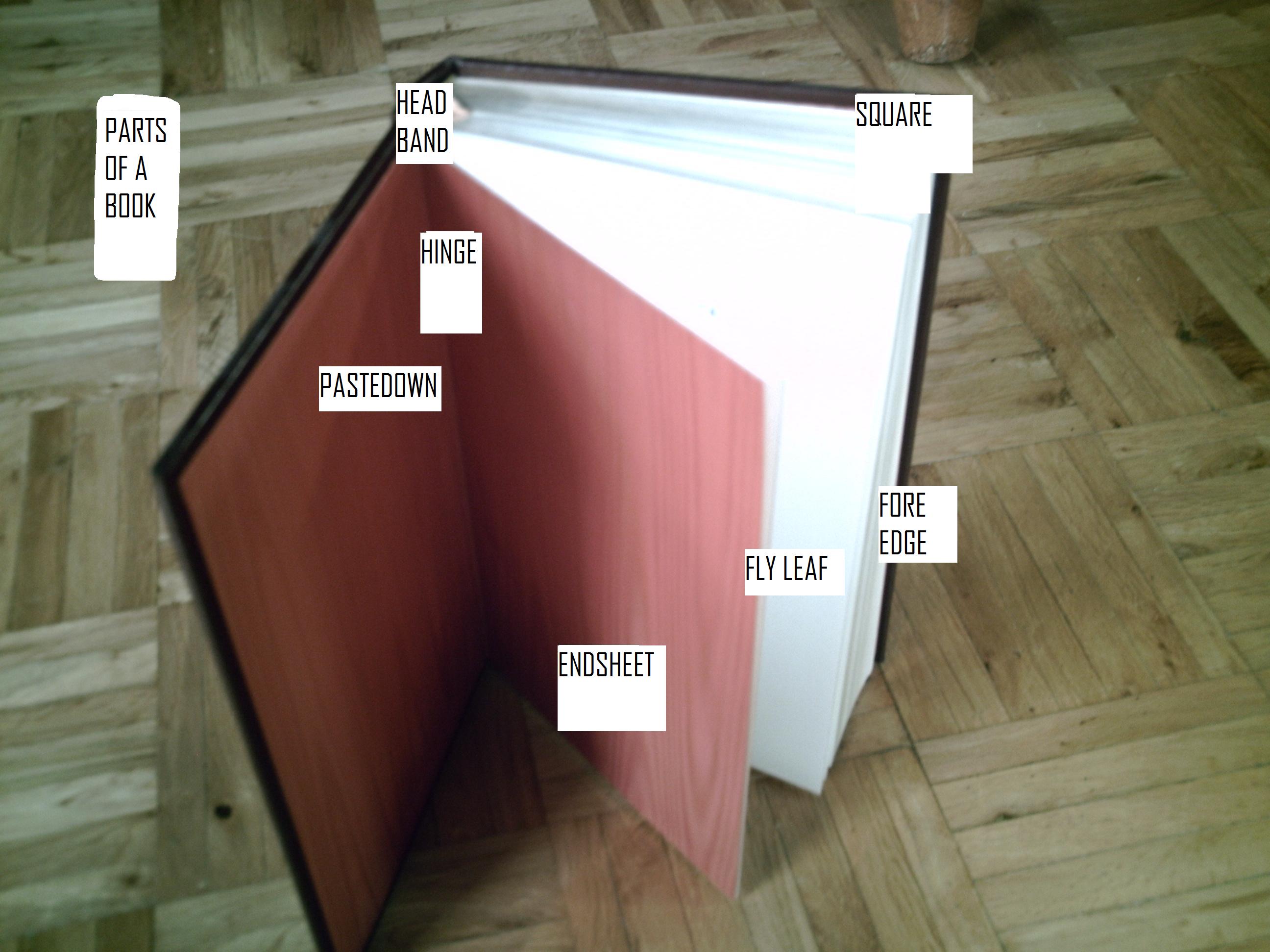
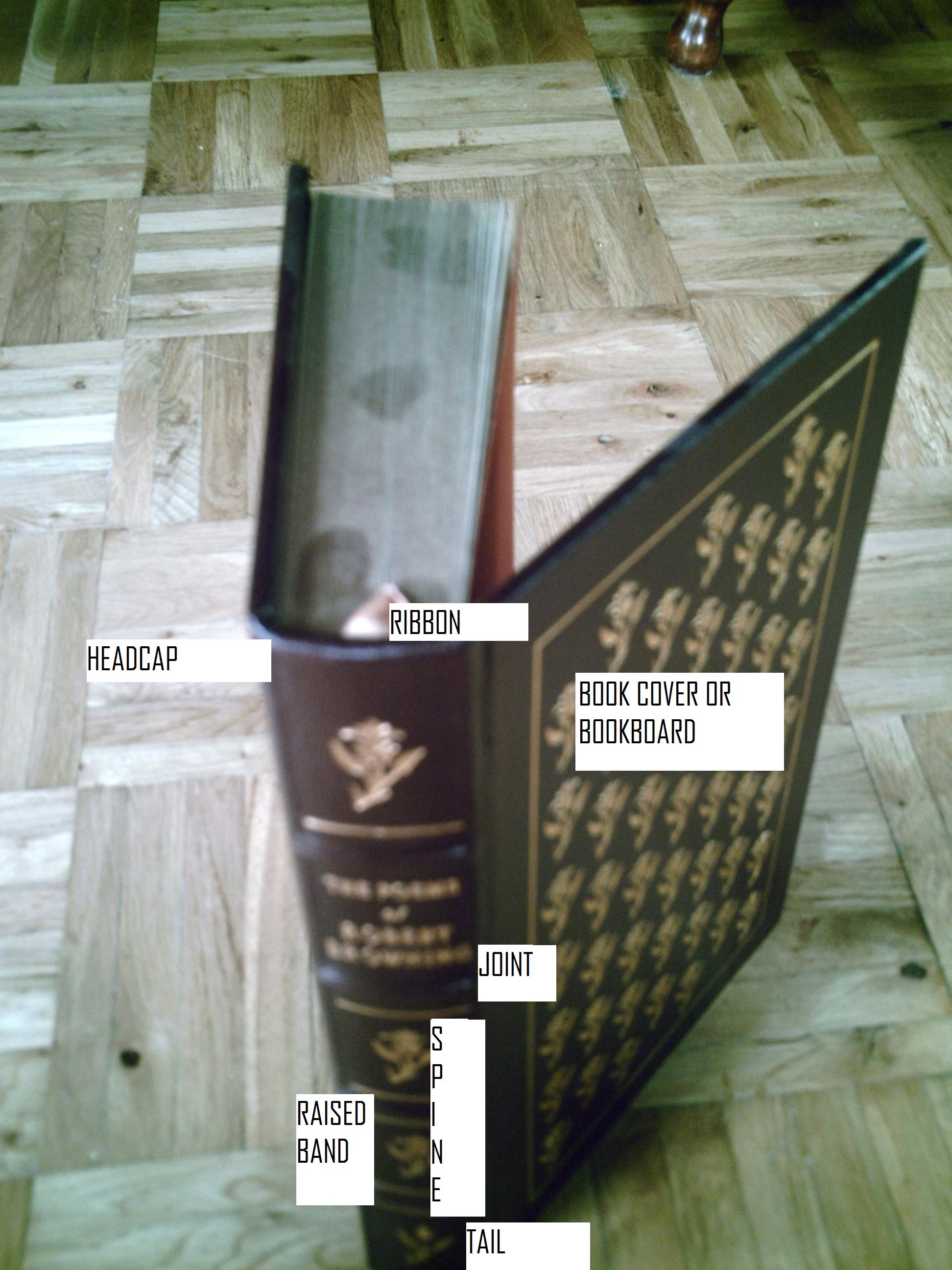
PARTS OF A BOOK

Most writers are also avid book readers.  The amount of time that we spend reading is above average.  We also love the feel of a book, and yes, the smell.  I appreciate the new technology on electronic books, but nothing compared to handling a tome.  This got me thinking that many of us are not familiar with the proper names for the parts that make up a book – the physical parts.  So, I decided to make this post and include an image to point them out.  In this case, pictures say more than words.  Here it is. 

Writer’s Wisdom 69

“Write what you know.”

I have heard many authors say this, when watching their interviews.  This is a very good point and excellent advice for us aspiring writers.  Even when writing fiction and creating our own universes, those universes have to be filled with something – and that is when “what you know” comes handy.   At the beginning, it is easier to write from knowledge than going through lots of research and deep waters.  It is good practice and it comes from you.  If you have a background in law, you will probably apply your knowledge in that mystery or crime novel, and so on …

That doesn’t mean that we will be writing what we know forever; at one point or another, we will embark towards unknown seas and shake our confidence a bit.  It just means that it is easier to write about something that will flow naturally to us and keep us going.  Eventually, we all know when it is time to cross that bridge.

Writer’s Wisdom 68

What fits into the story?

When writing a story many ideas will come to you; sometimes the gates of inspiration will be open and a flood of characters, circumstances and themes will overtake you.  You may be tempted to incorporate all in your story, after all, you may think – they came to you while writing that particular story.  Well, it doesn’t have to be that way.  Some things may not fit in the current chain of events, and may fit later – or not fit at all.  However, write down these  ideas as they will become fuel for other writing projects.

When editing your current story, mind how things fit together.  Cut out what doesn’t fit right or what seems lengthy and does not contribute anything to it.   Readers will devour a story with an easy flow .  The Twilight Saga from Stephenie Meyer is a good example of mammoth books with excellent flow for the reader.

Writer’s Wisdom 67

Between the lines … a Writer’s Heartbeat

While reading a fellow writer’s article on how much of a writer’s life and beliefs are reflected on a piece of writing (see link below) it dawn on me that the adage “we are open books” is not so far from a writer’s truth.  I agreed with the premise and my comment to her was the following:  “There is always some truth about the writer hidden in a piece. Even when the piece is written on a subject totally alien to the writer. I find poetry a good example of this. You can express anything on a poem, even something that does not agree with your values (such as a poem about betrayal) – but somehow a writer’s truth will emerge between the lines. Other times, the writer let’s it all out.”

Soon a question emerged – how much of yourself do you let others see in between the lines?  And when is much too much?  The answer is as unique as an individual’s privacy and disclosure preferences.  And as a reader, how much do I want to know about that writer?  And again, the answer is as unique as that particular reader. 

There is also one thing to consider – with every heart beat amongst the lines, there is an image of a writer being born to the reader – growing, and developing.  Mind those beats.

Here is her article.  

http://writinghood.com/writing/how-life-reflects-in-your-writing/

Writer’s Wisdom 66

Mind your ideas.

Ideas come from everywhere; from something you heard, saw, remembered, an object, a smell, or from something you read.  Some writers avoid reading the genre in which they are writing their current piece.  The reason, they are weary of borrowing any ideas, without intention.

The other day I read about the lawsuit going on between the estate of  British author Adrian Jacobs and J.K. Rowling.  It alleges plagiarism on Rowling’s part, but of course, not substantiated.  It got me thinking on how many similar ideas float in a writer’s world, and how easy is to be influenced by a similar idea.  I don’t consider this plagiarism, as many people can have the same idea and express it in a completely different way.  This is not a copy.  However, more than ever, we should mind our ideas, since writing has evolved in so many ways due to the internet and the many ways in which you can share your work these days.  Ideas are free, and you are free to write what you want, as long as it does not land you in already claimed territory.

Writer’s Wisdom 65

Character’s Point of View

When writing fiction it is important to consider your character’s point of view – where is he/she coming from?  The life experience and the amount of detail of who he/she is, determines how the character moves throughout the story.  A character that grew up and lives in the slums will know little about social etiquette or let’s say, playing golf (unless the character is learning that particular skill and of course it would part of the story).  For example, you cannot write a chapter where this same character – with no previous golf experience – will beat a golf pro in a game (unless you are planning to include some special magical abilities in the story, or paranormal, such as re-incarnation or past lives) – you get the point. 

Make your characters believable, alive and your readers will identify with them.

Writer’s Wisdom 64

From Movie to Book

We have read the book, we loved it, and pray for it to become a movie.  It seems that more and more books, especially for young adults, are making it to the big screen.  I prefer to read a book first, then watch the movie.  Some people become inspired by a movie to read the book.  However it goes, one seems to complement the other – although some book lovers may disagree and say that a book stands for itself – and that is true.  Let’s say that they enhance each other and this relationship between book and movie makes good commercialism.

I have heard best-selling authors being interviewed about their involvement in the process of their book being made into a movie and their opinion is very similar.  Most love it, consider it an honor, and view it as a complete different process.  Some don’t want to be involved much in it, but enjoy having a little bit of input.  But most, if not all, agree that they want the integrity of the characters to remain true to the story – and I think that is what makes one to enhance the other in the relationship of book and movie.

We all enjoy to read a good story – in our heads we visualize it – but when the story becomes alive in the screen and special effects are added, our senses become alive – the icing on the cake.

Writer’s Wisdom 63

The story that I love …

Who do you write for?  Although books are categorized or targeted for sale to particular groups of readers, such as young adults … I keep hearing best-selling authors saying during interviews that they sat down to write a story that they would love.  Some of them say that they wrote the story for themselves.  This is a very important point since it determines how you approach the writing of a piece. 

If you sit down to write the story that you love, you will be connected with that piece much more that if you think that you are writing for such and such group of readers – a bit of pressure there.  Of course some authors will take advantage of a trend, such as the trend of vampires.  It seems that since Stephenie Meyer wrote Twilight and the sequels and it was a hit with young readers as well as adults, everyone is writing about vampires and werewolves now.  The vampire has been awakened again.  And that is fine.

So next time you sit down to write, ask yourself this question:  “Am I writing the story that I love?”

Writer’s Wisdom 62

Writers are entrepreneurs

 According to a simple definition of the word, an entrepreneur is a person who is willing to take upon herself or himself a new venture or enterprise and accepts full responsibility for the outcome and is looking to make a profit (from Wikipedia).  Although most of the time we define it in the traditional business sense, this definition can be applied to writers.  Aside from their love of writing, writers take chances, are willing to put the long hours that it takes, and go from rejection to rejection learning and adjusting their venture, until they make it.  Writers also want to make money in the end.  They look for their own clients, present their own projects and work, and even do the legwork in promoting their work.  Most dream of the day that they publish “the book,” and will endure anything for the love of the craft.

When we think of an entrepreneur we hardly think of writers.  The image that comes to mind is of the traditional business man or woman starting  a venture.  But if you are a serious writer you well know that you have the entrepreneurial spirit deep in you.